 Birch Bay Roofing
 Birch Bay Village Windows Work Harder Than Windows Inland
Birch Bay Village sits close enough to the water that homes here take a different kind of weathering than a house twenty miles inland in Whatcom County. Salt-laden air off the bay settles into window frames, hardware, and weep holes. Wind-driven rain doesn't just fall on glass — it gets pushed sideways into any gap that isn't sealed correctly. And the long, damp moss season that defines a Pacific Northwest winter doesn't stop at your roofline; it works its way into window sills, tracks, and corner joints that stay wet for days at a time.
Vinyl and wood windows installed without the right flashing detail or the right sealant for a marine environment tend to show problems earlier here than they would in a drier part of the state. That's not a knock on any particular window brand — it's just what salt air and sustained moisture do to any building product over years of exposure. A window replacement in this neighborhood needs to account for that from the start, not patch it later.
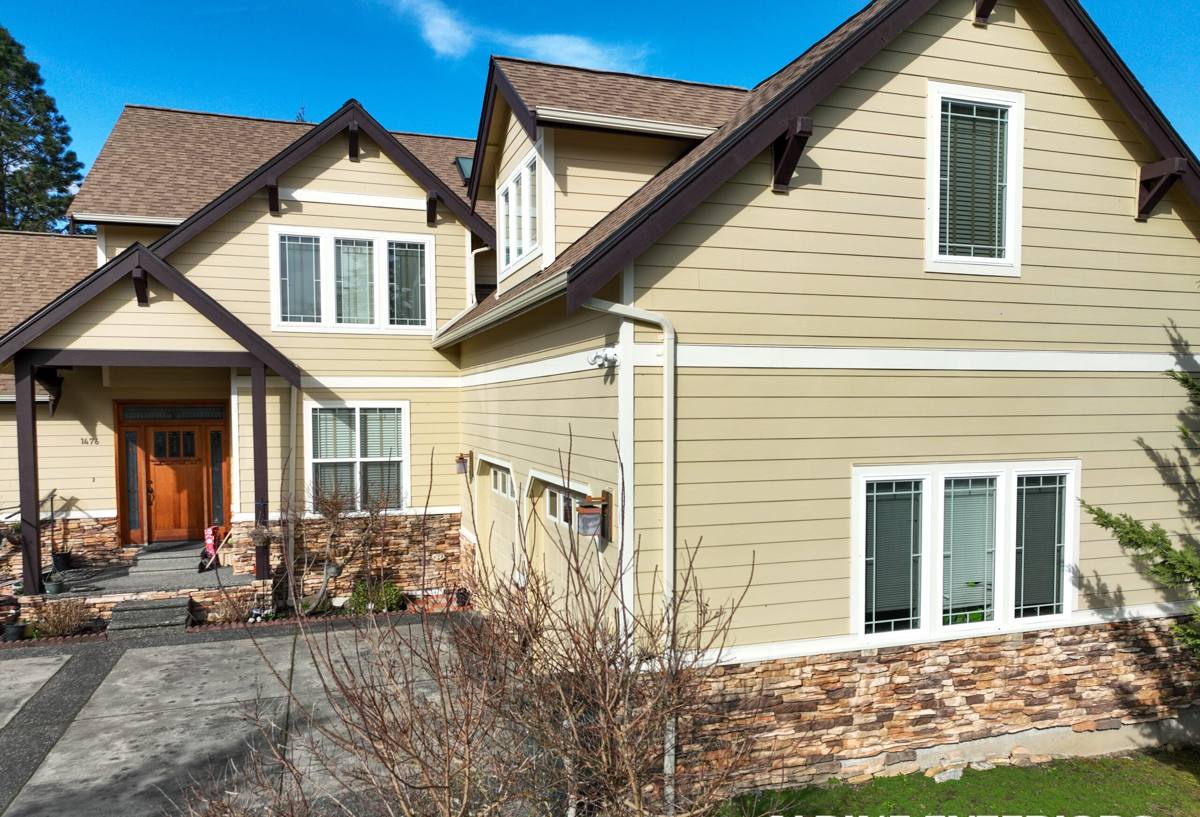
Signs a Window in Birch Bay Village Is Past Its Useful Life
Most homeowners don't replace windows because they woke up and decided to — they replace them because something started bothering them enough to act. In this area, the common triggers look like this:
- Fog or moisture trapped between panes on a double-pane window (a failed seal — the gas fill has escaped and it won't clear)
- Soft or discolored wood on the sill, jamb, or exterior trim around the frame
- A draft you can feel with your hand near the frame edge on a windy day
- Hardware — locks, cranks, balances — that's corroded, sticky, or simply stopped working
- Visible gaps between the frame and the siding or trim, or caulk that's cracked and pulled away
- A noticeably higher heating bill compared to a similar-sized home nearby
- Paint that bubbles or peels specifically around the window opening, even when the rest of the wall looks fine
Any one of these on its own might just mean a repair or a re-caulk. Several of them together, especially on the sides of the house that catch the prevailing wind and rain, usually mean the window and its installation have reached the point where replacement is the more honest answer than another round of patching.
What a Correct Window Replacement Actually Involves
The window unit itself is only part of the job. In our experience, most premature window failures in coastal Whatcom County neighborhoods trace back to the installation, not the product. A correct replacement includes:
Removing the Old Unit Without Damaging the Opening
We cut out the old window carefully so we can see the condition of the rough opening — the framing, sheathing, and any existing flashing — before anything new goes in. This is the point where hidden water damage from years of small leaks gets found. If the sheathing or framing underneath is soft or rotted, that gets addressed before a new window ever goes in, not covered up.
Flashing and Water Management
This is the step that matters most in a marine climate. Proper flashing directs any water that gets behind the siding back out, rather than letting it pool at the sill or wick into the wall cavity. We install sill pan flashing, side and head flashing, and integrate it correctly with the home's weather-resistive barrier — lapped the right direction, sealed at the right points — so water sheds down and out instead of finding its way in.
Sealing and Insulating the Gap
The gap between the new window frame and the rough opening gets insulated and sealed with materials rated for exterior use, not just whatever caulk is on the truck. Over-filling that gap with the wrong foam can actually bow the frame and cause the window to operate poorly, so this step takes some judgment, not just volume.
Exterior Trim and Finish
The trim gets reinstalled or replaced, caulked at the right joints (and left open at others, since not every seam should be sealed), and finished so the whole assembly sheds water the way it was designed to.
Choosing a Window Built for a Salt Air, High-Moisture Environment
There's no single "correct" window brand for coastal Whatcom County, but there are meaningful differences in how frame materials and hardware hold up to salt air and constant moisture cycling. We walk homeowners through the real trade-offs rather than pushing one option:
| Frame Material | Strengths in This Climate | Trade-Offs to Know |
|---|---|---|
| Vinyl | Won't rot, low maintenance, good value, handles moisture well | Can expand/contract with temperature swings; quality varies a lot by manufacturer |
| Fiberglass | Very stable dimensionally, strong resistance to moisture and corrosion, holds paint well | Higher upfront cost than vinyl |
| Wood (clad exterior) | Traditional look, good insulating properties | Exterior cladding must be intact — any breach exposes wood core to rot near a coastline |
| Aluminum | Strong and slim sightlines | Poor insulator and more prone to corrosion in salt air unless properly coated |
For hardware — locks, hinges, cranks — we favor corrosion-resistant finishes over standard-grade hardware whenever a window faces the water or the prevailing weather side of the house. It costs a little more up front and saves a service call two winters later.
Our Process, Start to Finish
- Walkthrough and measurement. We look at every window being replaced, note the condition of the surrounding trim and siding, and measure precisely — no stock sizing.
- Written estimate. You get a clear, itemized quote before any work is scheduled, including what's covered in installation, not just the unit price.
- Scheduling around weather. Given how much rain this area sees, we plan installation days with the forecast in mind and protect open wall cavities if weather turns during a multi-window job.
- Removal and inspection. Old units come out, and we inspect the opening before anything goes back in.
- Installation. Flashing, insulation, sealing, and trim, done in that order, with attention to the water management details described above.
- Walkthrough and cleanup. We check operation of every new window with you, clean up debris and packaging, and haul away the old units.
What Window Replacement Typically Depends On
Every home is different, but the cost of a window replacement project in Birch Bay Village generally comes down to a handful of factors:
| Factor | Why It Matters |
|---|---|
| Number of windows | Per-window cost usually drops slightly as the total count goes up due to shared setup and labor |
| Frame material chosen | Vinyl, fiberglass, and clad-wood carry different material costs |
| Condition of the rough opening | Hidden rot or damaged sheathing found during removal adds repair work |
| Window size and configuration | Large picture windows, bays, or custom shapes cost more than standard single or double-hung units |
| Access and height | Second-story or hard-to-reach windows take more time and equipment |
| Trim and siding work | Replacing or repairing exterior trim beyond the window opening adds to the scope |
We'd rather walk your home and give you real numbers than throw out a broad range that doesn't mean much either way. Most homeowners find it helpful to know these factors going in so the estimate makes sense line by line.
A Homeowner's Checklist Before Hiring Anyone
- Ask whether the crew installs sill pan flashing on every replacement, not just new construction
- Ask how they handle a rough opening if they find rot or moisture damage during removal
- Get the warranty terms in writing — both the manufacturer's product warranty and the contractor's labor warranty
- Confirm they're licensed and insured to work in Washington State
- Ask what happens to old windows and debris — hauled away should be part of the quote, not an add-on
- Get a firm, itemized written estimate before signing anything
Why Local Experience in This Neighborhood Matters
Birch Bay Village isn't identical to every neighborhood in Whatcom County. Its proximity to the bay means salt air exposure that a crew working mostly on inland homes doesn't deal with day to day. A contractor who already works in this area has a feel for which sides of a house typically take the worst of the wind-driven rain, how the moss season affects sills and trim here specifically, and which flashing and sealing details actually hold up through a full winter this close to the water. That local pattern recognition is hard to replace with a generic install crew passing through the area for a one-off job.
It also means someone who's reachable if a question comes up after the install — not a crew that finished the job and moved three counties away.
Maintenance That Extends the Life of New Windows Here
A correct installation is most of the battle, but a little seasonal attention keeps new windows performing well for years in this climate:
- Rinse salt residue off exterior frames and glass a few times a year, especially after storms
- Keep weep holes clear of debris and moss so water can drain out of the frame
- Check and refresh exterior caulk lines every couple of years, since UV and moisture cycling break down sealant over time
- Lubricate hardware — locks, cranks, hinges — periodically to prevent corrosion from taking hold
- Trim back vegetation that holds moisture against the exterior wall near window openings
If you're noticing drafts, fogged glass, or soft trim around your windows, or you're simply ready to stop fighting an old window every winter, we're happy to take a look. We offer free, no-pressure estimates for window replacement in Birch Bay Village — walk the house with us, get straight answers about what your windows need, and decide from there.