 Birch Bay Roofing
 Roofing Built for the Semiahmoo Coastline
Homes along Semiahmoo and the surrounding Blaine and Birch Bay shoreline sit right where Pacific weather meets saltwater. That combination is harder on a roof than most homeowners realize until they're dealing with the results — corroded flashing, moss creeping under shingles, or a soft spot in the decking that only shows up once you're standing on it. We've built our roofing work around what actually happens to roofs out here, not a generic checklist written for a drier, inland climate.
Whatcom County gets a lot of rain, but it's the combination of factors that wears roofs down faster near the water: salt-laden air that accelerates corrosion on metal components, wind-driven rain that finds its way under improperly sealed flashing, and a moss and moisture season that can run eight months or more in a shaded, north-facing roof plane. None of these are dramatic, one-time events. They're slow, cumulative problems, which is exactly why they're so often missed until a roof is well into needing full replacement instead of a simple repair.
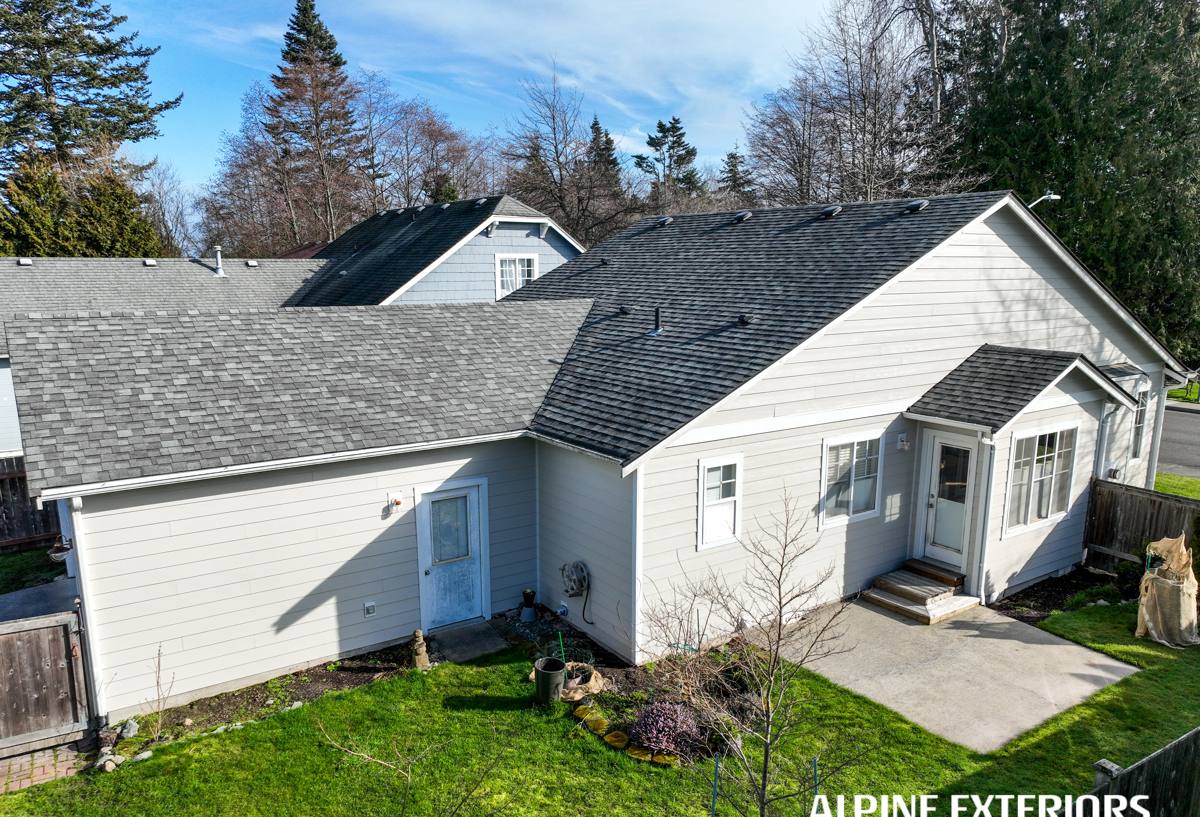
What Salt Air Actually Does to a Roof
Salt air doesn't damage roofing materials the way people expect. It's not the shingles themselves that usually fail first — it's the metal. Nails, flashing, vent boots, gutter hardware, and any exposed fasteners are the first casualties of consistent salt exposure. Once corrosion starts on a fastener or flashing seam, water finds a path behind it, and that's when small problems become deck rot and interior leaks.
Where We Look First on Coastal Homes
- Flashing around chimneys, skylights, and roof-to-wall transitions
- Valley metal, where water volume and corrosion risk are both highest
- Nail heads and fastener patterns on older roofs, especially anything installed with standard (non-coated) hardware
- Gutter hangers and downspout straps, which corrode faster than people expect
- Vent boots and pipe collars, a common failure point on any coastal roof
Using corrosion-resistant fasteners and properly rated flashing isn't an upsell — near Semiahmoo, it's the difference between a roof that holds up for its full expected life and one that starts leaking at fastener points years before the shingles themselves are worn out.
Moss, Shade, and the Long Wet Season
Whatcom County's roofs deal with a moss season that's longer than most homeowners moving here from drier climates expect. Moss doesn't just look bad — it holds moisture directly against the roofing material, works its way under shingle edges as it grows, and can lift shingles enough to let wind-driven rain in underneath. North-facing roof planes, and any section shaded by trees, are the most consistent problem spots we see.
A Realistic Approach to Moss
Moss treatment and prevention works best as routine maintenance, not a one-time fix. Zinc or copper strips near the roof ridge help suppress regrowth over time as rain carries trace metal down the roof plane. Soft washing (not pressure washing, which can strip granules and shorten shingle life) clears existing growth without damaging the roofing surface. And keeping gutters and valleys clear of debris removes the organic material that moss needs to get established in the first place.
Materials That Make Sense for This Area
There's no single "best" roofing material — the right choice depends on your home's exposure, your budget, and how much maintenance you're willing to keep up with. Here's how the common options stack up specifically for a coastal, high-moisture, high-moss environment like Semiahmoo:
| Material | Coastal/Salt Air Performance | Moss Resistance | Typical Lifespan Here |
|---|---|---|---|
| Architectural Asphalt Shingle | Good with corrosion-resistant fasteners and flashing | Moderate — benefits from zinc strips and regular cleaning | 20-30 years |
| Standing Seam Metal | Excellent when properly coated and fastened | High — sheds moss more effectively than shingles | 40-60 years |
| Cedar Shake | Fair — requires diligent maintenance near salt air | Low without regular treatment; holds moisture readily | 20-30 years with upkeep |
| Composite/Synthetic Shingle | Good — resists corrosion since it's non-metallic | Moderate to good depending on product | 30-50 years |
We install and repair all of these, and we'll tell you honestly which one fits your situation rather than steering every homeowner toward the same product. A shaded, north-facing roof with heavy tree cover is a different conversation than an open, wind-exposed roof closer to the water.
A Note on Cedar Shake
Cedar has real appeal, and we're happy to install or maintain it for homeowners who want that look and are committed to the upkeep. Our honest professional standard is that cedar shake in a high-moisture coastal environment needs more frequent attention than asphalt or metal — regular treatment, better ventilation underneath, and closer inspection for trapped moisture. It's not that cedar fails on its own; it's that the maintenance burden is higher here than in a drier inland setting, and we want homeowners to go in with that expectation rather than be surprised by it later.
Repair or Replace? What Actually Drives That Decision
Most roofs don't fail all at once — they degrade in specific areas while the rest of the roof is still sound. The decision to repair versus replace usually comes down to a few concrete factors rather than the age of the roof alone.
| Factor | Leans Toward Repair | Leans Toward Replacement |
|---|---|---|
| Extent of damage | Isolated to one area (flashing, one valley, a few shingles) | Widespread across multiple roof planes |
| Age of roofing material | Under 60-70% of expected lifespan | Near or past expected lifespan for the material |
| Decking condition | Solid, no soft spots | Soft, delaminated, or previously water-damaged decking |
| Underlayment condition | Intact and still doing its job | Degraded, brittle, or failing in multiple spots |
| Frequency of past repairs | First or second repair in several years | Recurring leaks or repairs in the same general area |
An honest inspection should give you a clear answer on which side of this table your roof falls on, along with photos and a plain explanation — not just a quote.
Signs a Semiahmoo-Area Roof Needs a Closer Look
- Granules collecting in gutters or at downspout outlets
- Visible moss or dark streaking on north-facing or shaded roof sections
- Rust staining below flashing, vents, or fasteners
- Daylight visible through the attic decking or soffit areas
- A musty smell or visible staining on interior ceilings after heavy rain
- Shingles that look curled, lifted, or cupped at the edges
- Sagging in any roof plane, which can indicate decking or structural moisture damage
Any one of these on its own isn't necessarily an emergency, but it's worth a proper look before the next storm season rather than after.
Why a Local Crew Matters Here
Roofing crews who mostly work inland don't run into salt air corrosion or an eight-month moss season as a routine part of the job — so it's easy for that experience gap to show up in the details: the wrong fastener grade, flashing that isn't rated for the exposure, or a maintenance plan that just doesn't account for how much moss this area actually gets. We work on homes throughout Birch Bay, Blaine, and the greater Whatcom County coastline, and the patterns repeat often enough that we know what to check first and what tends to fail early out here.
That local knowledge also matters for timing. Scheduling roof work around this region's wetter months versus the drier summer stretch affects both the quality of the installation and how long it takes. A crew that works this coastline regularly plans around that instead of learning it on your project.
Beyond the Roof: How This Fits Your Whole Exterior
A roof doesn't work in isolation. Gutters, siding, fascia, and even window flashing all interact with how water moves off your house, and a problem in one area often shows up as damage in another — a failing gutter can rot fascia board, and a poorly flashed roof-to-wall transition can lead to siding damage below it. Because we handle roofing, siding, windows, and decks, we can look at the whole exterior envelope during an inspection instead of just the roof plane, and flag connected issues before they turn into separate, more expensive repairs down the road.
Maintenance That Actually Extends Roof Life
For homes in this area, a simple annual or twice-yearly maintenance rhythm does more for roof longevity than almost anything else:
- Clear gutters and valleys of debris before the fall rains start
- Treat or refresh moss prevention measures on shaded roof sections
- Inspect flashing and fasteners for early corrosion signs
- Check attic ventilation, since poor airflow traps moisture and accelerates decking damage
- Address small repairs promptly rather than letting them sit through another wet season
None of this is complicated, but it's the kind of routine care that gets skipped easily — and skipping it is usually what turns a $300 repair into a $10,000 replacement a few years later.
If you're noticing any of the warning signs above, or it's simply been a while since your roof had a real inspection, we're glad to take a look. Fill out the form below for a free, no-pressure estimate — we'll walk the roof, tell you honestly what we find, and lay out your options without any pressure to choose the most expensive one.