 Birch Bay Roofing
 Roofing in Ferndale, Serving Birch Bay and the Whatcom County Coast
Ferndale sits close enough to the water that its homes deal with the same weather patterns we see across Birch Bay and the rest of northern Whatcom County. That means salt-laden air blowing in off the Strait of Georgia, long stretches of driving rain through fall and winter, and a moss season that seems to start earlier every year. We work on roofs throughout this area regularly, and the patterns repeat from house to house: certain materials age faster here, certain details fail first, and certain maintenance habits make the difference between a roof that lasts its full rated life and one that needs early intervention.
This page walks through what we actually see on Ferndale and Birch Bay roofs, what holds up and what doesn't, and how we approach the work. We're not going to give you a sales pitch dressed up as an article. We'd rather you understand the trade-offs before we ever show up for an estimate.
What Whatcom County Weather Does to a Roof
Every region has its own combination of stresses on a roofing system. Along this stretch of coast, three factors do most of the damage over time.
Salt Air
Homes within a few miles of Birch Bay and the Strait get regular exposure to salt-carrying air, especially during winter storms. Salt accelerates corrosion on any exposed metal — flashing, fasteners, gutters, and metal roofing panels themselves. It's not usually dramatic; it's a slow, steady process that shows up as rust streaking, pitted fasteners, or flashing that fails a few years before you'd expect. The practical response isn't to avoid metal components altogether, it's to spec the right alloys and coatings and to inspect those components more often than you would inland.
Driving Rain
Whatcom County doesn't just get a lot of rain, it gets wind-driven rain that hits roofs at an angle rather than falling straight down. That matters because it pushes water into laps, seams, and transitions that are designed for vertical drainage, not lateral pressure. Underlayment quality, proper flashing at every penetration, and correct shingle or panel overlap aren't optional details in this climate — they're the difference between a dry attic and a slow leak that goes unnoticed for a season or two before it shows up as a stain on a ceiling.
Moss Season
Between the moisture and the shade many Ferndale and Birch Bay properties get from mature trees, moss has a long growing window here — often close to nine months out of the year. Moss holds moisture against roofing material, works its way under shingle tabs, and lifts edges over time. On cedar it accelerates rot. On composition shingles it shortens granule life. Left unchecked for several years, moss growth can turn a roof that should have another decade of service into one that needs premature replacement.
Common Roof Problems We See in Ferndale Homes
A few issues come up often enough on service calls in this area that they're worth calling out specifically:
- Moss buildup at the north-facing slopes and valleys, where shade and moisture linger longest
- Corroded or failing flashing around chimneys, skylights, and roof-to-wall transitions
- Gutter systems overwhelmed during heavy rain events, causing water to back up under the roof edge
- Granule loss on older composition shingles from years of moss and moisture cycling
- Soft or spongy roof decking discovered during re-roofs, usually from a slow leak that went unnoticed for years
None of these are unusual or a sign of a poorly built home — they're what this climate does to any roof over enough time. The question is whether they get caught early through routine maintenance or discovered late during a bigger repair.
Roofing Materials That Hold Up in This Climate
There's no single "best" roofing material for every home — budget, roof pitch, architectural style, and how long you plan to stay in the house all factor in. What we can tell you honestly is how different materials tend to perform under Whatcom County's specific mix of salt air, rain, and moss.
| Material | Moss Resistance | Salt Air Durability | Typical Lifespan Here | Maintenance Burden |
|---|---|---|---|---|
| Architectural Composition Shingle | Moderate — benefits from periodic cleaning | Good with corrosion-resistant fasteners and flashing | 20-30 years | Low to moderate |
| Standing Seam Metal | Good — sheds moss more easily than textured surfaces | Requires marine-grade coatings and fasteners near the coast | 40-50+ years | Low, with periodic fastener checks |
| Cedar Shake | Poor without diligent maintenance — moisture-prone | Fair, but hardware corrodes faster | 20-25 years with upkeep | High |
| Synthetic/Composite Shingle | Good — resists moisture absorption | Good | 30-50 years | Low |
Cedar shake still has a place for homeowners who want the look and are committed to regular maintenance, but we're upfront that it's the highest-upkeep option in a climate like this — the moisture retention that gives cedar its character is the same property that shortens its life here without consistent care. Metal and synthetic composite systems tend to be the lowest-maintenance long-term choices for coastal Whatcom County properties, but they carry a higher upfront cost that not every project budget supports. We'll walk through what fits your roof, your budget, and how long you're planning to own the home.
Roof Maintenance Checklist for Coastal Whatcom County Homes
Most roof failures we're called out for didn't have to happen — they were the result of a few years of deferred maintenance compounding. A simple annual routine goes a long way:
- Inspect and clear moss at least once a year, ideally before it spreads past a light surface layer
- Clean gutters and downspouts before the fall rain season starts
- Check flashing around chimneys, vents, and skylights for rust, gaps, or lifted edges
- Trim back overhanging branches to reduce shade and debris buildup that feeds moss growth
- Look for granule buildup in gutters, which signals accelerated shingle wear
- Have a professional inspection every few years, especially once a roof passes the 10-year mark
We don't push moss treatment or gutter cleaning as an upsell on every visit — if your roof looks clean and sound, we'll tell you that. But when we do recommend maintenance, it's because we've seen what skipping it costs a few years down the line.
Beyond the Roof: Siding, Windows, and Decks in the Same Climate
The same salt air, rain, and moisture that stress a roof affect the rest of a home's exterior. We handle siding, windows, and decks alongside roofing because they're not separate problems — they're one building envelope responding to one climate.
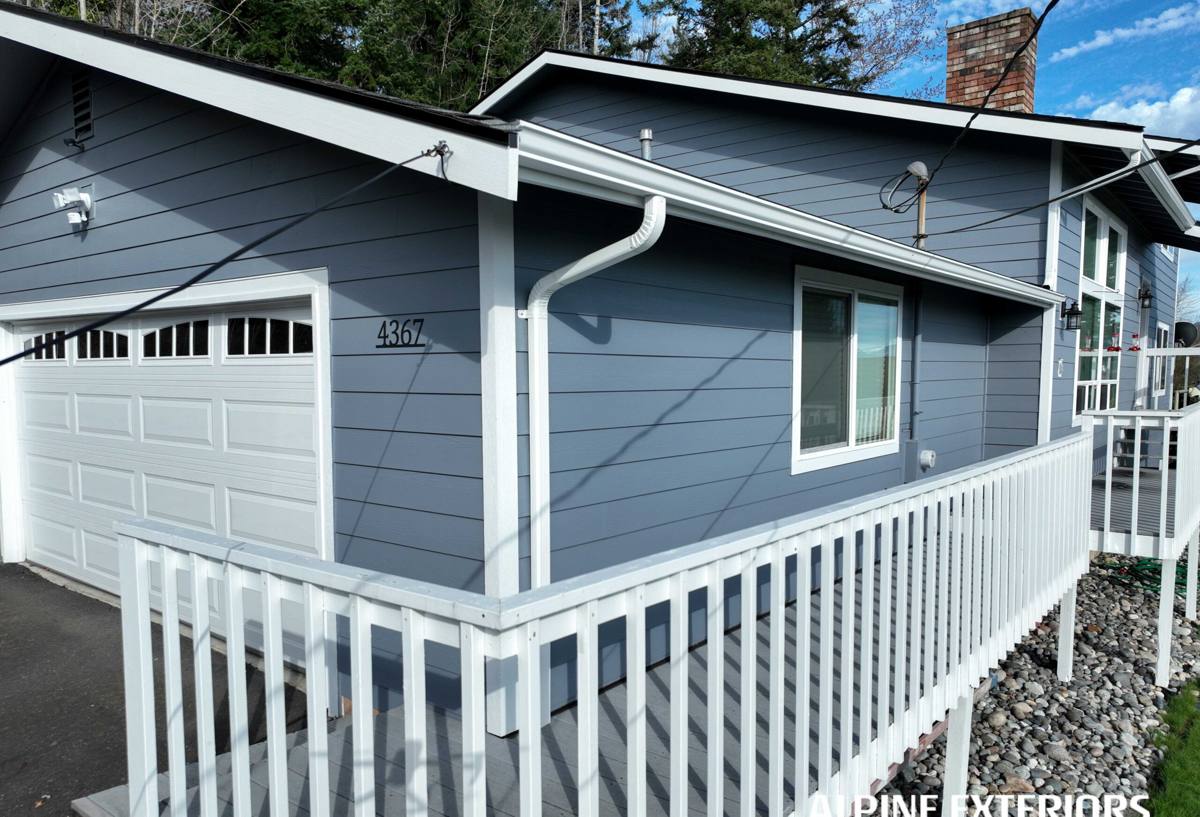
Siding in this area needs to manage the same wind-driven rain a roof does, particularly around window and door transitions where water intrusion most often starts. Windows near the coast benefit from corrosion-resistant hardware and weatherstripping rated for sustained moisture exposure, not just a standard residential spec. Decks take some of the hardest punishment of all — full sun exposure in summer, standing water and moss in winter, and direct exposure to salt air with no roof overhang to shield them. Composite decking and pressure-treated framing with corrosion-resistant fasteners tend to outlast standard lumber-and-fastener combinations in this environment.
Because we work across all four trades, we can look at a Ferndale or Birch Bay home as a whole system rather than patching one component while ignoring how it interacts with the others.
Why a Local Crew Matters in Ferndale and Birch Bay
A roofing crew that mostly works inland doesn't build the same instincts as one that works this stretch of coast regularly. Knowing which fastener grade actually holds up to salt exposure, which flashing details fail first under driving rain, and how aggressive the moss season really gets here isn't something you learn from a manufacturer's spec sheet — it's something you learn from doing the work in this specific climate, season after season.
Being local also means we're a short drive away if something needs a second look after a storm, and we're not disappearing to the next region once the job wraps. Whatcom County weather is specific enough that experience here counts for more than experience somewhere else.
What to Expect When You Work With Us
- A straightforward inspection of your roof and relevant exterior components, with honest findings — including if nothing urgent needs doing
- A written estimate that explains material options, trade-offs, and pricing factors in plain language
- Clear timelines and a crew that shows up when scheduled
- A final walkthrough so you know exactly what was done and why
We'd rather earn a job by being straight with you about what your roof actually needs than by upselling something it doesn't.
If you're in Ferndale, Birch Bay, or elsewhere in Whatcom County and want an honest look at your roof, siding, windows, or deck, request a free, no-pressure estimate using the form below. We'll tell you what we see and what your real options are — no obligation either way.