 Birch Bay Roofing
 Roofing in California Creek: Built for the Coastline, Not Just the Weather Forecast
California Creek sits close enough to the water that homes here deal with a different set of roofing conditions than houses just a few miles inland. It isn't only about rain totals — it's the combination of salt-laden air, wind-driven storms coming off the Strait of Georgia and Boundary Bay, and the deep shade from mature evergreens that keeps roof surfaces damp long after a storm has passed. A roof that would hold up fine in a drier part of Whatcom County can wear out faster here if it wasn't chosen and installed with this specific mix of conditions in mind.
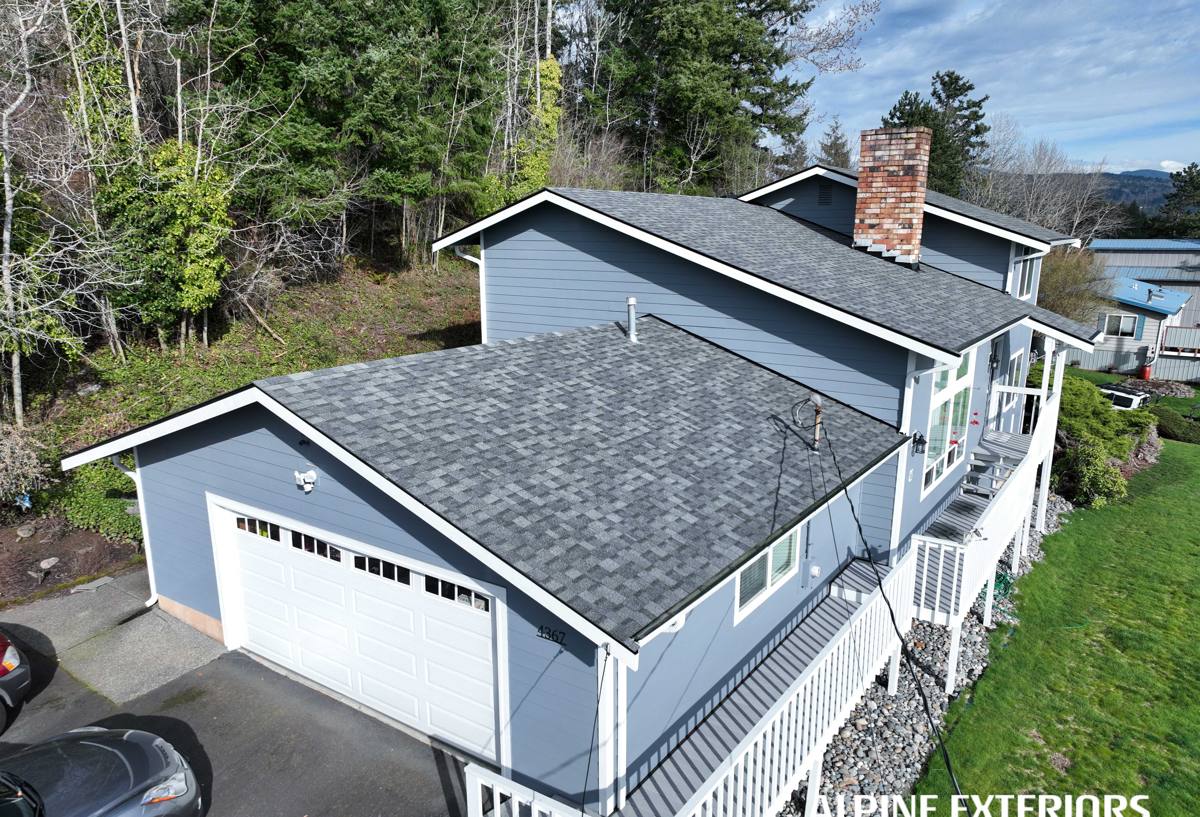
We work on roofs throughout Birch Bay and the surrounding communities, and California Creek roofs tend to show a consistent pattern of wear: fastener and flashing corrosion from salt exposure, moss and algae growth in shaded, north-facing sections, and granule loss or shingle lifting from repeated wind-driven rain. None of that is unusual for a coastal Northwest property — it's just part of owning a home this close to the water, and it's manageable with the right materials and a maintenance rhythm that fits the area.
What the Local Climate Actually Does to a Roof
Salt Air and Metal Corrosion
Airborne salt doesn't need direct ocean spray to cause problems — it travels on the wind and settles on exposed metal. Nails, flashing, vent boots, and gutter hardware are the first things to show it, usually as rust streaks or pitting years before the roofing material itself is due for replacement. Standard electro-galvanized fasteners corrode noticeably faster in this environment than they would twenty or thirty miles inland.
Driving Rain and Wind
Storms moving in off the water tend to push rain sideways rather than straight down, which puts real stress on laps, seams, and flashing details that would never get tested in a calmer rain event. Underlayment quality and flashing technique matter more here than they do in a lot of other parts of the county, because wind-driven rain finds any weak point in the system.
Moss, Algae, and Shade
Between the marine layer, regular rainfall, and heavy tree cover in parts of California Creek, roofs can stay damp for days at a stretch, especially on north- and east-facing slopes. That's ideal growing conditions for moss and algae, which hold moisture against the roofing material, work into shingle laps, and lift edges over time. Left unaddressed, moss growth is one of the more common reasons we see otherwise sound roofs fail early.
Temperature Swings and Material Movement
Whatcom County doesn't see extreme heat, but the swing between damp, cool nights and warmer afternoons still causes roofing materials to expand and contract. Over enough cycles, that movement stresses fasteners and seams — another reason flashing detail and fastener choice matter more than the shingle brand printed on the wrapper.
Choosing a Roofing Material for a California Creek Home
There's no single "best" roofing material for this area — the right choice depends on your home's exposure, roof pitch, budget, and how much upkeep you want to take on. Here's how the common options compare for a coastal Whatcom County property:
| Material | Coastal/Salt Air Performance | Moss Resistance | Typical Lifespan Here | Maintenance Level |
|---|---|---|---|---|
| Asphalt Composition Shingle | Good with corrosion-resistant fasteners and flashing | Moderate — benefits from algae-resistant granules | 20–25 years | Low to moderate |
| Standing Seam Metal | Very good when properly coated and fastened | High — sheds moisture quickly | 40–50+ years | Low |
| Cedar Shake/Shingle | Fair — needs vigilant maintenance near salt air | Lower — holds moisture, needs regular treatment | 20–30 years with upkeep | High |
| Synthetic/Composite Shingle | Good — resists corrosion and moisture absorption | Moderate to high depending on product | 30–50 years | Low |
Cedar shake has real curb appeal and a long history in this part of the Northwest, but in a marine environment it demands more regular cleaning and treatment to avoid moisture retention and premature rot — that's a maintenance commitment we're upfront about rather than glossing over. Metal roofing has become a popular choice for California Creek homes precisely because it sheds moisture and doesn't give moss much to hold onto, though the upfront cost is higher. Most homeowners land on a quality architectural asphalt shingle with algae-resistant granules and properly detailed flashing — it's a solid middle ground of cost, appearance, and coastal durability.
Signs Your Roof Is Telling You Something
Roof problems in this climate rarely show up as a dramatic leak first — they usually start quietly. Homeowners in California Creek should keep an eye out for:
- Dark streaking or green-black growth, especially on shaded or north-facing slopes
- Granules collecting in gutters or at downspout outlets
- Curling, cupping, or lifted shingle edges after wind events
- Rust staining around vents, flashing, or metal fasteners
- Soft or spongy decking felt through the roof surface during an inspection
- Daylight visible through the attic or soffit vents where there shouldn't be any
- Water stains on interior ceilings, particularly near chimneys, skylights, or valleys
Catching these early is almost always cheaper than waiting. A section of moss or a handful of lifted shingles is a repair; the same issue ignored for a couple more wet seasons can turn into decking replacement or an interior repair on top of the roof work.
How We Approach a Roofing Project Here
Inspection First
Every job starts with an actual inspection, not a guess from the driveway. We check the roofing surface, flashing at every penetration and valley, ventilation, and — where accessible — the decking underneath. That tells us whether you're looking at a repair, a partial re-roof, or a full replacement, and we'll tell you honestly which one it is.
Materials Matched to Exposure
For California Creek roofs, that generally means corrosion-resistant fasteners and flashing (stainless or heavily coated, not standard electro-galvanized), algae-resistant shingle products where applicable, and underlayment rated for the wind-driven rain this area sees. On more exposed or heavily shaded roofs, we'll walk you through whether a metal or synthetic option makes sense given the added upfront cost versus the lower long-term maintenance.
Ventilation and Moisture Control
A roof that can't breathe traps moisture underneath the surface, which accelerates decking rot and shortens the life of the roofing material from below — often before you'd notice anything from above. We check intake and exhaust ventilation as part of every roofing project, since it's one of the most overlooked factors in how long a coastal roof actually lasts.
Flashing and Detail Work
Most roof failures we get called out for aren't a bad shingle — they're a flashing detail that was rushed or done wrong around a chimney, skylight, valley, or wall intersection. Given how much this area's rain gets pushed sideways by wind, that detail work is where a roofing job earns its keep.
Beyond the Roof: How the Rest of Your Exterior Holds Up
Roofing rarely fails in isolation on a coastal property — the same salt air, moisture, and wind exposure that wears on a roof works on siding, windows, and decks at the same time. We handle all four because they're connected: a roof leak can show up as siding damage, poor window flashing can mimic a roof leak, and a deck built without the right coastal-grade fasteners corrodes on the same timeline as roof hardware. When we're on-site for a roofing estimate in California Creek, we'll flag anything we notice on the rest of the exterior — not to upsell, just because it's often visible from the same vantage point and worth knowing about.
Siding
Siding in this area faces the same corrosion and moisture-retention issues as roofing, particularly around trim, fastener heads, and any spot where siding meets a roofline or window.
Windows
Window flashing is one of the most common sources of water intrusion we find during roof inspections — it's worth checking whenever roofing work is being done nearby.
Decks
Exterior decks close to the water need the same attention to fastener and hardware corrosion as a roof, plus regular attention to moisture trapped between boards and ledger connections.
Maintenance That Actually Extends Roof Life Here
A California Creek roof isn't a "install and forget" fixture — a little regular attention goes a long way given the moss season and salt exposure. A practical maintenance routine looks like:
- Visual inspection at least once a year, ideally after the wettest months
- Gutter and downspout cleaning to keep water moving off the roof, not pooling at the edges
- Moss and debris removal from valleys and shaded slopes before it spreads
- Checking flashing and sealant around chimneys, vents, and skylights for cracking or lifting
- Trimming back overhanging branches that keep sections of roof shaded and damp
- Addressing small repairs — a lifted shingle, a rusted fastener — before the next storm season
None of this requires a major investment on its own, but skipping it for a few years in a row is usually what turns a maintenance item into a full replacement.
Why a Local Crew Matters for This Kind of Work
A roofing crew that mostly works inland doesn't necessarily think about corrosion-resistant fasteners or moss-prone shading as a default — it's not wrong for their market, it's just not built for this one. Working roofs throughout Birch Bay and the surrounding Whatcom County coastline means we're used to designing for salt air and driving rain as standard practice, not an afterthought. That shows up in the fasteners we choose, how we detail flashing, and what we flag during an inspection that a generic checklist might miss.
It also means we're realistic about timelines. Roofing work here is weather-dependent, and we plan around the wetter stretches of the year rather than promising a schedule that ignores them.
Get a Straight Answer About Your Roof
If you're dealing with visible moss, a storm that left shingles out of place, or you're just not sure how much life is left in your roof, we're happy to take a look. We'll give you an honest read on whether you need a repair or a replacement, walk through material options that make sense for a California Creek property, and answer questions about siding, windows, or decks while we're there. Fill out the form below to schedule a free, no-pressure estimate.