 Birch Bay Roofing
 Roofing in California Creek Takes a Different Kind of Beating
California Creek sits close enough to Birch Bay and the water that its roofs live under a different set of pressures than a house twenty minutes inland. Salt-laden air moves in off the bay, driving rain comes sideways during winter storms, and the shaded, tree-lined lots that make this area attractive also keep roofs damp longer than they'd like. None of that is a reason to panic about your roof — but it is a reason to replace one correctly instead of patching it and hoping. This page covers what a proper roof replacement looks like for a California Creek home, what tends to go wrong when it's done generic, and how our process is built around this specific stretch of Whatcom County.
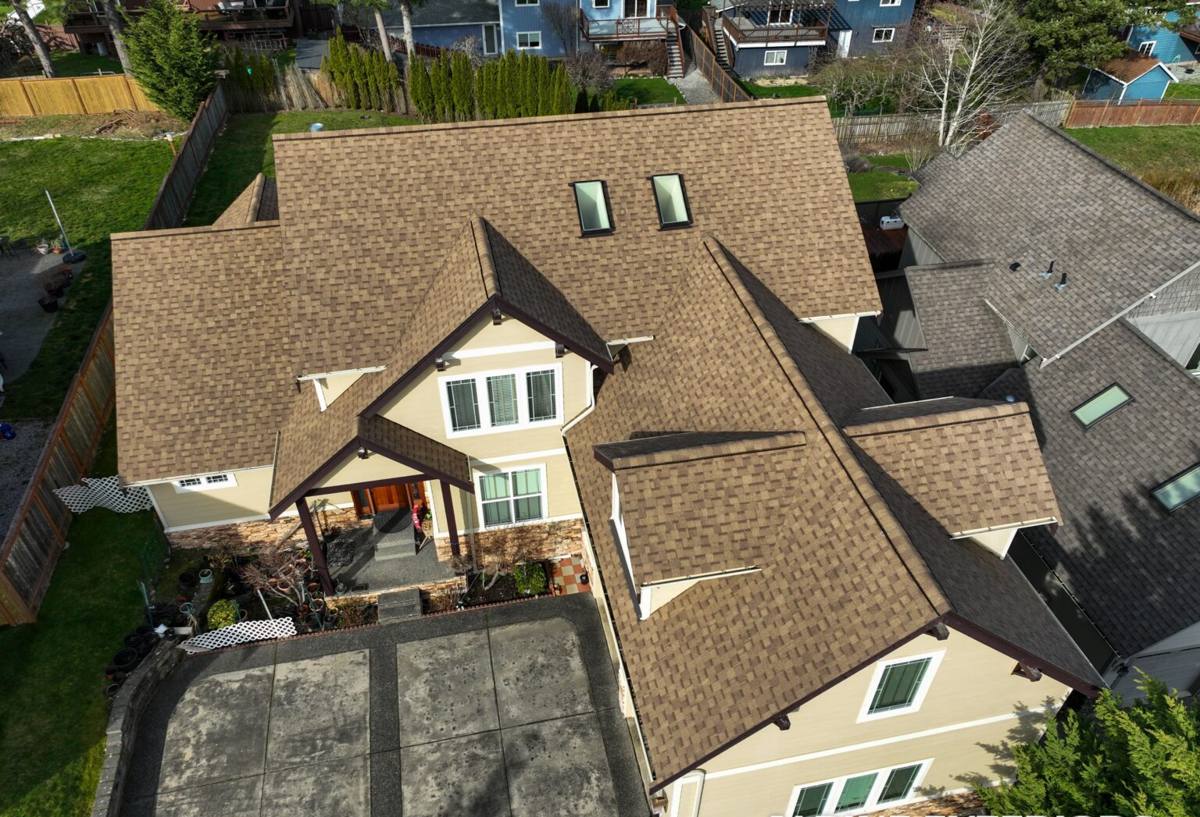
What Salt Air, Driving Rain, and Moss Actually Do to a Roof
Salt Air and Metal Components
You don't have to be beachfront to feel the effects of salt air — it travels on wind and settles on every exposed surface within several miles of the water, California Creek included. The parts of a roof most affected aren't the shingles themselves but the metal: nail heads, flashing, drip edge, vent caps, and any exposed fasteners. Standard galvanized fasteners can start showing surface corrosion years before the roofing material around them fails, and once a fastener corrodes, its grip weakens and its seal around the shingle can loosen. This is why fastener and flashing material matter as much as shingle brand in a job done right here.
Driving Rain and Wind-Driven Water
Birch Bay winters bring rain that doesn't fall straight down — it's pushed sideways by wind off the water, which means it finds its way into gaps that a calm-weather roof would never expose. Wind-driven rain tests every seam, every flashing detail around chimneys and skylights, and every transition where a roof plane meets a wall. A roof that would perform fine in a drier, calmer climate can leak here simply because the water is arriving at an angle the original installation didn't account for.
Moss and the Long, Damp Season
Western Washington's moss season isn't a short window — for many California Creek properties with tree cover or north-facing slopes, conditions stay damp enough for moss and algae to establish themselves for much of the year. Moss holds moisture directly against the roofing material, works its way under shingle tabs as it grows, and can lift edges enough to let wind-driven rain underneath. A roof replacement that doesn't account for airflow, sun exposure, and material choice is setting itself up to grow moss again within a few seasons.
Signs a California Creek Roof Needs Replacement, Not Another Repair
Not every roof problem calls for a full replacement, and we won't tell you it does. But there's a point where repeated repairs stop making financial sense and start masking a bigger issue underneath. Watch for:
- Granule loss heavy enough that you're finding shingle grit in gutters every time it rains
- Shingles that are cupping, curling, or cracking across large sections rather than one isolated spot
- Soft or spongy decking felt underfoot in the attic, especially near valleys or wall transitions
- Persistent moss or algae staining that comes back within a season of cleaning
- Daylight visible through the roof deck from inside the attic
- A roof already past or near the end of its material's expected service life, combined with any of the above
If you're only seeing one or two of these, a repair may still be the right call — we'll tell you that honestly during an inspection rather than push a replacement you don't need yet.
What a Correct Replacement Involves in This Climate
Tear-Off and Deck Inspection
A full tear-off exposes the roof deck, which is the only real way to find rot, delamination, or soft spots hidden under the old material — something an overlay can never reveal. Given how much moisture this area sees, we treat deck inspection as a mandatory step, not an upsell. Any damaged sheathing gets replaced before anything new goes down.
Underlayment and Water Barrier
Underlayment is your roof's backup layer if wind-driven rain or an ice dam gets past the primary roofing material, and it matters more here than in drier parts of the state. We use synthetic underlayment across the field for its water resistance and durability, with self-adhering ice-and-water barrier at eaves, valleys, and any roof-to-wall transition — the exact spots wind-driven rain and moss-related backup tend to target.
Flashing Details
Flashing is where most roof leaks actually start, not in the open field of shingles. Around chimneys, skylights, dormers, and sidewalls, we install new flashing rather than reusing old pieces, and we use corrosion-resistant metal given the salt exposure this area gets. Cutting corners on flashing is the single most common reason a "new" roof leaks within a few years.
Ventilation
Proper intake and exhaust ventilation keeps the underside of the roof deck dry and temperature-balanced, which slows moss regrowth and helps shingles last their full rated life. A lot of older Whatcom County homes were built with minimal ventilation by today's standards, so replacement is often the right time to correct it.
Material Options for This Area
There's no single "best" roofing material for every California Creek home — it depends on your roof's exposure, slope, tree cover, and budget. Here's how the common options compare against the conditions that matter most here.
| Material | Salt Air / Corrosion Resistance | Moss Resistance | Typical Lifespan | Relative Cost |
|---|---|---|---|---|
| Architectural asphalt shingle | Good, with corrosion-resistant fasteners and flashing | Moderate — improves with algae-resistant granules and good airflow | 25–30 years | $ – lowest upfront |
| Standing seam metal | Excellent when using marine-grade coatings and fasteners | Very good — smooth, steep surfaces shed moss more easily | 40–50+ years | $$$ – highest upfront |
| Synthetic composite shingle | Good — resists corrosion since the material itself doesn't rust | Good, varies by product line | 30–50 years depending on product | $$ – mid-range |
Asphalt architectural shingle remains the most common choice for California Creek homes because it balances upfront cost with solid performance when installed with the corrosion-resistant details this climate calls for. Metal earns its higher price tag on longevity and low maintenance, which some homeowners value more once they've dealt with a few moss seasons. We'll walk through the honest trade-offs for your specific roof rather than steering you toward whatever's easiest to install.
Our Process, Start to Finish
- Inspection and estimate. We walk the roof and attic in person, document what we find, and give you a written estimate with no pressure to decide on the spot.
- Material selection. We go over the options above against your budget, roof exposure, and how long you plan to stay in the home.
- Scheduling around the weather. Roof replacements need a dry window, and we plan the job with Birch Bay's rain patterns in mind rather than promising dates we can't keep.
- Tear-off and deck repair. Old material comes off, the deck is inspected, and any damaged sheathing is replaced before moving forward.
- Underlayment, flashing, and ventilation installation. This is where the durability of the job actually gets decided.
- New roofing material installed to manufacturer specification — correct nailing pattern, exposure, and sealing for the product chosen.
- Cleanup and magnetic sweep. Property is cleared of debris and swept for stray nails before we consider the job done.
- Final walkthrough. We go over the finished roof with you and answer any questions before closing out the job.
Why a Crew That Already Works California Creek Matters
Roofing crews who mostly work drier, inland areas sometimes underbuild for what this stretch of Whatcom County actually experiences — lighter flashing details, standard fasteners, ventilation specs that don't account for a long moss season. A crew already familiar with California Creek and the broader Birch Bay area knows which roof orientations tend to hold moisture longest, how far salt exposure reaches from the water, and what flashing and fastener upgrades are worth the extra cost versus which ones aren't necessary for your specific lot. That local pattern recognition shows up in fewer callbacks and a roof that actually performs the way it's supposed to for its full expected life.
Keeping Your New Roof Performing After Installation
A correctly installed roof still benefits from basic upkeep, especially in a climate that pushes moss and debris buildup harder than most. A simple annual routine goes a long way:
- Clear gutters and valleys of needles and leaf debris at least once a year, more often under heavy tree cover
- Have moss growth treated or gently removed before it spreads, rather than waiting until it's established
- Check attic ventilation isn't blocked by insulation or storage
- Look at flashing around chimneys and skylights after major storms for any lifted or shifted sections
- Trim back overhanging branches that keep sections of the roof shaded and damp
None of this requires a professional every time, but a quick annual look — by you or by us — catches small issues before they become the kind of damage that shortens a roof's life.
Ready to Talk About Your Roof?
If your California Creek home's roof is showing its age or you just want an honest read on how much life it has left, we're happy to come take a look. The estimate is free, there's no pressure to book anything on the spot, and you'll get a straight answer about whether you need a replacement, a repair, or nothing at all right now. Fill out the form below and we'll get in touch to schedule a time.