 Birch Bay Roofing
 Birch Bay sits right on the water in northern Whatcom County, and that location puts a roof through more than most inland homes ever see. Salt-laden marine air moves off the bay and settles on every exposed surface, wind-driven rain comes in sideways during fall and winter storms, and shaded or north-facing slopes can carry moss for eight or nine months out of the year. None of that means a roof is doomed — it just means roofs here age on a different timeline than roofs in drier, calmer climates, and a Birch Bay homeowner needs a slightly different set of questions when deciding whether it's time to repair or replace.
This guide walks through the real warning signs, how long different roofing materials actually hold up out here, and how to think through the replacement process without guesswork.
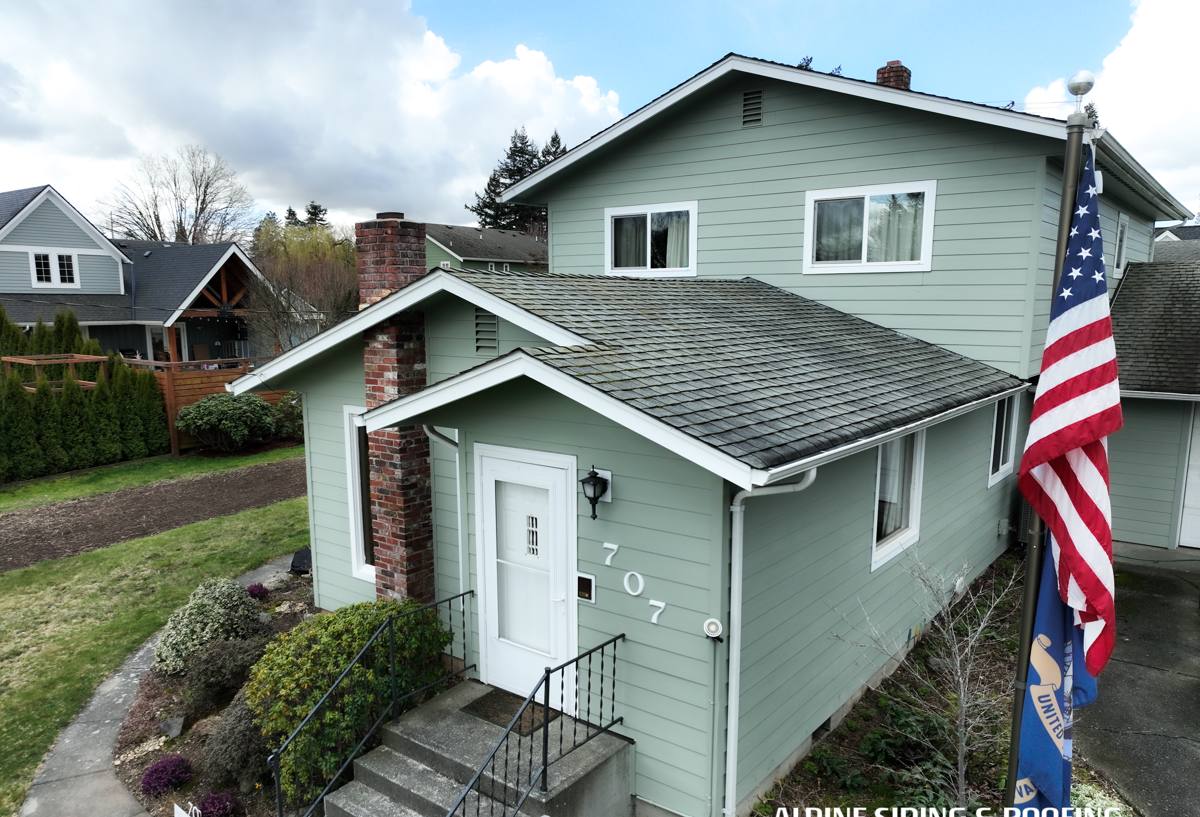
Warning Signs You Can Spot From the Ground
Most homeowners never get up on the roof, and they don't need to. A walk around the exterior and a look with binoculars will tell you most of what matters.
- Shingles curling at the edges or cupping in the middle
- Bald patches where granules have worn away, exposing the black asphalt mat
- Granules collecting in gutters or piled at the base of downspouts
- Shingles that are cracked, split, or missing outright
- Heavy moss or dark algae streaking across whole sections, not just a shaded corner
- Flashing around chimneys, vents, or skylights that looks rusted, lifted, or caulked over repeatedly
- Sagging along the roofline or in valleys instead of a straight, even plane
Any single item on that list might mean a targeted repair is enough. Several of them together, especially on a roof already near the end of its expected lifespan, usually mean it's time to start planning for a full replacement instead of another round of patching.
Signs Inside the Attic
The attic tells the truth before the shingles do, because water finds its way to the underside of the roof deck before it ever shows up as a stain on a ceiling.
What to Check
On a dry day, look for daylight coming through the roof boards, dark water staining on the underside of the decking or rafters, soft or spongy sheathing when pressed on, and any musty smell that points to trapped moisture. Rust on the tips of nails poking through the deck is another tell — it means moisture has been sitting up there longer than it should.
Why It Matters More Here
Wind-driven rain off the bay can push water sideways under shingles and along flashing details that would stay dry in a calmer climate. That's why an attic check matters as much as the view from the curb — a roof can look fine from the driveway and still be letting moisture into the deck along its edges and valleys.
How Long Should a Roof Actually Last?
Manufacturer lifespan ratings assume ideal installation in a moderate climate. Coastal Whatcom County conditions — salt air, sustained moss growth, and a long wet season — tend to shorten the practical end of those ranges, especially on a roof that hasn't been kept clear of debris.
| Roofing Material | Typical Lifespan (National) | Realistic Lifespan Near Birch Bay |
|---|---|---|
| 3-tab asphalt shingles | 15-20 years | 12-18 years |
| Architectural (laminate) asphalt shingles | 25-30 years | 20-25 years |
| Wood shake | 25-30 years | 15-20 years with regular maintenance |
| Standing seam metal | 40-60 years | 35-50 years with proper fastener and flashing detailing |
| Composite/synthetic shingle | 30-50 years | 25-40 years |
These are general ranges, not guarantees. Actual lifespan depends on attic ventilation, installation quality, how much sun a slope gets, and how consistently moss and debris get cleared off. A neglected roof can fail well ahead of these numbers, while a well-maintained one can outlast them.
Salt Air, Moss, and Driving Rain: The Birch Bay Factor
This is the section that matters most for a home on or near the water. Moss doesn't just look bad — it holds moisture directly against the shingle surface for months at a stretch, and its rhizoids work into the granule layer and lift shingle edges as it grows. On a north-facing slope shaded by trees, which describes a lot of roofs around Birch Bay, moss can establish itself within a year or two of a new roof going on and keep coming back every wet season after that.
Salt air adds a second, separate problem. It accelerates corrosion on exposed metal — flashing, fasteners, gutter hangers, vent caps. A fastener that would hold up for decades further inland can start rusting and losing grip years sooner this close to the water. That's why flashing material and fastener selection matter more here than in a lot of other markets, and why a roof that looks structurally sound from the ground can still have quietly failing metal components at the penetrations.
Driving rain rounds out the picture. Storms moving in off the bay don't just fall straight down — they push water sideways and upward under laps and around fasteners that a calmer climate would never test. Underlayment coverage and flashing detail carry more of the actual waterproofing load here than in drier regions, where the shingles themselves do most of the work.
Routine moss removal (never pressure washing, which strips granules and voids most manufacturer warranties) and keeping gutters and valleys clear of needle and leaf buildup are two of the cheapest things a homeowner can do to add years to a roof's life in this climate.
Repair vs. Replace: How to Think Through It
There's no single dollar figure that separates "repair" from "replace." It comes down to a handful of honest questions about the roof's condition and history.
| Factor | Leans Toward Repair | Leans Toward Replacement |
|---|---|---|
| Age of roof | Well under expected lifespan | At or past expected lifespan for the material |
| Extent of damage | Isolated to one area (a valley, a boot, a section) | Spread across multiple slopes or the whole roof |
| Deck condition | Sheathing is solid, dry, and intact | Sheathing is soft, delaminated, or rotted in places |
| Number of past repairs | First or second repair on this roof | Third or later repair, or a recurring leak in the same spot |
| Underlying material | Still available and easy to match for patching | Discontinued profile or color, hard to blend |
| Plans for the home | Selling soon, budget is tight | Staying long-term, want it handled once |
A roof that's eight years old with one damaged valley from a fallen branch is almost always a repair. A roof that's twenty-two years old, has moss embedded across multiple slopes, and has needed two prior leak repairs is a roof telling you it's done — the next leak becomes a matter of when, not if.
What a Correct Roof Replacement Actually Involves
A roof replacement is more than pulling off old shingles and nailing down new ones. In a climate that sees this much wind-driven rain, the details underneath the visible shingle layer matter as much as the shingles themselves.
Tear-Off and Deck Inspection
A full tear-off exposes the deck so any soft, delaminated, or rotted sheathing can be found and replaced before new material goes down. Roofing over an existing layer, where code allows it, hides deck problems instead of fixing them — not something we recommend on a home exposed to this much moisture.
Underlayment
Synthetic underlayment provides the primary water barrier beneath the shingles. In eave areas, valleys, and around penetrations, self-adhered ice-and-water membrane adds a second layer of protection specifically where wind-driven rain is most likely to find a way in.
Flashing
New flashing at every chimney, vent, skylight, and wall intersection — not caulk smeared over old, corroded metal. Given how salt air accelerates corrosion, using corrosion-resistant flashing material at these details is worth the modest added cost.
Ventilation
Balanced intake and exhaust ventilation keeps the attic dry and regulates temperature, which extends shingle life and helps prevent moisture buildup that feeds moss and mildew growth from underneath the roof deck, not just on top of it.
Ridge and Valley Detail
Woven or closed-cut valleys, proper ridge cap installation, and correctly lapped courses all matter more in a climate where water is being pushed sideways by wind rather than falling straight down.
Choosing a Roofing Material for a Birch Bay Home
Architectural asphalt shingles, standing seam metal, and quality composite shingles all perform well here when installed with proper flashing, ventilation, and attention to moss resistance. The material choice matters less than most homeowners assume — installation quality and ongoing maintenance do more to determine how a roof ages in this climate than the brand printed on the shingle wrapper. That said, some general trade-offs are worth knowing going in:
- Architectural asphalt shingles: the most common choice, moderate cost, wide color selection, needs periodic moss maintenance
- Standing seam metal: longest lifespan, sheds moss and debris well due to its smooth surface, higher upfront cost
- Composite/synthetic shingle: strong impact and weather resistance, often mimics shake or slate appearance, mid-to-upper cost range
- Wood shake: traditional look, but the shortest realistic lifespan in a wet, moss-prone coastal climate without diligent upkeep
Vetting a Roofing Contractor
Roofing draws more than its share of storm-chasing outfits that show up after a windstorm, sign a contract quickly, and are gone by the next season. A few basic checks go a long way toward avoiding that.
- Confirm they're licensed and insured in Washington, and ask to see current proof, not just a claim
- Ask how they handle flashing details, not just which shingle brand they carry
- Get manufacturer warranty terms in writing, including what would void it
- Ask whether decking replacement is part of the base bid or an add-on surprise once the tear-off starts
- Check whether they're an established, local business with a permanent address, not just a phone number
- Get a written scope of work, not just a one-line price
A roof replacement is one of the largest single investments a homeowner makes in a house, and it's also one of the least visible once the job is finished — which is exactly why the installation details matter more than the sales pitch.
Getting a Straight Answer About Your Roof
If you're seeing some of these signs on a home in or around Birch Bay and aren't sure whether you're looking at a repair or the start of a full replacement, an in-person look tells you more than any checklist can. We offer free, no-pressure estimates for homeowners throughout Whatcom County, including an honest read on whether it's time to replace or whether a targeted repair will genuinely hold. Use the form below to get started.