 Birch Bay Roofing
 Roofing and Exteriors in Birch Bay Village
Birch Bay Village sits close enough to the water that homes here live with conditions most inland Whatcom County neighborhoods never have to think about. Salt-laden air off the bay, wind-driven rain that comes in sideways during winter storms, and a moss season that can stretch from October through April all put steady, cumulative stress on roofs, siding, windows, and decks. None of it is dramatic on any given day. It's the years of exposure that catch homeowners off guard when a roof that "looked fine" turns out to have soft decking underneath, or siding that seemed intact is actually holding moisture behind the surface.
We work on homes throughout Birch Bay and the surrounding Whatcom County coastline, and Birch Bay Village has its own particular mix of exposure, age of housing stock, and coastal microclimate that shapes how we approach a roof or exterior project here versus somewhere further inland.
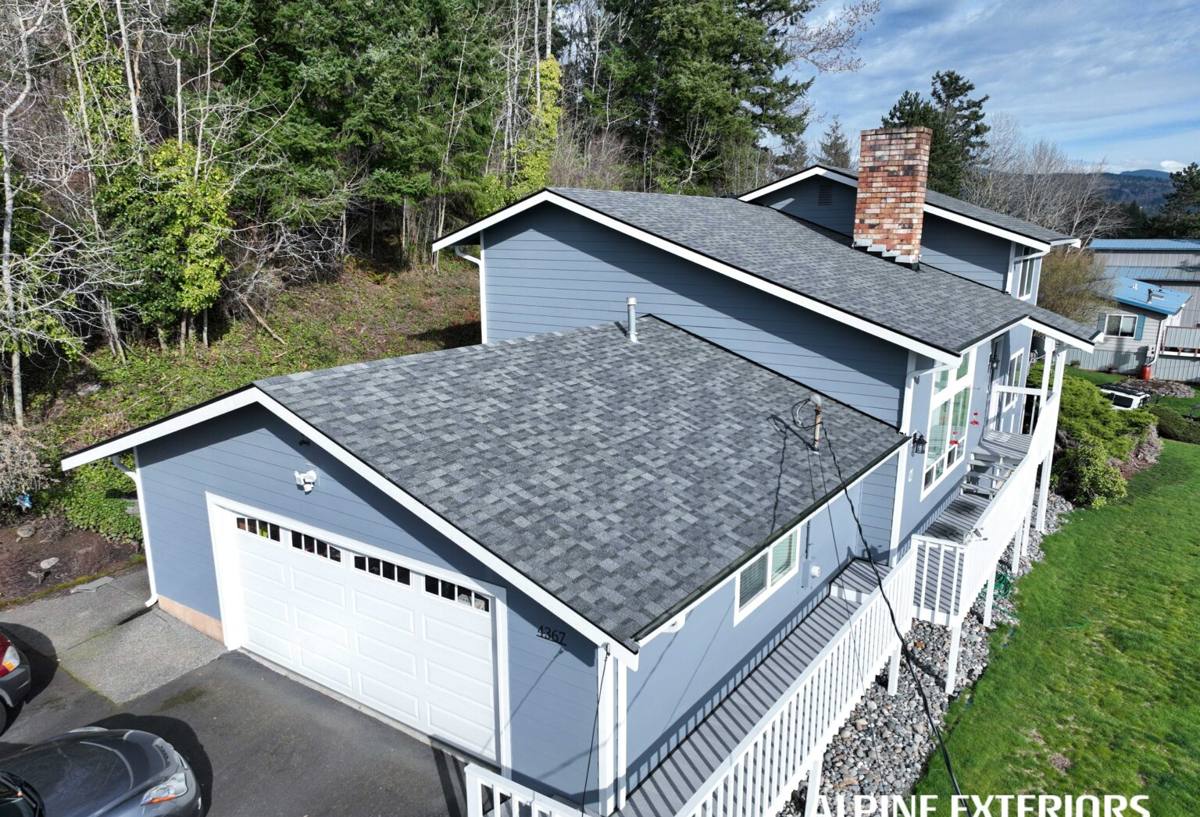
What the Coastal Climate Does to a Roof
Salt air and metal components
Salt in the air accelerates corrosion on anything metal — flashing, fasteners, gutter hardware, and exposed nail heads. Standard fasteners that hold up fine twenty miles inland can start rusting and staining a roof within a few years this close to the water. It's one of the reasons material and fastener selection matters more here than in a lot of other parts of the county.
Driving rain and wind exposure
Birch Bay's winter storms don't just drop rain straight down — wind pushes it sideways and up under laps, flashing, and trim that would shed water fine in a calmer climate. This is where installation detail matters as much as the material itself. Underlayment quality, flashing laps, and how transitions are sealed all determine whether a roof stays dry in a real coastal blow, not just a normal rain shower.
The long moss season
Shaded, north-facing, and tree-covered roof sections in Birch Bay Village hold moisture longer than open, sun-exposed areas, and moss takes hold in those spots first. Left unchecked, moss lifts shingle edges, holds water against the roof surface, and shortens the life of the roofing material well before it would otherwise need replacing. Regular moss management is genuinely one of the highest-value, lowest-cost things a homeowner here can do.
Roof Replacement and Repair Considerations
When we're asked to look at a roof in Birch Bay Village, we're checking for a specific set of issues that show up more here than elsewhere: corrosion at flashing and fastener points, moss growth patterns tied to shade and slope, soft or delaminating decking under areas that have held moisture for a while, and gutter systems that are undersized or clogged for the volume of rain this area gets in winter.
Material choices for coastal exposure
Asphalt shingle roofing remains a solid, cost-effective choice for most Birch Bay Village homes when it's specified with corrosion-resistant fasteners and properly detailed flashing. Metal roofing can perform very well here too, but only with coatings and fastener systems rated for coastal salt exposure — standard metal roofing components without that spec will corrode faster near the bay than they would inland. We walk homeowners through these trade-offs honestly rather than defaulting to whatever's easiest to install.
Ventilation matters more near the water
Proper attic ventilation keeps moisture from condensing inside the roof assembly, which is especially important in a climate with this much ambient humidity and rainfall. A roof can be replaced with quality materials and still underperform if the ventilation underneath it isn't sized and balanced correctly.
Siding That Holds Up to Salt Air
Siding on the water-facing and prevailing-wind sides of a Birch Bay Village home takes the brunt of salt spray and driving rain. Over time, that combination can degrade paint finishes, cause premature fading, and — if water gets behind the siding through failed caulking or damaged panels — lead to rot and moisture damage in the wall assembly that isn't visible from outside.
What we look for
- Caulking and sealant condition around windows, doors, and siding seams — this is usually the first thing to fail
- Panel or lap damage that lets wind-driven rain behind the siding rather than off of it
- Signs of moisture trapped behind siding: soft spots, discoloration, or a hollow sound when tapped
- Corrosion on any metal trim, flashing, or fasteners integrated into the siding system
- Areas shaded by trees or neighboring structures where moss and mildew take hold first
Fiber cement and quality vinyl siding both perform well in this environment when installed with attention to sealing and flashing details at every penetration and transition. The material matters less than the installation quality when it comes to keeping water out over the long run.
Windows: Sealing Out Wind-Driven Rain
Windows are one of the most common sources of water intrusion complaints we hear about in coastal Whatcom County homes, and it's rarely the window unit itself that's failed — it's usually the flashing and sealant around it. Wind-driven rain finds any gap in the weather barrier around a window frame, and in a spot like Birch Bay Village that gets more of that sideways rain than inland areas, those gaps show up as leaks faster.
Replacement windows for this climate
When we replace windows here, proper flashing integration with the surrounding wall assembly is as important as the window's energy rating. A well-sealed, correctly flashed window keeps water out through decades of coastal storms; a poorly flashed installation can leak within a season or two no matter how good the window itself is.
Decks: Built for Moisture, Not Just Sun
Decks in Birch Bay Village deal with a lot of standing moisture exposure — rain, condensation, and in shaded yards, extended damp periods that never fully dry between storms. That combination is hard on both wood and composite decking if the structure underneath isn't built and maintained with drainage in mind.
Common issues we see
Ledger board attachment points and any spot where the deck meets the house are the most moisture-vulnerable areas, since that's where water tends to collect and linger. Fastener corrosion is also more of a factor here than inland, so hardware rated for coastal or wet-use conditions makes a real difference in how long a deck's structural connections last.
Comparing Material Considerations for Coastal Exposure
| Component | Coastal Consideration | What Matters Most |
|---|---|---|
| Roof fasteners/flashing | Salt-air corrosion | Corrosion-resistant hardware, quality flashing details |
| Asphalt shingle roofing | Moss growth on shaded sections | Regular moss removal, proper ventilation |
| Metal roofing | Corrosion without proper coating | Coastal-rated coatings and fasteners |
| Siding | Wind-driven rain intrusion | Sealant integrity, flashing at penetrations |
| Windows | Leaks at frame/wall transition | Correct flashing integration during install |
| Deck hardware | Corrosion, moisture at ledger board | Wet-use rated fasteners, drainage detailing |
Why a Local Crew Matters in Birch Bay Village
Exterior work in this part of Whatcom County isn't one-size-fits-all. A crew that mostly works inland may not think twice about standard fasteners or skip the extra flashing detail that a coastal property actually needs — not out of carelessness, but because it simply isn't a habit built from working this stretch of coastline regularly. Knowing which slopes hold moss the longest, which exposures take the worst of the winter wind, and how quickly salt air degrades unprotected metal is the kind of thing that comes from doing this work in Birch Bay and along the bay specifically, season after season.
We also know the practical side of working here: permitting through Whatcom County, scheduling around the wetter months so work isn't rushed into a storm window, and being upfront when a repair makes more sense than a full replacement, or vice versa.
A Simple Maintenance Checklist for Coastal Homes
- Clear moss from shaded and north-facing roof sections at least once a year, more often under heavy tree cover
- Check and clean gutters before the fall rains start, and again mid-winter if the property has significant tree coverage
- Inspect caulking and sealant around windows and siding seams annually — this is usually the first line of defense to fail
- Look for rust staining at flashing, fasteners, or metal trim, which signals corrosion starting to take hold
- Check deck ledger boards and hardware for corrosion or moisture damage where the deck meets the house
- Address small leaks or soft spots promptly — in this climate, minor issues left alone tend to become bigger ones by the next wet season
Getting Started
If you own a home in Birch Bay Village and you're noticing moss buildup, staining around flashing or trim, a window that's letting in moisture, or a deck that feels soft in spots, it's worth having someone take an honest look before the next wet season makes the problem worse. We offer free, no-pressure estimates for roofing, siding, windows, and decks — use the form below to get in touch and we'll walk the property with you.