 Birch Bay Roofing
 Board & Batten Siding, Built for Where Birch Bay Village Actually Sits
Birch Bay Village homes sit close enough to the water that the weather off the Strait of Georgia and Semiahmoo Bay is part of daily life, not an occasional event. Salt-laden air, wind-driven rain that hits siding sideways instead of straight down, and a moss season that can run eight or nine months out of the year all put real, cumulative stress on exterior materials. Board and batten siding — with its strong vertical lines, deep shadow reveals, and clean modern-farmhouse look — is one of the most requested siding styles in this part of Whatcom County. But the style is only half the story. What actually determines whether a board and batten job holds up here is the material underneath the look and how it's fastened, flashed, and ventilated behind the boards.
This page is specifically about board and batten siding installed on homes in Birch Bay Village. We're not going to give you a generic national rundown of the style — we're going to walk through what this exact siding profile needs to survive this exact stretch of coastline, and what our crew does differently because we already work in this neighborhood.
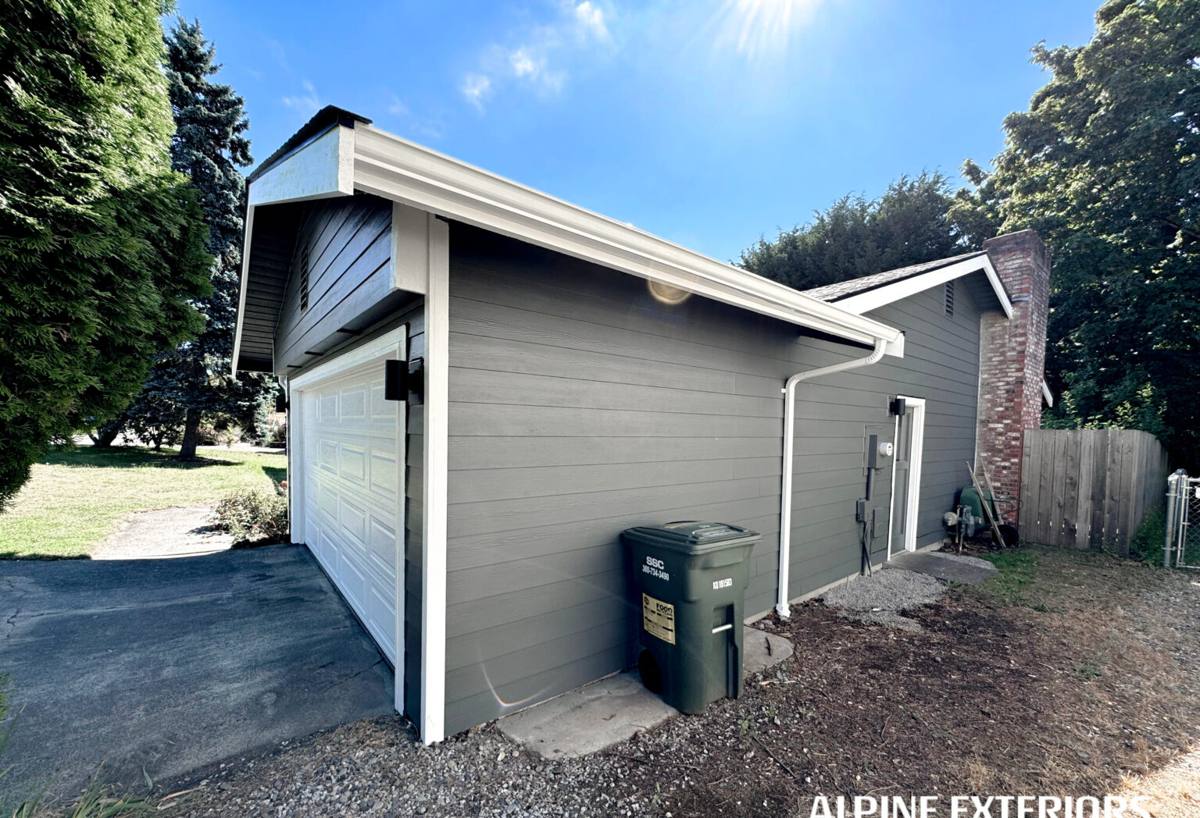
Why Board & Batten Is Popular Here — and Why It's Unforgiving
Board and batten works well on Birch Bay homes because the vertical lines read cleanly against the low, wide silhouettes common on the waterfront and in the surrounding wooded lots. It also pairs naturally with the mix of traditional and modern-farmhouse remodels that have become common in the area over the past several years.
The trade-off is that board and batten is less forgiving of poor installation than lap siding. The design relies on wide flat boards with narrow battens covering the seams — every one of those seams, every board end, and every batten fastening point is a potential water entry path if it isn't detailed correctly. On a home a few miles inland, a marginal installation might last for years before problems show up. On a home exposed to salt air and driving rain in Birch Bay Village, the same marginal installation shows its weaknesses much faster — swelling seams, streaking, fastener corrosion, and moss establishing itself in any spot that stays damp.
What the Local Climate Actually Does to This Siding Style
- Salt air accelerates corrosion on fasteners, flashing, and any exposed metal trim — cheap or improperly coated fasteners fail years before the siding itself would.
- Driving rain off the water gets pushed sideways and upward under eaves and around windows, which is exactly where board and batten seams and batten strips are most vulnerable if caulk is doing the work that flashing should be doing.
- Long moss season means anything that traps moisture — tight-to-the-wall installation, poor drainage at the base, boards installed without a rainscreen gap — becomes a growth surface within a season or two, not years.
- Shade from tree cover on many Birch Bay Village lots slows drying time after every rain event, compounding all of the above.
Why We Only Install James Hardie Fiber Cement — Not Vinyl, LP, or Cedar
We get asked regularly about board and batten in vinyl, LP SmartSide, or cedar. We don't install any of them, and it's worth explaining why in the context of this specific siding style and this specific location — not as a knock on those products in general, but as an honest account of the trade-offs we're no longer willing to build into a home here.
Vinyl Board & Batten
Vinyl board and batten panels are lightweight and inexpensive, and in drier, more sheltered climates they can perform adequately. In a driving-rain, salt-air environment, vinyl's expansion and contraction with temperature swings tends to open gaps at the panel laps faster, and the material itself can become brittle over time from UV and salt exposure. It's also difficult to repair a single damaged section without the patch being visible, since matching faded vinyl years later is rarely exact.
LP SmartSide (Engineered Wood)
LP SmartSide is a legitimate engineered-wood product with a real factory treatment, but it is still wood at its core. Wood-based siding depends heavily on caulking, flashing, and edge-sealing being done exactly right and maintained over time — any breach at a cut edge or fastener hole lets moisture into the substrate. In a climate with this much sustained dampness and moss pressure, that maintenance burden is significant, and a missed touch-up can turn into swelling or delamination faster than in a dry climate.
Cedar Board & Batten
Cedar is a beautiful traditional choice for this style, and it holds up reasonably well to moisture on its own — but it needs re-staining or re-sealing on a real schedule, it's a combustible material, and in a moss-prone environment like Birch Bay, unsealed or under-maintained cedar becomes a moss and mildew surface quickly. It's also one of the more expensive board and batten options once you factor in ongoing upkeep.
Why James Hardie
James Hardie fiber cement is what we put on homes instead, because it solves the specific problems above: it's non-combustible, it doesn't expand and contract the way vinyl does, it doesn't rot or delaminate the way wood-based products can, and its ColorPlus factory finish is baked on with a UV-cured process designed to hold color and resist the kind of streaking and fading that salt air causes on painted surfaces. Hardie's HZ5 product line in particular is engineered for cold, wet, high-moisture climates like this one. It costs more up front than vinyl and is a heavier, more labor-intensive material to install correctly — but for a Birch Bay Village home facing decades of salt air and rain, it's the material we're willing to warranty and stand behind.
What a Correct Board & Batten Installation Involves
The look of board and batten is simple. The installation that makes it last is not. Here's what we consider non-negotiable on every board and batten job we do in this area:
| Installation Element | Why It Matters Here |
|---|---|
| Rainscreen / drainage gap behind boards | Lets any moisture that gets past the siding drain and dry out instead of sitting against the wall — critical given the long moss season |
| Corrosion-resistant fasteners | Salt air corrodes standard fasteners over time, leading to rust streaking and eventual fastener failure |
| Proper flashing at windows, doors, and penetrations | These are the highest-risk points for wind-driven rain intrusion on a vertical siding profile |
| Correct board and batten spacing/fastening per manufacturer spec | Fiber cement expands and contracts slightly with moisture — spec fastening prevents cracking and buckling |
| Factory-primed or ColorPlus-finished cut edges sealed on site | Any exposed raw edge is a moisture entry point, especially with sustained coastal humidity |
| Base clearance off grade, decks, and hardscape | Keeps the bottom course from sitting in standing moisture or splashback, a common moss-starting point |
Our Process on a Birch Bay Village Home
Because we already work this neighborhood regularly, our process here isn't a generic one-size-fits-all routine — it's shaped by what we've seen work and fail on homes in this exact microclimate.
- Site walk and exposure assessment — we look at how much direct weather and salt exposure your specific lot gets, tree cover and shade, drainage around the foundation, and the condition of whatever siding is currently there.
- Substrate check — before any new siding goes up, we confirm the sheathing and water-resistive barrier underneath are sound. Board and batten installed over hidden rot or a failed barrier just repeats the same problem under a new surface.
- Rainscreen and flashing plan — we detail drainage and flashing specific to your home's window and door locations, roof lines, and any deck or porch intersections before a single board goes up.
- Installation to Hardie's HZ5 spec — fastening, spacing, and sealing done to the manufacturer's climate-specific installation requirements, not shortcuts that pass a casual inspection but fail in five years.
- Final walkthrough — we go over the finished job with you, including what routine care (if any) is actually needed versus what's simply cosmetic preference.
Cost Factors for Board & Batten Siding
Every home is different, and we don't quote pricing without seeing the actual scope, but the main factors that move the cost on a board and batten project in this area are consistent:
| Factor | Why It Affects Cost |
|---|---|
| Home size and wall height | More square footage and taller walls mean more material and labor |
| Existing siding removal | Tear-off and disposal of old vinyl, wood, or damaged siding adds labor |
| Substrate repair needs | Rot or water damage found during tear-off must be fixed before new siding goes on |
| Trim and detail complexity | Homes with more windows, dormers, or architectural detail take longer to flash and finish correctly |
| Rainscreen system | A proper drainage gap adds material and install time but is essential in this climate |
Maintenance in a Salt Air, High-Moss Environment
Even with the right material and installation, board and batten siding in Birch Bay Village benefits from basic seasonal attention. Here's the practical checklist we give homeowners:
- Rinse salt residue off siding surfaces once or twice a year, especially on sides facing the water
- Keep gutters clear so overflow doesn't run down and pool against siding seams
- Trim back tree branches and shrubs holding moisture and shade against the wall
- Check caulking at window and door trim annually and have any gaps addressed early
- Watch for moss establishing at the base course or in shaded corners and remove it before it spreads
- Have fastener heads and flashing points inspected every few years for early signs of corrosion
Why Hiring a Crew That Already Works Birch Bay Village Matters
Board and batten siding installed to spec on paper can still underperform if the crew doesn't understand how the specific wind, rain, and moisture patterns of a location actually behave against a wall. A crew that already works in Birch Bay Village has seen which sides of homes take the worst of the driving rain, which lots hold shade and moisture longest, and which details — flashing returns, base clearances, rainscreen gaps — matter most given what this stretch of Whatcom County coastline does to a house year after year. That local pattern recognition is difficult to replicate from a general specification sheet alone, and it's the difference between a board and batten job that looks right on install day and one that still looks and performs right a decade later.
If you're considering board and batten siding for your Birch Bay Village home, we're happy to walk your property, look at your current siding's condition, and talk through what a correct James Hardie installation would involve for your specific home — no pressure, no obligation. Use the form below to request a free estimate.