 Birch Bay Roofing
 Building a Deck for Sandy Point's Marine Climate
Sandy Point sits right up against the water in Birch Bay, and that location shapes every deck we build there. Homes here take a steadier dose of salt-laden air than properties even a few miles inland, and that air works on wood, metal, and finish coatings year-round, not just during storm season. Add Whatcom County's long stretch of driving rain and the moss that takes hold anywhere shade and moisture linger, and you have a climate that will find every weak point in a deck within a few seasons if the build wasn't planned for it. A deck that looks the same as one built in a dry inland neighborhood often isn't built the same underneath, and in Sandy Point that difference shows up fast.
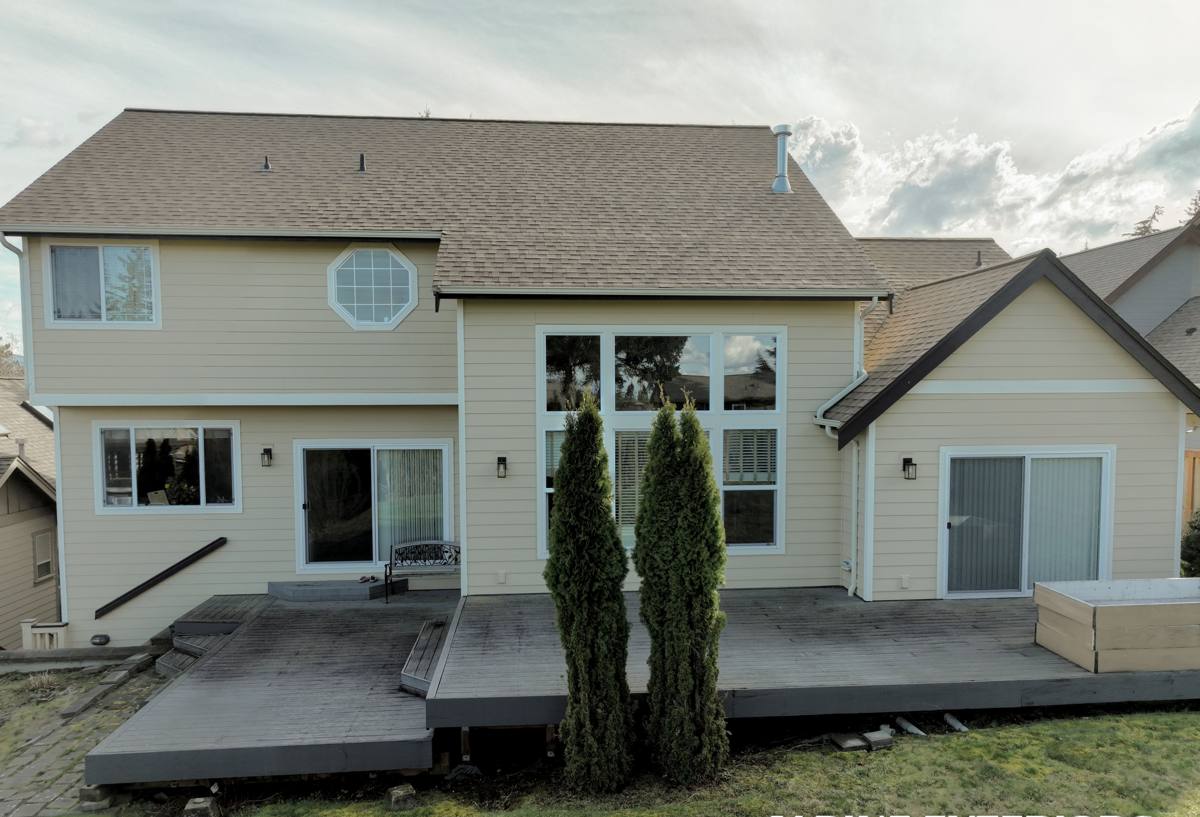
What the Marine Environment Does to an Unprotected Deck
Salt Air and Corrosion
Airborne salt settles on every exposed surface, including the fasteners, brackets, and connectors holding a deck together. Standard coated screws and nails that would last for years inland can start rusting within a season or two this close to the bay. Once corrosion starts on a fastener embedded in wood, it weakens the connection from the inside where you can't see it, long before there's any visible sign at the surface.
Driving Rain and Trapped Moisture
Wind-driven rain off the bay doesn't just fall on a deck, it gets pushed sideways into ledger connections, under railings, and into any gap where flashing or fasteners weren't detailed correctly. Water that gets behind a ledger board or pools on a joist without a way to drain leads to rot in framing lumber that's supposed to be structural, and that kind of damage is often hidden under decking boards until it's advanced.
Moss, Algae, and Slick Surfaces
Whatcom County's wet, mild winters give moss and algae months to establish themselves on any decking surface that stays damp and shaded. Beyond the cosmetic issue, a mossy deck surface is a real slip hazard, and moss holds moisture against the board itself, which accelerates wear on wood decking and can void warranties on some composite products if it's left to build up.
Choosing Decking Material for a Sandy Point Property
There's no single "best" decking material for every Sandy Point home — the right choice depends on how much sun and shade the deck gets, how close it sits to the water, and how much upkeep the homeowner actually wants to do. Here's how the common options compare in this specific climate:
| Material | Upfront Cost | Moisture & Salt Resistance | Maintenance |
|---|---|---|---|
| Pressure-treated lumber | Lowest | Good if properly sealed and re-coated | Annual cleaning, periodic sealing |
| Cedar | Moderate | Naturally decay-resistant, but softens over time near salt air | Regular cleaning and re-staining to hold color |
| Composite decking | Higher | Very good; won't rot, resists moss buildup better than wood | Periodic washing, no staining or sealing |
| Tropical hardwood (e.g. ipe) | Highest | Excellent density and rot resistance | Occasional oiling to maintain color; low structural upkeep |
For most Sandy Point homes we end up recommending composite decking or a dense hardwood for the field of the deck, simply because both hold up to the freeze-thaw-and-wet cycle without the recoating schedule that cedar and pressure-treated lumber need to stay ahead of moss. That said, plenty of homeowners prefer the look and feel of real wood, and we'll build a solid cedar or PT deck too — it just comes with a clearer conversation up front about the maintenance commitment.
Framing, Fasteners, and the Hardware You Don't See
The decking boards get all the attention, but the framing and hardware underneath are what actually determine how long a Sandy Point deck lasts. Our standard for anything built this close to the water is stainless steel or hot-dip galvanized fasteners and structural connectors — not the standard coated hardware that's fine for a drier inland job but starts corroding here within a few years. We also pay close attention to ledger board flashing where the deck ties into the house, since that's the single most common point of hidden water damage on any deck, coastal or not. Joist tape over the tops of framing members, proper gaps between decking boards for drainage and airflow, and footings set below frost depth on undisturbed soil round out a framing package built to actually handle the exposure instead of just meeting the minimum code requirement.
Railings, Elevation, and Waterfront Views
A lot of Sandy Point properties are built to take advantage of a bay view, which often means a raised deck, a walkout from an upper level, or a design that keeps sightlines open. That changes the engineering: taller decks need guardrails at proper code height, stronger post connections to resist wind load off the water, and stair and landing details that meet current building code. For railings, we steer clients toward stainless cable rail or powder-coated aluminum in this location rather than uncoated steel, because standard steel railing components are exactly the kind of hardware that salt air attacks first. Wood railings are also an option and can look great, but they carry the same maintenance conversation as wood decking — regular refinishing to keep them from graying and cracking in the wind and rain.
Permits and Whatcom County Requirements
Most new decks and significant deck rebuilds in unincorporated Whatcom County need a building permit, and elevated decks or those attached to the primary structure almost always require one regardless of size. Waterfront and near-waterfront properties, which describes a lot of Sandy Point, can also fall under state and county shoreline regulations depending on how close the structure is to the water and the bluff or bank. We handle the permit application and plan submission as part of our process, and if your lot has any shoreline setback questions, we'll flag that early rather than after materials are ordered. Getting this step right up front avoids the much more expensive problem of a deck that has to be modified or torn out after the fact.
Our Process, From First Visit to Final Walkthrough
Every custom deck we build in Sandy Point follows the same basic sequence, adjusted for the specifics of your lot and home:
- On-site visit to assess sun and wind exposure, existing structure condition, and access for equipment and materials.
- Design conversation covering layout, material selection, railing style, and how the deck ties into your home's existing elevation and entry points.
- Written estimate with material and labor broken out, so you know exactly what you're paying for.
- Permit preparation and submission to Whatcom County, including any shoreline review if applicable.
- Demolition of the old deck, if replacing one, with attention to what's found in the framing underneath before we build over it.
- Framing, flashing, and fastener installation using corrosion-resistant hardware throughout.
- Decking, railing, and stair installation, followed by a final walkthrough to review the finished work with you.
Keeping a New Deck Ahead of Moss Season
A well-built deck still needs some seasonal attention in a climate like this, but the workload is manageable if you stay ahead of it rather than catching up after moss has already taken hold. A few habits go a long way:
- Sweep leaves, needles, and debris off the deck surface regularly, especially in shaded corners where moisture lingers longest.
- Rinse or gently pressure-wash the surface before moss gets a chance to establish, typically once in fall and once in late winter.
- Check that gaps between boards stay clear so water can drain instead of pooling.
- Inspect railings and stair connections once a year for any looseness, which can be an early sign of fastener corrosion.
- Reapply sealer or stain on wood decking and railings on the schedule the product calls for — don't wait until it's visibly gray or worn.
- Trim back overhanging vegetation that keeps sections of the deck shaded and damp longer than necessary.
Why Hire a Crew That Already Works Sandy Point
Building a deck that holds up here isn't about using fancier materials across the board — it's about knowing which decisions actually matter in this specific environment and which ones don't. A crew that hasn't worked much on the Birch Bay waterfront may not think twice about standard fastener hardware or a stock railing system, because in most of the country those choices work fine. In Sandy Point, they're often the first thing to fail. We've built and repaired enough decks along this stretch of Whatcom County to know where water actually gets in, which materials are worth the extra cost here, and what the permit process looks like for waterfront and near-waterfront lots. That local experience shows up in fewer callbacks and a deck that's still solid well past the point where a poorly detailed one would already need repairs.
If you're planning a new deck or replacing one that's showing its age, we're happy to take a look and walk you through your options. Use the form below to request a free, no-pressure estimate for your Sandy Point property.