 Birch Bay Roofing
 A Cottonwood Beach Neighborhood Built Close to the Water
Cottonwood Beach sits in the Birch Bay area of Whatcom County, close enough to the water that homes here deal with a different set of conditions than houses further inland. Salt-laden air off the bay, wind that has nothing to slow it down before it hits a roofline, and a tree canopy that keeps everything shaded and damp for much of the year — these are the everyday realities for anyone who owns a home in this part of the county. Some homes here are full-time residences, others are weekend or seasonal properties, but the exterior of the house takes the same beating either way, whether anyone is watching it happen or not.
We work in Birch Bay and the surrounding Whatcom County communities regularly, and Cottonwood Beach comes with its own particular mix of exposure: coastal wind and moisture on one side, heavy tree cover and shade on the other. A roof, siding system, or set of windows that would hold up fine in a drier, more open part of the state doesn't always perform the same way a few hundred yards from saltwater.
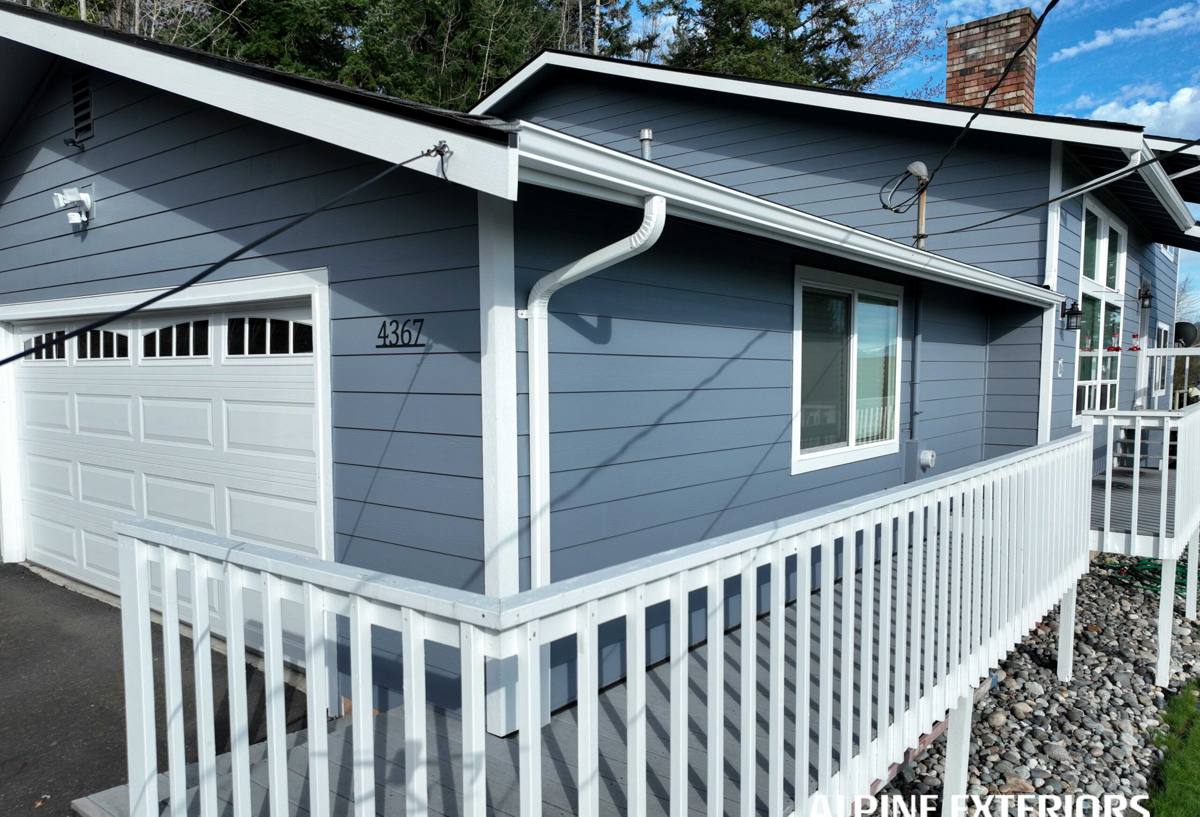
What Salt Air and Marine Exposure Do to a Roof and Exterior
Salt air doesn't just smell different — it behaves differently on building materials. Airborne salt accelerates corrosion on exposed metal fasteners, flashing, and hardware, and it can degrade certain finishes faster than a manufacturer's standard lifespan estimate assumes. This matters most at the details: nail heads, flashing seams, gutter hangers, and any exposed metal trim. It's also a factor in choosing which products we recommend for a given home, since not every roofing or siding line is rated the same way for direct coastal exposure.
Wind is the other half of that equation. Homes closer to the water tend to see stronger, more consistent gusts than homes set back in the trees, and wind-driven rain finds its way into gaps that would stay dry in a straight-down rainstorm. That's why flashing detail, underlayment quality, and proper fastening patterns matter more here than the shingle brand printed on the wrapper.
Where We See the Damage First
- Corroded or loosening fasteners around flashing, vents, and ridge caps
- Gutter and downspout hardware rusting faster than the rest of the roof system
- Wind-lifted shingle tabs or siding panels along gable ends and roof edges
- Premature fading or chalking on south- and west-facing exterior surfaces
- Soft or discolored trim boards where wind-driven rain collects
Moss, Shade, and the Long Whatcom County Wet Season
Whatcom County's roofing season isn't really a season at all — it's most of the year. Heavy tree cover around Birch Bay and Cottonwood Beach keeps roofs shaded and slow to dry out after rain, and that combination of moisture and shade is exactly what moss needs to take hold. Once moss establishes itself on a roof, it holds water against the surface far longer than the shingle or panel was ever designed to tolerate, and it works its way under tabs and seams over time.
The damage moss causes is rarely dramatic — it's slow and cumulative. Granule loss, soft decking under a moss mat, and staining that spreads across a roof face are all signs of long-term moisture retention rather than a single storm event. Regular moss treatment and mechanical removal (not just spraying and walking away) is one of the more cost-effective things a homeowner in this area can do to extend a roof's usable life.
Moss Management We Recommend
Zinc or copper control strips near the ridge help suppress regrowth over time, but they work best paired with periodic manual removal rather than as a stand-alone fix. We treat this as ongoing maintenance, not a one-time repair — a roof under heavy tree cover in this area will need attention on a recurring schedule, and we're upfront about that from the first estimate.
Roofing Materials: What We Install and Why
We install a range of roofing systems, and the right choice depends on the home's exposure, roof pitch, budget, and how much ongoing maintenance the owner wants to take on. We're selective about certain products in coastal, high-moisture settings — not because a given material is bad, but because some systems demand more precise installation and more consistent maintenance to perform well near saltwater and under tree cover, and we'd rather set that expectation up front than have a homeowner discover it years later.
| Roofing Option | Typical Lifespan | Maintenance Needs | Coastal/Moss Considerations |
|---|---|---|---|
| Architectural asphalt shingle | 25-30 years | Low to moderate | Good moss resistance with treated or algae-resistant granules; solid value for most homes |
| Standing seam metal | 40-50+ years | Low | Sheds moisture and moss well; fastener and finish quality matters more near salt air |
| Cedar shake | 20-30 years with upkeep | High | Attractive but moisture-sensitive; needs disciplined maintenance under tree cover |
| Composite/synthetic shake | 30-50 years | Low to moderate | Mimics cedar appearance with better moisture tolerance in shaded, damp settings |
For most Cottonwood Beach homes, we lean toward architectural asphalt or metal roofing as the practical middle ground between upfront cost, longevity, and how much maintenance the homeowner actually wants to keep up with. That's a recommendation based on performance and maintenance burden, not a knock on any manufacturer's product.
Siding: The Other Line of Defense Against Salt and Rain
A roof gets most of the attention, but siding is doing just as much work keeping wind-driven rain and salt air out of the wall assembly. In this area we see the most wear on siding at inside corners, around window and door trim, and along the lower courses closest to grade, where splashback and standing moisture are most persistent.
Fiber cement siding has become a strong option for homes in coastal Whatcom County settings because it holds paint well, resists moisture-driven warping, and doesn't feed moss and mildew the way some wood products can under constant shade. Vinyl siding remains a lower-maintenance, lower-cost option that performs adequately in many settings, though it's more sensitive to impact and UV fading over long-term coastal sun exposure on southern and western exposures. We'll walk through the real trade-offs for the specific home rather than pushing one product across every job.
Windows: Where Salt Air and Wind Pressure Show Up First
Windows on homes closer to the water tend to show their age faster than windows a mile or two inland. Seal failure, fogging between panes, and hardware corrosion are common complaints we hear, and they're almost always tied to a combination of wind pressure cycling the frame and salt air working on any exposed metal components. Proper flashing and sealing at installation matters more here than in a typical inland replacement job, since a poorly flashed window is an open invitation for wind-driven rain.
When we replace windows in this area, we pay particular attention to head flashing and the water management path behind the trim — not just the window unit itself. A high-quality window installed with poor flashing detail will still leak; a modest window installed correctly will usually outperform it.
Decks: Built to Handle Beach-Adjacent Exposure
Decks near Cottonwood Beach face their own combination of stressors — salt air on fasteners and hardware, near-constant dampness from shade and marine humidity, and, for elevated or waterside decks, direct wind exposure. Composite decking has become popular here because it resists moisture absorption and doesn't require the same repainting or sealing cycle that wood decking does, though it still needs a properly ventilated substructure to perform well over time. Pressure-treated wood decking remains a solid, lower-cost option when it's built with adequate drainage and finished with a maintenance schedule the homeowner is actually willing to keep up with.
Fastener choice matters more on a deck near the water than almost anywhere else on the house — stainless or coated fasteners rated for coastal exposure are worth the modest upcharge over standard hardware that will start showing corrosion within a few seasons.
Why a Local Crew Matters for a Community Like This
Cottonwood Beach isn't a large market, and it doesn't get the same attention from larger regional contractors that bigger Whatcom County towns do. That's part of why a crew that actually works this stretch of coastline regularly makes a difference — we've seen how roofs, siding, and decks in this specific microclimate age over time, not just how a spec sheet says they should perform in ideal conditions. That local knowledge shapes which products we recommend, how we detail flashing and fastening, and how we set maintenance expectations from the start.
Being local also means we're reachable after the project is done. If something needs a second look after the next storm season, we're not a call center routing you to whoever's available — we're the same crew that did the original work.
What to Expect From an Estimate and a Project Here
We keep the estimate process straightforward: a walk-around inspection of the roof, siding, windows, or deck in question, a plain-English explanation of what we find, and a written estimate that lays out material options and honest cost ranges rather than a single locked-in number before we've seen the condition of the structure underneath.
What We Check Before Any Estimate
- Roof surface condition, moss or algae buildup, and granule loss on shingle roofs
- Flashing condition around vents, chimneys, valleys, and roof-to-wall transitions
- Gutter and downspout hardware for corrosion or improper drainage
- Siding condition at corners, trim lines, and lower courses near grade
- Window seals, frames, and flashing for signs of water intrusion
- Deck structure, fastener condition, and drainage beneath the decking surface
If you own a home in Cottonwood Beach and want a straight read on how your roof, siding, windows, or deck are holding up against the salt air and rain this area sees, we're happy to come take a look. The estimate is free, there's no pressure attached to it, and you'll walk away with a clear picture of what's actually going on with your home — just use the form below to get started.