 Birch Bay Roofing
 Why Decks Take Extra Punishment in Cottonwood Beach
Cottonwood Beach sits right up against the water, and that proximity is exactly why decks here age differently than decks a few miles inland. The combination of salt-laden air, near-constant marine moisture, and heavy tree cover in parts of the neighborhood creates conditions that push wood and hardware toward failure faster than most homeowners expect. A deck that might get twenty years of service in a dry inland yard can start showing real structural problems in half that time along this part of Whatcom County's coastline.
Salt Air and Metal Fasteners
Airborne salt doesn't just sit on the surface — it works into the microscopic gaps around nail heads, screw threads, and joist hangers. Once corrosion starts on a fastener, it doesn't stay contained to that one spot. Rust weeps into the surrounding wood fibers, darkening and softening them, which is why we so often find the worst decay clustered right around the metal connectors rather than spread evenly across a deck.
Driving Rain and Trapped Moisture
Storms coming off the water tend to drive rain sideways, which means it gets forced into joints, under railing caps, and behind ledger boards that a straight-down rain would never reach. Combined with our long stretch of overcast, damp months, a lot of deck framing in this area simply never gets a real chance to dry out between weather events. That sustained dampness is the single biggest driver of rot we see in Cottonwood Beach repair calls.
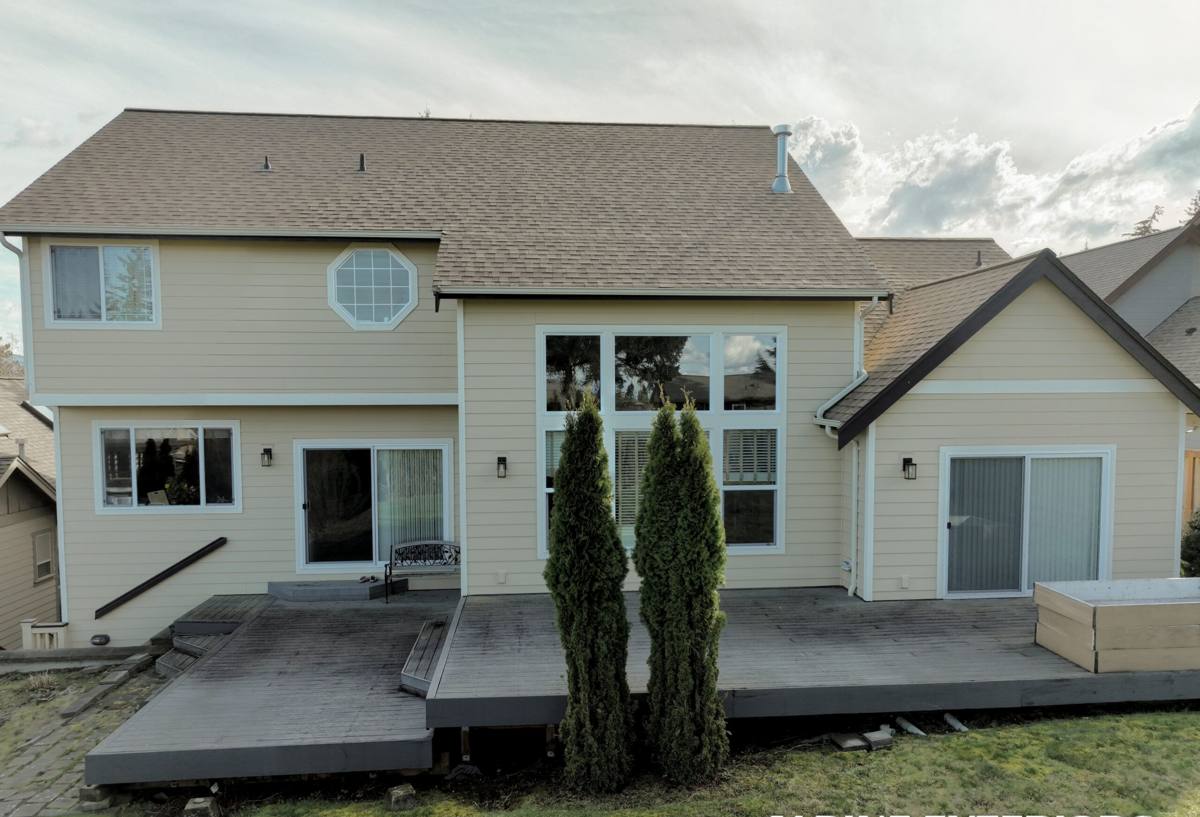
Signs Your Deck Needs Repair, Not a Full Rebuild
Most decks don't fail all at once. They give you warning signs for months or years before a board gives way or a railing goes loose. Catching those signs early is usually the difference between a repair bill and a full replacement bill.
- Boards that feel spongy or flex noticeably underfoot, especially near the house
- Railings or posts that wiggle when pushed, even slightly
- Dark staining or a musty smell around the ledger board where the deck meets the house
- Nails backing out or fastener heads showing rust bleed into the wood
- Gaps opening up between decking boards that weren't there a year or two ago
- Green or black film building up faster each season, especially in shaded corners
- Stairs that feel less solid than they used to, particularly at the stringers
None of these on their own necessarily means the whole structure is compromised. But they're all reasons to get a closer look before the next wet season adds another layer of damage.
What a Proper Deck Repair Actually Involves
A repair that just replaces the boards you can see and leaves everything underneath untouched is a repair that gets redone in a few years. Doing it right means looking at the deck as a system, not a set of surface boards.
Structural Framing First
Before anything cosmetic happens, we check the ledger board connection to the house, the beams, the posts, and the joists. This is the part of the deck holding everything up, and it's also the part most likely to be hiding rot underneath decking that still looks fine from above. Any framing member showing soft spots, checking, or fastener corrosion gets addressed before we touch the walking surface.
Decking Boards and Railings
Once the frame is sound, we deal with the boards and railings people actually notice — cupped or split boards, loose balusters, railing posts that have worked loose from their connections. Railings get particular attention here since a railing failure is a safety issue, not just a cosmetic one.
Fasteners and Flashing
Given how much of the damage we see traces back to fastener corrosion and water intrusion at connection points, we don't just swap a rusted screw for another one of the same kind. Ledger flashing, joist hanger hardware, and fastener specifications all get matched to what actually holds up in a marine environment, not just what's cheapest at the yard.
Matching Repair Materials to What's Already Built
Whether your deck is pressure-treated lumber, cedar, or composite decking changes how a repair should be approached. Mixing materials without understanding how they behave together can create new problems — different expansion rates, different moisture behavior, different maintenance needs.
| Decking Material | Common Coastal Issue | Repair Consideration |
|---|---|---|
| Pressure-treated lumber | Checking, splintering, fastener rust staining | Match treatment grade; re-seal cut ends exposed during repair |
| Cedar | Graying, softening in shaded/damp areas, moss growth | Replace in-kind for appearance; address underlying moisture source |
| Composite | Fastener pull-through, moisture trapped at hidden clips | Use manufacturer-specified clips and spacing; check substructure separately |
| Mixed/older unknown boards | Inconsistent wear, unclear original spec | Identify material before ordering repair stock to avoid mismatched behavior |
This is also where working with a crew familiar with the area helps — knowing which materials have held up on nearby decks facing similar sun, shade, and wind exposure saves you from repeating a mismatch that didn't work the first time.
How We Handle a Deck Repair Job
- On-site assessment. We walk the full deck, check the framing from underneath where accessible, and test suspect boards and railings by hand rather than just eyeballing them.
- Moisture and structural check. Ledger connections, posts, and any area with staining or soft wood get probed to find the actual extent of damage, not just the visible surface.
- Clear repair plan. You get a straightforward explanation of what needs to be replaced, what can be left alone, and why — no upselling a full rebuild when a targeted repair will hold up.
- The repair itself. Framing repairs happen first, then decking, then railings, using fasteners and flashing details suited to a marine climate rather than generic hardware.
- Final walkthrough. We check the repaired sections are solid underfoot and the railings pass a real push test before we call it done.
Maintenance Between Repairs in a Marine Climate
Even a well-done repair benefits from some ongoing attention, especially given how much moss and moisture pressure this area sees compared to inland neighborhoods.
- Sweep debris and fallen leaves off the deck surface regularly, especially in fall
- Keep gutters and downspouts clear so runoff isn't dumping directly onto or under the deck
- Address moss growth early with gentle cleaning rather than letting it establish and hold moisture against the wood
- Check railings and stair treads by hand a couple times a year, particularly after winter storms
- Reseal or restain wood decking on the schedule the product actually calls for, not just when it looks faded
- Keep an eye on the ledger board area where the deck meets the house — it's the spot most prone to hidden moisture buildup
Repair or Replace? Weighing the Cost Factors
Not every deck problem calls for the same fix, and the right answer usually comes down to how much of the structure is actually affected versus how much is cosmetic.
| Factor | Favors Repair | Favors Replacement |
|---|---|---|
| Extent of framing damage | Isolated to one or two members | Widespread rot across joists/beams |
| Age of the deck | Newer structure, isolated failure | Original structure decades old, multiple systems failing |
| Decking material condition | Boards sound, only a few damaged | Most boards cupped, split, or delaminating |
| Railing/code compliance | Meets current safety spacing and height | Outdated railing design needs full replacement anyway |
| Budget timeline | Targeted fix now, plan ahead for later | One project instead of repeated partial repairs |
We'll always tell you honestly which side of that table your deck falls on rather than defaulting to the bigger job.
Why Hiring a Crew That Works Cottonwood Beach Matters
A deck repair contractor who mostly works inland jobs isn't necessarily prepared for how differently wood, fasteners, and finishes age in a saltwater-adjacent, moss-prone environment. Working regularly in and around Birch Bay and Cottonwood Beach means we've seen how these specific conditions play out over years, not just in a single inspection — which framing details tend to fail first here, which fastener choices actually hold up, and how much shade and tree cover on a given lot changes the maintenance schedule. That local pattern recognition is part of what keeps a repair from becoming a repeat job in a couple of years.
We also understand that a deck repair in this part of Whatcom County often needs to work around wet-season scheduling, since driving rain and saturated ground can make certain repair windows more practical than others. Planning around that, rather than being surprised by it, keeps projects moving without unnecessary delays.
If your deck in Cottonwood Beach is showing any of the signs above, or you'd just like an honest assessment of where it stands, we're happy to take a look and walk you through what we find. Reach out for a free, no-pressure estimate using the form below.