 Birch Bay Roofing
 Roof Replacement Built for the Semiahmoo Spit
Semiahmoo sits out on a narrow spit between Semiahmoo Bay and Drayton Harbor, close to Birch Bay and right up against the Canadian border in Whatcom County. It's about as exposed a spot as a roof can sit in this part of Washington — water on more than one side, open wind with little to break it, and a marine climate that stays damp for long stretches of the year. A roof out here works harder than a roof a few miles inland, and when it's time to replace one, the details that get treated as optional elsewhere are exactly what determine whether the new roof lasts three decades or gets patched every few years.
This page covers roof replacement specifically for Semiahmoo homes: what the local climate demands, what a correct tear-off and install actually involves, how our process works, and why it matters to hire a crew that already works this stretch of coastline rather than one learning it on your roof.
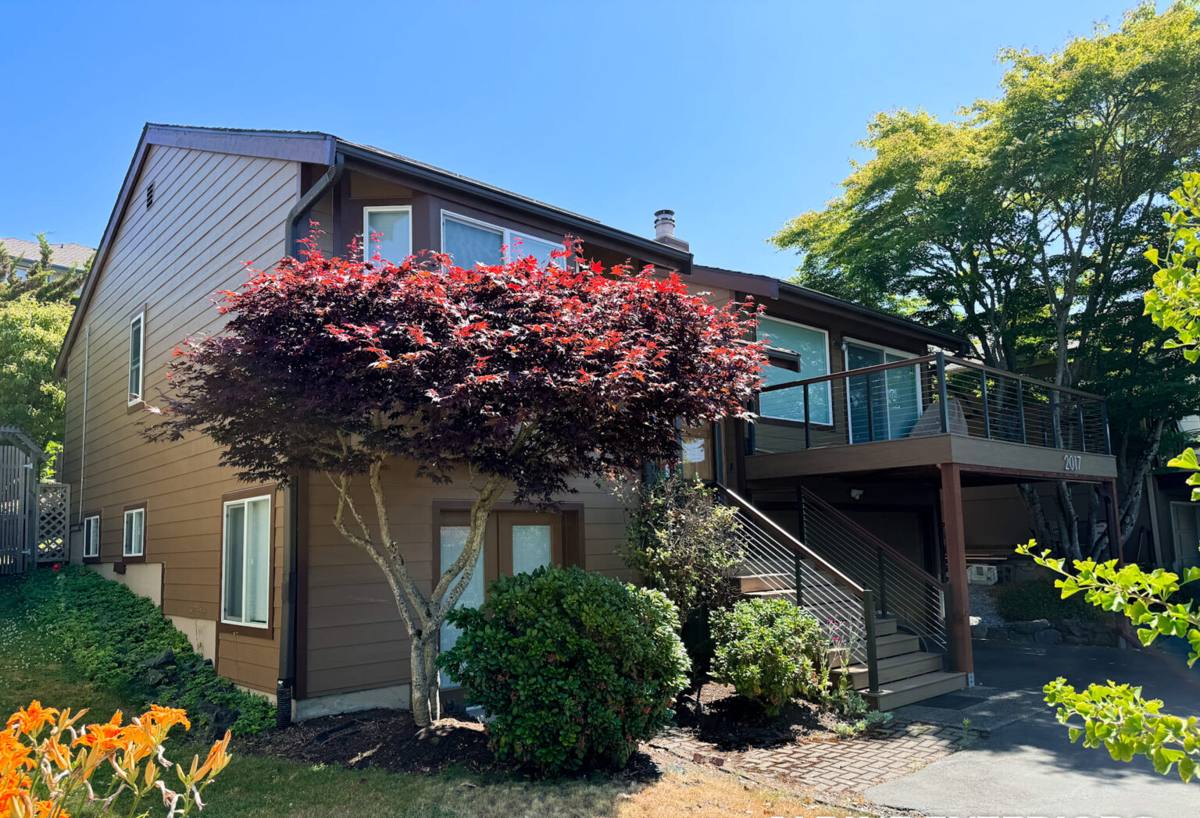
What the Climate on the Spit Does to a Roof
Salt Air From More Than One Direction
Because the spit has water on both sides, salt-laden air reaches a Semiahmoo roof from multiple directions instead of one prevailing exposure, the way most inland Whatcom County homes see it. Salt speeds up corrosion in fasteners, flashing, and any exposed metal trim, and it breaks down lower-grade finishes faster than a sheltered site would. A roofing spec that holds up fine a few miles inland can start showing rust streaks and failed sealant within a handful of years right on the water.
Driving Rain With Almost No Windbreak
Open wind exposure means rain on the spit rarely falls straight down — it gets driven sideways into valleys, roof-to-wall transitions, and flashing laps with more force than a typical inland roof ever experiences. That's a heavier moisture load than annual rainfall totals suggest, and it's exactly where roofs with minimal underlayment or loosely lapped flashing start to leak first.
A Moss Season That Runs Most of the Year
Mild temperatures and near-constant humidity give moss and algae a long growing season across this part of the county, and Semiahmoo's waterfront setting doesn't shorten it. Shaded, north-facing slopes and roofs under tree cover hold moisture longest, and that's where moss establishes first — then works under shingle edges, holds water against the roof surface, and shortens the material's usable life if it isn't addressed.
Signs a Semiahmoo Roof Is Due for Replacement, Not Just a Patch
Not every problem calls for tearing the whole roof off. These are the signals that usually point toward full replacement rather than another round of spot repair:
- Moss coverage spread across multiple slopes rather than one isolated shaded area
- Granule loss heavy enough to be visibly collecting in gutters and downspouts
- Shingles that are cupping, curling, or missing across large sections
- Rust staining at fastener heads, flashing, or metal vent stacks
- More than one active leak location, especially showing up during wind-driven storms off the water
- Soft or spongy roof deck felt underfoot, or sagging visible from the ground
- A roof at or past its material's rated service life for this kind of exposure
- A history of repeated repairs to the same areas without the leaks actually stopping
A roof with one of these on its own is often still a repair. Several of them together, especially on a roof already near the end of its expected life, is usually more honestly addressed with a full replacement than with another patch that won't hold through the next wet season.
Choosing a Roofing Material for This Exposure
There's no single right material for every Semiahmoo home — it depends on roof pitch, sun and shade exposure, and budget. What matters is understanding the honest trade-offs for a spit property before deciding, not defaulting to whatever's cheapest or easiest to sell.
| Material | Salt Air & Wind-Driven Rain | Moss Resistance | Typical Service Life Here |
|---|---|---|---|
| Architectural asphalt shingle | Good with marine-rated fasteners and correct flashing; standard hardware corrodes faster on the spit | Moderate; algae-resistant granule options help | 20-30 years with correct install |
| Standing seam metal | Excellent in a coastal-rated finish; sheds wind-driven rain aggressively | High; smooth surface and steep pitch discourage moss buildup | 40-60 years |
| Cedar shake | Absorbs moisture readily; needs airflow underneath to dry between storms | Low without regular treatment and cleaning | 20-30 years with consistent upkeep |
| Composite/synthetic shingle | Good; manufactured for consistent weather resistance | Moderate to high depending on product | 30-50 years |
We'll go over which option fits a given roof's pitch, exposure, and budget during the estimate rather than pushing one product on every home. A steep, open, west-facing roof catching wind straight off the water and a shaded, low-slope roof tucked behind trees can reasonably land on different recommendations.
What a Correct Replacement Involves
The visible shingle or panel layer is the smallest part of what determines how long a roof lasts on a property like this. Most premature failures trace back to what's underneath or around it, not the material itself.
Tear-Off and Deck Inspection
A full tear-off lets us see the actual condition of the roof deck, not just guess at it from the attic. Soft spots, rot, or prior water damage get found and replaced before anything new goes down — installing a new roof over a compromised deck just shortens the life of the new material.
Underlayment
Given the rain exposure on the spit, underlayment isn't an afterthought here. A synthetic underlayment with strong water resistance, plus self-adhered membrane at eaves, valleys, and other vulnerable points, gives the roof a second line of defense if wind-driven rain ever gets past the primary surface.
Flashing
Flashing at chimneys, skylights, vent penetrations, and roof-to-wall transitions is where most leaks actually start on an older roof. We use corrosion-resistant flashing suited to salt air exposure and integrate it properly with the underlayment rather than leaning on sealant alone to keep water out.
Fasteners and Hardware
Standard fasteners rust faster in salt air than most homeowners expect, and a fastener failure years down the line is hard to trace and easy to prevent up front. We spec corrosion-resistant fasteners and hardware rated for marine exposure on every Semiahmoo roof.
Ventilation
Proper intake and exhaust ventilation keeps the roof deck drier and discourages the damp conditions moss needs to take hold. It also protects the underside of the roof from condensation damage, which matters in a climate where humidity stays elevated most of the year.
Our Replacement Process
- On-site assessment. We inspect the existing roof, deck condition, ventilation, and problem areas, and take accurate measurements for the estimate.
- Material selection. We walk through the options that fit the home's exposure, pitch, and budget, with honest trade-offs for each.
- Written scope and timeline. A clear, written scope goes together before any work begins, so there are no surprises mid-project.
- Tear-off and deck repair. Old roofing comes off, the deck is inspected, and any damaged sheathing is replaced.
- Underlayment and flashing installation. The moisture barrier and flashing go in first, since this layer determines whether the roof actually stays dry through a spit winter.
- Roofing material installation. The chosen material goes on to manufacturer specification, with fastening pattern and exposure accounted for.
- Ventilation check. Intake and exhaust ventilation are confirmed working correctly before close-out.
- Final walk-through. We review the completed roof with the homeowner and go over care and warranty details.
Cost Factors for a Semiahmoo Roof Replacement
Every roof prices out differently, and we don't quote a number without seeing the roof in person — pitch, access, and deck condition alone can move a bid significantly.
| Factor | Why It Matters on the Spit |
|---|---|
| Roof size and complexity | More valleys, dormers, and penetrations mean more flashing detail and labor |
| Pitch and access | Steep or hard-to-access roofs take longer and need more safety setup |
| Material choice | Metal and premium composites cost more up front but often need less upkeep in salt air |
| Deck condition | Rot or soft sheathing found during tear-off adds repair cost not visible beforehand |
| Fastener and flashing grade | Marine-rated hardware costs more than standard but avoids early corrosion failures |
| Underlayment upgrade | Full self-adhered membrane coverage costs more than minimum-code underlayment but reduces wind-driven rain risk |
Why a Local Crew That Already Works Semiahmoo Matters
A roofer who mostly works inland Whatcom County jobs isn't wrong about roofing in general — they're just working from a different set of defaults. Fastener specs, flashing choices, and underlayment coverage that are perfectly adequate on a typical inland roof are often undersized for what a spit property with water on two sides throws at a roof year-round. A crew that already works Semiahmoo has seen which details actually fail out here, not just which ones fail in a textbook, and that shows up in small decisions: how flashing gets lapped at a valley facing open water, which fastener grade gets used on a west-facing slope, where extra underlayment coverage earns its cost.
A Simple Checklist Before Hiring for a Roof Replacement on the Spit
- Confirm current Washington contractor licensing and active liability insurance
- Ask what fastener and flashing materials they use and whether those choices account for salt air exposure
- Ask how they detail flashing at valleys and roof-to-wall transitions for wind-driven rain
- Get a clear, written scope of work and material specification before signing anything
- Ask directly how much experience they have with waterfront or open-exposure roofs specifically
Permits and What to Expect Locally
A full roof replacement in Whatcom County typically requires a building permit, and we handle that process as part of the job so it isn't something a homeowner has to navigate alone. Timelines depend on the roof's size and complexity, but a straightforward residential tear-off and replacement is usually a matter of a few days of on-site work once materials are on hand and weather cooperates — and on the spit, we plan around wind and rain windows rather than fighting them.
If your Semiahmoo roof is showing its age or you're planning ahead for a replacement, we're glad to take a look and give you a straightforward, honest read on what it actually needs. Reach out using the form below for a free, no-pressure estimate.