 Birch Bay Roofing
 Roofing and Exteriors for Point Whitehorn Homes
Point Whitehorn sits along the Birch Bay shoreline in Whatcom County, close enough to the Strait of Georgia that salt air and wind-driven rain are simply part of owning a home here. Whether your property backs up to the natural area and shoreline bluffs or sits a few streets inland, the exterior of your home is doing constant, quiet work to keep that marine climate outside where it belongs. Roofs, siding, windows, and decks in this area age differently than they do twenty miles inland, and a contractor who understands that difference matters as much as the materials themselves.
We're a local exterior contractor working throughout the Birch Bay area, including Point Whitehorn, and we handle roofing, siding, windows, and decks as connected parts of the same system rather than separate trades. A roof that sheds water well but dumps it onto failing siding, or windows that are watertight but flash into a compromised roof edge, still leaves you with a wet wall cavity. Understanding how these systems meet each other is a big part of doing exterior work correctly this close to the water.
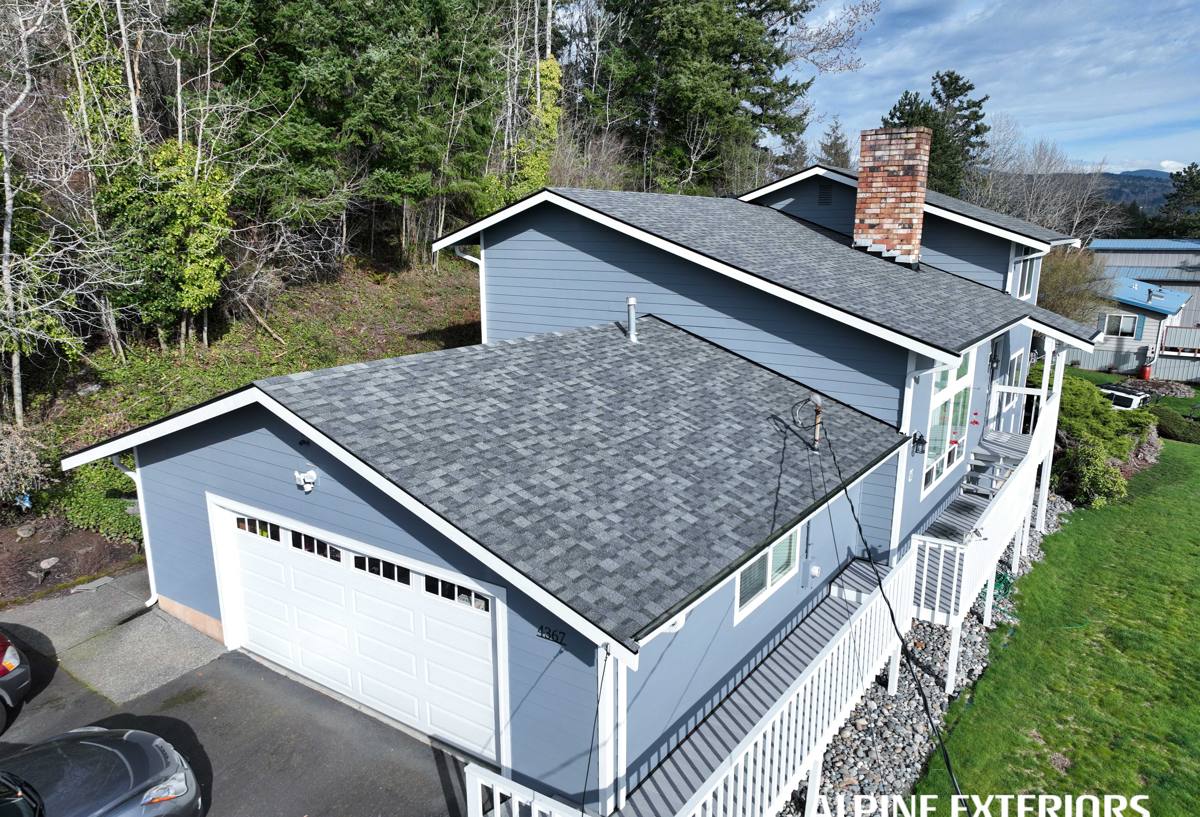
What the Marine Climate Does to a Roof Here
Salt Air and Metal Fasteners
Airborne salt from the Strait doesn't just affect boats and railings — it accelerates corrosion on any exposed metal on your roof: nail heads, flashing, vent boots, gutter fasteners, and ridge caps. Standard electro-galvanized fasteners can start showing rust streaks years before they would inland. We spec corrosion-resistant fasteners and flashing metals for homes in this zone specifically because we've seen what happens when a roof is built to a generic spec instead of a coastal one.
Driving Rain and Wind-Driven Water
Birch Bay gets its share of storms rolling in off the water, and wind-driven rain behaves differently than a straight-down downpour. It can push water sideways and upward under shingle tabs, around vents, and into gaps that would stay dry in calmer weather. Proper underlayment, ice-and-water shield at vulnerable transitions, and correctly lapped flashing aren't optional upgrades here — they're the baseline for a roof that's actually going to perform.
Moss, Shade, and a Long Wet Season
Between the tree cover common in this area and a wet season that runs long, moss and algae growth on roofs is a real and ongoing issue. Moss holds moisture against the roof surface, works its way under shingle edges, and can lift tabs over time, which shortens the life of an otherwise sound roof. Regular moss treatment and keeping gutters and valleys clear of debris does more for roof longevity here than almost anywhere else in the county.
Siding That Holds Up to Salt and Moisture
Siding on a Point Whitehorn home is fighting the same battles as the roof: salt exposure, sustained moisture, and cycles of wet and dry that stress seams, caulking, and fastener points. We look closely at a few things when we're assessing or replacing siding in this area:
- Whether existing caulking and trim seals have failed at window and door transitions, letting moisture behind the siding
- Signs of moisture trapped behind the siding plane, especially on the sides of the home facing prevailing wind and rain
- Corrosion on any exposed fasteners or metal trim pieces
- Whether the current siding material is genuinely suited to sustained salt-air exposure, or was a builder-grade choice that's now showing its limits
- How well the house wrap and flashing behind the siding are actually performing, not just how the surface looks
Fiber cement and quality vinyl products both have a place in coastal Whatcom County, and the right choice depends on your home's exposure, your maintenance preferences, and your budget. We'll walk you through the honest trade-offs rather than pushing whatever's easiest to install.
Windows: The Weak Point in Most Older Coastal Homes
Older single-pane or early dual-pane windows are one of the most common failure points we see on homes in this part of Birch Bay. Wood frames exposed to salt-laden moisture rot from the inside out, seals fail and let condensation build between panes, and old flashing details around the window opening can quietly funnel water into the wall framing for years before it shows up as a stain on an interior wall. Replacing windows here isn't just about comfort or energy bills — it's about cutting off one of the main paths water uses to get into the structure.
When we replace windows, we pay particular attention to the flashing and sealing details around each opening, since that's where most coastal window failures actually originate, not in the window unit itself.
Decks in a Wet, Salty, Shaded Environment
Decks near the water take a beating from three directions at once: salt air corroding fasteners and hardware, near-constant moisture keeping wood damp longer between dry spells, and shade from surrounding trees that slows drying even further. Untreated or improperly maintained decking can develop soft spots, checking, and hidden rot in ledger boards and support posts — the structural pieces that matter most for safety.
We build and repair decks with coastal-grade fasteners and hardware, proper flashing at the ledger board where the deck meets the house, and materials chosen for how they'll actually hold up in this specific environment, whether that's a quality treated lumber, composite decking, or another option suited to your home and budget.
How We Approach an Exterior Project Here
Assessment First
Every project starts with a straightforward look at what's actually happening on your home — not just the surface but how the roof, siding, windows, and any decks are interacting with moisture and with each other. We'll tell you honestly what needs attention now, what can wait, and what's simply cosmetic.
Materials Matched to This Microclimate
We don't use a one-spec-fits-all approach across Whatcom County. A home in Point Whitehorn facing direct exposure off the water gets different fastener, flashing, and material recommendations than a home tucked further inland, even if they're both technically "Birch Bay."
Clean, Coordinated Work
Because we handle roofing, siding, windows, and decks under one roof, we can coordinate a project so the pieces actually work together — for example, making sure new siding is installed with flashing details that tie properly into an existing or new roof edge, instead of two separate contractors leaving a gap between their scopes of work.
Comparing Common Exterior Materials for This Area
| Material | How It Handles Salt Air / Moisture | Typical Maintenance |
|---|---|---|
| Asphalt composition roofing | Performs well with proper underlayment, flashing, and corrosion-resistant fasteners; moss is the main long-term concern | Periodic moss treatment, gutter and valley clearing, fastener inspection |
| Metal roofing | Very durable against moisture when properly coated and fastened; coastal-grade coatings matter more here than inland | Occasional inspection of fasteners and coating condition |
| Fiber cement siding | Handles sustained moisture and salt exposure well when properly sealed and painted | Periodic repainting/resealing at seams and trim |
| Vinyl siding | Resists moisture intrusion itself but relies heavily on correct flashing and house wrap behind it | Low; mainly cleaning and checking trim seals |
| Wood-framed windows (older) | Prone to rot and seal failure under sustained coastal moisture over time | Regular repainting/sealing; eventual replacement is common |
| Vinyl or fiberglass windows (modern) | Better resistance to moisture-related degradation than older wood frames | Low; periodic seal and flashing inspection |
A Homeowner's Seasonal Checklist for Point Whitehorn
- Check gutters and roof valleys for debris buildup before the wet season sets in
- Look for moss growth on north-facing or shaded roof slopes and address it before it spreads
- Inspect caulking around windows and doors annually for cracking or gaps
- Look at exposed fasteners, hinges, and railing hardware on decks for early corrosion
- Watch for soft spots or discoloration on deck boards, especially near the house connection
- Check attic or crawlspace areas periodically for signs of moisture intrusion that didn't show up on the surface
- Have your roof looked at after major windstorms, since wind-driven rain can expose weaknesses that calmer weather won't reveal
Why a Local Crew Makes a Difference
A contractor based elsewhere in the county, or one traveling in from further away, doesn't always factor in how differently Whatcom County's coastal microclimates behave compared to the interior. We work in and around Birch Bay regularly, so we're familiar with how homes in Point Whitehorn and the surrounding shoreline areas actually hold up over time — which details fail first, which materials are worth the extra cost, and which shortcuts show up as problems within a few years. That local familiarity shapes every recommendation we make, from fastener choice to how we sequence a project around this area's weather patterns.
We're also simply easier to reach when something needs a second look after the work is done, which matters more in a climate that doesn't give exteriors much of a break.
Getting Started
If you're dealing with a roof that's showing its age, siding that's letting moisture through, windows that fog or feel drafty, or a deck that needs attention, we're happy to take a look and give you a straightforward, no-pressure assessment. Use the form below to request a free estimate, and we'll walk you through exactly what we see and what your options are.