 Birch Bay Roofing
 Composite Decking Built for Point Whitehorn's Coastal Exposure
Point Whitehorn sits close enough to the water that homes here deal with a different set of conditions than decks built further inland in Whatcom County. Salt-laden air, wind-driven rain that gets pushed sideways under eaves and railings, and a long, damp moss season that can stretch from fall through spring all put real stress on outdoor decking. A deck built for a dry-climate spec sheet doesn't hold up the same way out here. Composite decking, installed correctly for this specific exposure, is one of the more durable choices available for Point Whitehorn properties — but "composite" is not a single product, and how it's installed matters as much as what brand goes down.
This page covers what a composite deck actually needs to survive and look good in this part of Birch Bay, what a correct installation involves, and how we approach the job when we build decks for homes in this area.
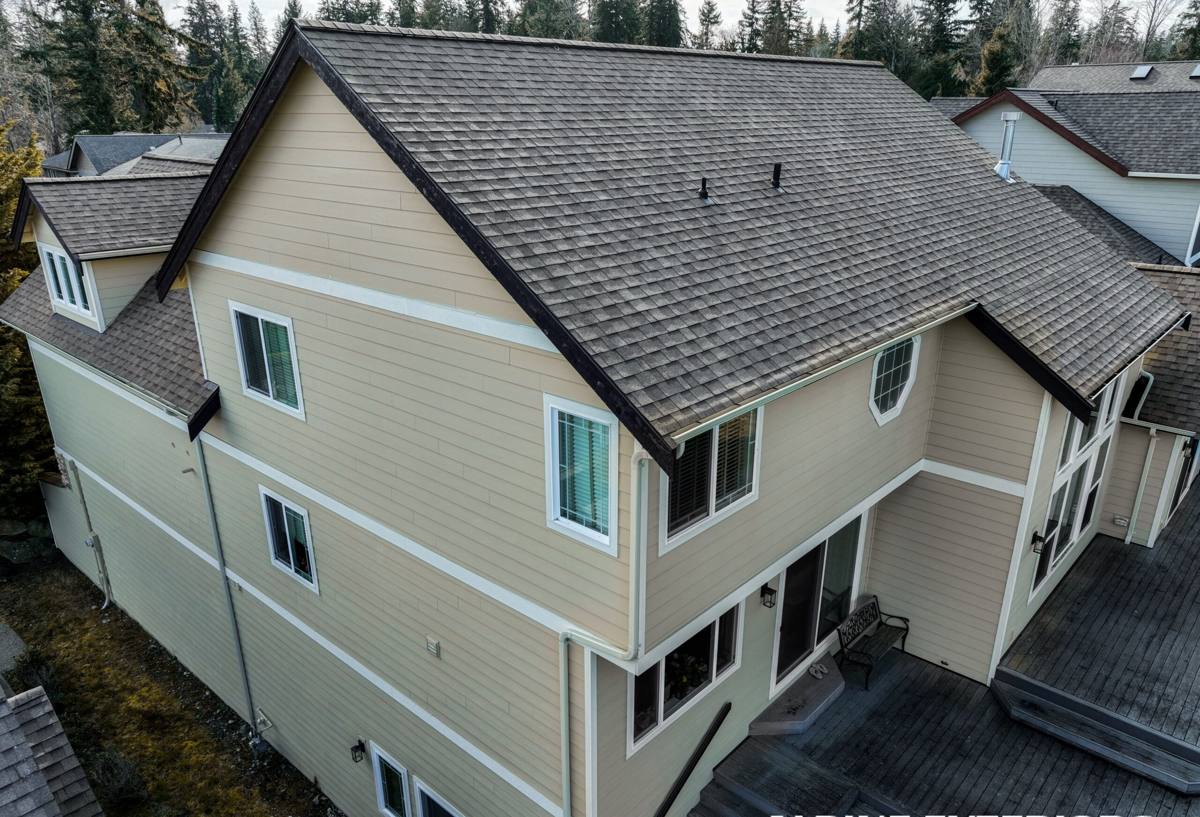
What Point Whitehorn's Climate Actually Does to a Deck
Salt Air and Hardware
Proximity to Birch Bay and the Strait of Georgia means airborne salt settles on every exterior surface, including deck boards, railings, and — critically — the fasteners and structural hardware underneath. Salt exposure accelerates corrosion on anything less than fully rated stainless or coated hardware. On a lot of decks that fail early, it isn't the boards that go bad first — it's the screws, joist hangers, and ledger connections that were never spec'd for a coastal environment.
Driving Rain and Water Management
Rain in this part of Whatcom County rarely falls straight down. Wind off the water pushes it at an angle, which means water gets driven under rail caps, into board end grain, and against ledger boards and house-to-deck connections far more than it would on a sheltered inland lot. If flashing, drainage gaps, and end-cuts aren't handled with that in mind, water finds a way in — and once it's trapped against wood framing or under a poorly capped board edge, rot and hardware corrosion follow.
Moss and Sustained Dampness
Birch Bay's moss season is long. Shaded decks, north-facing decks, and decks tucked under tree cover stay damp for extended stretches, which is exactly the environment moss and algae need to take hold. On composite decking, moss doesn't rot the board core the way it can with untreated wood, but it does make surfaces slippery and, if left unaddressed, can hold moisture against board surfaces and fastener heads longer than they're designed to sit wet.
Why Composite Makes Sense for This Specific Location
We recommend composite decking for a lot of Point Whitehorn projects because it removes several of the failure points that wood decking struggles with in this exposure — it won't rot from the inside the way wood framing members can, it doesn't need annual staining or sealing, and modern capped composite boards resist moisture absorption at the surface far better than uncapped wood or older composite formulations. That said, composite is not maintenance-free, and it is not immune to the effects of salt air and standing moisture — it just handles them differently than wood does. Part of doing this job right is setting accurate expectations, not overselling the product.
What a Correct Composite Deck Installation Involves Here
Framing and Structure First
The composite boards are the visible part, but the framing underneath is what determines whether the deck lasts. For this area, that means:
- Corrosion-resistant fasteners and connectors rated for coastal/high-moisture exposure — not standard galvanized hardware
- Proper ledger board flashing where the deck attaches to the house, sealed against wind-driven rain
- Joist spacing that matches the specific composite board's span rating — composite often requires tighter spacing than dimensional lumber decking
- Adequate airflow and drainage beneath the deck so moisture doesn't sit trapped against framing
- Ground clearance and vapor consideration for low or shaded areas where dampness lingers
Board Installation Details That Matter
Composite boards need consistent gapping for expansion and contraction, hidden or color-matched fastening depending on the board system, and properly finished end cuts — exposed, uncapped end grain is one of the more common places composite decking takes on water and starts to show damage over time, especially with the rain patterns typical of this stretch of coastline. Rail posts, stair stringers, and picture-frame border boards all need attention at the connection points, since these are the spots most exposed to driving rain.
Substructure Options
| Substructure | Performance in Salt Air / Wet Climate | Notes for Point Whitehorn |
|---|---|---|
| Pressure-treated lumber framing | Good, if hardware is corrosion-rated | Most common and cost-effective; requires correct fastener spec |
| Composite/PVC substructure | Very good | Higher upfront cost; removes wood rot risk from framing entirely |
| Steel deck framing | Good, if properly coated | Less common residentially; needs coating rated for salt exposure |
Choosing Composite Board Types for This Exposure
Not all composite decking is built the same way, and the differences matter more in a coastal, high-moisture climate than they would somewhere dry.
| Board Type | Moisture Resistance | Maintenance | Fit for Point Whitehorn |
|---|---|---|---|
| Fully capped composite | Best — capped on all sides | Occasional cleaning | Strong choice for full sun and shaded, damp areas alike |
| Capped on top/sides only | Good, exposed end grain is a weak point | Requires attention to end caps at cuts | Workable, but end-cut treatment is critical |
| Uncapped composite (older style) | Weaker — absorbs moisture over time | Higher, may need periodic cleaning/sealing | Generally not what we recommend for this exposure |
We walk homeowners through these options honestly, including cost differences, rather than defaulting to whatever has the best margin. The right board depends on how exposed the specific deck location is — a fully shaded, north-facing deck near tree cover has different needs than a sun-exposed deck on the water side of the house.
Railings, Stairs, and Fasteners
Railing systems and stair connections take the brunt of wind-driven rain and are handled with the same coastal-grade hardware standard as the deck structure itself. Composite or aluminum railing components generally hold up better than untreated wood railings in this climate, since railing posts and caps are directly exposed to horizontal rain in a way that flat decking surfaces aren't. Stair stringers, being close to grade, are also more prone to splash-back moisture and need the same attention to drainage and fastener quality as the rest of the structure.
Maintenance Realities for a Point Whitehorn Deck
Composite decking cuts down maintenance significantly compared to wood, but "low maintenance" isn't "no maintenance," especially with a moss season this long. A realistic maintenance routine for this area includes:
- Periodic cleaning to remove moss, algae, and organic buildup before it gets a foothold, particularly on shaded sections
- Keeping gutters and downspouts clear so runoff isn't dumping directly onto or near the deck
- Checking rail post connections and stair hardware annually for early signs of corrosion
- Clearing debris from between boards where composite gapping can trap leaves, needles, and moisture
- Trimming back vegetation that keeps sections of the deck shaded and damp longer than necessary
Our Process for Composite Deck Projects in This Area
1. On-Site Assessment
We look at sun exposure, prevailing wind and rain direction relative to the house, existing drainage, and any shaded or low-airflow areas that will need extra attention during framing and board selection.
2. Structural Plan
We spec framing, hardware, and flashing to the site conditions — not a generic template — accounting for the salt air and rain exposure specific to the property's position in Point Whitehorn.
3. Board and Railing Selection
We go over composite board options and railing systems with honest trade-offs on cost, appearance, and long-term performance for the specific exposure of that deck.
4. Installation
Framing, flashing, hardware, board installation, and railing/stair work are done to the standards outlined above, with particular attention to ledger flashing and end-cut treatment.
5. Walkthrough and Maintenance Guidance
Before we call the job done, we walk the finished deck with the homeowner and cover what routine upkeep looks like for their specific site conditions — shaded areas, drainage points, and anything else particular to that property.
Why Local Experience Matters for This Job
A crew that hasn't worked this specific stretch of Whatcom County coastline can get the framing basics right and still miss the details that determine whether a deck holds up over the next decade here — the fastener grade that actually resists salt corrosion, the flashing detail that stops wind-driven rain at the ledger, the board choice that won't degrade under a shaded, moss-prone section of yard. We build decks in Birch Bay and the surrounding coastal communities, including Point Whitehorn, and we spec every project around what this specific climate does to a deck over time, not around a generic install checklist.
Get an Estimate for Your Point Whitehorn Deck
If you're planning a new composite deck or replacing an aging one in Point Whitehorn, we're happy to come take a look, walk the site with you, and put together a straightforward estimate — no pressure, no upsell. Use the form below to request a free estimate.