 Birch Bay Roofing
 Roofing in Sumas: A Valley Climate With Its Own Demands
Sumas sits at the north end of Whatcom County, tucked into the Nooksack River valley right at the Canadian border. It's a different setting than the coastline a few miles west, but the roofing challenges are cut from the same cloth: long stretches of gray, wet weather, cool damp air that doesn't burn off quickly, and a growing season for moss and algae that runs most of the year. Add in valley fog and low winter sun angles that keep north-facing roof slopes shaded and slow to dry, and you've got a climate that is genuinely hard on roofing materials, fasteners, and flashing.
Birch Bay Roofing Co has worked roofs across Whatcom County long enough to know that a roof built for a dry-climate spec sheet doesn't perform the same way once it's sitting under this much sustained moisture. Salt-tinged air off the Strait, driving rain events, and months of low-angle sun combine to shorten the useful life of the wrong materials and installation choices. Sumas homeowners don't need a roof that looks good in a brochure — they need one that's detailed correctly for this region.
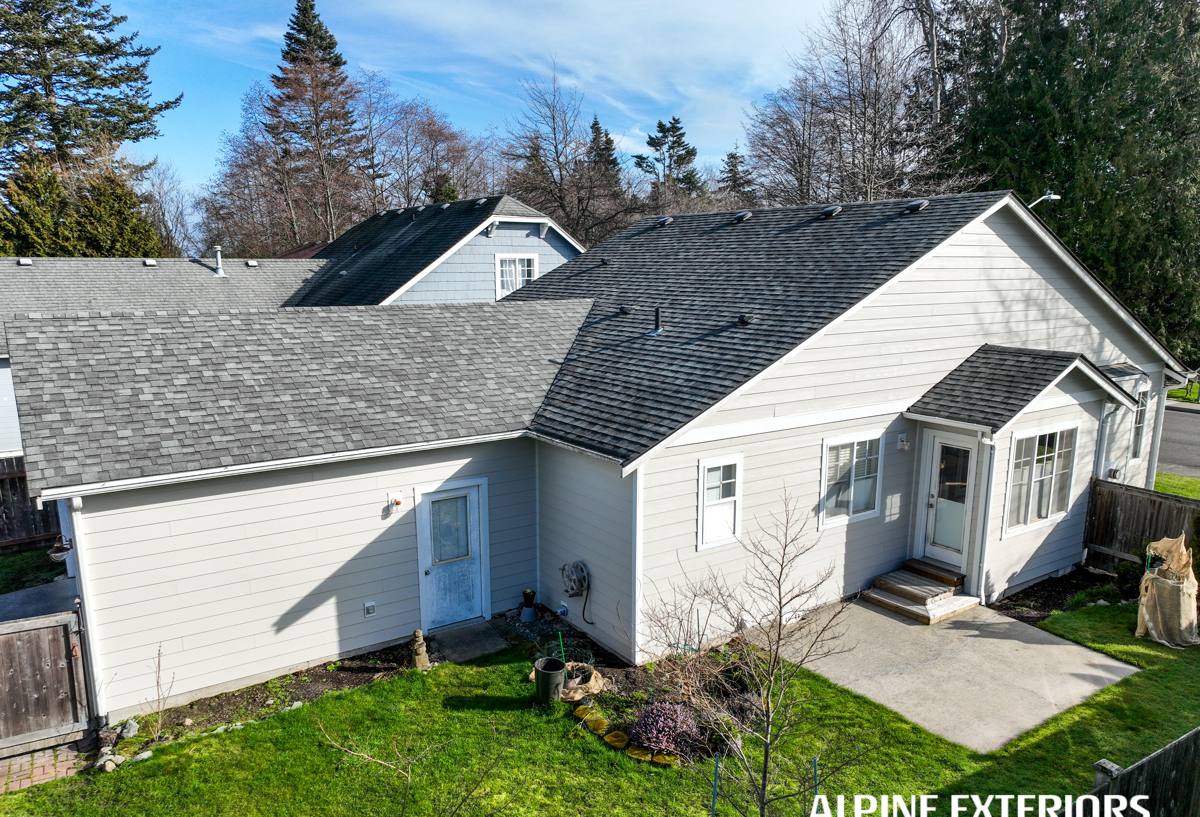
What We See Most Often on Sumas Roofs
Moss and Algae Growth
Moss is the single most common issue we find on roofs in this area, and it's rarely just cosmetic. Moss holds moisture against the roofing surface, works its way under shingle tabs and shake courses, and over time lifts material away from the deck. Left unchecked long enough, it accelerates granule loss on asphalt shingles and rot on wood-based roofing. North-facing slopes and roofs shaded by mature trees are usually hit hardest.
Flashing and Valley Leaks
Most of the leaks we're called out for don't start in the field of the roof — they start at flashing: chimneys, skylights, vent penetrations, and valleys where two roof planes meet. Sustained rain finds any gap in these details, and in a valley climate where rain can settle in for days rather than hours, marginal flashing work eventually fails.
Fascia, Soffit, and Gutter Wear
Constant moisture at the roof edge is hard on fascia boards and soffit material, especially where gutters are undersized, clogged, or pitched wrong. We regularly find soft or rotting fascia behind gutters that look fine from the ground but haven't been draining properly for a season or more.
Ice and Cold-Snap Stress
Sumas can see colder overnight temperatures than the immediate coastline, and the valley setting means occasional hard frosts and brief snow events. Roofing that's already compromised by moisture damage is more prone to cracking or further failure during these cold snaps, even though extended freezes aren't the norm here.
Repair or Replace? How We Help You Decide
Not every roof problem in Sumas means a full replacement, and we don't treat every inspection as a sales opportunity. The right call usually comes down to the age of the roof, how widespread the damage is, and whether the underlying deck is still sound.
| Situation | Usually Repair | Usually Replace |
|---|---|---|
| Age of roofing | Under 12-15 years, asphalt shingle | Approaching or past manufacturer's expected service life |
| Leak pattern | Isolated to one flashing detail or penetration | Multiple leak points across different areas |
| Moss condition | Light to moderate, surface only | Heavy growth with granule loss or lifted shingles |
| Deck condition | Solid, no soft spots | Soft decking, visible sagging, or rot found during inspection |
| Shingle condition | Localized wind or impact damage | Widespread curling, cracking, or brittle shingles |
We walk every roof and give you a straight answer on which category it falls into, along with photos and a written explanation — not just a quote.
Roofing Materials That Actually Hold Up Here
Material choice matters more in a climate like Whatcom County's than it does in drier parts of the country. We install a range of roofing systems, and we'll tell you honestly where each one fits and where it doesn't.
| Material | Strengths in This Climate | Trade-offs |
|---|---|---|
| Architectural asphalt shingle | Good value, wide color range, solid moss and algae resistance with the right shingle line | Shorter lifespan than metal; still needs periodic moss maintenance |
| Standing seam metal | Excellent water shedding, long service life, performs well on low-slope sections | Higher upfront cost; requires a crew experienced with proper seaming and fastening |
| Cedar shake | Traditional Pacific Northwest look | Highest moisture and moss maintenance burden of any common option; we're upfront that it's a bigger long-term commitment in this climate |
| Synthetic/composite shingle | Consistent moisture resistance, low maintenance | Product and warranty quality varies significantly by manufacturer |
Our default recommendation for most Sumas homes is a quality architectural asphalt shingle with algae-resistant granules, or standing seam metal for homeowners who want the longest possible service interval and don't mind the higher initial investment. We size these recommendations to your roof's exposure, slope, and how much shade or tree cover it sits under — a roof that's mostly sun-exposed can often get by with less aggressive moss protection than one buried under fir and cedar canopy.
How We Approach Every Roofing Job
- Inspection and documentation. We get on the roof (or use a drone for steep or difficult sections), document actual conditions, and photograph anything that needs your attention.
- Written scope and estimate. You get a clear, itemized explanation of what's being repaired or replaced and why — no vague line items.
- Deck assessment. On replacements, we don't cover up a bad deck. Soft or rotted sheathing gets replaced before new roofing goes down, and we'll show you what we find.
- Proper underlayment and flashing detail. This is where most roof failures in this climate actually originate, so we don't shortcut it to save time.
- Ventilation check. Poor attic ventilation traps moisture and shortens roof life from underneath — we check intake and exhaust balance on every replacement.
- Cleanup and final walkthrough. Magnetic sweep for nails, full site cleanup, and a walkthrough so you know exactly what was done.
Beyond the Roof: Siding, Windows, and Decks
Roofing problems in this climate rarely stay isolated to the roof. Water that gets past compromised flashing or clogged gutters often shows up next in fascia rot, siding damage at the wall-roof intersection, or moisture intrusion around window headers. Because Birch Bay Roofing Co also handles siding, window, and deck work, we can look at the whole exterior envelope rather than patching one component while a related problem keeps developing underneath.
For decks specifically, the same moss and moisture issues that affect roofs apply to horizontal wood and composite surfaces exposed to Whatcom County's wet season — proper board spacing, ledger flashing, and material choice matter just as much there. If you're dealing with a roof issue and notice related wear on siding, trim, or a deck surface, it's worth having it looked at together rather than as separate projects down the road.
A Practical Maintenance Checklist for Sumas Homeowners
- Have moss treated or removed before it spreads across more than a small section of the roof
- Clean gutters and downspouts at least twice a year, more often if you're under conifer trees
- Check attic insulation and ventilation for signs of trapped moisture or condensation
- Look at flashing around chimneys, skylights, and vents after any major storm
- Trim back tree limbs that overhang the roof to reduce shade, debris, and moss pressure
- Schedule a professional inspection every couple of years, even with no visible problems
- Address small leaks immediately rather than waiting for a dry stretch to "deal with it later"
Why a Local Crew Makes a Real Difference
Sumas is a small community, and the roofing needs here aren't identical to what you'd spec for a house in a drier inland climate or even for the immediate coastline a few miles away. A crew that works Whatcom County regularly knows how valley fog behaves, how much moss pressure a shaded north slope actually sees over a winter, and which flashing details tend to fail first in sustained rain versus short downpours. That local pattern recognition is hard to substitute with a generic regional average.
It also means accountability. We're not driving in from out of the area for one job and disappearing — we're working roofs throughout this county on an ongoing basis, and our reputation here depends on the work holding up long after the invoice is paid.
Getting Started
If you're noticing moss buildup, a slow leak, or you just haven't had your roof looked at in a few years, we're glad to come out and take a straightforward look. Use the form below to request a free, no-pressure estimate — we'll tell you honestly what your roof needs, and what it doesn't.