 Birch Bay Roofing
 Why Sumas Roofs Take a Different Kind of Beating
Sumas sits in a part of Whatcom County that gets hit harder by wind than most people expect. The gap near the Canadian border acts like a funnel for cold, fast-moving air during winter storms, and that wind doesn't arrive gently — it comes in gusts strong enough to lift shingles, peel back ridge caps, and drive rain sideways under flashing that would hold up fine in a normal downpour. Add in the long, wet stretch of fall and winter typical of this region, and a roof here is doing more work than it looks like from the ground.
Most storm damage doesn't announce itself with a hole in the roof. It shows up as a lifted shingle tab, a dented vent cap, a seam that used to be watertight and now isn't. If it's not caught and repaired correctly, that small failure turns into a ceiling stain, then rot, then a much bigger job. Storm damage repair is about catching that first failure and fixing it properly — not just patching what's visible and hoping the next storm doesn't find the same weak spot.
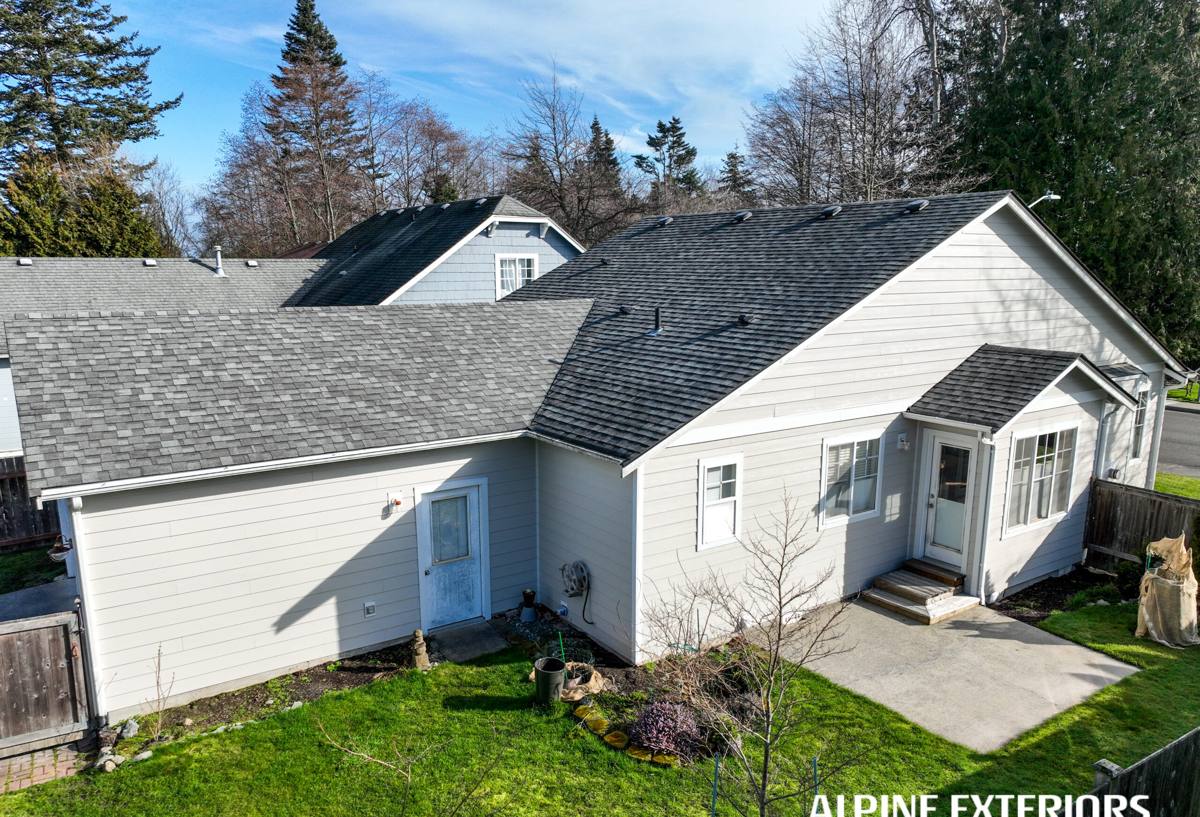
What Actually Counts as Storm Damage
Not every roof problem after a windstorm is storm damage, and it's worth knowing the difference before you call anyone out. Storm damage is sudden and traceable to a specific weather event — wind, falling debris, or hail. It's different from gradual wear like moss buildup, UV-brittled shingles, or a roof simply reaching the end of its service life. Both need attention, but only one is typically an insurance matter, and an honest contractor should tell you which is which rather than labeling everything "storm damage" to make a claim easier.
Wind Damage
Wind damage usually shows up as lifted, creased, or missing shingle tabs, especially along roof edges, ridges, and any place the roofline changes direction. Sumas's exposure to strong gusts means we see this pattern more often here than in more sheltered parts of the county. A shingle doesn't have to be missing to be compromised — one that's been lifted and resealed by rain can look fine and still have a broken seal underneath.
Impact Damage
Falling branches, wind-blown debris, or hail can dent metal flashing and vent caps, crack shingle mat, or knock granules loose in a concentrated area. Impact damage is often small in size but serious in effect, because it creates a single weak point where water finds its way in.
Water Intrusion After a Storm
Sometimes the damage isn't visible on the roof surface at all — it's a ceiling stain, a musty smell in the attic, or moisture around a chimney or skylight that appeared after a bad storm. This almost always traces back to a flashing or seal failure rather than the field of the roof itself, and it's the kind of problem that gets worse quietly if it's ignored.
Our Storm Damage Repair Process
We keep this straightforward because homeowners dealing with storm damage usually have enough going on already.
- Inspection. We get on the roof (not just a look from the driveway) and check the field, flashing, penetrations, and gutters — not just the spot you called about, since wind damage often shows up in more than one place.
- Documentation. We take clear photos of what we find, dated and specific, so you have a record whether or not you end up filing an insurance claim.
- Temporary protection. If there's active water intrusion, we get the roof weathertight first — tarping or sealing exposed areas — before we talk through the full repair.
- A written repair plan. You get a clear explanation of what's damaged, what needs to be done, and why, in plain terms — not a vague estimate.
- The repair itself. Matching materials where we can, correct fastening and sealing methods, and flashing details done to hold up to the next storm, not just this one.
- Follow-up. We check the repair after the next significant rain or wind event when it's a larger job, so problems get caught while they're still small.
Repair or Replace? What Actually Drives the Decision
Most storm damage is repairable. Full replacement only makes sense when the damage is widespread, the roof was already near the end of its life, or repeated storm hits have compromised enough of the roof that patchwork repairs stop being cost-effective. Here's how we think through it:
| Factor | Repair Usually Makes Sense | Replacement Usually Makes Sense |
|---|---|---|
| Age of roof | Under 15 years, in otherwise good shape | Already near or past expected service life |
| Extent of damage | Isolated to one section or a handful of spots | Spread across multiple slopes or the whole roof |
| Underlying condition | Decking and structure are sound | Rot, soft decking, or repeated past leaks found underneath |
| Material availability | Matching shingles or materials are available | Product is discontinued or badly mismatched from fading |
| Storm history | First significant damage in years | This is the third or fourth repair in a short span |
Cost is the other piece of this. A straightforward flashing or shingle repair after a storm is usually a modest job — often a few hundred dollars. Larger wind or water damage affecting a full slope, or repairs that uncover rotted decking underneath, can run into the low thousands. We'll never know exactly where your job lands until we're actually up there, which is why we inspect before we quote.
Working With Your Insurance Company
If the damage is significant enough to file a claim, the documentation from our inspection is meant to support that process honestly — not to inflate it. We'll point out what's genuinely storm-related versus what's normal wear, because adjusters know the difference and an inflated claim tends to slow everything down or get denied outright. If an adjuster wants to meet on-site, we're glad to walk the roof with them and explain what we found. Our goal is a claim that reflects the actual damage and a repair that actually fixes it.
Why Hiring a Crew That Already Works in Sumas Matters
A roofer who mainly works in flatter, more sheltered parts of Whatcom County isn't necessarily thinking about wind uplift the same way a crew that's used to Sumas conditions is. We pay attention to fastening patterns, ridge and edge detailing, and flashing choices that hold up specifically against the wind loads this area sees, not just what passes on a calmer roof across the county. That local familiarity also means faster response after a storm — we're not learning the area's weather patterns for the first time when your roof needs attention.
It also matters for follow-through. Storm damage repair isn't a one-and-done transaction for us; it's the kind of work that builds or breaks a local reputation. A crew that plans to keep working in Sumas has every reason to get the repair right the first time.
Storm Season Checklist for Sumas Homeowners
A few habits go a long way toward catching problems before they become expensive ones:
- Clear gutters and downspouts before the fall storm season so wind-driven rain has somewhere to go
- Trim back tree limbs that hang over or near the roofline
- Walk the exterior after any major wind event and look for shingle pieces or granules in the yard
- Check the attic for daylight, damp insulation, or musty smells a couple times a year
- Have flashing around chimneys, skylights, and vent pipes inspected before winter, since these are the first places wind-driven rain gets in
- Don't ignore a single lifted or missing shingle — it's a small fix now and a bigger one later
Moss, Salt Air, and the Long Game
Storm damage rarely happens in isolation. A roof that's already carrying a moss load or has algae-softened granules is more vulnerable to wind lift and water intrusion than a clean, well-maintained one, because moss holds moisture against the shingle surface and works its way under tabs over time. Along the more exposed, coastal parts of our Whatcom County service area, salt air adds its own slow wear to metal flashing and fasteners; further inland around Sumas, it's more about sustained damp and shade driving that moss cycle. Either way, a roof that's kept clean and well-flashed goes into storm season with a real advantage, and it's part of what we look at even when we're out for a repair unrelated to moss.
If a recent storm has you wondering whether your roof took damage, we're glad to come take a straightforward look. There's no pressure and no charge for the estimate — just a clear answer about what we find and what, if anything, it takes to fix it. Use the form below to get in touch.