 Birch Bay Roofing
 Roofing in Blaine: A Different Kind of Weather Load
Blaine sits right up against the water at the northern edge of Whatcom County, and that location shapes what a roof has to deal with year-round. It's not just "a lot of rain," the way people talk about western Washington in general. It's a specific combination of salt-laden air coming off the water, wind-driven rain that gets pushed sideways into fascia and siding instead of falling straight down, and a moss and algae season that runs long because the roof surface rarely gets a real chance to dry out between storms. Any one of those on its own is manageable. Together, over years, they wear on a roof faster than homeowners moving from drier climates usually expect.
We work on roofs across Whatcom County, and Blaine homes tend to show a fairly consistent pattern of wear tied to that combination of exposure and moisture. Understanding that pattern is most of what separates a roof that gets ahead of problems from one that gets surprised by them.
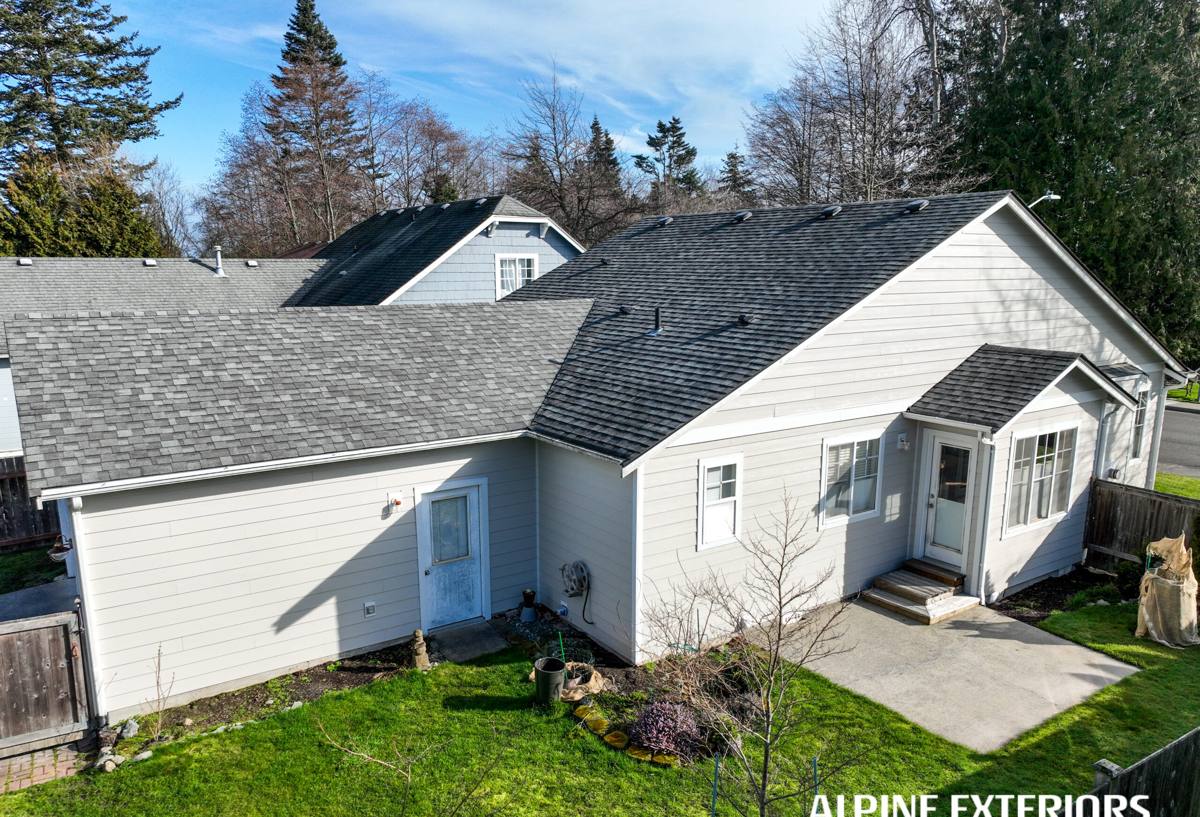
Common Issues We See on Blaine Roofs
Moss and Algae Growth
Shaded roof planes, north-facing slopes, and anywhere debris collects tend to stay damp longer here than in drier parts of the state. Moss doesn't just look bad — it holds moisture against the roofing material, works its way under shingle edges as it grows, and can lift tabs enough to let wind and rain in underneath. Left unaddressed for a few seasons, moss growth shortens the useful life of an otherwise sound roof.
Wind-Driven Rain and Flashing
Storms coming off the water don't always drop rain straight down. Wind pushes it sideways and upward under laps, around chimneys, and along wall-to-roof transitions. Flashing and sealant details that would be fine in a calmer inland setting can fail here sooner, because they're being tested by rain approaching from angles they weren't necessarily detailed for. Valleys, skylight curbs, and chimney step flashing are the areas we check most closely on Blaine homes.
Salt Air and Metal Corrosion
Proximity to the water means airborne salt settles on exposed metal — flashing, fasteners, gutters, and any metal roofing components. Over time this accelerates corrosion compared to homes further inland. It doesn't mean metal can't be used well here; it means fastener choice, flashing material, and coating matter more, and cheaper or mismatched hardware shows its age faster.
Materials That Hold Up in This Climate
There's no single "best" roofing material for Blaine — it depends on the home, the budget, and how much maintenance the homeowner wants to take on. Here's how the common options generally compare for this specific climate.
| Material | Moss/Moisture Resistance | Wind-Driven Rain Performance | Salt Air Durability | Typical Lifespan |
|---|---|---|---|---|
| Architectural asphalt shingle | Good with proper ventilation and periodic cleaning | Good when installed with correct underlayment and flashing detail | Good; not metal, so corrosion isn't a factor | 20-30 years |
| Standing seam metal | Excellent — sheds moisture, little surface for moss to grip | Excellent; concealed fasteners help in wind-driven conditions | Good to excellent with marine-grade fasteners and coatings; ordinary hardware corrodes faster | 40-60+ years |
| Cedar shake (natural) | Fair; needs more upkeep to resist moss and rot in wet, shaded areas | Fair to good with proper installation | Fair; wood is less affected by salt directly but retains moisture | 20-30 years with maintenance |
| Synthetic composite shake/slate | Good; engineered to resist moisture absorption | Good | Good | 30-50 years |
We don't push one material on every home. A steep, heavily shaded roof on a wooded lot has different needs than an open, wind-exposed roof closer to the water. Part of a good estimate is walking the specific roof and talking through what actually fits it.
Beyond the Roof: Siding, Windows, and Decks
The same climate conditions that wear on a roof — moisture, wind-driven rain, and salt air — affect the rest of a home's exterior too, which is a big part of why we handle siding, windows, and decks alongside roofing rather than treating them as separate trades. Siding takes wind-driven rain at wall penetrations and trim joints. Windows need flashing and sealant details that account for the same sideways-rain exposure. Decks, especially uncovered ones, deal with near-constant moisture cycling and, closer to the water, salt exposure on fasteners and hardware.
Treating these as connected systems rather than one-off repairs matters. A roof replacement done without attention to how water sheds onto the siding below it, or a deck rebuilt with the wrong fastener grade for a coastal setting, just shifts the problem instead of solving it.
Why a Local Crew Matters Here
Whatcom County has its own permitting process, its own inspection expectations, and weather patterns that don't match generic national guidance. A crew that works this specific area regularly knows which roof details tend to fail first in Blaine's wind and salt exposure, how to schedule around the wetter months, and what local building departments actually look for at inspection. That's different from knowledge that transfers from a drier or less coastal region.
It also means being available for the follow-up. Roofing and exterior work in a marine climate isn't always a one-and-done project — moss treatment, gutter maintenance, and periodic inspection are part of keeping a roof performing over its full lifespan, and that's easier to stay on top of with a crew that's actually local to the area.
Staying Ahead of the Weather: Maintenance That Matters
Most roof failures we see in this area aren't sudden — they're the result of small issues that went unaddressed for a few seasons. A simple annual routine goes a long way:
- Clear gutters and downspouts before the fall rains start, so water isn't backing up under the roof edge
- Treat or remove moss growth before it spreads across a full roof plane, not after
- Inspect flashing around chimneys, skylights, and valleys for lifted edges or failed sealant
- Check attic ventilation — poor airflow traps moisture and speeds up moss growth and sheathing rot from underneath
- Walk the roof (or have it walked) after major windstorms to catch lifted shingles or debris damage early
- Inspect exposed metal fasteners and flashing for early corrosion, especially on homes closer to the shoreline
None of this requires a major project every year. It requires catching the small things before they turn into a leak, a rot repair, or a full reroof ahead of schedule.
Repair or Replace: How We Think About It
Not every roofing problem in Blaine means a full replacement. If a roof is younger, structurally sound, and the issue is isolated — a section of flashing, a run of lifted shingles, a moss-damaged area — targeted repair is often the right call. Replacement makes more sense when a roof is nearing the end of its material lifespan, when repeated repairs are starting to add up, or when underlying decking has been compromised by long-term moisture. We'll tell you honestly which situation you're in rather than defaulting to the bigger job.
Timing matters too. Reroofing during a stretch of drier weather reduces the risk of moisture getting into the decking mid-project, which is part of why we plan installation windows around the calendar here rather than treating every month as equal.
What Affects the Cost of a Blaine Roofing Project
| Factor | Why It Matters Here |
|---|---|
| Roof pitch and access | Steeper roofs and limited access add labor time and safety equipment needs |
| Material choice | Metal and synthetic materials cost more upfront but need less frequent maintenance in this climate |
| Existing damage | Rotted decking or compromised sheathing found during tear-off adds to the scope |
| Flashing complexity | Multiple valleys, chimneys, or skylights require more detail work to handle wind-driven rain properly |
| Fastener and hardware grade | Homes closer to the water benefit from corrosion-resistant hardware, which costs more but lasts longer |
We don't quote roofing work off a phone call. An accurate number comes from actually seeing the roof, the access, and the condition underneath — that's the only way to give a homeowner a number they can trust instead of one that changes once the crew shows up.
Ready When You Are
If you're dealing with moss buildup, a suspected leak, storm damage, or you're just trying to figure out where your roof stands after a few Whatcom County winters, we're glad to take a look. Reach out for a free, no-pressure estimate using the form below — we'll walk the roof, tell you what we actually see, and lay out honest options.