 Birch Bay Roofing
 Building a Deck That Actually Holds Up in Blaine
Blaine sits close enough to the water and to Birch Bay that every outdoor structure on a property deals with the same three things year-round: salt-laden air, long stretches of driving rain, and a moss season that seems to start earlier and last longer each year. A deck built with generic, big-box assumptions about weather will show it within a few seasons — soft spots, corroding hardware, slick green boards, and railings that loosen before their time. A deck built for this specific stretch of Whatcom County coastline is a different animal, and the difference isn't cosmetic. It's in the fasteners, the framing details, the drainage path under the boards, and the material choice itself.
This page covers what we look at specifically for custom deck projects in Blaine — not a generic "how to build a deck" overview, but the decisions that matter for homes in this corner of the county.
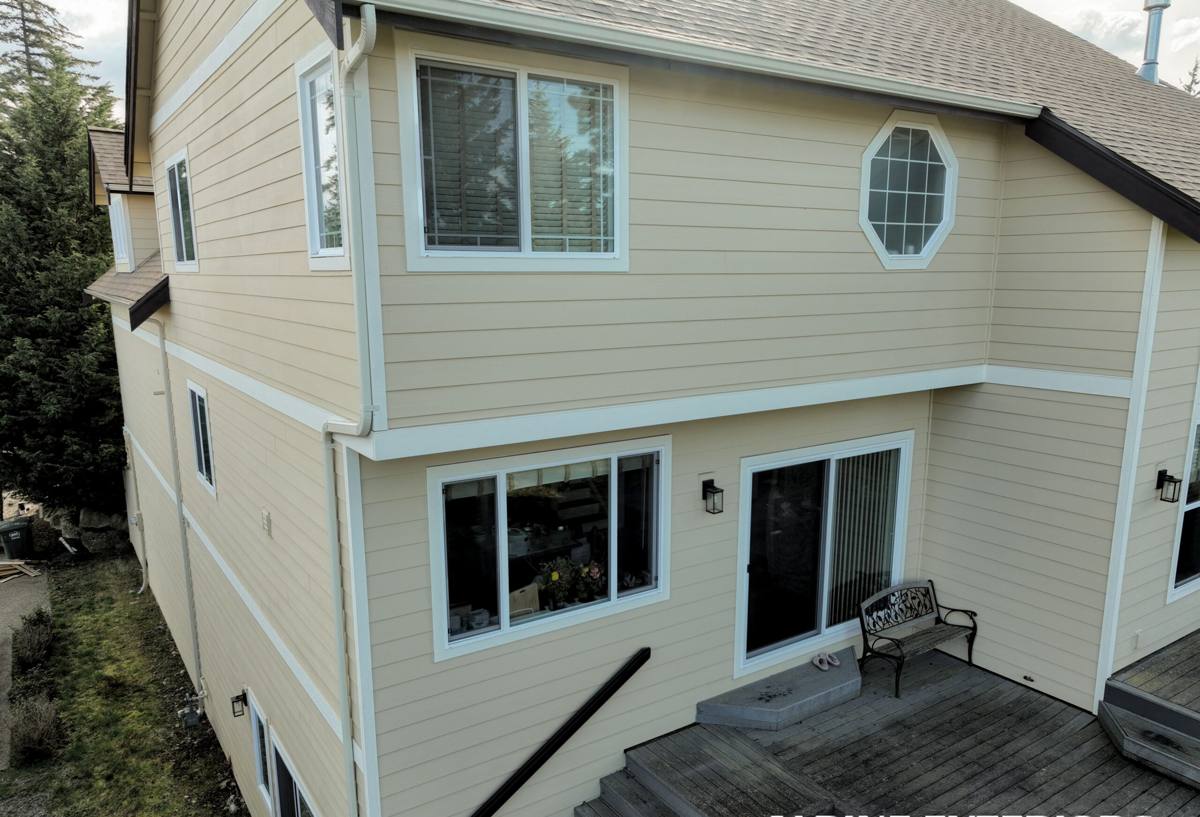
What Blaine's Climate Actually Does to a Deck
Salt Air and Metal Fatigue
Proximity to Semiahmoo Bay and the broader Salish Sea means the air here carries more salt than it does even twenty or thirty miles inland. Salt accelerates corrosion on anything metal — fasteners, joist hangers, structural screws, and railing hardware. A deck built with interior-grade or standard exterior fasteners will start showing rust streaks and weakened connections well before a deck built with fasteners actually rated for coastal exposure. This isn't a minor detail; the fasteners are what hold the structure together, and a corroded structural screw is a hidden failure point you won't see until something moves.
Driving Rain and Water Intrusion
Rain in this part of Washington doesn't just fall — wind off the water pushes it sideways, which means it gets into places a calm, straight-down rain never would: ledger board connections, post bases, the gaps between decking boards, and any spot where two materials meet. A deck that isn't flashed and sloped correctly at these joints will trap water instead of shedding it, and trapped water is what causes rot, mold, and structural softening long before the surface boards look obviously worn.
The Long Moss Season
Moss and algae need shade, moisture, and time — Blaine gives them all three for a good chunk of the year. Any deck surface that stays damp longer than it should (because of poor drainage, tight board spacing, or heavy tree cover) will grow a slick green film that's more than unsightly — it's a slip hazard, and on wood surfaces it holds moisture against the board, which speeds up decay underneath the growth.
Choosing the Right Decking Material for a Blaine Property
There's no single "best" decking material for every yard — it depends on how much sun and shade the deck gets, how much upkeep the homeowner wants to do, and budget. Here's how the common options actually perform under this region's conditions:
| Material | Moisture Behavior | Moss/Algae Resistance | Maintenance | Typical Lifespan Here |
|---|---|---|---|---|
| Pressure-treated fir/hem-fir | Absorbs and releases moisture; prone to cupping if not sealed | Low — needs regular cleaning and sealing | Annual cleaning, re-sealing every 1-2 years | 10-15 years with upkeep |
| Cedar | Naturally moisture-resistant, but surface still needs protection | Moderate — cedar's natural oils slow growth early on, fades over time | Periodic staining/sealing to maintain resistance | 15-20 years with upkeep |
| Composite decking | Doesn't absorb water into the board core | Moderate to good, depends on the board's surface texture | Periodic washing; no staining/sealing needed | 25+ years |
| PVC/capped polymer decking | Fully water-resistant, no core absorption | Good — smoother, harder surfaces shed film more easily | Occasional washing | 25-30+ years |
We don't push one product line over another as a blanket rule — we size the recommendation to the site. A shaded, tree-covered lot near Birch Bay's wetter pockets is a different conversation than an open, sun-exposed yard closer to town. What we do insist on, regardless of decking material, is that the structure underneath — framing, flashing, and fasteners — is built to the same coastal standard every time, because that's the part you can't easily replace later.
What a Correctly Built Custom Deck Involves
Footings and Framing
Footings need to be sized and set below frost depth and on solid, well-draining soil — a shortcut here is invisible until the deck starts to shift or settle unevenly. Framing lumber should be rated for ground contact where it's close to grade, and every structural connection should use coastal-rated hardware, not standard galvanized fasteners that will corrode faster in this air.
Ledger Attachment and Flashing
Where a deck attaches to the house is the single most common source of long-term water damage on any deck, anywhere — and it's worse here because of the driving rain. Correct flashing at the ledger board diverts water away from the house's wall assembly instead of letting it wick behind the siding. This is a detail that's completely invisible once the deck is finished, which is exactly why it matters that it's done right the first time.
Board Spacing and Drainage
Gap spacing between decking boards affects how fast water and debris clear the surface. Too tight, and the deck holds moisture and organic matter that feeds moss growth; too wide, and you get a less comfortable walking surface and more gaps for debris to build up in. We set spacing based on the specific material's expansion behavior and the site's drainage, not a one-size number.
Railings and Guards
Railing posts need solid blocking and coastal-rated fasteners at the connection points, since these joints see constant flexing from wind and use. Whatcom County follows the same general building code requirements on guard height and baluster spacing as the rest of the state, and we build to those requirements as the floor, not the ceiling.
How Our Process Works
- On-site assessment: We walk the specific spot on your property — sun exposure, drainage slope, tree cover, and how the deck will tie into the house.
- Material and design conversation: Based on that assessment, we talk through material options honestly, including upkeep expectations, not just upfront cost.
- Permitting: Most custom decks in Whatcom County need a permit depending on size and height — we handle that process rather than leaving it to the homeowner.
- Build: Footings, framing, flashing, decking, and railings, in that order, with structural connections inspected at each stage before we move to the next.
- Final walkthrough: We go over the finished deck with you, including what maintenance it actually needs and on what schedule.
Maintenance Realities for a Blaine Deck
Every deck material needs some upkeep here — the climate doesn't allow for a truly "zero maintenance" outdoor structure, no matter what a product label claims. Here's a realistic checklist for what ongoing care looks like:
- Sweep off standing leaves and debris regularly, especially in fall — trapped organic matter is the main food source for moss and algae.
- Rinse or lightly scrub the surface a couple of times a year to knock back algae film before it becomes slick.
- Check fastener heads and railing connections annually for early corrosion or loosening, especially on older or lower-grade hardware.
- Re-seal or re-stain wood decking on the schedule appropriate to the product — skipping this is the fastest way to shorten a wood deck's life here.
- Keep an eye on the ledger board area at the house connection for any sign of staining or soft wood, which can indicate a flashing issue.
- Trim back overhanging vegetation where possible to reduce shade and moisture retention on the deck surface.
Cost Factors for a Custom Deck in Blaine
Every project is different, but the same handful of factors drive most of the cost variation we see on Blaine properties:
| Factor | Why It Matters Here |
|---|---|
| Decking material choice | Composite and PVC cost more upfront than wood but lower long-term maintenance costs in this climate |
| Deck height and footing depth | Higher decks and deeper footings (needed for frost depth and slope) add labor and material |
| Site access and slope | Sloped or hard-to-access lots, common near the water, add setup and equipment time |
| Railing style and material | Cable, glass, and metal railings cost more than standard wood balusters but hold up differently in salt air |
| Roof or cover addition | Adding a cover reduces rain and UV exposure on the deck surface but adds its own structural requirements |
We give straightforward, itemized estimates rather than vague per-square-foot numbers, because the factors above can shift the real cost meaningfully from one Blaine lot to the next.
Why It Matters That We Already Work in Blaine
A crew that works this specific stretch of coastline regularly already knows which fastener grades hold up, which decking products actually perform in shaded, damp yards versus open ones, and how the local soil and drainage patterns behave from one property to the next. That's different from a crew that builds decks broadly across a wide region and treats every site the same way. We've built and maintained an understanding of Blaine and the surrounding Birch Bay area specifically, and it shapes every material and detail recommendation we make here — not because the code requires it, but because the climate does.
Get a Straightforward Estimate
If you're weighing a custom deck project for your Blaine property, we're happy to walk the site, talk through material options honestly, and give you a clear, no-pressure estimate — no obligation, no hard sell. Use the form below to get started.