 Birch Bay Roofing
 Exterior Work Built for Lummi Island's Marine Climate
Lummi Island sits out in the salt water of Whatcom County, and that location shapes everything about how a house should be built and maintained here. Homes on the island face a combination most inland Birch Bay properties don't deal with in the same intensity: near-constant salt air off the water, wind-driven rain that comes in sideways during winter storms, and a long, damp moss season that can run most of the year on north-facing and shaded roof slopes. We handle roofing, siding, windows, and decks for island homeowners, and we approach each of those systems with the marine environment in mind rather than treating Lummi Island like any other Whatcom County job.
Getting materials and crews to and from the island also means working around ferry schedules, which is a logistics detail a lot of mainland-based contractors don't plan for well. It affects how we sequence a job, how we stage materials, and how we quote timelines.
What Salt Air, Rain, and Moss Actually Do to a Home
Salt Air and Metal Components
Airborne salt accelerates corrosion on anything metal — flashing, fasteners, gutter hardware, and window frames included. Standard-grade fasteners and unprotected steel components that might hold up fine twenty miles inland can start showing rust and pitting years earlier on a waterfront or near-waterfront lot. This is why fastener and flashing selection matters more here than in most parts of the county.
Driving Rain and Wind Exposure
Island homes are more exposed to sustained wind than many mainland properties, and wind-driven rain finds its way into gaps that would stay dry in calmer conditions. That means underlayment quality, flashing detail work, and window and door sealing all carry more weight on an exposed lot than they would on a sheltered inland site.
Moss and Sustained Moisture
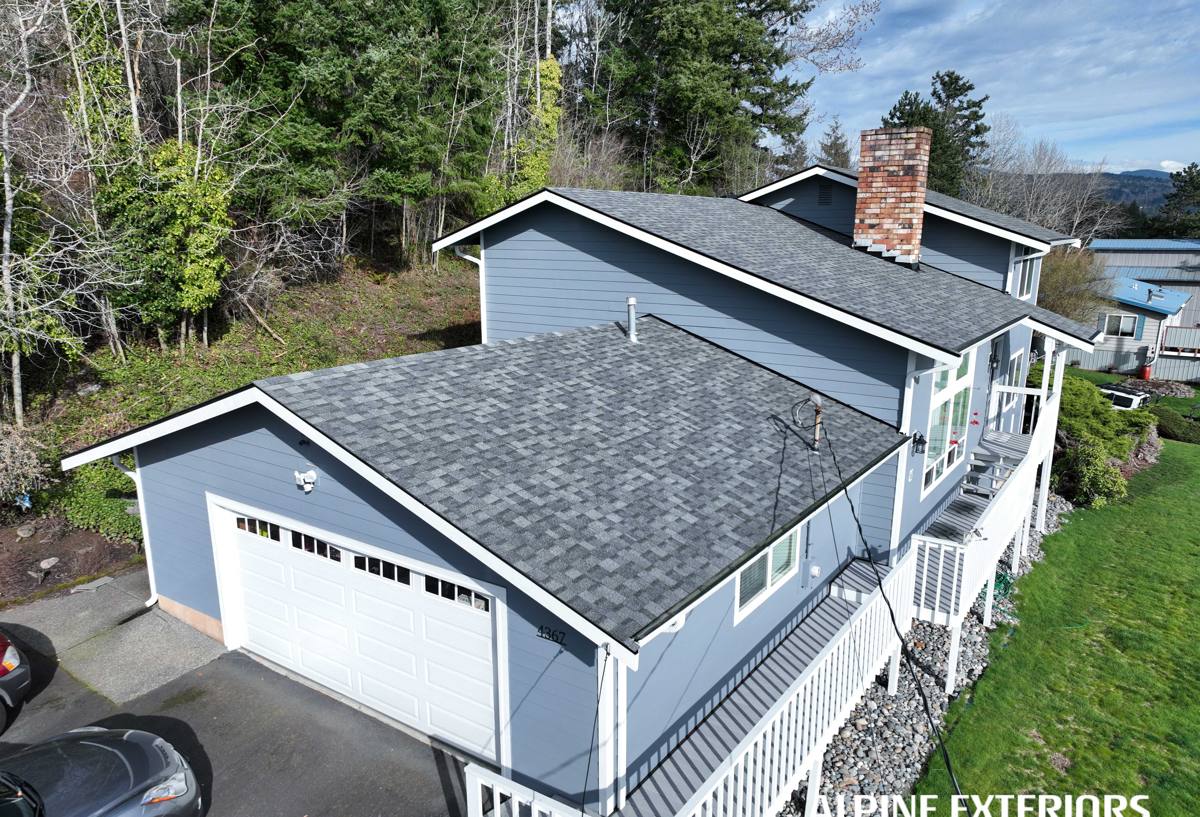
Whatcom County's damp, mild climate already favors moss growth, and shaded or tree-covered lots on Lummi Island — which describes a lot of the island's wooded parcels — see it worse and longer into the year. Moss holds moisture against roofing material, works into shingle laps and joints, and can shorten the service life of a roof significantly if it's never addressed. Left long enough, it also degrades siding and decking that stays damp in the same way.
Roofing for Island Homes
We look at roof slope, tree cover, and sun exposure on every island roof before recommending a material or a maintenance plan. A roof tucked under a stand of firs is going to need a different moss strategy than an open, sun-exposed roof closer to the shoreline. Flashing details around chimneys, skylights, and valleys get extra attention on our installs because that's where wind-driven rain problems tend to start, and it's far cheaper to get that right the first time than to chase leaks later.
Regular roof inspections matter more here than in drier parts of the state. Catching moss growth, lifted shingles, or compromised flashing early is a lot less expensive than dealing with the water damage that follows if those issues sit through a few wet seasons unaddressed.
Siding for Waterfront and Wooded Lots
Siding on Lummi Island has to deal with the same one-two punch as the roof: salt exposure on open, water-facing sides of a house, and sustained dampness on shaded, tree-covered sides. We pay close attention to how siding is fastened and flashed at trim, corners, and window and door openings, since those are the spots where water intrusion behind the siding does the real damage — not the face of the material itself. Ventilation behind the siding assembly also matters more in a climate that rarely gives materials a long stretch to fully dry out.
We're straightforward with homeowners about trade-offs between siding materials rather than pushing one option as universally best. Fiber cement holds up well against moisture and salt air with minimal upkeep but costs more upfront. Engineered wood and vinyl products each have their own maintenance and moisture profiles, and the right call depends on the specific exposure of your walls, your budget, and how much upkeep you want to take on.
Windows: Sealing Out Wind and Salt
Wind-driven rain finds weak seals faster on an exposed island lot than it does almost anywhere else in the county. Window replacement and repair work here is as much about the installation — flashing, sealants, and how the window integrates with the siding around it — as it is about the window unit itself. Salt air also accelerates wear on hardware and frame finishes over time, so we talk through frame material and hardware options with island homeowners specifically because of that exposure, not as a generic upsell.
Condensation is another issue worth planning for. Homes with a lot of glass facing the water can see more interior condensation during cold, damp stretches, and window selection plus proper installation both play a role in minimizing that.
Decks in a Marine Environment
Outdoor living space is a big part of why people choose to live on the water, and decks on Lummi Island take a beating from the same combination of salt, rain, and shade that affects roofing and siding. Fasteners and structural hardware need to be rated for the exposure, ledger board flashing needs to be done correctly to keep water out of the house framing, and decking material choice should reflect how much sun the deck actually gets. A shaded, north-facing deck holds moisture and grows moss and algae differently than a sun-exposed, water-facing one, and we build and maintain decks with that difference in mind.
Deck and Fastener Considerations Checklist
- Confirm structural fasteners and connectors are rated for coastal/marine exposure, not standard interior-grade hardware
- Check ledger board flashing where the deck attaches to the house — this is a common hidden moisture entry point
- Choose decking material based on actual sun exposure, not just aesthetics
- Plan for periodic cleaning on shaded sections to keep moss and algae from building up
- Inspect railings and stairs for loosening, since salt-air corrosion on hardware can happen faster than it looks
Material and Cost Considerations
Every island job has its own variables — lot exposure, tree cover, ferry logistics, existing structure condition — but the table below outlines general trade-offs homeowners should weigh when planning roofing work in this kind of climate.
| Roofing Option | Moisture/Moss Behavior | Relative Upfront Cost | Typical Maintenance |
|---|---|---|---|
| Asphalt composition shingle | Prone to moss growth in shaded areas; moderate lifespan in wet climates | Lower | Periodic moss treatment and gutter clearing |
| Metal roofing | Sheds moisture well, resists moss better on steep slopes | Higher | Occasional fastener and sealant checks; corrosion-resistant hardware recommended near salt air |
| Cedar shake/shingle | Attractive but requires diligent moisture management in a damp, shaded climate | Higher | Regular treatment and inspection; higher maintenance burden near the water |
These are general patterns, not guarantees — actual performance depends heavily on your specific roof's slope, sun exposure, and how well the installation was detailed at flashings and penetrations. We'll walk through the honest trade-offs for your particular home rather than steering everyone toward the same product.
Why a Local Birch Bay Crew Matters for Island Work
Working on Lummi Island means planning around ferry schedules for both our crews and material deliveries, which is a real scheduling constraint that out-of-area contractors often underestimate or don't account for at all. Being based nearby in Birch Bay means we already understand the ferry logistics, we're familiar with the kind of weather exposure island homes deal with, and we're not trying to squeeze an island job into a schedule built for easy mainland access. That translates into more realistic timelines and fewer surprises once a project is underway.
It also means we're a known, reachable crew if something comes up after the job is done — not a company that did one job on the island and was never seen again.
What to Expect When You Work With Us
We start with an on-site look at the actual conditions your home faces — sun exposure, tree cover, proximity to the water, and the current condition of your roofing, siding, windows, or decking. From there we walk through material and repair options honestly, including the trade-offs of each, and put together a clear scope and timeline that accounts for island logistics. We don't believe in pushing one-size-fits-all solutions, especially in a climate as specific as this one.
If you're dealing with moss buildup, a leak, aging siding, drafty windows, or a deck that's starting to show wear, we're happy to take a look and give you a straightforward, no-pressure estimate. Use the form below to get in touch and we'll set up a time to come out.