 Birch Bay Roofing
 Siding Repair Built for Lummi Island's Coastal Climate
Lummi Island sits out in the water along the Whatcom County coastline, which means every exterior surface on the island takes a harder hit than the same house would a few miles inland. Salt-laden air off the water works its way into seams and fastener heads. Driving rain off Puget Sound finds any gap in a wall assembly and pushes water sideways, not just down. And the long, damp moss season here means anything that traps moisture against a wall stays wet for weeks at a time. Siding on Lummi Island doesn't fail because homeowners neglect it — it fails because the material or the installation wasn't built to handle this specific combination of exposure.
This page is about one service, done right, for this one area: siding repair for Lummi Island homes. Not a general "we fix siding" pitch — a look at what actually goes wrong out here, what a correct repair looks like, and why the crew doing the work needs to already understand this island's conditions before they ever pull up to your house.
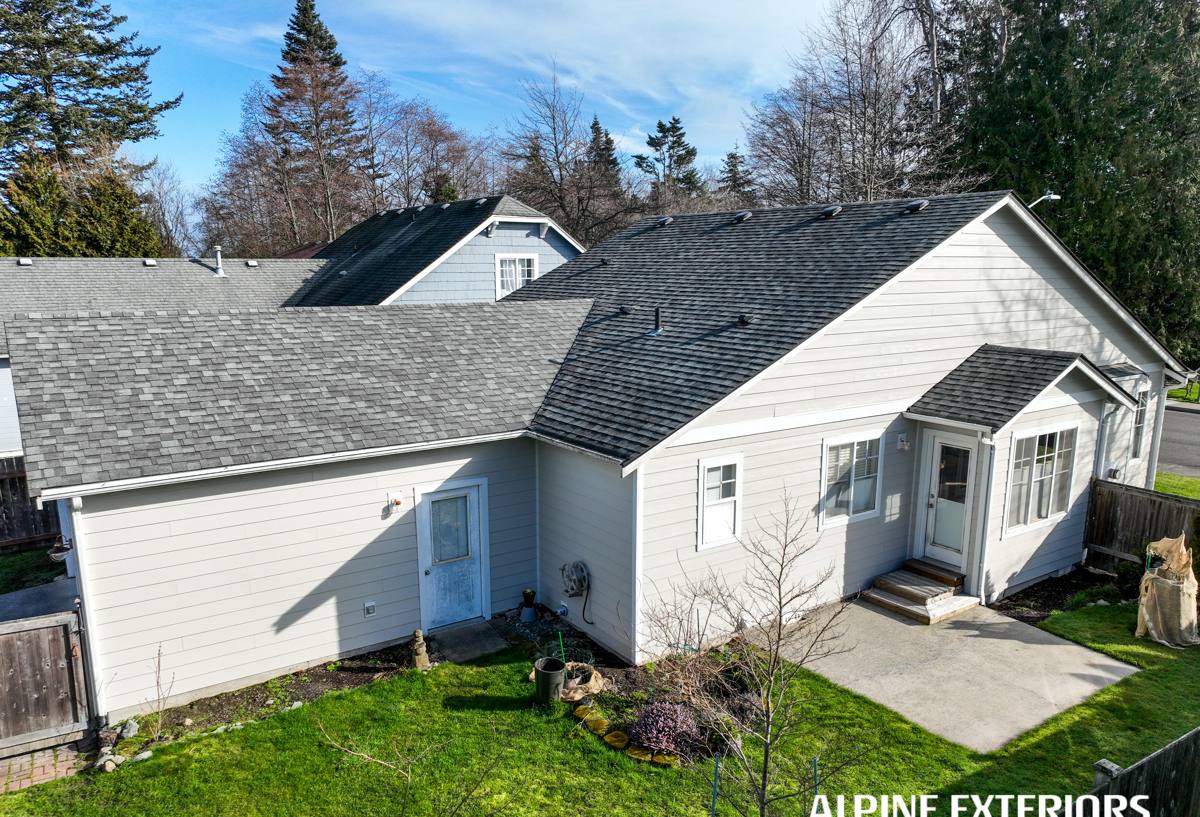
What Salt Air, Rain, and Moss Actually Do to Siding
Salt Air and Fastener Corrosion
Airborne salt accelerates corrosion on anything metal — nail heads, flashing, trim fasteners. Once a fastener starts to rust, it swells slightly, loosens its grip, and creates a tiny gap that water exploits. On older or lower-grade siding, this shows up as rust streaking below nail heads or trim edges, which is often the first visible sign that repair work needs to happen before the problem spreads.
Driving Rain and Wind-Driven Moisture
Waterfront exposure means rain rarely falls straight down here — wind pushes it sideways into wall assemblies, corner joints, and anywhere siding meets a window, door, or roofline. Siding that was installed with correct flashing and clearances sheds that water. Siding installed without it lets water track behind the panels, where it can sit against sheathing long after the storm has passed.
Moss, Algae, and Trapped Moisture
Whatcom County's long wet season keeps north-facing and shaded walls damp for extended stretches. Moss and algae take hold anywhere moisture lingers, and once established, they hold water against the siding surface even longer, creating a cycle that soft or moisture-sensitive materials struggle to withstand year after year.
Signs Your Lummi Island Home Needs Siding Repair
Most siding problems on the island give warning signs well before they become structural. Knowing what to look for helps you catch a repair while it's still a repair, not a replacement.
- Soft, spongy, or bubbling spots when you press on a panel, especially near the bottom courses or under windows
- Visible gaps, cracks, or separation at seams, corners, or trim joints
- Persistent moss or dark staining that keeps returning after cleaning
- Paint that's peeling, bubbling, or failing faster than the rest of the house — often a sign of moisture trapped underneath
- Rust streaking below nail heads or metal flashing
- Warped, cupped, or bowed boards, particularly on walls facing the prevailing wind and rain
- Interior signs: musty smell, discoloration on interior walls, or soft drywall near an exterior wall
Any one of these on its own might just need attention to a small section. Several at once, especially spread across more than one wall, usually means moisture has been getting behind the siding for a while and the repair needs to address the cause, not just the symptom.
What a Correct Siding Repair Actually Involves
Finding the Cause, Not Just the Damaged Board
Replacing a cracked or rotted board without figuring out how water got behind it in the first place just resets the clock on the same failure. A proper repair starts by tracing the water path — checking flashing at windows, doors, and rooflines, checking clearances at the ground and at decks or patios, and checking whether the moisture barrier behind the siding is still doing its job.
Matching Material and Finish
Repairs that use mismatched material, mismatched exposure reveal, or a close-but-not-quite paint color stand out immediately and age differently than the surrounding wall. When we repair a section, we match the plank profile, exposure, and finish so the repair blends in rather than becoming a visible patch.
Correct Fastening and Flashing
Given how much salt air accelerates fastener corrosion here, repairs need corrosion-resistant fasteners installed at the correct spacing and depth, along with properly lapped flashing at every penetration and joint. This is the step that's easiest to shortcut and the one most responsible for repeat failures when it's skipped.
Checking What's Underneath
Any time siding is opened up for repair, it's worth checking the condition of the sheathing and moisture barrier behind it. Siding that looked fine on the surface can be covering sheathing that's already been softened by months or years of trapped moisture — something that needs to be addressed before new siding goes back on, not after.
Repair or Replace? How We Help You Decide
Not every siding problem on Lummi Island calls for a full re-side, and not every problem should be patched. The right call depends on how much of the wall is affected, what the underlying material is, and what's driving the damage.
| Situation | Repair Usually Makes Sense | Replacement Usually Makes Sense |
|---|---|---|
| Damage location | Isolated to one or two sections or elevations | Spread across multiple walls or the whole house |
| Underlying material | Sound James Hardie fiber cement with a localized issue | Failing wood, LP SmartSide, or vinyl reaching the end of its service life |
| Sheathing condition | Dry and solid where opened up | Soft, delaminated, or showing rot behind more than a small area |
| Age of siding | Newer install with an isolated install defect | Original siding is decades old and already showing widespread wear |
| Cause of damage | One-time event (impact, isolated flashing failure) | Chronic, ongoing moisture exposure across the exterior |
We'll tell you honestly which category your house falls into. If a targeted repair solves the problem, that's what we recommend — there's no reason to sell a full re-side when a section repair will hold up.
Why We Repair With — and Recommend — James Hardie Fiber Cement
We install and repair with James Hardie fiber cement siding exclusively. We don't install LP SmartSide, vinyl, Cemplank, Allura, primed spruce, or cedar, and when we're called out to repair one of those products on a Lummi Island home, we're upfront about the trade-offs we've seen with each: wood-based products can be sensitive to sustained moisture exposure and need diligent upkeep to avoid rot; vinyl can become brittle and distort in temperature swings and doesn't hold paint if you ever want to change the color; other fiber cement brands may lack the specific climate-engineered product lines and factory finish warranty that James Hardie backs its material with.
James Hardie's HZ5 product line is engineered for regions with the kind of moisture exposure Lummi Island deals with, and the ColorPlus factory finish resists fading and chipping better than field-applied paint — both of which matter when a wall is going to spend years absorbing salt air and driving rain. When a repair calls for replacing a full section rather than patching, we replace it with Hardie material so the repaired section performs the same as the rest of the wall for the long haul, not just until the next wet winter.
Our Process for Lummi Island Siding Repair
Assessment First
We start with an on-site inspection — checking the visible damage, probing suspect areas, and, where needed, opening a small section to check what's happening behind the siding. You get a clear explanation of what we find and what caused it before we talk about scope.
A Straightforward Scope and Estimate
You'll get a written scope that spells out exactly what's being repaired, what material is being used, and why — no vague line items. If we find the underlying issue is bigger than what shows on the surface, we tell you before starting work, not after we've opened up the wall.
Working Around Island Logistics
Lummi Island is reached by ferry, which means any contractor working here needs to plan material deliveries and crew scheduling around ferry timing — not something a mainland-only crew always accounts for. Because we already work on the island regularly, we build that into our scheduling instead of it becoming a surprise delay mid-project.
Clean, Contained Work
Repair work is kept contained to the affected area, with care taken to protect landscaping, windows, and adjacent finished siding. When we're done, we walk the repair with you so you can see exactly what was done and why it addresses the cause of the original problem.
Between-Repair Maintenance Checklist for Lummi Island Homes
A little seasonal attention goes a long way toward stretching the time between repairs, especially with the salt air and moss pressure this area sees.
- Rinse salt residue off siding periodically, especially on walls facing open water
- Keep gutters clear so water isn't overflowing and running down the siding face
- Trim back vegetation and tree cover that keeps a wall shaded and damp longer than necessary
- Check and re-caulk gaps around windows, doors, and trim before the wet season sets in
- Address moss or algae growth promptly rather than letting it establish and hold moisture
- Walk the exterior after major windstorms to check for loosened trim, popped fasteners, or new gaps
- Have any soft, bubbling, or discolored area checked before it spreads to adjacent boards
Why Hiring a Crew That Already Works Lummi Island Matters
Siding repair on an island community isn't quite like siding repair on a typical mainland street. Scheduling has to account for ferry access, material has to be planned and brought over in the right quantities so a crew isn't stranded mid-job waiting on a part, and the crew doing the work needs firsthand familiarity with how exposed this coastline actually is compared to more sheltered parts of Whatcom County. A contractor who already works Lummi Island regularly has already solved those logistics — you're not paying for them to figure it out on your project.
Just as importantly, a crew that's repaired siding across the island has already seen what fails here and why: which elevations take the worst weather, where flashing tends to get shortcut on older installs, and how quickly moss re-establishes on shaded walls near the water. That pattern recognition is what turns a repair from a temporary patch into a fix that actually holds.
If you're seeing soft spots, gaps, persistent moss, or peeling paint on your Lummi Island home's siding, we're happy to take a look. We'll give you an honest read on whether it's a targeted repair or something bigger, with a free, no-pressure estimate — just fill out the form below to get started.