 Birch Bay Roofing
 Siding Built for Cottonwood Beach's Weather, Not Just Its Look
Cottonwood Beach sits close enough to the water that its houses take a different kind of beating than homes even a few miles inland in Whatcom County. Salt-laden air moves through the neighborhood on a regular basis, driving rain comes in sideways during winter storms, and the shaded, damp stretches between homes stay wet long after the rest of the yard has dried out. Siding here isn't just cosmetic — it's the first and most exposed layer of defense a house has, and it's working harder than siding almost anywhere else in the region.
When we talk with Cottonwood Beach homeowners about siding, the conversation isn't about color swatches first. It's about what the material and the installation need to survive: repeated wet-dry cycles, salt exposure on fasteners and finishes, and a moss season that can run most of the year in shaded spots. Get those fundamentals wrong and even an attractive new siding job will show problems within a few winters. Get them right, and the siding becomes something you stop thinking about.
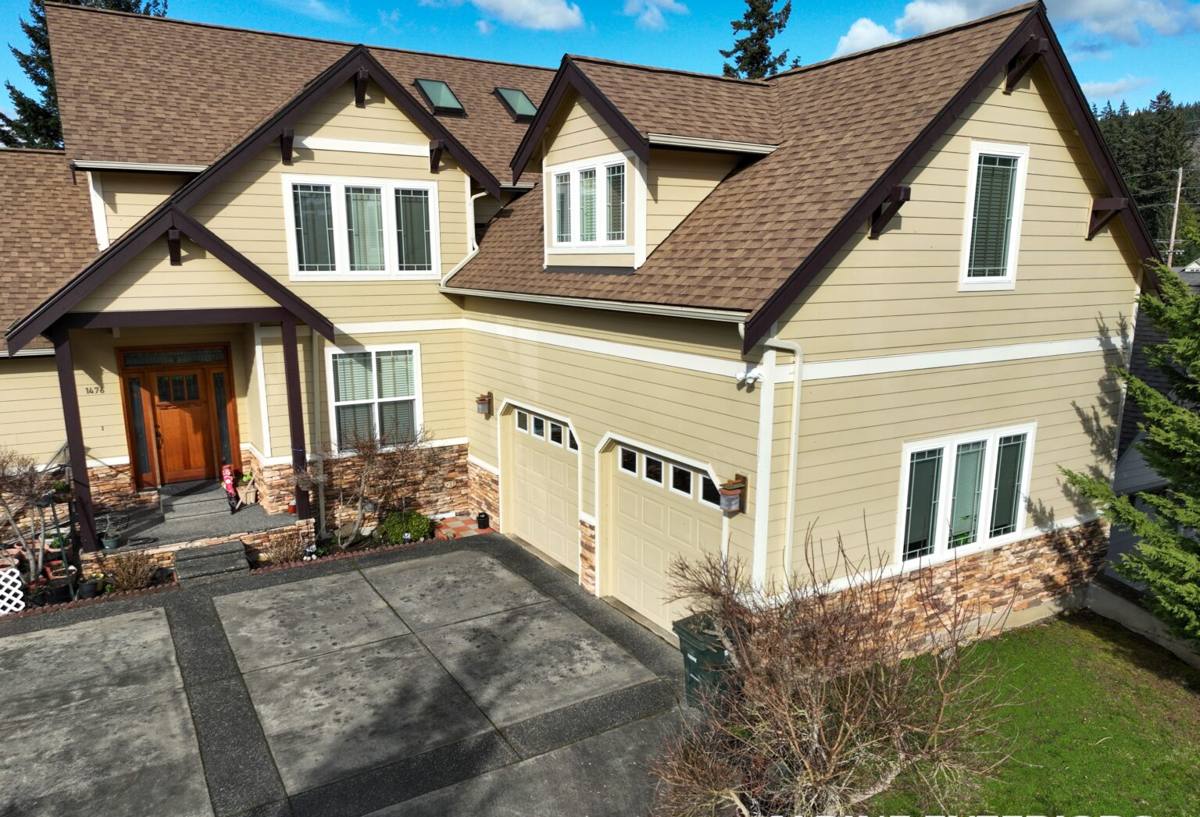
What Coastal Exposure Actually Does to Siding
Salt Air and Fasteners
Homes near Birch Bay's shoreline deal with airborne salt that settles on exterior surfaces and accelerates corrosion on anything metal — nail heads, trim fasteners, flashing. Uncoated or under-spec fasteners can start bleeding rust stains down the face of siding within a couple of years, and a corroding fastener eventually loses its grip. This is a materials and hardware decision as much as an installation one.
Driving Rain and Wind-Loaded Walls
Storms off the water don't just drop rain straight down — they push it sideways into wall assemblies, especially on the west- and south-facing elevations that catch the prevailing weather. Siding that isn't lapped, flashed, and sealed correctly at every seam gives that wind-driven water a path behind the cladding, where it can sit against sheathing and framing unseen for months.
Moss, Algae, and Shaded Walls
Whatcom County's long wet season and Cottonwood Beach's tree cover mean north-facing and shaded walls often stay damp far longer than sun-exposed ones. That constant moisture is exactly what moss and algae need to take hold. On absorbent or poorly finished materials, growth doesn't just look bad — it holds moisture against the surface and speeds up wear.
Why We Install Only James Hardie Fiber Cement
We standardized on James Hardie fiber cement siding for every job we do, including here in Cottonwood Beach, and it's a deliberate call rather than a default. Fiber cement doesn't rot, and it isn't a food source for the moss and algae that thrive in this climate the way it can be on wood-based products. It's non-combustible, which matters to insurers and to homeowners thinking about wildfire-adjacent risk in the broader Pacific Northwest. And Hardie's ColorPlus factory finish is baked on under controlled conditions, which holds up to salt air and UV exposure far more consistently than field-applied paint.
Hardie also engineers specific product lines — its HZ5 formulation, for example — for regions with more moisture and freeze-thaw cycling, which fits Whatcom County's climate better than a one-size-fits-all product. We don't install LP SmartSide, vinyl, or other fiber cement brands, and we're glad to talk through why if you're weighing options — but on a coastal job like this, the case for factory-finished, non-combustible fiber cement over a wet, salty winter after winter is a straightforward one.
What a Correct Installation Involves
Siding failures we get called out to fix are rarely a bad product — they're almost always an installation shortcut. The table below covers the details that actually determine whether siding performs for twenty-plus years or starts failing in five.
| Installation Element | Why It Matters in Cottonwood Beach |
|---|---|
| Weather-resistive barrier, properly lapped | Backs up the siding as the real drainage plane behind wind-driven rain |
| Flashing at windows, doors, and penetrations | Redirects water around openings instead of letting it track behind the wall |
| Rainscreen or drainage gap | Lets moisture that gets behind the cladding drain and dry instead of sitting against sheathing |
| Corrosion-resistant fasteners, set to spec | Resists salt-air corrosion and keeps boards from working loose over time |
| Correct clearance from grade, decks, and roof lines | Keeps splash-back and runoff from wicking into the bottom courses |
| Factory-finished ColorPlus panels, field-cut edges sealed | Preserves the factory coating's resistance to salt and moisture at every cut |
None of these steps are unusual on paper. What's unusual is doing all of them, every time, on every wall — including the ones that are harder to reach or slower to detail correctly.
Our Process on a Cottonwood Beach Home
- Walk-through and assessment. We look at existing siding condition, moisture staining, moss patterns by elevation, and any trim or flashing issues before we quote anything.
- Tear-off and substrate check. Old siding comes off and we inspect the sheathing underneath for hidden rot or water damage before anything new goes up — this is often where problems from a prior installation show up.
- Weather barrier and flashing. House wrap, window and door flashing, and drainage details are installed and inspected before a single piece of siding goes on.
- Hardie installation to spec. Panels or lap siding are installed with manufacturer-spec fastening, clearances, and sealed cut edges.
- Trim, caulking, and finish details. Corners, trim boards, and joints are finished and sealed against wind-driven rain.
- Final walkthrough. We go over the finished work with you before we consider the job done.
Signs Your Current Siding Is Losing the Fight
Homeowners often wait until siding looks bad to call, but the early warning signs show up well before that. Worth checking for:
- Persistent moss or algae streaking, especially on shaded or north-facing walls
- Rust streaks running down from nail heads or trim fasteners
- Soft or spongy spots when you press on the siding, particularly near the bottom courses
- Paint or finish that's peeling, chalking, or noticeably faded on wind-exposed elevations
- Gaps opening up at seams, corners, or trim joints
- Musty smell or visible staining on interior walls that back up to exterior siding
Any one of these on its own isn't necessarily an emergency, but a few of them together usually means water is getting further into the wall assembly than it should.
Why Hiring a Crew That Already Works This Area Matters
Siding installation isn't the same job in every part of Whatcom County. A crew used to drier, more sheltered inland lots can do competent work and still miss the details that matter most a few blocks from the water — the extra attention a west-facing wall needs, how much drainage gap makes sense given how wet the shaded sides of a Cottonwood Beach lot stay, or which fastener spec actually holds up to salt air over a decade instead of two winters. That's not a knock on general contracting skill — it's just what comes from doing the work in this specific environment repeatedly.
We also know the practical side of working here: what access looks like on tighter coastal lots, how weather windows affect scheduling during the wetter months, and what kind of prep keeps a job moving instead of stalling out waiting on a dry stretch.
What Affects the Cost of a Siding Installation
Every home is different, and we won't throw out a number without seeing the house, but these are the factors that move the price on most Cottonwood Beach jobs:
| Factor | How It Affects the Job |
|---|---|
| Tear-off scope | Removing and disposing of old siding adds labor versus a bare or already-stripped wall |
| Substrate condition | Hidden rot or water damage found during tear-off requires repair before new siding goes on |
| Home size and wall complexity | More corners, dormers, and trim detail increase both material and labor time |
| Siding profile chosen | Lap siding, panel siding, and shingle-style Hardie products differ in material and install time |
| Site access | Tight lots, decks, or landscaping close to the walls can slow staging and installation |
If you want a real number for your home, that starts with a site visit — not a guess based on square footage alone.
Get a Straight Answer About Your Siding
If your Cottonwood Beach home is showing moss buildup, rust streaking, soft spots, or siding that's just past its useful life, it's worth having someone look at it before another wet season goes by. We'll give you an honest read on what's actually going on and what correct James Hardie installation would look like for your specific home — no pressure, no inflated scope. Fill out the form below for a free estimate.