 Birch Bay Roofing
 Siding Repair in Lynden: Fixing What's Actually Wrong, Not Just What's Visible
Lynden sits inland in the Nooksack River valley in northern Whatcom County, close enough to the Canadian border and the Sound to sit inside the same marine-influenced weather system that shapes exterior work across this whole corner of Washington. Homes here still get a real dose of salt-tinged air, long stretches of wind-driven rain through fall and winter, and a moss and mildew season that can run most of the year on shaded, north-facing walls. Siding repair in this climate is rarely just a cosmetic fix — a cracked board, a stained panel, or a soft spot near a window is usually a symptom of moisture getting somewhere it shouldn't, and patching over that symptom without addressing the cause just buys a house a year or two before the same repair is needed again.
Birch Bay Roofing Co repairs siding on Lynden homes regularly, and we treat every repair call the same way: find out why the damage happened before deciding how to fix it. On new siding installations we work exclusively in James Hardie fiber cement, and that standard carries into repair work too — when we're patching, replacing damaged boards, or extending an existing Hardie wall, we match Hardie's product line and factory finish rather than substituting whatever's easiest to source. This page walks through what siding repair actually involves in Lynden's climate, how we handle homes that aren't already sided in Hardie, and when a repair is the right call versus when it isn't.
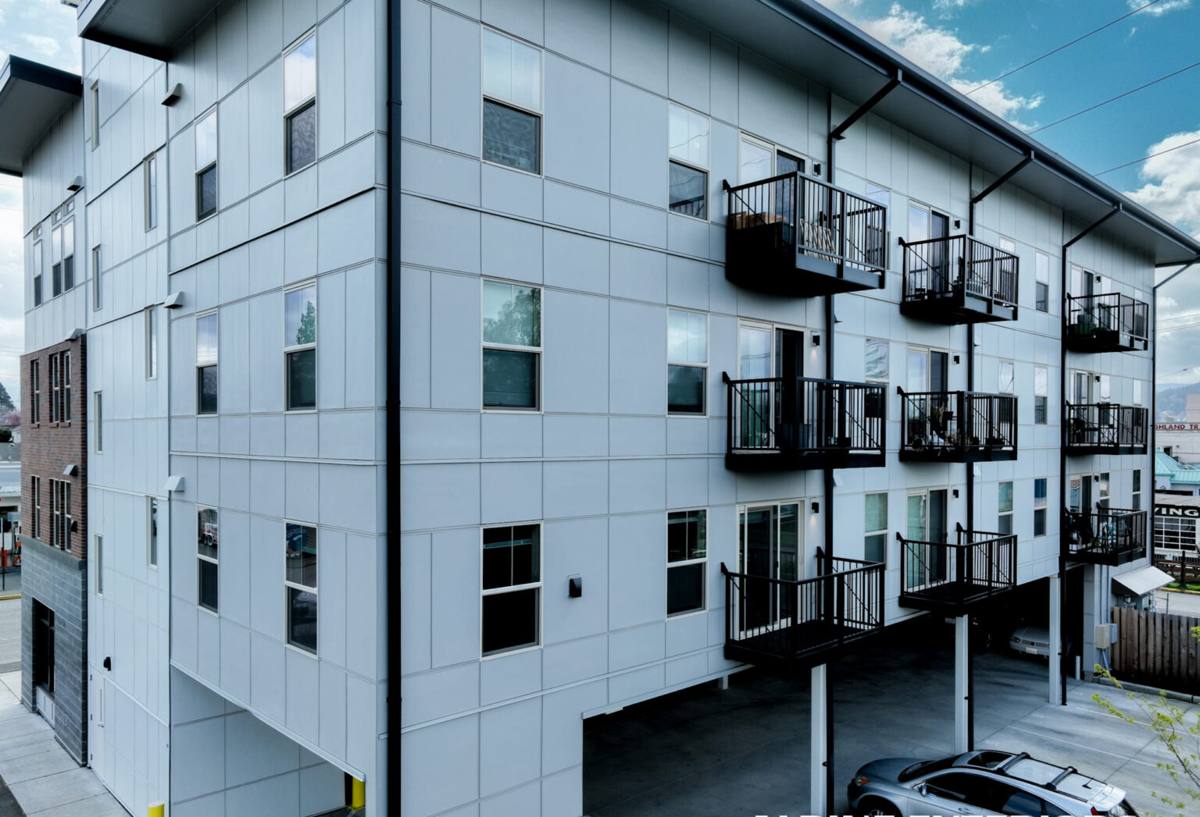
What Lynden's Climate Does to Siding Over Time
Wind-Driven Rain
Rain through this region's fall and winter rarely falls straight down. Wind pushes it sideways into wall assemblies, trim joints, and the flashing around windows and doors. That sideways load is why damage so often shows up in predictable spots — around window heads, at butt joints between siding courses, and low on the wall near grade — rather than evenly across a whole elevation. A repair that only addresses the visible crack or gap without checking how water is actually reaching that spot tends to fail again in the same place.
A Long Moss and Mildew Season
Mild temperatures, tree cover, and near-constant moisture add up to a moss and mildew season that can run close to year-round on shaded siding. Lynden's mix of open farmland and tree-sheltered residential lots means this varies a lot house to house — a wall facing an open field dries out fast after a storm, while a shaded wall against a tree line often stays damp for days. Moss and mildew don't just look bad; they hold moisture against the siding surface, which accelerates whatever damage is already starting underneath.
Temperature Swings and Material Fatigue
Whatcom County doesn't see extreme heat or deep cold most years, but the repeated cycle of damp, mild days punctuated by occasional cold snaps still stresses siding materials over time. Wood-based and engineered wood products expand and contract with that cycle more than fiber cement does, and repeated movement at joints and fastener points is a common source of the cracking and gapping that eventually calls for a repair.
What a Correct Siding Repair Actually Involves
Finding the Root Cause, Not Just Patching the Symptom
Before we replace a single board, we look at why that section failed. A cracked panel near a window is often a flashing problem, not a siding problem — water is getting behind the cladding at the window head and the siding is just where the damage became visible. Swapping in a new board without correcting the flashing detail behind it means the same failure shows up again, usually within a season or two.
Checking the Sheathing Behind the Damage
Once damaged siding comes off, we check the sheathing and house wrap underneath for rot, staining, or soft spots. This is the step that determines whether a repair stays a repair or needs to expand. Covering compromised sheathing with new siding hides a problem instead of fixing it, and on a home in this climate, hidden moisture behind the wall rarely stays contained to one small area for long.
Matching Material, Profile, and Finish
On homes already sided in James Hardie, we match the existing product line, plank width, and ColorPlus finish as closely as the manufacturer's current offerings allow, so a repair blends into the wall rather than standing out as an obvious patch. Hardie's factory-applied finish is manufactured in specific color and texture runs, which is why matching an older installation sometimes means working with Hardie's current product options rather than an exact discontinued match — we'll walk through what's realistically achievable before starting the work.
Repair or Replace? How We Help Lynden Homeowners Decide
Not every siding problem calls for a full re-side, and we don't default to recommending one. The right call usually comes down to how much of the wall is affected, what we find once we open it up, and how the existing material has held up overall.
| Situation | Usually Points To | Why |
|---|---|---|
| Localized crack or impact damage, sheathing dry underneath | Targeted repair | The problem is contained and the underlying structure is sound |
| Repeated staining or soft boards at one recurring spot | Repair plus a flashing or drainage fix | A root-cause moisture path needs correcting, not just a new board |
| Rot or soft sheathing spread across multiple wall sections | Larger repair or partial re-side | Isolated patches won't address moisture that's already spread |
| Siding older than 20-25 years with widespread wear | Full replacement | Repeated repairs on aging material rarely outperform a fresh install |
We explain what we find during the inspection and give an honest read on which category a given repair falls into, rather than steering every call toward the larger job.
Our Siding Repair Process
- Inspection: We look at the damaged area and the surrounding wall, checking for moisture patterns that extend beyond what's immediately visible.
- Diagnosis: We identify whether the cause is flashing failure, a caulking or sealant gap, impact damage, or simple material age, since that determines the actual scope of work.
- Sheathing check: Once damaged siding is removed, we inspect the sheathing and weather barrier underneath before closing anything back up.
- Repair and correction: We replace the damaged material, correct whatever moisture path caused the failure, and re-integrate flashing and house wrap properly at the repair area.
- Match and finish: New material is matched to the existing siding as closely as current product lines allow, and joints are sealed to manufacturer spec.
- Walkthrough: We review the finished repair with the homeowner and explain what caused the original damage, so it's clear what to watch for going forward.
Repairing Non-Hardie Siding — and What We Recommend Long-Term
Plenty of Lynden homes we're called out to aren't sided in James Hardie — vinyl, LP SmartSide, cedar, and primed wood are all common around the county, and we repair those materials when a homeowner needs a targeted fix rather than a full replacement. We won't tell someone with a few damaged vinyl panels that their only option is to re-side the whole house in fiber cement; a contained repair on existing material is often the right, honest answer.
Where we're direct with homeowners is when a pattern shows up — repeated repairs in the same area, or damage that keeps recurring because the material itself struggles with this climate's sustained moisture and moss exposure. At that point we'll say so plainly: continuing to patch a wood-based or vinyl system that's fighting this climate every wet season is a real, valid choice, but it's one with an ongoing cost. When a homeowner is ready to stop repairing and start replacing, James Hardie fiber cement is what we install, specifically because its non-combustible core, factory-applied ColorPlus finish, and climate-engineered HZ formulation hold up against the moisture and moss pressure that drives most of the repair calls we get in this area.
Signs Your Lynden Home's Siding Needs a Repair Call
- A cracked, split, or missing board or panel, especially after a windstorm
- Soft or spongy siding when pressed, particularly low on the wall or near window trim
- Staining or streaking that traces down from a window head or roof-to-wall transition
- Moss or dark growth that keeps returning to the same spot after cleaning
- Gapping, buckling, or separation at seams and butt joints
- Musty odor or visible staining on an interior wall that backs up to exterior siding
- Peeling paint or chalking limited to one section rather than the whole house
Any one of these is worth a call before the next wet season turns a contained repair into a larger one.
Why a Crew That Already Works Lynden Matters for Repair Work
Repair work rewards local pattern recognition more than a full installation does. A crew that sees siding failures across Lynden homes repeatedly learns which wall orientations stay damp longest, which flashing shortcuts show up most often in older installations, and which materials tend to hold up versus struggle against this valley's rain and moss exposure. That experience is what separates a repair that actually solves the problem from one that looks fine for a season and fails again in the same spot. It also means that if a repair does need a follow-up, it's a call to a crew that's still working in the same area and remembers the job, not a company that's moved on.
A Quick Checklist Before Hiring for a Siding Repair
- Ask whether they'll diagnose the underlying cause or just replace the visible damage
- Confirm they check sheathing condition before closing up any repair area
- Ask how closely they can match your existing siding material, profile, and finish
- Confirm current Washington contractor licensing and active liability insurance
- Get a written scope that specifies exactly what's being repaired and why
If your Lynden home has damaged, stained, or cracked siding, we're glad to take a look, explain what's actually causing it, and give you a straightforward read on whether a repair or something larger makes sense. Reach out using the form below for a free, no-pressure estimate.