 Birch Bay Roofing
 Why This Decision Matters More in Birch Bay Than Most Places
Choosing between metal roofing and asphalt shingles is never a one-size-fits-all decision, but it matters more here than in a lot of the country. Birch Bay sits right on the water, which means salt-laden air working on every exposed fastener and metal edge year-round. Add in driving rain off the Strait of Georgia and a moss season that can stretch from October through May in the shaded, damp corners of Whatcom County, and you've got a climate that will find the weak point in a poorly matched roofing system within a few winters. This guide walks through how each material actually performs under those conditions, not just the marketing claims you'll read elsewhere.
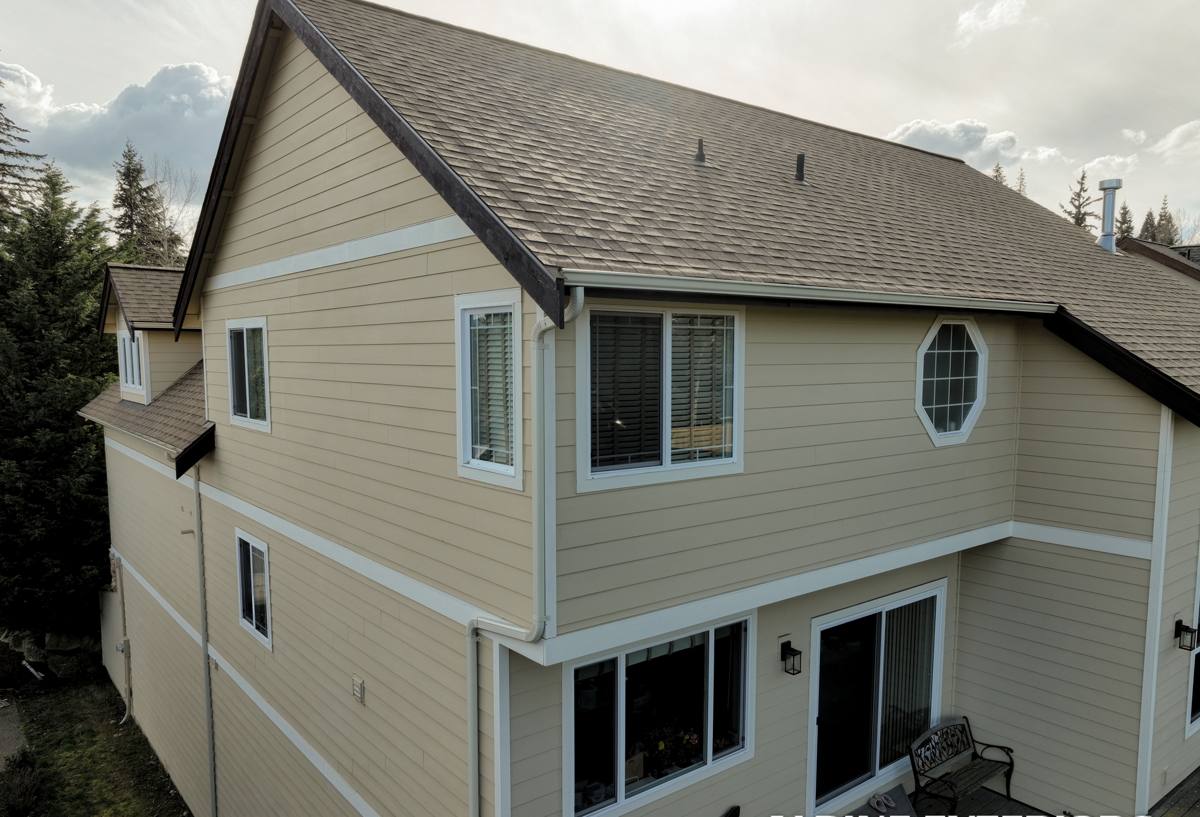
How Salt Air, Rain, and Moss Actually Affect Each Material
Salt Air and Corrosion
Metal roofing holds up well near the water, but only when the coating and fastener hardware are actually rated for a marine environment. Bare or lightly coated steel components — exposed screws, cheap flashing, uncoated cut edges — will show rust streaking within a few years this close to the bay. Asphalt shingles don't corrode, obviously, but their metal flashings, valleys, and fasteners are subject to the exact same salt exposure, so the "asphalt avoids the problem" idea is a myth. The real question with either material is whether the installer used marine-grade fasteners and properly coated flashing details, not just whether the field material is metal or shingle.
Driving, Wind-Driven Rain
Birch Bay's exposure means rain rarely falls straight down — it comes in sideways off the water. That puts a premium on lap details, underlayment quality, and fastening patterns rather than on the roofing material itself. Standing seam metal, when installed correctly, sheds wind-driven rain exceptionally well because it has fewer horizontal seams for water to work into. Asphalt shingles can perform just as well in wind-driven rain, but only with proper nailing patterns, ice-and-water shield in the vulnerable areas, and shingles rated for higher wind exposure — cutting corners on any of those shows up as leaks at the eaves and valleys first.
Moss and Algae
This is where the two materials genuinely diverge. Asphalt shingles have an organic mat and granule surface that moss and algae can gain a foothold on, especially on north-facing slopes and under tree cover — common conditions on wooded Birch Bay lots. Metal roofing has no organic material for moss to root into, so growth on a metal roof is almost always debris sitting on top rather than moss actually established in the surface. That doesn't mean metal is maintenance-free — needles and leaf litter still need to be cleared so they don't hold moisture against the panels — but the difference in moss resistance between the two materials is real and it's one of the bigger practical factors for anyone who's dealt with a green, streaked roof after a wet Pacific Northwest winter.
Lifespan and Durability Side by Side
Manufacturer warranties are a starting point, but real-world lifespan in a coastal, high-moisture climate depends heavily on installation quality and ongoing maintenance. Here's a general comparison based on typical performance in this region:
| Factor | Asphalt Shingles | Metal Roofing |
|---|---|---|
| Typical service life here | 18–25 years | 40–60 years |
| Wind resistance | Good, with proper nailing and rated shingles | Very good to excellent, especially standing seam |
| Moss/algae resistance | Moderate; needs periodic cleaning and treatment | High; little organic surface for growth to root into |
| Corrosion risk near salt air | Low for the shingle field; flashing still at risk | Low to moderate; depends entirely on coating/fastener grade |
| Impact resistance (hail, debris) | Good | Good to excellent, denting possible with cheaper panels |
| Weight on structure | Heavier per square | Lighter per square |
Upfront and Lifetime Cost Factors
Metal roofing almost always costs more upfront than asphalt shingles — that's not in dispute. Where the comparison gets more interesting is lifetime cost, since a well-installed metal roof can outlast two or even three asphalt roof replacements over the life of a home. Whether that trade-off makes sense for a given homeowner depends on how long they plan to stay in the house, what their insurance situation looks like, and their tolerance for periodic maintenance versus a bigger one-time investment.
| Cost Factor | Asphalt Shingles | Metal Roofing |
|---|---|---|
| Material cost | Lower | Higher, often 2–3x shingle material cost |
| Installation labor | Widely available, competitive pricing | Requires specialized crews, fewer bids typically |
| Maintenance cost over time | Periodic moss treatment, occasional repairs | Lower ongoing cost if installed correctly |
| Number of replacements over 50 years | 2 to nearly 3 | Typically 1, sometimes 0 |
| Insurance considerations | Standard rates | Some insurers offer discounts for impact/fire resistance |
Always ask your insurance carrier directly about any potential discount — it varies by company and isn't guaranteed, so treat it as a question to ask rather than an assumption to build a budget around.
Maintenance: What You're Actually Signing Up For
Neither roof is "no maintenance," despite what some marketing implies. Here's what ongoing care realistically looks like for each:
- Asphalt shingles: periodic moss and debris removal, especially on shaded slopes; inspection of flashing and valleys every couple of years; prompt repair of any lifted or missing shingles after wind events.
- Metal roofing: occasional clearing of needles and leaf debris from valleys and panel seams; inspection of fastener heads and sealant at penetrations; touch-up of any scratched coating before it becomes a rust point.
- Both: keeping gutters clear so water isn't backing up under the roof edge, and trimming overhanging branches that hold moisture against the surface.
Appearance, Resale, and Neighborhood Fit
Asphalt shingles remain the default look in most Birch Bay neighborhoods, and they come in enough colors and profiles to match nearly any home style without standing out. Metal roofing has become far more common on newer builds and remodels in the area, particularly standing seam in darker colors, and it reads as a durability upgrade to most buyers rather than an unusual choice. If you're in an HOA or a neighborhood with informal architectural expectations, it's worth a quick look at what's already on nearby roofs before committing either way — not because one option is wrong, but because resale value is partly about fitting the block.
Installation Considerations That Affect the Decision
A few structural and practical details should factor into your decision before you settle on a material:
- Roof pitch: very low-slope sections perform better with certain metal panel systems than with shingles, which need adequate slope to shed water properly.
- Existing structure: metal's lighter weight can be an advantage on older framing, though a proper load assessment should confirm this rather than assuming it.
- Ventilation: both materials need correct attic ventilation to avoid trapped moisture — this matters even more in our humid, marine climate than in drier regions.
- Tear-off vs. overlay: metal can sometimes be installed over an existing shingle roof with the right underlayment system, while shingles generally require full tear-off if the existing layer is already at two layers.
- Local contractor experience: not every roofing crew installs both materials equally often — ask directly about metal roofing experience specifically if that's the direction you're leaning.
Which Roof Fits Your Situation
There's no universally correct answer — it comes down to your budget horizon, how long you plan to own the home, and how much ongoing maintenance you're willing to do. Use this as a rough guide:
- Planning to stay long-term and want to minimize future roofing costs: metal roofing generally pencils out better over 30–40 years.
- Working with a tighter upfront budget or planning to sell within 10–15 years: asphalt shingles remain a sound, cost-effective choice.
- Home is heavily shaded with a history of moss problems: metal roofing removes one of the biggest recurring headaches.
- Home is in a very exposed, wind-driven-rain location: either material can perform well, but installation quality matters more than the material choice itself.
- Concerned about matching neighborhood character: take a walk around the block before deciding either way.
Getting an Honest Answer for Your Home
Every one of these factors — pitch, existing structure, sun exposure, tree cover, how close you are to the water — plays out differently on every lot in Birch Bay, and the right answer for your neighbor's house isn't necessarily right for yours. We're happy to walk your roof, look at your specific exposure and structure, and give you a straight comparison of both options with real numbers for your home — no pressure, no upsell, just the information you need to make the call. Fill out the form below for a free estimate.