 Birch Bay Roofing
 Roofing Built for Terrell Creek's Coastal Conditions
Terrell Creek sits close enough to Birch Bay and the Strait of Georgia that homes here deal with a version of coastal weather that inland Whatcom County properties simply don't see as often. Salt-laden air moves in off the water, driving rain comes in sideways during winter storms, and the shaded, moisture-heavy tree cover along the creek corridor keeps roofs and siding damp for days after a storm passes. None of that is unusual for this part of Washington, but it does mean the building materials and installation details that work fine forty miles inland can fall short here. We've built our approach around what actually holds up in this specific environment.
Birch Bay Roofing Co works throughout the Terrell Creek area on roofing, siding, windows, and decks. We're not a national franchise cycling crews through the region for a season — we're local, we know what Whatcom County winters do to a roof over ten or twenty years, and we stand behind the work because we're still going to be here if something needs a follow-up look.
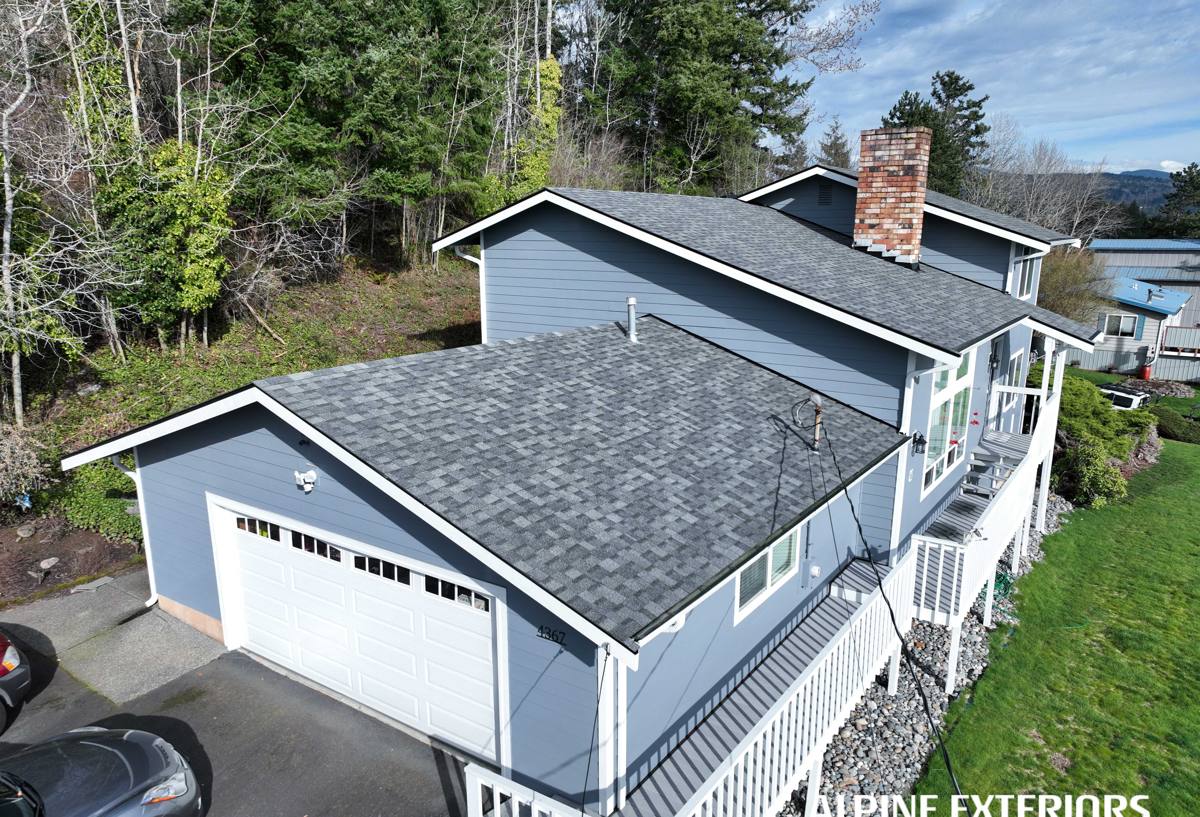
What the Local Climate Does to a Roof
Salt Air and Metal Fasteners
Proximity to saltwater accelerates corrosion on exposed metal — flashing, fasteners, gutter hardware, and any exposed screws on a metal roof panel. Standard galvanized fasteners can start showing rust streaks well before their expected service life is up. We spec corrosion-resistant fasteners and flashing for homes in this zone as a matter of course, not as an upsell.
Driving Rain and Wind-Driven Water
Whatcom County storms frequently bring rain at an angle, not straight down. That matters because it pushes water into laps, seams, and transitions that a purely vertical rain would never reach. Roof valleys, chimney flashing, and the step flashing where a roofline meets a wall are the spots most likely to leak under these conditions if they weren't detailed correctly the first time.
Moss, Shade, and Extended Damp Periods
Terrell Creek's tree cover is part of what makes the area attractive, but shaded roof sections stay wet longer after every rain, and that's exactly the environment moss needs to take hold. Moss isn't just cosmetic — as it grows, it lifts shingle edges, holds moisture against the roof deck, and can shorten the life of asphalt shingles significantly if it's left unmanaged for years at a stretch.
Roofing Materials That Make Sense Here
We install and repair a range of roofing systems, and we'll walk through the honest trade-offs for your specific roof rather than pushing one product for every house.
| Material | Typical Lifespan | Moss/Moisture Behavior | Best Fit |
|---|---|---|---|
| Architectural asphalt shingle | 25-30 years | Needs periodic moss treatment in shaded areas | Most homes, balanced cost and performance |
| Standing seam metal | 40-50+ years | Sheds moisture fast, resists moss buildup | Homes wanting long-term, low-maintenance coverage |
| Synthetic/composite shingle | 30-40 years | Good moisture resistance, impact-resistant | Homes wanting a shake or slate look without the upkeep |
| Cedar shake | 20-30 years with upkeep | High maintenance in damp, shaded settings | Homeowners committed to the look and the maintenance schedule |
Cedar shake has a real place in this region's architectural character, but we're upfront with clients about what it takes to maintain in a shaded, damp-prone location like Terrell Creek — it needs more attention than the other options on this list, and we'd rather a homeowner know that going in than be surprised five years later.
Siding That Holds Up to Salt Air and Moisture
Siding takes a similar beating to roofing out here — wind-driven rain finds gaps at trim and window transitions, and salt air is hard on certain finishes over time. We install fiber cement, engineered wood, and vinyl siding depending on the home's style and the homeowner's budget and maintenance preferences. Fiber cement in particular has become a strong choice for this coastal-influenced climate because it resists moisture damage and holds paint well over the years, though it's a heavier material that requires correct installation technique to perform as designed.
Whatever siding material we're working with, the details that actually prevent problems are the same: proper flashing at every window and door, correct overlap on lap siding, sealed penetrations, and a drainage plane behind the siding that lets any moisture that does get in find its way back out instead of sitting against the wall sheathing.
Windows: Sealing Out the Wind and Damp
Older windows in Terrell Creek homes often show their age through drafts, fogging between panes, and soft or discolored trim from years of moisture exposure. Replacing windows in a coastal-influenced setting is as much about the installation as the product itself — flashing details around the window opening determine whether water gets diverted away or finds its way into the wall cavity. We install a range of vinyl and fiberglass window lines chosen for energy performance and moisture resistance, and we take the same care on a single window replacement as we do on a whole-house job.
Decks Built for Wet, Shaded Yards
A lot of Terrell Creek properties back up to trees or sit close enough to the creek corridor that decks stay shaded and damp longer than decks in open, sunnier parts of the county. That affects material choice and structural details:
- Composite decking resists moisture absorption and doesn't need annual staining, which matters in a shaded yard that never fully dries out
- Pressure-treated framing rated for ground contact where structural members sit close to grade or damp soil
- Proper joist spacing and flashing at the ledger board, since ledger attachment is one of the most common failure points on older decks
- Gaps between deck boards sized to let water drain rather than pool
- Stainless or coated fasteners to resist the same corrosion pressure that affects roofing hardware
Whether you're building new or replacing an aging deck, we design for the specific conditions of the site rather than defaulting to a generic spec.
What to Check Before You Hire Anyone for Exterior Work
Whatcom County has no shortage of contractors advertising roofing, siding, or deck work, and it's worth being selective given how much a poor installation can cost down the road. A short checklist worth running through:
- Washington contractor license and current bond/insurance, verifiable through the state's contractor lookup
- A physical presence in the region, not just a phone number and a crew that drives in from out of area
- Written estimates that spell out materials, scope, and warranty terms — not a verbal number
- Manufacturer certifications if the product line requires them for warranty coverage
- Willingness to explain why a given material or approach fits your specific home, not just a standard package
Why a Local Crew Matters for Terrell Creek Homes
There's a practical reason local experience matters here beyond familiarity with the area: crews who work Whatcom County roofs regularly see the same failure patterns repeat — the same flashing shortcuts, the same fastener corrosion, the same moss buildup in shaded valleys — and that pattern recognition shapes how we detail a new installation or diagnose a repair. A crew unfamiliar with this specific coastal-influenced climate might build to a generic spec that's adequate somewhere drier and calmer, but not quite enough here.
We're also positioned to respond quickly if something comes up after the job is done, whether that's a follow-up question, a warranty item, or a storm that exposes an issue nobody could have predicted. That kind of accountability is harder to get from a company that isn't actually based in the region.
Maintenance That Extends the Life of Your Investment
Regardless of which materials are on your home, a few maintenance habits go a long way in this climate: keep gutters clear so water isn't backing up under roof edges, have shaded roof sections checked for moss buildup every year or two, and keep an eye on caulking and sealant around windows and siding transitions since UV and moisture cycling break those down faster here than in drier climates. Catching a small issue during a routine check is almost always cheaper than repairing the damage it causes if it's ignored for a few seasons.
If you're in Terrell Creek and want a straight answer on what your roof, siding, windows, or deck actually need, we're glad to take a look. Use the form below to request a free, no-pressure estimate — no obligation, just an honest assessment from a crew that knows this area.