 Birch Bay Roofing
 Terrell Creek's Exterior Walls Work Harder Than Most
Terrell Creek sits close enough to the water that homes here deal with a different set of conditions than siding twenty miles inland. Salt-laden air off the Salish Sea settles on exterior surfaces year-round, wind-driven rain comes in sideways during winter storms, and the tree cover that gives the neighborhood its character also means long stretches of shade where moss and algae never fully dry out. None of that is unusual for Whatcom County, but it adds up faster on a home that's exposed to marine air on a near-daily basis. Siding that would hold up fine in a drier, more sheltered part of the county can start showing problems within a few years out here.
That's the backdrop for every siding conversation we have with Terrell Creek homeowners. The material matters, but so does understanding what it's actually being asked to withstand.
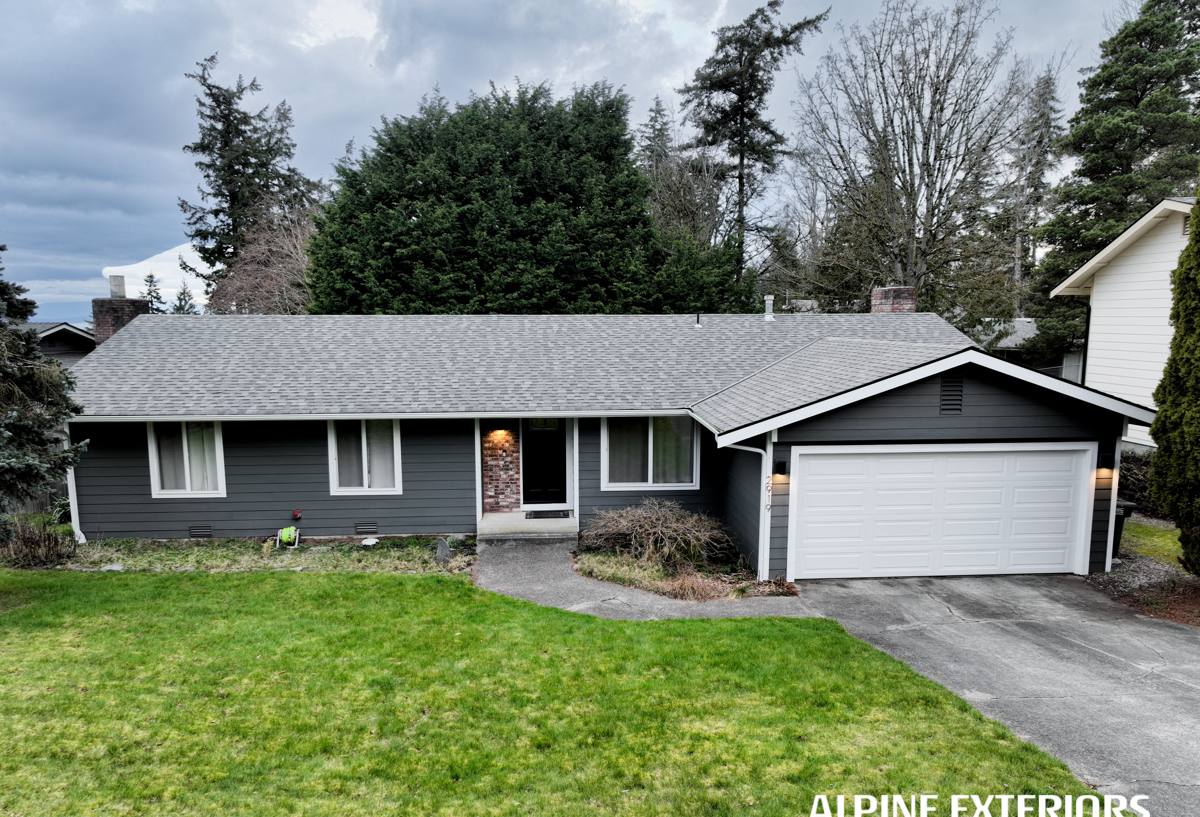
What Salt Air, Rain, and Moss Actually Do to Siding
Salt Air
Airborne salt is mildly corrosive and hygroscopic — it pulls moisture out of the air and holds it against whatever surface it lands on. On metal fasteners, trim, and flashing, that means accelerated corrosion if the wrong hardware is used. On wood-based siding products, it means the surface stays damp longer between rain events, which speeds up rot and paint failure.
Driving Rain
Wind off the water doesn't just wet the face of a wall — it drives moisture up under laps, into seams, and behind trim if the siding isn't detailed correctly. A house on a more sheltered inland lot can get away with sloppier flashing work for years. A house catching wind straight off Birch Bay usually can't.
Moss and Algae
Shaded, north-facing walls and anything under tree canopy stay damp for extended periods in the fall and winter. That's exactly the environment moss and algae need to take hold. On porous or textured siding surfaces, growth gets a foothold and is genuinely hard to remove without damaging the material underneath.
Put those three together and you get a climate that punishes any siding material with weak points in moisture resistance, fastener corrosion resistance, or surface durability. That's the lens we use when we talk to Terrell Creek homeowners about what to put on their walls.
How Common Siding Materials Hold Up in This Climate
| Material | Salt air exposure | Moisture behavior | Moss/algae resistance |
|---|---|---|---|
| Vinyl siding | Doesn't corrode, but can warp and fade faster in reflected coastal sun | Not water-absorbent, but seams and J-channels are common entry points for wind-driven rain | Smooth surface sheds growth better, but panels can trap moisture behind them |
| Primed spruce / cedar | Vulnerable — salt-driven moisture accelerates rot at end grain and joints | Absorbs water readily; needs consistent repainting to stay protected | Poor — organic material is a food source for moss and mildew |
| LP SmartSide (engineered wood) | Better than raw wood but still wood-based; edges and cuts need diligent sealing | Engineered strand core can swell if water gets past the coating | Moderate; textured finish can hold moisture longer than smooth surfaces |
| James Hardie fiber cement | Non-organic, doesn't corrode or feed rot | Dimensionally stable — doesn't swell, cup, or absorb water like wood-based products | Factory-finished surface resists growth better than raw or painted wood |
This isn't a knock on every alternative product across the board — vinyl and engineered wood siding have their place, and plenty of installers do good work with them. But for the specific combination of salt air, driving rain, and heavy moss pressure that Terrell Creek deals with, we've made a professional call: fiber cement is the material we're willing to put our name behind here.
Why We Only Install James Hardie
We don't install LP SmartSide, vinyl, Cemplank, Allura, primed spruce, or cedar siding. That's a deliberate standard, not a lack of options. Here's the reasoning:
- Non-combustible material: James Hardie fiber cement doesn't burn, which matters given wildfire smoke seasons are becoming a more regular part of Pacific Northwest summers.
- Climate-engineered product lines: Hardie builds region-specific formulations (their HZ5 and HZ10 lines) rather than a one-size-fits-all board, which matters in a marine climate like ours.
- Factory-applied ColorPlus finish: The finish is baked on at the factory under controlled conditions, rather than field-painted, which gives more consistent coverage and better long-term color retention against salt exposure and UV.
- Transferable warranty: A strong, transferable manufacturer warranty protects the investment for the current owner and adds value if the home sells.
- Proven track record when installed to spec: Fiber cement's biggest failures almost always trace back to installation shortcuts — gaps, wrong fasteners, missed flashing — not the material itself. Get the install right, and it performs for decades.
We'd rather turn down work on a product we don't stand behind than install something in this climate that we know will cause a homeowner problems in five or ten years.
What a Correct Fiber Cement Installation Actually Involves
Fiber cement siding is only as good as the installation underneath it. In a climate like Terrell Creek's, shortcuts show up faster than they would elsewhere. A correct install includes:
Water Management Before the Siding Ever Goes On
A properly lapped weather-resistant barrier, correctly flashed windows and doors, and drainage space behind the siding so any incidental moisture can escape instead of sitting against the wall.
Proper Clearances and Fastening
Hardie specifies minimum clearances from grade, roof lines, and decks, plus specific fastener types and spacing. In a salt-air environment, using the wrong fastener material is one of the fastest ways to get streaking and premature corrosion at every nail head.
Sealed Joints and Butt Seams
Every horizontal joint and butt seam is a potential water entry point. Correct caulking, or engineered joints designed to shed water without caulk, keep wind-driven rain from working its way behind the boards.
Manufacturer-Compliant Trim Details
Corners, window trim, and transitions to roofing or masonry all need to be detailed to keep water moving outward and downward, not pooling or wicking into end grain.
Our Process for a Terrell Creek Project
- On-site assessment: We look at your home's specific exposure — how much direct wind and salt spray it gets, how much shade and moisture the walls hold, and the condition of what's currently on the house.
- Removal and inspection: Old siding comes off and we check the sheathing underneath for hidden rot or water damage before anything new goes up.
- Water barrier and flashing: We install or repair the weather-resistant barrier and flash every penetration, window, and door before the first board goes on.
- Hardie installation to spec: Boards are installed with correct clearances, fastener type, and joint treatment for our climate — not generic defaults.
- Trim, caulking, and final detailing: Corners, trim, and transitions are finished to shed water correctly.
- Walkthrough: We go over the finished work with you and answer questions about care going forward.
Living with Fiber Cement Siding in a Salt-Air, Moss-Prone Climate
Fiber cement is low-maintenance compared to wood, but "low-maintenance" doesn't mean "no maintenance" — especially this close to the water. A few habits go a long way:
- Rinse siding with a garden hose once or twice a year to knock off accumulated salt residue and airborne debris.
- Keep gutters clear so overflow doesn't run down the face of the siding during heavy rain.
- Trim back vegetation that keeps a wall shaded and damp, since that's where moss gets its start.
- Address any moss or algae growth early with a gentle wash rather than letting it establish and spread.
- Have caulked joints and trim inspected periodically, since caulk is the one component that ages faster than the board material itself.
What to Look for in a Siding Contractor for This Area
Not every contractor who installs siding understands what a coastal Whatcom County climate demands. Before hiring anyone for a Terrell Creek project, it's worth asking:
- Are they a factory-certified James Hardie installer, and can they explain the difference between Hardie's product lines?
- Do they detail flashing and water barriers as standard practice, or only when asked?
- Can they speak specifically to how they adjust installation for salt air and wind-driven rain, not just generic siding practices?
- Do they carry proper licensing and insurance for exterior work in Washington State?
- Will they put the fastener type, clearances, and warranty terms in writing?
Cost Factors for a Terrell Creek Siding Project
| Factor | Why it affects cost |
|---|---|
| Home size and wall complexity | More square footage and more corners, dormers, or trim details mean more labor and material |
| Condition of existing sheathing | Hidden rot or water damage found during tear-off requires repair before new siding goes on |
| Siding profile and Hardie product line | Lap width, texture, and whether HZ5 or HZ10 formulation is specified affect material cost |
| Trim and accessory work | Corner boards, window trim, and fascia detailing add labor beyond the flat wall area |
| Access and site conditions | Tree cover, slope, and proximity to neighboring structures can affect equipment and staging |
Every home is different, and the only way to get an accurate number is a walk-through of your specific property. We're glad to put together a free, no-pressure estimate so you know exactly what a correctly installed James Hardie system would cost for your home.