 Birch Bay Roofing
 James Hardie Siding for Point Whitehorn's Shoreline Homes
Point Whitehorn sits on the bluffs and wooded lots along the Strait of Georgia, just north of Birch Bay in Whatcom County. It's a quieter, more rural stretch of coastline than the town center — fewer close-together lots, more tree cover, and homes that sit right up against open water with very little between the siding and the weather coming off the strait. That combination of direct marine exposure and heavy shade makes Point Whitehorn one of the tougher spots in the county for exterior siding to hold up over time.
We install James Hardie fiber cement siding exclusively, and Point Whitehorn is regular territory for our crew. This page is specifically about siding work in this one area — what the climate does to a house here, what a correct Hardie installation actually involves, and how our process works from first look to finished wall. If you also need roofing, window, or deck work, we handle that too, but siding is the focus here.
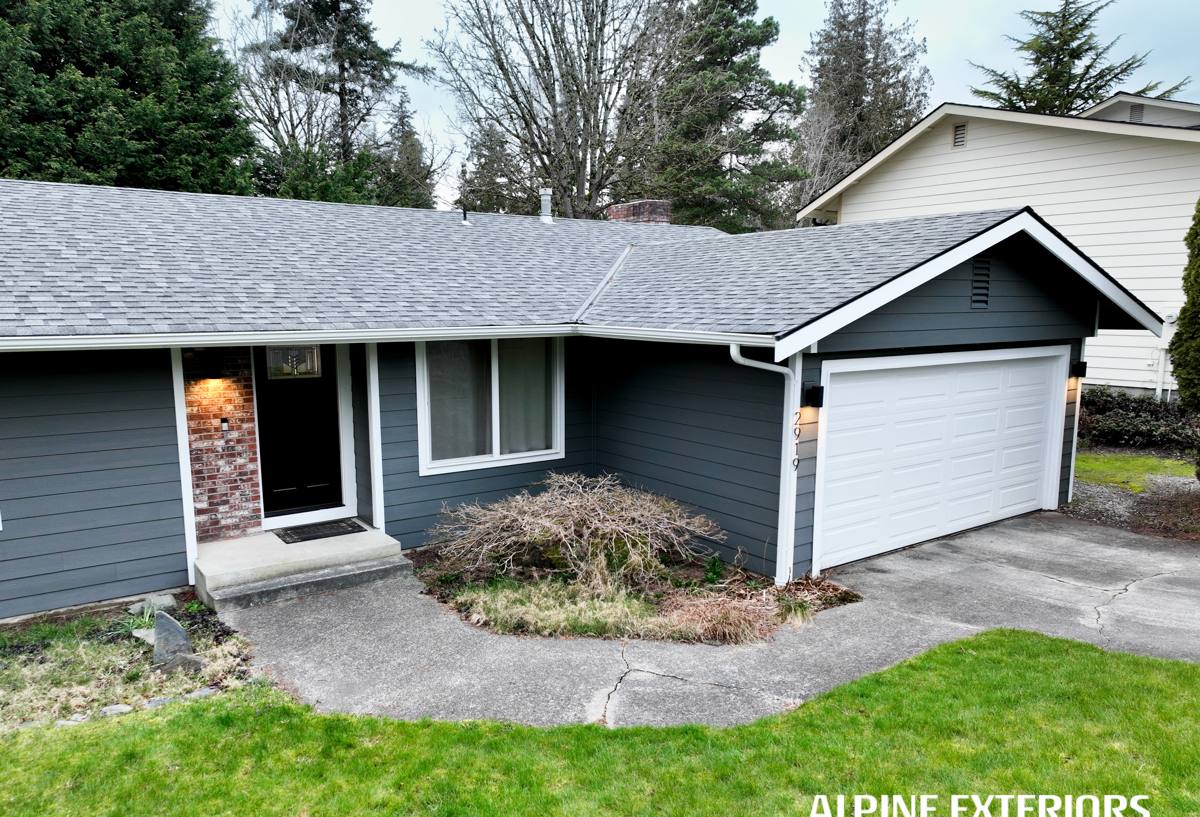
What Point Whitehorn's Climate Does to Siding
Direct Salt Air Off the Strait
Homes on or near the bluffs get a steady dose of salt-laden marine air with very little to break it up before it reaches the wall. Salt accelerates corrosion on fasteners, flashing, and any exposed metal trim, and it wears down lower-grade paints and coatings faster than a drier, more sheltered location would. On an exposed lot, the material and hardware choices on the siding matter more than they would a few miles inland, because there's less margin for a cut corner this close to open water.
Driving Rain and Wind Off the Water
Storms coming off the strait push rain sideways into wall assemblies rather than letting it fall straight down, and bluff-top lots with little windbreak take that load directly. That sideways-driven moisture finds gaps a careless installation would leave behind — around trim, at butt joints, and anywhere flashing wasn't lapped correctly. It's a heavier moisture load than the area's rainfall totals alone suggest, and it's the reason installation details matter as much as the siding product itself.
A Long Moss Season Under Tree Cover
Point Whitehorn's wooded lots bring a different problem than the open bluff does: shade. Mild temperatures and near-constant moisture already give Whatcom County a long moss and mildew season, and a heavily treed lot extends that season further by keeping walls damp longer between storms. North-facing siding and anything shaded by mature trees is usually the first place moss and mildew take hold, and any material with even slight surface porosity gives it something to grow on.
Why James Hardie Is the Right System for This Exposure
We install James Hardie fiber cement siding and nothing else. That's not a brand preference — it's a professional standard built from years of installing, inspecting, and tearing off siding in exactly this kind of coastal, high-moisture environment. Here's what the product actually brings to a Point Whitehorn home:
- Non-combustible core: Fiber cement doesn't feed a fire the way wood-based siding can, which matters for both safety and insurance considerations on a rural, wooded lot.
- Factory-applied ColorPlus finish: Color is baked on under controlled factory conditions instead of brushed on in the field, so it holds up longer against fading, chalking, and moisture than site-applied paint does.
- Climate-engineered HZ5 formulation: Hardie's HZ5 product line is built for regions with sustained moisture exposure and freeze-thaw cycling, which describes marine Whatcom County well.
- Dimensional stability: Fiber cement doesn't swell, cup, or warp the way engineered wood products can after repeated wetting off the water.
- Strong transferable warranty: Hardie backs the product with one of the more robust warranty structures in the industry, provided the installation follows their published spec.
We won't install LP SmartSide, vinyl siding, Cemplank, Allura, primed spruce, or cedar. Each has a place in the market, and plenty of homeowners are satisfied with them in milder settings. But on an exposed shoreline lot like the ones in Point Whitehorn, we've made the call to install one system we fully stand behind rather than offer something cheaper that quietly shifts long-term maintenance risk back onto the homeowner.
Choosing a Hardie Product Line for This Setting
Hardie makes several distinct siding profiles, and the right one depends on the home's style and how exposed the lot is. We walk homeowners through the real trade-offs rather than defaulting to whatever's easiest to install.
| Hardie Product | Best Fit | Point Whitehorn Consideration |
|---|---|---|
| HardiePlank lap siding | Traditional and craftsman-style homes | Most common choice; performs well on both open bluff and wooded lots when installed with correct lap and fastener spacing |
| HardiePanel vertical siding | Contemporary or rustic builds, board-and-batten look | Clean look for rural, wooded lots; joint and batten detailing needs extra attention against sideways-driven rain |
| HardieShingle siding | Cottage or shingle-style homes | More seams to detail correctly; best suited to more sheltered lots rather than the most wind-exposed bluff positions |
| HardieTrim boards | Corners, window and door casing, fascia | Paired with any of the above; corrosion-resistant fastening matters most here given salt exposure |
None of these profiles are interchangeable in terms of installation difficulty. A lap siding job and a vertical panel job have different joint details, different fastening patterns, and different failure points if either is rushed — which is part of why we walk every Point Whitehorn property in person before recommending a product line.
What Correct Installation Involves Here
Hardie siding only performs the way it's engineered to when it's installed to the manufacturer's spec, and on an exposed shoreline lot, skipping any of these steps shows up faster than it would somewhere more sheltered.
- Rain screen gap: A drainage cavity behind the siding lets any moisture that gets past the exterior surface drain and evaporate instead of sitting against the wall sheathing.
- Correct fastener type and spacing: Hardie specifies corrosion-resistant fasteners and precise spacing for a reason — loose spacing or the wrong fastener is one of the most common causes of early failure we find on tear-offs near the water.
- Properly lapped house wrap and flashing: Every seam, window opening, and penetration needs to shed water downward and outward, especially on walls that face open water directly.
- Sealed butt joints and trim transitions: Open or poorly sealed joints are the first place salt-laden, wind-driven moisture works its way behind the siding.
- Clearance from grade and roof lines: Proper standoff keeps splash-back moisture and roof runoff from sitting against the bottom courses of siding.
None of this is exotic — it's the manufacturer's own installation spec, applied consistently rather than shortcut on the details that are hardest to see once the siding is up.
Our Process for a Point Whitehorn Siding Project
We start with an on-site walk of the home, looking specifically at how the existing siding — or the bare sheathing, on new construction — has handled moisture and salt exposure so far, and how exposed the lot is to wind off the water versus tree cover. From there we put together a clear, written scope covering product line, color, and any substrate repair we find once old siding comes off, before any work begins. Tear-off often reveals moisture damage that wasn't visible from outside, and we'd rather flag that upfront than discover it mid-project.
Through installation, the rain screen gap, fastener spacing, and flashing details covered above are standard practice on every job, not optional upgrades. We finish with a walk-through so the homeowner can see the completed work and ask questions before we consider the project done.
Why a Crew That Already Works Point Whitehorn Matters
A contractor who regularly works this stretch of coastline already knows that a bluff-top lot with full water exposure needs different detailing than a wooded, more sheltered lot a few hundred feet inland — even though both are technically in Point Whitehorn. That local familiarity shows up in practical decisions: where extra flashing attention is worth the time, which fastener grade to use given how close a home sits to open water, and which walls will stay damp longest under tree cover. Those are exactly the details that determine whether a siding job lasts one wet season or several decades.
What to Ask Before Hiring for Siding Work in Point Whitehorn
- Ask what siding material they install and why, and whether they stand behind it with a written, transferable warranty
- Confirm current Washington contractor licensing and active liability insurance
- Ask how they detail flashing and rain screen gaps specifically for wind-driven rain off open water
- Ask what happens if they find moisture damage under the old siding once tear-off starts
- Get a written scope of work, including product line and color, before signing anything
Signs a Point Whitehorn Home Needs New Siding
- Soft or spongy siding, especially low on the wall or around window and door trim
- Moss or dark staining that returns quickly after cleaning, particularly on shaded or north-facing walls
- Rust streaking or visibly corroded fasteners and trim near the water-facing side of the house
- Peeling paint, chalking, or visible warping on older wood or engineered wood siding
- Gaps opening up at butt joints, corners, or trim transitions
- Interior wall staining or a musty smell near exterior walls after a windy storm
If your Point Whitehorn home needs new siding, or you're planning ahead for a home that's starting to show its age against the salt air and wind off the water, we're glad to walk the property and give an honest, no-pressure read on what it actually needs. Reach out using the form below to schedule a free estimate.