 Birch Bay Roofing
 Roofing for the Cherry Point Area
Cherry Point sits along the western edge of Whatcom County, tucked between Birch Bay and Ferndale on a stretch of shoreline that takes weather straight off the Strait of Georgia. Homes out here run from older rural properties on larger lots to newer construction closer to the water, and nearly all of them share the same roofing challenges: salt-laden wind, long stretches of wet weather, and tree cover that keeps things shaded and damp for much of the year. We've worked roofs across this stretch of the county long enough to know that a roof spec'd for a drier inland town doesn't always hold up the same way out here.
Birch Bay Roofing Co. handles roofing, siding, windows, and decks, and on a coastal property those four things are more connected than most homeowners realize. A roof that's shedding water properly but dumping it onto failing siding, or a deck that's trapping moisture against a wall, creates problems that show up as a "roof leak" months later. We look at the whole exterior when we're out at a Cherry Point property, not just the shingles.
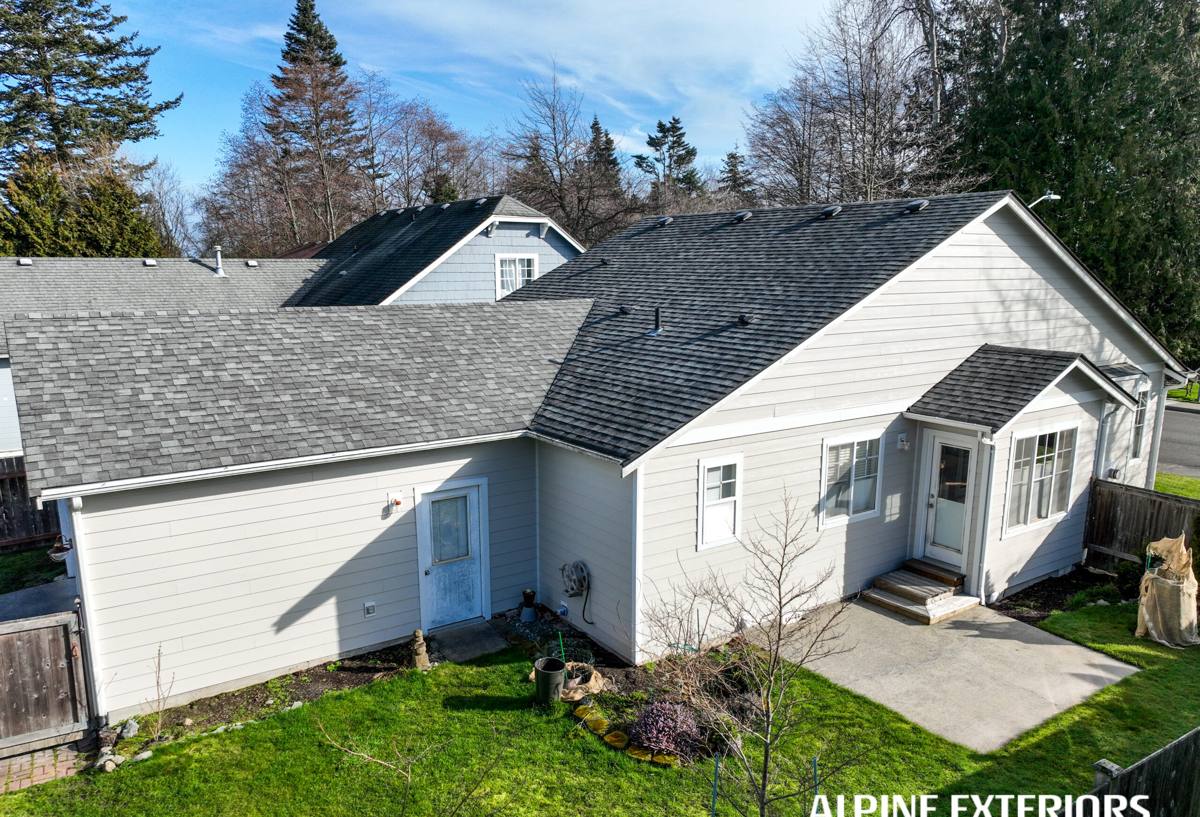
What the Climate Actually Does to a Roof Here
Salt Air
Proximity to saltwater accelerates corrosion on any exposed metal — flashing, fasteners, gutter hardware, vent caps. Standard galvanized fasteners can start showing rust streaks years before they would inland. It's not dramatic, but it's steady, and it's one of the first things we check on an older Cherry Point roof: are the exposed metal components holding up, or are they the weak point in an otherwise sound roof?
Driving Rain
Whatcom County doesn't just get rain, it gets rain pushed sideways by wind coming off open water. That matters for roofing because driving rain finds weaknesses that vertical rain never would — poorly lapped flashing, undersized drip edge, gaps around penetrations. A roof that's watertight in a calm rain can still leak in a wind-driven storm if those details weren't done right the first time.
Moss Season
Between the tree cover common around Birch Bay and Cherry Point and the region's long wet season, moss and algae growth is close to a year-round condition rather than a seasonal nuisance. Moss holds moisture against the roof surface, works into shingle laps, and over time lifts shingles enough that wind and rain get underneath. A roof that looks fine from the ground can already have moss doing damage at the ridge or in the valleys, where it's hardest to spot.
Roofing Materials: What Holds Up on the Cherry Point Coast
There's no single "best" roofing material — the right choice depends on the home, the budget, and how much maintenance the homeowner wants to take on. Here's how the common options compare for a coastal Whatcom County property:
| Material | Typical Lifespan | Moss/Moisture Behavior | Considerations Here |
|---|---|---|---|
| Architectural asphalt shingle | 25–30 years | Algae-resistant (AR) versions resist streaking better; still needs periodic moss removal | Good value, wide color range, easiest to repair in sections |
| Standard 3-tab shingle | 15–20 years | More prone to moss and algae staining without AR granules | Lower upfront cost, shorter service life in this climate |
| Metal roofing (standing seam or panel) | 40–50+ years | Sheds moss and moisture very well; minimal organic growth | Higher upfront cost, quieter than people expect with proper underlayment |
| Cedar shake | 20–30 years with upkeep | Absorbs moisture; needs regular treatment and cleaning to resist moss and rot | Traditional look, but the highest maintenance burden in a wet coastal climate |
We don't push cedar shake on properties out here as a low-maintenance option — it isn't one. It can look great and last a long time, but only with a homeowner committed to regular cleaning and treatment. If someone wants that look with less upkeep, we'll talk through composite or engineered shake alternatives instead of just selling what's easiest to install.
Signs a Cherry Point Roof Needs a Closer Look
- Moss visible along the ridge, in valleys, or on the north-facing slope (the slope that dries out slowest)
- Granules collecting in gutters or at downspout outlets
- Rust streaking below metal flashing, vents, or fasteners
- Soft spots or discoloration on interior ceilings, especially after a windy rainstorm
- Shingles curling, cupping, or lifting at the edges
- Daylight visible through the roof deck from inside the attic
- Gutters pulling away from the fascia or overflowing during heavy rain
Any one of these on its own isn't necessarily an emergency, but they're worth a professional look before the next storm season rather than after.
How We Approach a Roofing Project Out Here
Inspection First
We start with a full look at the roof deck, flashing, ventilation, and gutters — not just the shingle surface. On coastal properties, we pay particular attention to how the roof is ventilating. Poor attic ventilation traps moisture, which speeds up rot and gives moss even more to work with from underneath.
Honest Scope
Not every roof out here needs a full tear-off. Sometimes it's targeted repair, flashing replacement, or a thorough moss treatment and gutter clean-out that buys years of extra life. We'll tell you which situation you're in rather than defaulting to the biggest job.
Materials Suited to the Site
Where a property is more exposed to wind and salt, we lean toward corrosion-resistant fasteners and flashing details built for that exposure, and we'll talk through algae-resistant shingle options or metal roofing where the moss and moisture load is heavy.
Cleanup and Walkthrough
We walk the finished work with the homeowner, magnet-sweep for stray fasteners, and make sure gutters and downspouts are clear and functioning before we consider the job done.
The Rest of the Exterior: Siding, Windows, and Decks
A roof doesn't work in isolation. On a lot of Cherry Point and Birch Bay homes, the same salt air and moisture that stress a roof are working on the siding, window seals, and deck structure at the same time.
Siding
Siding takes the brunt of wind-driven rain at wall level. Failing caulk joints, cracked panels, or trim that's separated from the wall gives water a path behind the siding, where it can sit against sheathing for months before anyone notices. We check siding condition any time we're doing roof work nearby, since the two systems share flashing details at rooflines, chimneys, and dormers.
Windows
Older windows with failed seals or worn weatherstripping let both moisture and cold air in, and near the water that failure tends to happen faster. Window flashing that ties into siding and roofing is another spot where a disconnect between trades often causes leaks that get blamed on the roof.
Decks
Decks facing open water or wind exposure take a beating from both sun and salt spray. Fastener corrosion, ledger board rot where the deck meets the house, and gaps between boards that trap debris are the most common issues we find. A deck ledger that's letting water into the house band joist is a slow, hidden problem worth catching early.
Because we handle all four trades, we can flag an issue in one system while we're working on another, instead of a homeowner needing to bring in a separate crew for every piece of the exterior.
A Simple Maintenance Rhythm for This Climate
| Task | How Often Here | Why It Matters |
|---|---|---|
| Gutter cleaning | 2x per year (fall and spring) | Overflow during driving rain forces water under roof edges and siding |
| Moss treatment/removal | Annually, more on shaded roofs | Moss holds moisture and lifts shingles over time |
| Roof inspection | Every 1–2 years, or after major windstorms | Catches flashing and fastener issues before they become leaks |
| Deck fastener/board check | Annually | Salt air accelerates corrosion on exposed hardware |
| Window seal check | Every 2–3 years | Failed seals let in both moisture and cold, coastal exposure speeds wear |
Why a Local Crew Makes a Difference
A crew that works this specific stretch of Whatcom County — Birch Bay, Cherry Point, and the surrounding shoreline — knows what kind of exposure a given lot is likely to see just from its orientation to the water and the tree line. That's not something a generic bid from an out-of-area contractor accounts for. It shows up in small decisions: which side of the roof gets extra attention for moss, whether a property's wind exposure calls for a stronger flashing detail, how aggressive the moss growth is likely to be based on the amount of shade on the lot. None of that replaces a proper inspection, but it means we're not starting from zero on every visit.
If you're seeing moss buildup, rust staining, or you just haven't had your roof looked at in a few years, we're happy to come out and take an honest look. Reach out for a free, no-pressure estimate using the form below — we'll tell you what we actually find, not just what sells the biggest job.