 Birch Bay Roofing
 Roof Replacement in Cherry Point: Built for a Waterfront Climate
Cherry Point sits out on the water near Birch Bay in northern Whatcom County, and that shoreline exposure changes what a roof needs to survive out here compared to a home a few miles inland. Homes in this area take on a steady drift of salt-laden marine air, long stretches of wind-driven rain through fall and winter, and a moss season that can run most of the year on shaded or north-facing slopes. When a roof reaches the end of its service life in this kind of environment, patch repairs stop being a real fix and full replacement becomes the honest answer.
We install roof replacements specifically for the Cherry Point and greater Birch Bay area, and we treat this climate as the starting point for every decision on the job — not an afterthought handled with a generic spec. That shows up in the underlayment we choose, how flashing gets detailed at every transition, and how the whole system is built to shed water sideways as well as down.
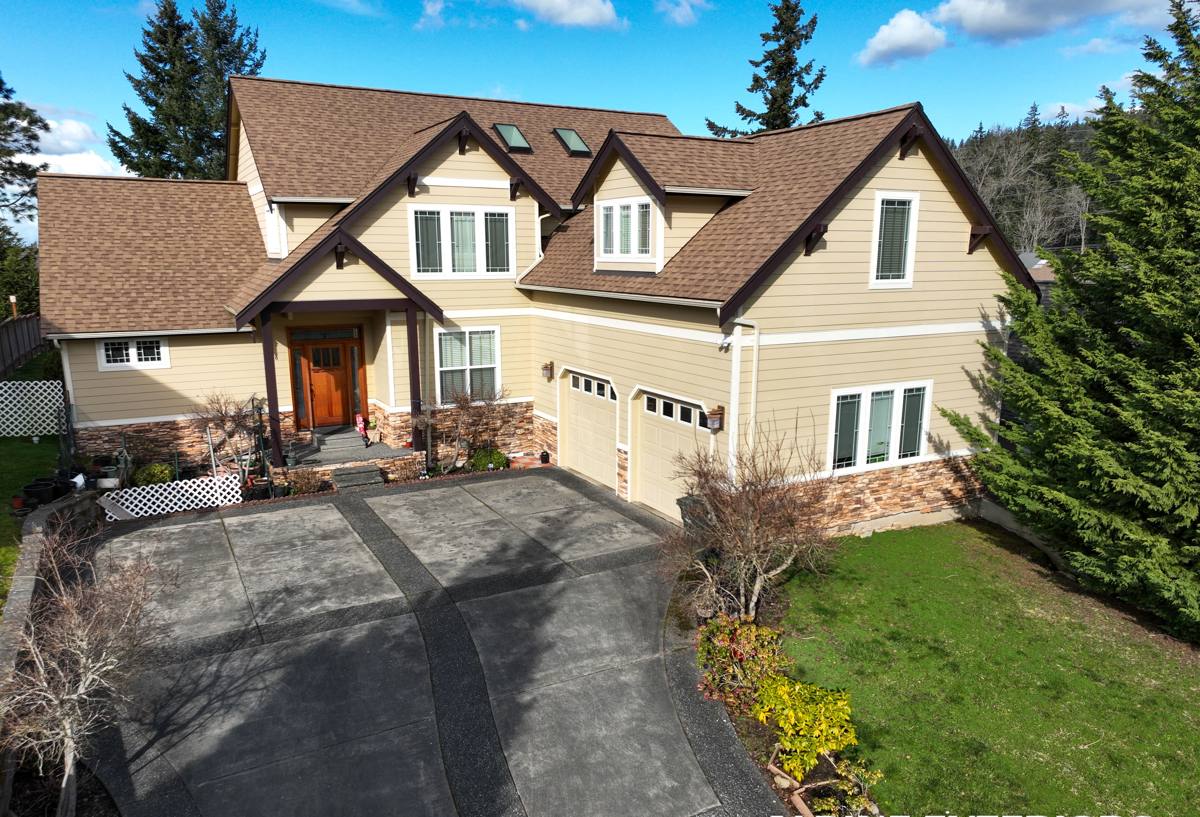
What This Climate Does to a Roof Over Time
Salt Air and Metal Components
Being close to open water means Cherry Point roofs deal with more direct salt exposure than homes set back from the shoreline. Salt accelerates corrosion on fasteners, flashing, and any exposed metal trim, and it can shorten the life of lower-grade hardware well before the shingles or panels themselves are due for replacement. Every fastener and metal component on a Cherry Point roof needs to be chosen with that corrosion risk in mind, not just picked for cost.
Driving Rain and Wind Load
Waterfront exposure also means more sustained wind, and wind-driven rain doesn't behave like a normal straight-down rainfall. It gets pushed up under shingle edges and sideways into flashing laps and roof-to-wall transitions. A roof system that would hold up fine in a calm, sheltered location can still fail here specifically because water is finding its way in from an angle the original installation never accounted for.
A Long Moss and Mildew Season
Mild temperatures, shade from trees, and near-constant moisture add up to a moss season that stretches across most of the year in this part of Whatcom County. Moss holds moisture against the roofing material, works its way under shingle tabs, and can lift edges enough to let water in underneath. North-facing slopes and anything shaded by trees or a neighboring structure typically need more frequent attention than the sun-facing side of the same roof.
Signs a Cherry Point Roof Needs Replacement, Not Just Repair
Repair makes sense when a roof has isolated damage on an otherwise sound system. Replacement becomes the right call when the underlying materials themselves are failing across the roof, or when repeated repairs in the same areas stop holding. Some signs point clearly toward replacement rather than another patch:
- Granule loss heavy enough to expose the shingle mat, not just show up lightly in gutters
- Shingles that are curling, cracking, or losing their seal across multiple slopes, not one isolated spot
- Soft or spongy decking discovered during inspection, indicating moisture has reached the wood underneath
- Recurring leaks in the same general area even after prior repairs
- A roof approaching or past the manufacturer's expected service life for this climate, especially if it was never properly ventilated
- Moss that keeps returning heavily to the same slopes shortly after cleaning, suggesting the surface underneath is already compromised
An honest inspection should be able to tell you which category a given roof falls into, and a contractor who's straight with you will say so even when repair is the cheaper, more accurate answer.
What a Correct Roof Replacement Involves
Tear-Off and Deck Inspection
A full replacement starts with a complete tear-off down to the decking, not an overlay on top of old material. That's the only way to actually see the condition of the roof deck, catch soft or rotted sheathing before it's covered back up, and confirm there's no hidden moisture damage from years of slow leaks. Skipping this step to save time is one of the more common ways a new roof ends up with problems within a few years.
Underlayment and Ice-and-Water Protection
Given how much wind-driven rain this stretch of coastline sees, underlayment choice matters more here than in a drier, calmer location. We use synthetic underlayment rated for this exposure and add ice-and-water shield at vulnerable points — eaves, valleys, and any low-slope transitions — as a second line of defense in case wind ever pushes water past the primary roofing material.
Flashing at Every Transition
Flashing is where most roof leaks actually start, not in the field of the roof itself. Every chimney, vent pipe, skylight, and roof-to-wall transition gets new flashing during a replacement, correctly lapped so water sheds down and over each layer rather than getting pushed sideways underneath by wind. Reusing old flashing to save a step is a shortcut that shows up as a leak later, sometimes years later.
Ventilation That Lets the Roof Dry Out
A roof deck that can't dry out between storms stays damp longer than it should, which shortens the life of the decking and the roofing material above it. Correct intake and exhaust ventilation keeps air moving through the attic space so moisture has somewhere to go, which matters even more in a climate with this much sustained humidity and rainfall.
Roofing Materials for Cherry Point Homes
We install high-wind-rated architectural asphalt shingle systems as our standard for Cherry Point homes, using shingle lines and fastening patterns rated for coastal wind exposure rather than a standard-grade product built for calmer inland conditions. We'll also discuss metal roofing where it's a good fit for the home and the homeowner's goals. What we won't do is install a lower-grade three-tab shingle or a system without wind-rated fastening on a waterfront property — the maintenance burden and shortened lifespan that comes with cutting that corner isn't something we're willing to hand a homeowner without saying so upfront.
| Material | Wind and Rain Performance | Moss Resistance | Typical Longevity Here |
|---|---|---|---|
| High-wind-rated architectural asphalt shingles | Strong when properly fastened; rated for coastal wind exposure | Moderate; benefits from periodic cleaning on shaded slopes | 25-30+ years with correct install and upkeep |
| Standard-grade three-tab shingles | Weaker wind rating; more prone to lifting in driving rain | Lower; thinner profile holds moisture against the surface longer | Shorter, especially on wind-exposed waterfront lots |
| Metal roofing | Excellent wind and water shedding when correctly installed | High; moss struggles to get purchase on a smooth metal surface | 40-50+ years with correct install |
Our Roof Replacement Process
We start with an on-site inspection of the existing roof, looking specifically at how it's handled salt exposure, wind, and moisture over its life, not just its age on paper. From there we put together a clear, written scope covering materials, flashing details, and ventilation before any work begins, so there's no ambiguity about what's included. Tear-off, deck repair where needed, underlayment, flashing, and the new roofing material follow in sequence, with flashing and ventilation treated as standard steps rather than optional add-ons.
A Few Things Worth Confirming Before Work Starts
- Get a written scope that specifies underlayment type, flashing approach, and ventilation plan, not just "new roof, same as before"
- Ask whether the deck will be inspected and repaired as part of the tear-off, and how that's priced if issues are found
- Confirm the fastening pattern and shingle wind rating match this coastal exposure, not a standard inland spec
- Ask how flashing will be handled at chimneys, vents, and roof-to-wall transitions
- Get manufacturer and workmanship warranty details in writing before signing
What Affects the Cost of a Roof Replacement Here
Every roof is different, but a few factors tend to drive cost more than homeowners expect going in. Knowing them ahead of time makes it easier to compare estimates apples-to-apples.
| Factor | Why It Matters |
|---|---|
| Roof size and pitch | More square footage and steeper pitches take more material and labor time |
| Deck condition | Rotted or soft sheathing found during tear-off adds material and labor to repair before new roofing goes on |
| Number of penetrations | Chimneys, skylights, and vent pipes each need correctly detailed flashing, which adds time per feature |
| Material choice | Standard-grade shingles cost less upfront than high-wind-rated architectural shingles or metal, but trade off longevity and maintenance |
| Access and layout complexity | Steep sites, multiple roof planes, and tight access can all add labor time |
We give a clear, written estimate that breaks these factors out rather than a single lump number, so it's clear what's driving the price.
Why a Crew That Already Works Cherry Point Matters
A roofing crew that regularly works this stretch of coastline already knows how salt air, wind, and prolonged moisture behave differently here than they do a few miles inland. That familiarity shows up in the details that actually determine how long a roof lasts — which fastener grade gets used, how flashing gets lapped at a roof-to-wall transition facing the prevailing wind, and where extra underlayment protection gets added without being asked. Those aren't things a contractor coming from a drier, calmer region will necessarily think to do by default.
If you're weighing a roof replacement for a home in Cherry Point or the surrounding Birch Bay area, we're happy to walk the roof with you and give an honest read on whether it needs full replacement or targeted repair. Reach out below for a free, no-pressure estimate.