 Birch Bay Roofing
 Roofing and Exterior Work for Nooksack Homes
Nooksack sits inland from our home base in Birch Bay, tucked into the river valley on the way toward the foothills and the Canadian border. It's a different piece of Whatcom County than the shoreline we started on, but the exterior problems homeowners deal with here rhyme with what we see everywhere else in the county: too much rain, not enough sun, and roofs and siding that have to shed water for months at a stretch without a real break.
We built our business around exteriors that hold up in this climate — roofing, siding, windows, and decks — and we bring that same approach to every Nooksack property we work on, whether it's a full roof replacement, a siding repair after a windstorm, or a deck that's finally showing its age.
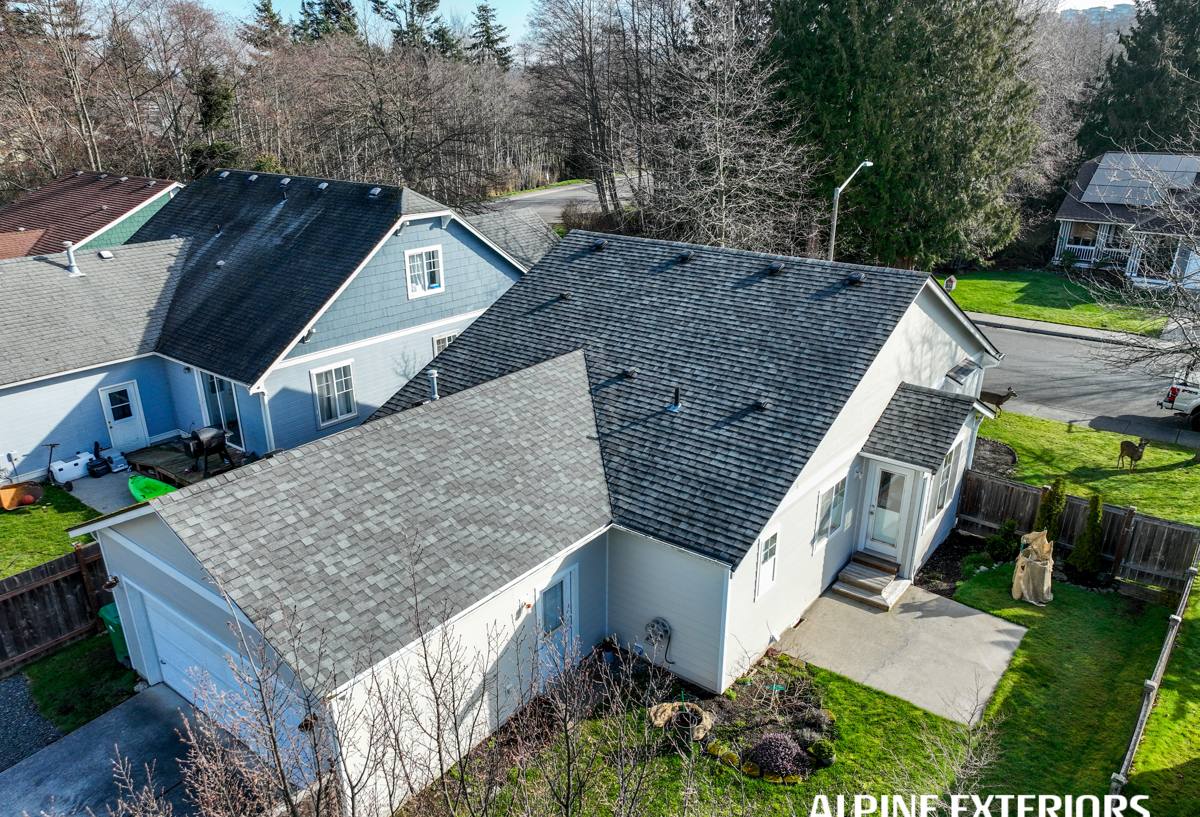
What the Climate Does to a Nooksack Home
Being farther from the water than our Birch Bay neighborhood, Nooksack gets a bit less of the direct salt-air exposure that eats at metal fasteners and finishes right on the coast. That's a small break. What it doesn't get a break on is rain, humidity, and shade — and those three do most of the damage we find on inland Whatcom County homes.
Driving Rain and Saturated Ground
The same Pacific weather systems that soak Birch Bay push inland and dump on the Nooksack valley too, often for days without a real dry stretch. Wind-driven rain finds every gap in flashing, every under-sealed nail head, and every spot where caulking has started to crack. Add a water table that sits close to the surface in parts of the valley, and you get more ground moisture working up into siding and deck framing than homes on higher, better-drained ground ever deal with.
Shade, Tree Cover, and a Long Moss Season
Nooksack has more mature tree cover and farmland windbreaks than the open coastal lots near Birch Bay, and that shade keeps roofs and north-facing siding damp long after a storm passes through. Moss and algae get a real head start in conditions like that, and once moss takes hold on a roof it doesn't just sit there — it lifts shingle edges, holds water against the roof deck, and works its way into fastener holes over a season or two.
Valley Humidity and Slow-Drying Surfaces
Being inland and lower in the valley, Nooksack can hold morning fog and humidity longer than breezier spots right on the water. That matters for exterior wood and for any siding or trim that isn't fully sealed — the longer a surface stays damp, the more time rot, mildew, and paint failure have to get started.
Roofing in Nooksack: What We Look For
A roof inspection here isn't just a glance from the ground. We're looking for the specific ways this valley climate shows up on a roof over time.
- Moss and algae buildup at ridge lines, valleys, and shaded north slopes
- Lifted or curling shingle edges where trapped moisture has done its work
- Soft or discolored roof decking under moss-heavy areas, checked from the attic side when possible
- Flashing around chimneys, vents, and skylights — the most common source of slow leaks
- Gutter and downspout function, since clogged gutters back water up under the roof edge
- Fastener condition and any signs of nail pops or wind-lifted shingles
We install and repair asphalt shingle, metal, and low-slope roofing systems, and we size the choice to the house — its slope, its shade exposure, and what the homeowner wants to deal with over the next 10, 20, or 30 years.
Roof Maintenance That Actually Matters Here
Moss treatment and gutter clearing aren't cosmetic in this climate — they're maintenance that extends the life of the roof underneath. A roof that's kept clear of moss and debris will consistently outlast one that isn't, on the same shingle, same house, same weather. We'd rather have that conversation with a homeowner up front than sell a full replacement that a maintenance plan could have delayed by years.
Siding: The Other Half of Keeping Water Out
Roofing gets the attention, but siding does just as much work keeping a Nooksack home dry — and it fails in quieter ways. Cracked caulking at trim joints, warped or delaminating panels, and gaps at window and door surrounds let moisture behind the siding where it can sit against sheathing for months without ever showing on the surface.
We work with fiber cement, engineered wood, and vinyl siding systems, and we pay close attention to the details that matter most in a wet climate: proper flashing behind every seam, correct overlap, and ventilation gaps that let any moisture that does get in dry back out instead of staying trapped.
Common Siding Materials — How They Hold Up Locally
| Material | Moisture Behavior | Maintenance | Typical Lifespan Here |
|---|---|---|---|
| Fiber cement | Very stable, doesn't rot or swell | Repaint every 10-15 years | 30-50 years |
| Engineered wood | Good if properly sealed and detailed | Keep caulking and paint maintained | 20-30 years |
| Vinyl | Sheds water well, doesn't absorb moisture | Occasional cleaning, minimal upkeep | 20-40 years |
| Untreated or older wood siding | Prone to swelling, rot behind paint film | Frequent repainting and caulk checks | Varies widely, often shorter |
We're honest with homeowners about trade-offs on all of these. Wood siding can look great and plenty of Nooksack homes have it, but it asks for more upkeep in a climate this wet — and skipping that upkeep is where the real problems start, not with the material itself.
Windows: Where Leaks Actually Start
A surprising number of the "roof leaks" we get called out for turn out to be window issues — failed seals, cracked glazing, or flashing that was never properly integrated with the siding around it. In a climate that stays wet as long as this one does, a poorly sealed window doesn't just waste energy, it gives water a direct path into the wall cavity.
When we replace windows, we treat the flashing and integration with the surrounding siding as seriously as the window unit itself. A quality window installed without proper flashing will still leak; a modest window installed correctly will keep water out for decades. We also talk through energy performance with homeowners, since older single-pane or poorly sealed windows lose a lot of heat during the long, damp Whatcom County winters.
Decks: Built for Wet Ground and Long Winters
Decks in Nooksack deal with a double dose of moisture — rain from above and, in low-lying parts of the valley, damp ground and slower air movement underneath. That combination is hard on framing, ledger boards, and any fasteners that aren't rated for ground contact or wet exposure.
We build and repair decks with attention to the parts homeowners don't see: proper ledger board flashing where the deck meets the house, joist protection, and hardware rated for exterior and wet-contact use. Above the frame, we install both traditional wood decking and composite materials, depending on how much maintenance a homeowner wants to take on.
Deck Repair Warning Signs
- Soft or spongy decking boards, especially near the house
- Rust streaking from fasteners or connectors
- Gaps or separation at the ledger board where the deck attaches to the house
- Wobble in railings or posts
- Standing water or slow drainage after rain
Any of those on their own might be minor. Together, or ignored for a season or two, they're how a repairable deck turns into a full rebuild.
Why a Local Crew Matters More Than It Sounds
Whatcom County isn't uniform. A crew that only knows shoreline conditions can miss what's different about a valley property like Nooksack — the extra tree cover, the shadier roof slopes, the ground moisture that doesn't drain the way it does near the coast. We work across the county, from Birch Bay's salt air to inland communities like Nooksack, and that range is useful: it means we're not guessing at how a given house will behave in this weather, we've seen the pattern before.
It also means we're a phone call away, not a name from an out-of-area lead-generation site. If a repair needs a follow-up visit, or a question comes up two years after a job, we're still the same local company.
How We Approach a Nooksack Project
- A full exterior walkaround — roof, siding, windows, and deck if applicable — not just the one thing you called about
- A straight explanation of what we find, including what's urgent and what can wait
- A written estimate with material options and honest trade-offs, no pressure to upsize the job
- Work scheduled around the weather, since wet-climate exterior work has to respect drying and cure times
- A final walkthrough so you know exactly what was done and why
Get a Free Estimate
If you're dealing with a mossy roof, siding that's starting to show its age, drafty windows, or a deck that needs a closer look, we're happy to come out and take a look. The estimate is free, there's no pressure attached to it, and you'll get a straight answer about what your home actually needs — just use the form below to get started.