 Birch Bay Roofing
 Roof Repair for Nooksack Homes
Homes in and around Nooksack deal with a specific combination of weather that most roofing crews from outside Whatcom County don't fully account for: salt-laden marine air moving in off the water, long stretches of driving rain, and a moss season that can run most of the year in shaded, north-facing sections of a roof. None of these things ruin a roof overnight. They work slowly, at the seams, fasteners, and flashing details that a rushed or generic repair often skips. Our job is to fix what's actually failing, explain why it failed, and leave the roof in a condition that holds up through the next several wet seasons — not just patched until the next call.
This page covers roof repair specifically — not full roof replacement. If your roof is sound overall but has a leak, storm damage, or a trouble spot that's been nagging at you, this is the service you need, and it's usually far less disruptive and less expensive than most homeowners assume.
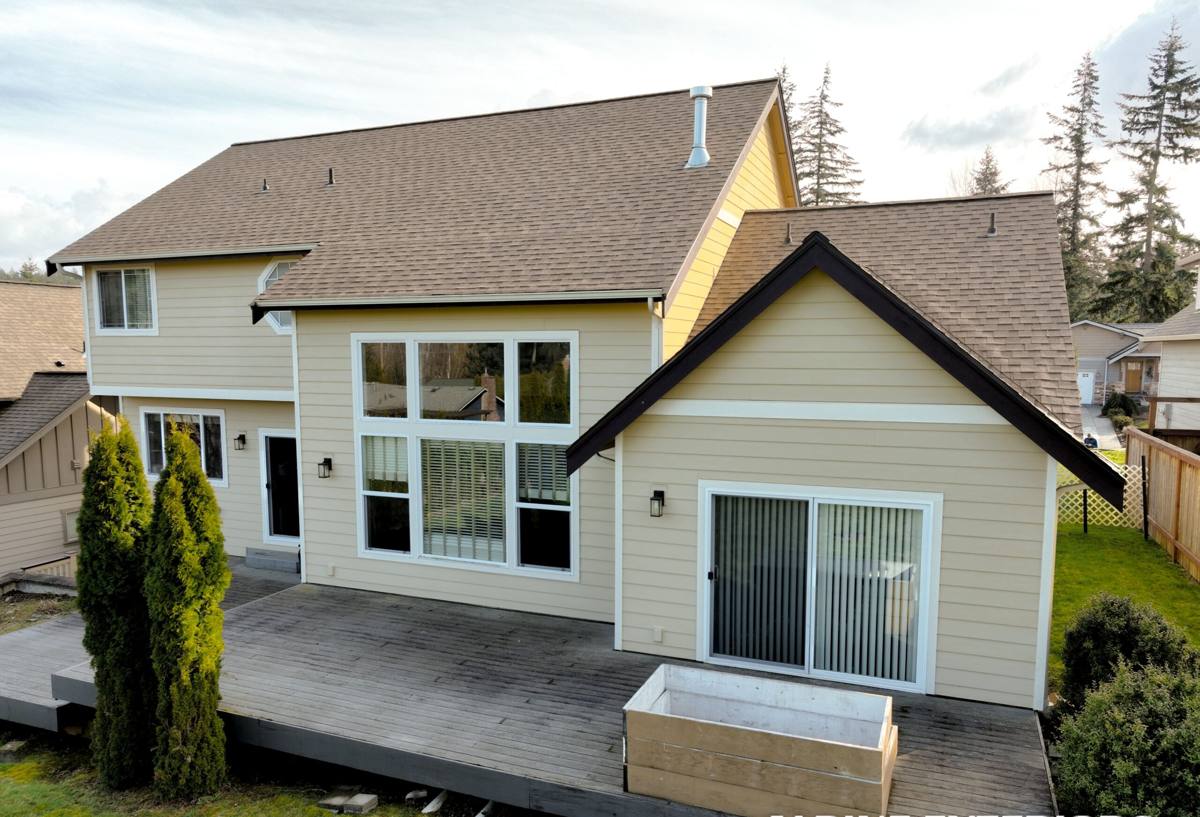
Why This Climate Wears Roofs Down Differently
Whether a home sits close to the water in Birch Bay or a bit further inland in Nooksack, the roofs in this part of Whatcom County are governed by the same weather pattern. Salt air accelerates corrosion on exposed metal — flashing, fasteners, vent caps, and gutter hardware — well before the shingles or panels themselves are due for replacement. Driving rain, especially when it comes in at an angle during winter storms, finds any gap in flashing or underlayment and pushes water sideways instead of letting it run straight down and off. And the long moss season means organic growth has months at a time to take hold on shaded slopes, holding moisture against the roofing material long after a dry-climate roof would have shed it.
Individually, each of these is manageable. Together, over years, they're why roofs here fail at flashing joints and fastener penetrations long before the field of the roof wears out. A repair that only addresses the visible symptom — a stain on the ceiling, a curled shingle — without addressing the underlying cause tends to come back.
Common Trouble Spots We See
- Flashing around chimneys, skylights, and roof-to-wall transitions where corrosion or a failed seal lets water in
- Valleys where two roof planes meet, especially where moss or debris has built up and redirected water flow
- Fastener heads and vent boots that have corroded or cracked from years of salt exposure and UV
- North- and east-facing slopes with heavy moss growth, where the underlying material stays wet longer than the rest of the roof
- Gutter and eave areas where ice, debris, or moss has caused water to back up under the roofing material
Signs a Repair Is Overdue
Most roof problems give warning signs well before they become emergencies. Homeowners in Nooksack often wait because the damage isn't dramatic — a small stain, a slightly discolored patch of shingles, a musty smell in an attic corner. Waiting is usually the more expensive choice, because water intrusion damages the roof deck, insulation, and interior finishes long before it becomes an obvious leak.
| What You Notice | What It Usually Means |
|---|---|
| Ceiling stain that grows after rain | Active leak, often from flashing or a valley, not necessarily directly above the stain |
| Granules collecting in gutters | Shingle wear accelerated by age, sun, or moss holding moisture against the surface |
| Dark green or black streaks on shaded slopes | Moss or algae growth beginning to hold moisture and lift shingle edges |
| Musty smell or visible mold in attic | Sustained moisture intrusion, usually from a flashing or ventilation failure |
| Missing or lifted shingles after a windstorm | Wind damage that exposes underlayment and needs prompt repair before the next rain |
What a Correct Repair Actually Involves
A roof repair that holds up in this climate isn't just about swapping a shingle or smearing sealant over a gap. It's about tracing the water's actual path and fixing the layer that failed.
Finding the Real Source
Water rarely enters a roof exactly where it shows up inside the house — it travels along the underlayment or roof deck before finding a gap in the ceiling or wall. We trace leaks back to their actual entry point, usually a flashing detail, fastener penetration, or valley, rather than patching the spot where the stain appears.
Flashing and Sealant Work
Because salt air corrodes exposed metal faster here than in drier inland climates, we pay close attention to flashing condition during any repair, even when it isn't the section actively leaking. Replacing corroded flashing now is far cheaper than repairing the same spot again in two years.
Matching Materials
Repairs should blend into the existing roof, both in appearance and in how the materials perform together. We match shingle type, color, and where possible, age-appropriate wear so a repaired section doesn't stand out or create a mismatched wear pattern that ages unevenly.
Underlayment and Deck Condition
If water has been getting in for a while, the underlayment or roof deck underneath may be compromised even if the surface shingles look mostly fine. We check for soft spots, delamination, and rot before closing up a repair — sealing over damaged decking just hides the problem.
Moss: Not Just a Cosmetic Problem
Moss gets treated as a curb-appeal issue more often than it should. In practice, moss on a roof in this climate is a moisture-management problem. Moss holds water against the roofing surface long after rain has stopped, keeps shaded areas from drying out between storms, and its root structure can lift shingle edges over time, creating small gaps that let wind-driven rain underneath.
We remove moss carefully — not with high-pressure washing, which strips granules and shortens the life of asphalt shingles, but with methods that clear growth without damaging the roofing material underneath. On repairs where moss has been present for a while, we also check for soft decking or granule loss in that area, since moss rarely sits on a roof without leaving some effect behind it.
Repair or Replace? How We Help You Decide
Not every roof problem calls for a full replacement, and not every roof problem is fixable with a small patch. We give you an honest read on which category your roof falls into, based on the roof's age, the extent of damage, and how many separate issues are showing up.
| Factor | Leans Toward Repair | Leans Toward Replacement |
|---|---|---|
| Roof age | Under 15-20 years, depending on material | Near or past expected material lifespan |
| Extent of damage | Localized — one valley, one flashing detail, storm damage in a small area | Widespread wear, multiple leak points, or granule loss across most slopes |
| Deck condition | Solid, dry decking under the affected area | Soft, rotted, or repeatedly wet decking in multiple spots |
| Repair history | First or infrequent repair needed | Same areas repaired multiple times already |
When a repair is the right call, we'll say so plainly. When it isn't — when a repair would just be a temporary fix on a roof that's genuinely at the end of its service life — we'll tell you that too, along with why.
Our Repair Process
- On-site inspection of the roof, attic (where accessible), and the areas around any reported leak or damage
- A clear explanation of what's actually causing the problem, in plain terms, before any work begins
- A written estimate that separates the repair scope from any additional recommendations, so you know exactly what you're paying for
- Repair work using materials matched to your existing roof, with attention to flashing, fasteners, and underlayment, not just the visible surface
- A final check to confirm the repair area sheds water correctly and there are no secondary issues nearby
Cost Factors for Roof Repair
Every repair is different, and giving a number without seeing the roof wouldn't be honest. What we can tell you is what actually drives cost up or down, so you're not guessing.
| Factor | Effect on Cost |
|---|---|
| Size and number of affected areas | A single flashing repair costs far less than several separate leak points |
| Roof pitch and accessibility | Steeper or harder-to-access roofs take longer and require more safety setup |
| Underlying deck damage | Rotted decking found during repair adds material and labor beyond the surface fix |
| Material type and age | Matching older or discontinued materials can take more sourcing time than standard shingle |
| How long the issue went unaddressed | Longstanding leaks tend to have spread further than a recent one, increasing scope |
Small, localized repairs are often a modest expense. Repairs involving deck replacement or several separate problem areas cost more, simply because more material and labor is involved. We break this down clearly in every estimate rather than giving one lump number.
Why a Crew That Knows Nooksack and Birch Bay Matters
Roofing crews unfamiliar with this part of Whatcom County sometimes apply repair methods built for drier, calmer climates — lighter flashing details, less attention to moss-prone slopes, sealant-heavy shortcuts that don't hold up against months of driving rain. We work in this area regularly, which means we've seen how roofs here actually fail over time, not just how they're supposed to perform on paper. That shapes how we flash a valley, which fasteners we trust for long-term salt exposure, and where we look first when tracing a leak. It's the difference between a repair that lasts and one that reopens the same call eighteen months from now.
What to Ask Any Roofer Before Hiring for a Repair
- Will you identify the actual source of the leak, or just patch the visible symptom?
- Do you check flashing condition even when it's not the section actively leaking?
- What method do you use for moss removal, and will it damage the existing shingles?
- Will the estimate separate the repair from any additional recommended work?
- Do you check the roof deck condition before closing up a repair, not just after?
If you're dealing with a leak, storm damage, or a roof that just needs an honest look, we're glad to come take a look. There's a free, no-pressure estimate through the form below — we'll tell you straight what's going on and what it would take to fix it right.