 Birch Bay Roofing
 Roofing and Exterior Services for Custer, Washington
Custer sits inland just enough from the water to feel a little different from the immediate Birch Bay shoreline, but it still gets the same weather system working against it: salt-laden air moving off the Strait of Georgia and Semiahmoo Bay, long stretches of driving rain through fall and winter, and enough shade and moisture on many lots to keep moss and algae established on roofs and siding nearly year-round. Homes out here run the gamut from older farmhouses and mobile homes to newer construction on acreage, and the exterior problems we see tend to track pretty closely with age, orientation, and how much tree cover is shading the roof and walls.
We work Custer as part of our regular Whatcom County service area, alongside Birch Bay, Blaine, and the surrounding county. That means a crew that already knows the local permitting expectations, the typical wind and rain exposure for this part of the county, and what actually holds up here versus what looks good on paper.
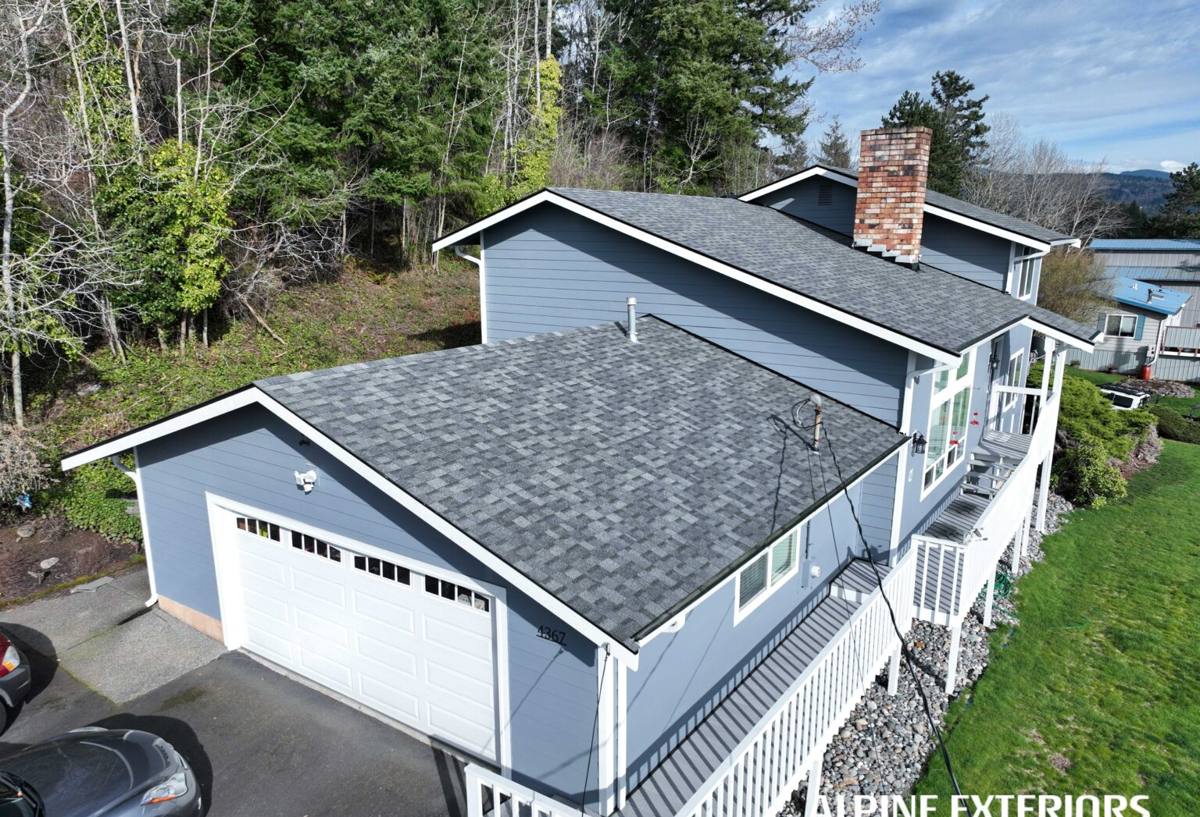
What the Custer Climate Does to a House
Salt Air and Corrosion
Even a few miles inland, salt-bearing air off the Strait of Georgia and the Salish Sea reaches Custer, especially during the windier months. Salt air accelerates corrosion on exposed metal — roof flashing, fasteners, gutter hardware, and any unprotected steel components. It's rarely dramatic; it's a slow, steady degradation that shows up years earlier than it would inland. This is one of the main reasons we lean toward corrosion-resistant fastener and flashing materials on homes in this area rather than standard-grade hardware.
Driving Rain and Wind-Driven Moisture
Whatcom County gets a lot of rain, but the more damaging factor for exteriors is wind-driven rain — storms that push water sideways into wall assemblies, under siding laps, and around window and door openings rather than just falling straight down. Homes with inadequate flashing detail, gaps in siding, or aging caulk joints are the ones that end up with hidden moisture intrusion. This kind of damage often isn't visible from the outside until it's already caused rot in the sheathing or framing behind the wall.
Moss, Algae, and Shade
Custer has plenty of tree-covered lots, and shaded, north-facing roof slopes rarely dry out fully between rain events. That's exactly the condition moss and algae need to take hold. Once moss establishes itself on a roof, it holds moisture against the shingles, lifts tabs, and accelerates granule loss — which shortens the life of an otherwise sound roof. The same organic growth shows up on siding, particularly on the shaded and north-facing walls of a home, where it can stain and slowly degrade painted or fiber cement surfaces if left unaddressed.
Roofing in Custer
Most of what we install and repair in this area is asphalt composition shingle roofing, which remains the most practical and cost-effective option for this climate when it's installed with the right underlayment and flashing detail. Metal roofing is a solid option too, particularly for homeowners planning to stay long-term, since it sheds moss more readily and handles wind-driven rain well when properly installed.
What We Check On Every Roof Inspection
- Shingle condition, granule loss, and any curling or lifted tabs
- Flashing around chimneys, vents, skylights, and roof-to-wall transitions
- Moss and algae growth, especially on shaded or north-facing slopes
- Gutter condition and whether water is draining away from the foundation properly
- Attic ventilation, since poor airflow traps moisture and shortens roof life from underneath
- Soft spots or sagging that can indicate underlying deck damage
Roof replacement timing depends heavily on how well a roof was maintained, not just its age. A 15-year-old roof that's been kept clear of moss and had flashing issues addressed can outperform a 10-year-old roof that hasn't been touched since installation.
Siding for Salt Air and Wet Winters
Siding choice matters more in Custer than it would in a drier inland climate, because whatever's on the wall needs to handle repeated wet-dry cycling, wind-driven rain, and salt exposure without trapping moisture behind it. We install and repair fiber cement, engineered wood, and vinyl siding, and we're upfront with homeowners about the trade-offs of each rather than pushing one product as a universal answer.
Common Siding Issues We Find Locally
The most frequent problems on Custer homes are moisture intrusion at poorly flashed window and door openings, delaminating or swelling on older engineered wood products that weren't properly maintained, and moss or algae staining on shaded walls. We also see a fair amount of caulk and trim failure around openings, which is a small fix if caught early and a much bigger one if it's allowed to let water behind the siding for a season or two.
| Siding Material | Moisture Behavior | Maintenance | Typical Trade-Offs |
|---|---|---|---|
| Fiber Cement | Very good; resists moisture and rot when properly installed and sealed | Periodic repainting, joint inspection | Heavier install, requires correct fastening and flashing detail |
| Vinyl | Doesn't absorb moisture, but can trap it behind the panel if house wrap and flashing aren't done right | Low; occasional cleaning | Can crack in impact or extreme cold; color is baked in, not paintable long-term |
| Engineered Wood | Good when sealed and maintained; vulnerable if coatings fail or edges are left exposed | Regular inspection of joints, seams, and paint condition | More maintenance-sensitive than fiber cement in a wet climate |
Windows: Where Custer Homes Lose the Most Efficiency
Older single-pane or early dual-pane windows are still common on Custer properties, and they're usually the weakest point in the building envelope during winter storms. Beyond energy loss, aging window flashing and failed seals are a common entry point for wind-driven rain. When we replace windows, proper flashing integration with the surrounding siding or trim is just as important as the window unit itself — a good window installed with poor flashing detail will still leak.
Decks in a Wet, Shaded Climate
Decks in Custer take a beating from the same conditions as siding and roofing: standing moisture, shade-driven mold and mildew, and, for ground-level or lower decks, splash-back and soil moisture at the framing. Wood decking requires more consistent maintenance — sealing, cleaning, and inspection of ledger board attachment and joist hardware — while composite decking reduces some of that maintenance burden but still needs proper drainage and airflow underneath to perform well long-term. Whatever the material, deck framing and ledger connections are worth inspecting periodically, since that's the structural point most likely to hide moisture damage in a climate like this.
Why a Local Crew Matters Here
A roofing or siding crew that mostly works drier, inland climates will often under-detail flashing and underlayment because they haven't had to fight wind-driven rain and salt air on a daily basis. Working Whatcom County and the Birch Bay area regularly means we see the same failure patterns repeat — moss-driven shingle damage, moisture intrusion at poorly flashed openings, corrosion on exposed hardware — and we build our installation and repair approach around preventing those specific problems rather than applying a generic standard.
Local also means faster response when something needs attention after a storm, and a crew that's familiar with the permitting and inspection expectations in the county so a project doesn't stall on paperwork.
What to Look For When Hiring an Exterior Contractor in Custer
- Washington state contractor license and current liability insurance, verifiable through the state's contractor lookup
- A written estimate that specifies materials, flashing and underlayment details, and scope — not just a bottom-line price
- Manufacturer certifications for the roofing or siding products being installed, where applicable
- Local references or a track record of work in Whatcom County specifically
- A clear explanation of warranty terms — both manufacturer material warranties and the contractor's workmanship warranty
Cost Factors for Custer Exterior Projects
Every property is different, but a few factors consistently move the price on roofing, siding, window, and deck projects in this area: roof or wall complexity (number of planes, valleys, and penetrations), existing damage that needs to be addressed before new material goes on, accessibility of the property, and material choice. Homes with significant moss damage, hidden moisture intrusion, or deferred maintenance typically cost more to bring up to standard than a straightforward replacement on a well-maintained structure — which is part of why we recommend catching these issues early rather than waiting for a full failure.
If you're dealing with moss buildup, a slow leak, aging siding, drafty windows, or a deck that's seen better days, we're happy to come take a look and give you a straightforward, no-pressure estimate. Use the form below to get in touch and we'll set up a time to assess your property.