 Birch Bay Roofing
 Why Siding Fails Faster in Custer Than Most Places
Custer sits close enough to the water that homes here deal with a combination most siding products were never designed around: salt-laden air off the Strait of Georgia and Birch Bay, wind-driven rain that gets pushed sideways into wall assemblies, and a long, damp shoulder season where moss and algae get a real foothold on north- and west-facing walls. None of these things are dramatic on their own. What they do is compound, year after year, on whatever material is covering your walls.
Salt air is corrosive to fasteners and hard on painted finishes, which is why chalking, fading, and rust streaks under nail heads show up here sooner than they would 50 miles inland. Driving rain doesn't just wet the surface of your siding — in Whatcom County's wind patterns, it gets forced under laps and around trim if the original installation wasn't detailed correctly, and it stays wet longer than it would in a drier climate because the drying window between storms is short for much of the year. Add in moss and algae growth that thrives in shade and moisture, and you've got a set of conditions that punishes anything with a seam, a fastener, or an organic component.
This is the backdrop for every siding replacement we do in Custer. It's not a generic "coastal Pacific Northwest" pitch — it's the specific reason we pay close attention to flashing, fastener choice, and finish quality on every job in this part of Whatcom County.
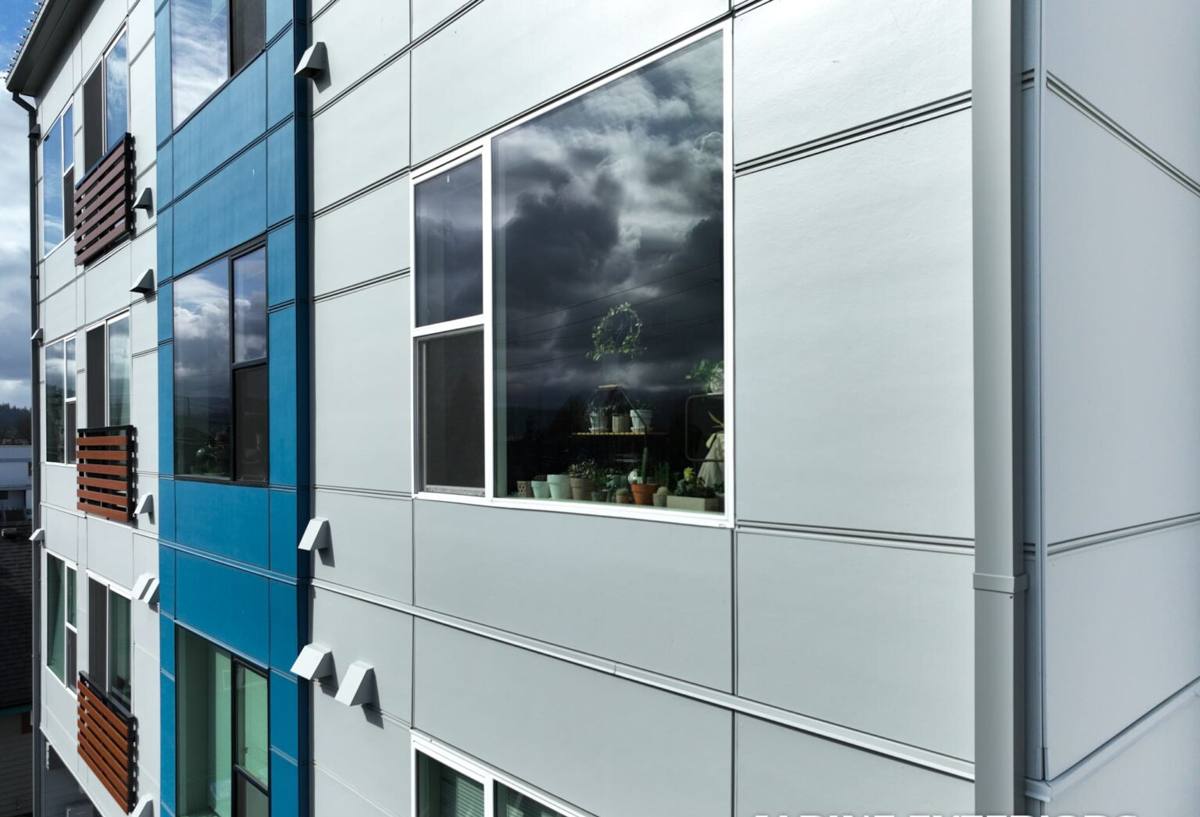
What a Correct Siding Replacement Actually Involves
Siding replacement isn't just pulling off old boards and nailing up new ones. A job that's going to hold up to Custer's climate for decades needs to get the parts you can't see right, not just the parts you can.
Tear-Off and Wall Inspection
Once the old siding comes off, we inspect the sheathing underneath for rot, delamination, or water staining — especially around window and door openings, where driving rain does the most damage over time. Any compromised sheathing gets replaced before anything else happens. Skipping this step is one of the most common ways a siding job looks fine for a year or two and then fails from the inside out.
Weather-Resistive Barrier and Flashing
A new weather-resistive barrier (WRB) goes on correctly lapped, and flashing gets installed at every window, door, and horizontal transition — not caulk used as a substitute for flashing. In a climate with sustained wind-driven rain, this layer is what actually keeps water out of the wall cavity. It's invisible once the siding goes up, which is exactly why it's worth asking your contractor about before you sign anything.
Fastening and Installation to Spec
Fiber cement siding has manufacturer-specified nailing patterns, gaps, and clearances for a reason — get them wrong and you can void the warranty and create long-term moisture problems, even with a good product. We install to the manufacturer's published specifications every time, including proper clearance from grade, decks, and roof lines.
Why We Install Only James Hardie Fiber Cement
We made a decision as a company to install James Hardie fiber cement siding exclusively — we don't install vinyl, LP SmartSide, Cemplank, Allura, primed spruce, or cedar. That's not a marketing angle; it's a standard we hold because of what we've seen these products do (and not do) in exactly this climate.
Vinyl is inexpensive and low-maintenance in mild conditions, but it can warp or become brittle over time and doesn't offer the same impact resistance or design flexibility as fiber cement. Wood-based products like LP SmartSide, primed spruce, and cedar look great going in, but they're organic materials in a climate that stays damp for long stretches — that combination puts real pressure on caulking, paint film, and edge-sealing to keep moisture out indefinitely, and any gap in that maintenance shows up as swelling or rot. Other fiber cement brands like Cemplank and Allura are legitimate products, but we standardized on one manufacturer so our crews master one installation system, one set of flashing details, and one warranty structure — rather than splitting expertise across several.
James Hardie's HZ5 product line is engineered specifically for climates like ours, with moisture and freeze-thaw performance built into the formulation. The ColorPlus factory-applied finish is baked on under controlled conditions rather than field-painted, which matters directly for salt air exposure — it resists fading and chipping better than a field finish and comes with its own finish warranty separate from the product warranty. It's non-combustible, holds up to wind-driven rain without the seam and joint vulnerabilities of some alternatives, and carries a strong transferable warranty when installed by a certified crew.
Comparing Siding Options for a Custer Home
| Material | Moisture Performance in Coastal Climate | Maintenance Burden | Finish Longevity |
|---|---|---|---|
| James Hardie Fiber Cement (HZ5) | Engineered for wet, coastal conditions | Low — no repainting for years with ColorPlus | Factory-baked finish, separate finish warranty |
| Vinyl | Sheds water but can warp/distort with heat and age | Low, but limited repair options if damaged | Color is through-body but can fade; not repaintable easily |
| Wood (Cedar, Primed Spruce) | Organic material, vulnerable to prolonged moisture | High — regular painting/sealing required | Field-applied finish, shorter recoat cycle |
| Other Fiber Cement (LP SmartSide, Cemplank, Allura) | Varies by product and formulation | Moderate to low depending on brand | Varies — some field-finished, some factory-finished |
Our Process, Start to Finish
- Free on-site estimate — we walk the home, look at current siding condition, and identify problem areas specific to sun, shade, and wind exposure on your lot.
- Written proposal with material quantities, HZ5 product selection, and ColorPlus color options.
- Tear-off and sheathing inspection, with any necessary repairs quoted transparently before we proceed.
- WRB and flashing installed at all penetrations, windows, doors, and transitions.
- James Hardie siding installed to manufacturer spec, including proper fastening and clearances.
- Final walkthrough with the homeowner before we consider the job complete.
Signs Your Custer Home May Need Siding Replacement
- Persistent moss or algae growth on north- or shaded-side walls that keeps coming back after cleaning
- Soft spots, bubbling, or visible warping in wood or engineered wood siding
- Paint that's chalking, peeling, or fading unevenly, especially on walls facing prevailing wind and rain
- Rust streaking below fastener heads
- Cracked or missing caulk joints around windows, trim, and corners
- Rising heating bills or drafts that suggest the wall assembly behind the siding is compromised
- Visible gaps, buckling, or separation at siding seams and laps
Any one of these on its own might just need a repair. Several at once, or damage that keeps recurring in the same spot, usually points to a wall assembly problem that a full replacement is the more honest fix for.
What Affects the Cost of a Siding Replacement
| Factor | Why It Matters |
|---|---|
| Home size and wall complexity | More corners, gables, and dormers mean more cutting, fitting, and flashing detail |
| Sheathing condition | Rot or water damage found during tear-off adds repair scope before new siding goes on |
| Siding profile and color | Lap width, shingle-style panels, and premium ColorPlus colors vary in material cost |
| Trim and accessory work | Corner boards, window trim, and fascia detailing add labor and material |
| Access and site conditions | Steep grades, tight lot lines, or multi-story walls affect staging and labor time |
We don't quote broad ballpark numbers without seeing the house — every Custer property has its own mix of exposure, wall condition, and design detail that changes the scope. What we can tell you honestly is that fiber cement typically costs more upfront than vinyl and can be comparable to or less than higher-end wood siding once you factor in the painting and maintenance wood requires over its life.
Why Hiring a Crew That Already Works in Custer Matters
Siding installation quality depends heavily on how well a crew understands the specific conditions of the wall they're covering. A crew that regularly works Custer and the broader Birch Bay area already knows which sides of a home typically take the worst wind-driven rain, where moss tends to establish first, and how to detail flashing so it actually performs through a Whatcom County winter. That's different from a crew installing siding for the first time in a coastal, salt-air environment.
It also matters for follow-up. If a warranty question or a minor issue comes up two or three years down the road, you want a contractor who's still working in the area and stands behind the installation — not a crew that moved on to other regions.
Maintenance After Installation
One of the practical advantages of James Hardie with a ColorPlus finish is how little ongoing maintenance it asks for compared to wood siding. Periodic rinsing to keep salt residue and moss spores from building up, prompt attention to any caulk joints that show wear, and keeping plantings trimmed back from walls to maintain airflow are really the extent of it. There's no repainting cycle to plan around, which over the life of the siding is a meaningful difference in both cost and effort for a homeowner in a climate this wet.
If you're weighing a siding replacement for a home in Custer, we're happy to walk the property, look at what's actually going on with your current siding, and give you a straightforward assessment — no pressure, no inflated urgency. Use the form below to request a free estimate.