 Birch Bay Roofing
 Roofing and Exterior Work for Marietta Homes
Marietta sits close enough to the water that its homes deal with a different set of pressures than houses further inland. Salt-laden air moves in off Birch Bay and the surrounding shoreline, driving rain comes in sideways more often than people expect, and the mild, damp Whatcom County winters give moss and algae a long season to take hold on roofs, siding, and anything shaded by trees. None of that is unusual for this part of Washington, but it does mean exterior work here needs to be done with those conditions in mind from the start, not treated the same way you'd treat a house in a drier inland climate.
Birch Bay Roofing Co works throughout Marietta and the surrounding Birch Bay area on roofing, siding, windows, and decks. We're a local crew, which matters more than it sounds like it should — we're not guessing at how a roof system holds up here, we're watching it happen year after year on homes down the road from the ones we're bidding.
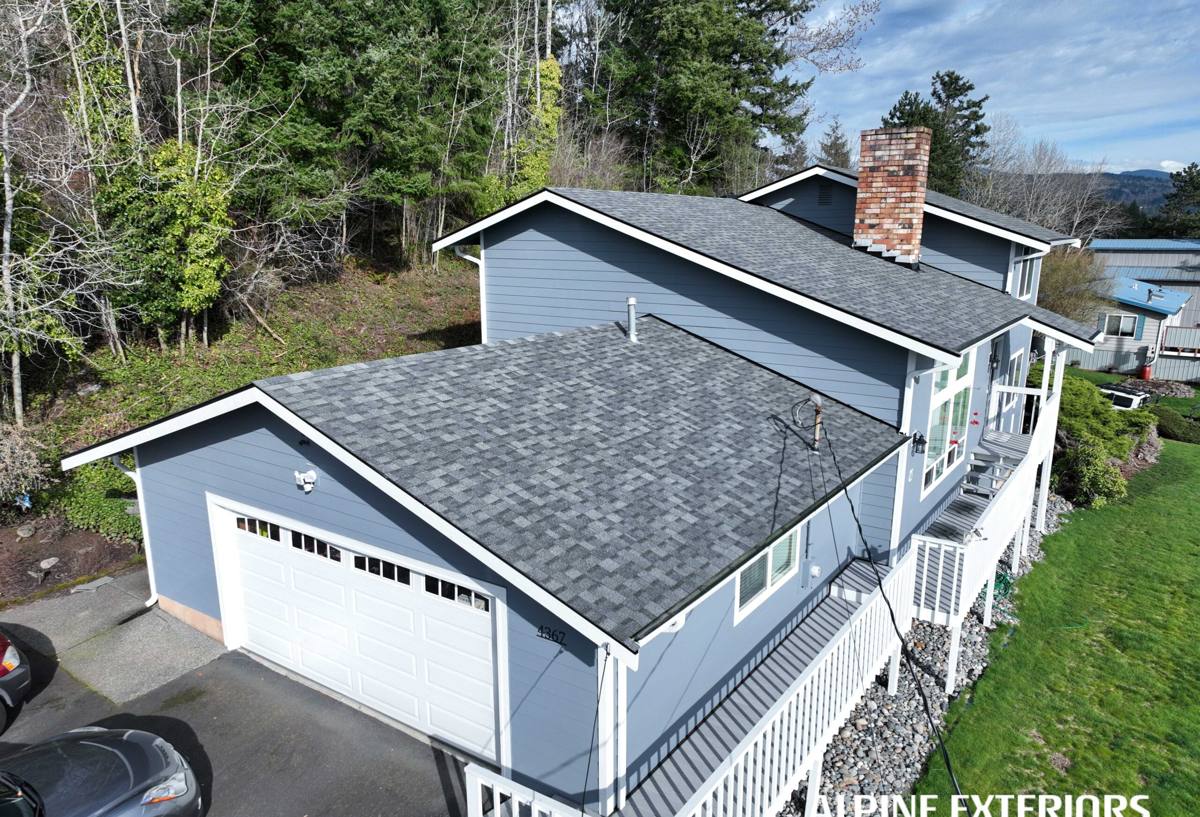
What the Local Climate Actually Does to a Home
Salt Air and Metal Fatigue
Proximity to saltwater accelerates corrosion on anything metal — flashing, fasteners, gutter hardware, and exposed metal roofing components. Standard, non-coated fasteners and thin-gauge flashing can start showing rust and pitting years before they would further inland. This is why material selection and fastener choice matter more here than they would in a lot of other parts of the state.
Driving Rain and Wind-Driven Moisture
Storms coming off the water don't always fall straight down. Wind-driven rain gets pushed sideways and upward under eaves, around window and door openings, and into laps and seams that would shed water fine in a calmer climate. Roofing and siding systems here need proper underlayment, correct flashing detail at penetrations and transitions, and house wrap or weather-resistive barriers installed with real attention to overlap and sequencing — not just nailed up and covered.
Moss, Algae, and a Long Wet Season
Whatcom County doesn't get the kind of hard freeze-thaw cycles some climates do, but it makes up for it with a long stretch of damp, mild weather that's ideal for moss and algae growth. North-facing slopes, shaded roof sections, and anywhere debris collects are the first places you'll see it. Left alone, moss holds moisture against roofing material and can work its way under shingle tabs, shortening the life of an otherwise sound roof.
Roofing in Marietta
Most homes in this area are roofed in asphalt composition shingle, with some metal roofing and a smaller number of cedar or other specialty materials mixed in. Each has trade-offs worth understanding before you commit to one.
| Roofing Material | Typical Lifespan Here | Local Considerations |
|---|---|---|
| Asphalt composition shingle | 20-30 years | Good value, wide style range; needs moss management and proper ventilation to hit full lifespan in this climate |
| Standing seam metal | 40-50+ years | Sheds moss and water well; requires quality coated fasteners and correct detailing near salt exposure |
| Cedar shake/shingle | 20-30 years with upkeep | Attractive traditional look; higher maintenance burden in a damp climate, needs regular treatment and airflow |
| Synthetic/composite shingle | 30-50 years | Resists moisture and impact well; higher upfront cost than asphalt |
For most Marietta homeowners, a well-installed asphalt shingle system with proper ventilation and moss-resistant detailing (like zinc or copper strips near the ridge) is a solid, cost-effective choice. Metal roofing earns its higher upfront cost on homes where owners want to minimize moss maintenance and maximize lifespan, especially on steeper pitches where moss and debris tend to collect less anyway but salt exposure is a bigger factor.
Ventilation Is Not Optional
In a climate this damp, attic ventilation does double duty — it helps regulate temperature and it keeps moisture from building up under the roof deck, which is a major contributor to premature shingle failure and rot. When we look at a roof replacement, we're always checking intake and exhaust venting, not just swapping shingles on top of an underlying problem.
Siding That Holds Up to Salt Air and Rain
Siding on a Marietta home is doing constant work against wind-driven moisture and, closer to the water, salt exposure. We install fiber cement, engineered wood, and vinyl siding, and the right choice depends on the home, its exposure, and the owner's priorities.
- Fiber cement — dense, moisture-resistant, and holds paint well; a strong choice for homes with more direct weather exposure
- Engineered wood siding — good appearance and performance when installed with correct flashing and maintained per manufacturer guidance
- Vinyl siding — lower maintenance and cost-effective, though color and panel choice matter more in coastal-adjacent settings where UV and salt exposure are both in play
Whatever the material, the details around windows, doors, and wall penetrations are where siding actually fails or succeeds in this climate. Correct flashing, weather barrier integration, and proper caulking at transitions are what keep wind-driven rain from finding its way behind the siding and into the wall assembly.
Windows: Sealing Out Wind-Driven Rain
Older or poorly installed windows are one of the most common sources of moisture intrusion we see on Marietta homes. It's rarely the glass itself — it's the flashing and sealing around the frame that fails first, especially on walls that take direct wind and rain off the water. When we replace windows, we pay particular attention to:
- Proper flashing integration with the existing or new weather-resistive barrier
- Correctly sloped sills so water sheds away from the opening instead of pooling
- Quality sealant application at all sides, not just a bead across the top
- Matching window performance ratings to the wall's actual sun and wind exposure
Energy performance matters too, but in this climate, keeping water out is the first job a window has to do correctly before efficiency numbers mean much.
Decks Built for a Wet, Shaded Climate
Decks in Marietta face a combination of rain exposure and, depending on the lot, tree cover that keeps surfaces damp longer after a storm than they would be in full sun. That combination is hard on both wood and the fasteners holding it together.
Material Choice
Pressure-treated wood decking is the traditional, cost-effective option, but it requires regular sealing or staining to keep moisture out of the wood grain. Composite decking costs more upfront but resists moisture absorption and doesn't need the same recurring maintenance — a real consideration on shaded lots where wood decking stays damp longer between dry spells.
Structure Matters More Than Surface
The decking boards get the attention, but the ledger board attachment, joist hangers, and fastener coating are what actually determine whether a deck stays safe and sound over time. In a damp, salt-influenced climate, we use corrosion-resistant hardware throughout and make sure the ledger connection — where a deck attaches to the house — is properly flashed to keep water from working its way into the band joist behind it.
Maintenance Checklist for Marietta Homeowners
Regular upkeep goes a long way toward getting full lifespan out of roofing, siding, windows, and decks in this climate. A few things worth checking on a regular basis:
- Clear moss and debris from roof valleys, north-facing slopes, and gutters at least once a year
- Inspect flashing around chimneys, vents, and skylights for gaps or lifted edges
- Check caulking around window and door trim annually and reseal where it's cracked or pulled away
- Look for staining or soft spots on siding near ground level or under windows, which can indicate trapped moisture
- Inspect deck ledger boards and fasteners for rust or looseness before each summer season
- Make sure gutters and downspouts direct water well away from the foundation and siding
What Working With a Local Crew Gets You
A contractor who works this specific stretch of Whatcom County sees the same failure patterns repeatedly — the same north-facing roof sections that hold moss, the same window details that let water in on homes exposed to weather off the bay, the same fastener corrosion issues on older decks. That repeated exposure shapes how we spec materials, detail flashing, and sequence a job, and it's different from what a crew unfamiliar with this specific coastal-adjacent climate would default to.
It also means we're accountable locally. We're not driving in from out of the area for a one-time job — we're working in Marietta and Birch Bay on an ongoing basis, and our reputation here depends on the work holding up.
Getting an Honest Look at Your Home
Every home in Marietta faces this climate a little differently depending on tree cover, sun exposure, and how close it sits to the water. If you're dealing with moss buildup, questionable flashing, an aging roof, or siding that's starting to show its age, we're happy to come take a look and give you a straightforward assessment — no pressure, no hard sell. Reach out using the form below to schedule a free estimate.