 Birch Bay Roofing
 Why Marietta Homes Are Hard on Windows
Marietta sits close enough to the water that its houses live with a different set of conditions than homes even a few miles inland in Whatcom County. Salt-laden air off the bay works on anything metal or painted, wind-driven rain finds its way into gaps that would stay dry elsewhere, and the long gray stretch of fall through spring keeps siding, trim, and window frames damp for weeks at a time. Add a moss season that runs longer here than in drier parts of the state, and you end up with windows that take more abuse in a normal year than a comparable window would see in most other regions.
None of that means Marietta homes need exotic products. It means the details most contractors treat as optional — flashing, sealant choice, frame material, drainage paths — stop being optional. A window that's "close enough" in a low-exposure area can start failing in three to five years out here. That's the gap a custom approach is meant to close.
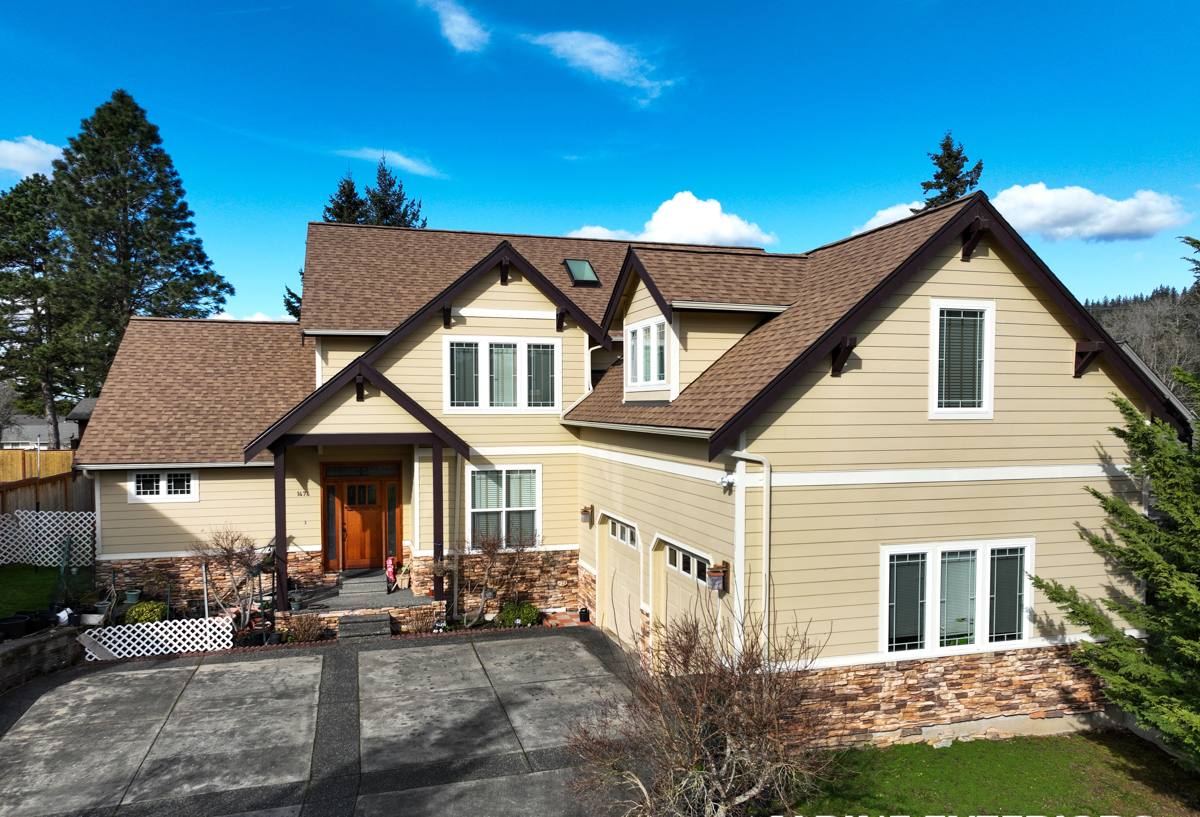
What "Custom" Actually Means on a Job Like This
Custom doesn't mean expensive or unusual-looking. For most Marietta homes it means three practical things:
- Exact sizing — older homes in this area rarely have perfectly square, standard-size openings, especially after decades of settling and moisture cycling. We measure each opening individually rather than ordering off a size chart.
- Frame and glass matched to exposure — a window on the weather side of a house facing open water needs different sealing and materials than one tucked under an eave on the leeward side.
- Retrofit or full-frame decisions made case by case — whether we replace just the sash and keep the existing frame, or pull the whole unit and rebuild the opening, depends on what condition the framing is actually in once we open it up.
Skipping that customization is how homeowners end up with a window that looks right for a year or two, then starts fogging between panes, sticking in its track, or letting water in around the corners during a hard blow off the water.
New Construction vs. Retrofit
If you're finishing an addition or a new build, we're working with a clean opening and can spec the window and flashing details from scratch. If you're replacing existing windows in an older Marietta home, the job is really about what we find once the old unit comes out — soft framing, missing or failed flashing, and insulation that's been wet for years are common finds in homes this close to the water, and each one changes the plan.
Materials and Glass: What Holds Up Here
There's no single "best" window material — there's a best match for a given house, budget, and exposure. Here's how the common options actually perform in a marine, high-rain environment like Marietta's:
| Frame Material | Salt Air / Moisture Resistance | Maintenance | Typical Trade-offs |
|---|---|---|---|
| Vinyl | Good — won't corrode or rot | Low | Can look less refined on higher-end or historic homes; dark colors absorb more heat and can warp on south/west exposures |
| Fiberglass | Very good — stable in wet/dry cycling | Low | Higher upfront cost than vinyl; fewer ultra-budget options |
| Wood | Fair — needs a sound exterior barrier or cladding to hold up to salt air and driving rain | High | Best look for period homes, but bare wood exposed to this climate will need consistent upkeep |
| Aluminum-clad wood | Good on the exterior face, interior wood still needs protection from condensation | Moderate | Strong option when you want a wood interior with a weather-resistant shell |
| Aluminum (uninsulated) | Poor — conducts cold, prone to condensation and corrosion near salt air | Moderate to high | We don't recommend it for this area outside of specific commercial or historic-match situations |
Glass matters as much as frame. In a house that catches wind off the water, we generally push for dual-pane units with a warm-edge spacer (the seal around the edge of the glass) rather than the cheapest available spacer type, because that seal is usually the first thing to fail in a coastal climate — and once it fails, you get the fogged, hazy look between panes that no amount of cleaning will fix.
The Installation Details That Decide Whether It Lasts
Most window failures we get called out to fix in this area aren't a bad window — they're a fine window installed without the right prep. The parts that matter most are the ones you can't see once the trim goes back on:
- Flashing sequence — water needs a planned path down and out, shingled correctly so each layer sheds onto the one below it, not the reverse.
- Sill pan protection — a proper drainage plane under the window sill so any water that does get past the exterior seal has somewhere to go besides your wall cavity.
- Sealant selection and placement — the right sealant in the right spots, with weep paths left open rather than caulked shut, which is a common mistake that traps moisture instead of letting it drain.
- Insulation around the frame — gaps packed correctly, not overstuffed, so the window isn't bowed and isn't leaking air around the perimeter.
Get those four things right and the window itself — vinyl, fiberglass, or wood-clad — will do its job for decades. Get any one of them wrong and even a premium window can develop rot, air leaks, or interior moisture damage well before it should.
How We Approach a Marietta Window Project
Assessment and Measurements
We start by looking at the whole opening, not just the glass — the condition of the framing, the current flashing (or lack of it), and how exposed that particular wall is to wind and rain off the water. This is also when we talk through which openings are priorities if you're phasing the project rather than doing the whole house at once.
Product Selection
We walk through frame material, glass package, and grille or style options based on your budget and how exposed that side of the house is — not a one-size answer for every window on the property.
Installation
Old units come out, framing gets inspected and repaired if needed, flashing and sill pans go in correctly, and the new window is set, shimmed, sealed, and insulated. We don't caulk over problems we find — if framing is soft or flashing has failed, we tell you before we close it back up, not after.
Cleanup and Walkthrough
Every opening gets checked for square operation and a clean seal before we call the job done, and we walk the finished work with you so you know what to expect from the new windows and how to keep an eye on them.
Signs a Marietta Home's Windows Need Attention
A quick self-check before you decide whether you're looking at a repair or a replacement:
- Fogging or haze between panes of a dual-pane window — the seal has failed and the unit needs replacing, not cleaning
- Soft or discolored trim or sill wood around the window frame
- Visible moss or dark streaking on the exterior trim above or beside the window
- Drafts you can feel at the frame edge on a windy day
- Windows that stick, won't stay open, or are hard to lock
- Condensation forming on the interior glass regularly through fall and winter
Cost Factors Worth Understanding Before You Get a Quote
Every custom window project prices out differently, but the same handful of factors drive most of the variation we see on Marietta jobs:
| Factor | Why It Moves the Price |
|---|---|
| Retrofit vs. full-frame replacement | Full-frame work costs more but is often necessary once framing or flashing has failed |
| Frame material | Vinyl is typically the lowest upfront cost; fiberglass and wood-clad options cost more but bring different longevity and maintenance profiles |
| Number and size of openings | Larger picture windows and multi-window bays cost more than standard single units |
| Condition found once the old window is out | Rot repair, reframing, or re-flashing add cost that's hard to quote sight unseen |
| Exposure of that wall | Weather-side openings sometimes warrant upgraded sealant or glass packages that leeward-side windows don't need |
We'd rather walk your specific openings and give you real numbers than quote a blanket per-window price that doesn't account for what we might find once we start.
Why a Crew That Already Works This Area Matters
A contractor who mostly works drier, inland parts of the county isn't necessarily doing anything wrong — they're just used to a different set of problems. Out here, we're used to seeing what three or four seasons of salt air and driving rain actually do to a house, which changes what we check for, what we flag before it becomes a bigger repair, and which products we steer people away from for a given wall exposure. That experience is less about brand knowledge and more about pattern recognition: knowing which corner of a house tends to take the worst of it, and building the job to account for that from the start.
After Installation: Keeping New Windows Performing
New windows are close to maintenance-free, but a little seasonal attention goes a long way in this climate. Rinse salt residue off exterior frames a couple of times a year, keep gutters and downspouts clear so runoff isn't sheeting down across the window head, and check weep holes at the base of the frame occasionally to make sure they haven't been blocked by debris or paint. None of this is heavy work — it's the same kind of upkeep that keeps moss and staining off any exterior surface near the water.
If you're weighing a window project for a Marietta home — whether it's one problem window or a full house — we're glad to take a look and give you a straightforward assessment. The estimate is free, there's no pressure attached to it, and you can use the form below to get in touch.