 Birch Bay Roofing
 Roof Repair in Marietta: Built for This Stretch of Whatcom County
Marietta sits low and close to the water, in the same weather belt as the rest of Birch Bay and the surrounding Whatcom County coastline. That means homes here take on a specific combination of punishment that roofs further inland simply don't see: salt-laden air rolling in off the water, driving rain that comes in sideways during winter storms, and a moss season that can stretch for months in the shaded, damp shoulder seasons. A roof repair here isn't just about patching a leak — it's about understanding why that leak started in the first place, and making sure the fix actually holds up against the next round of weather.
We work on roofs in Marietta regularly, which matters more than it might sound. A repair crew that mostly works dry inland neighborhoods doesn't always think about corrosion-resistant fasteners or how moss changes the way water actually moves across a roof deck. Those details are the difference between a patch that lasts a season and a repair that lasts years.
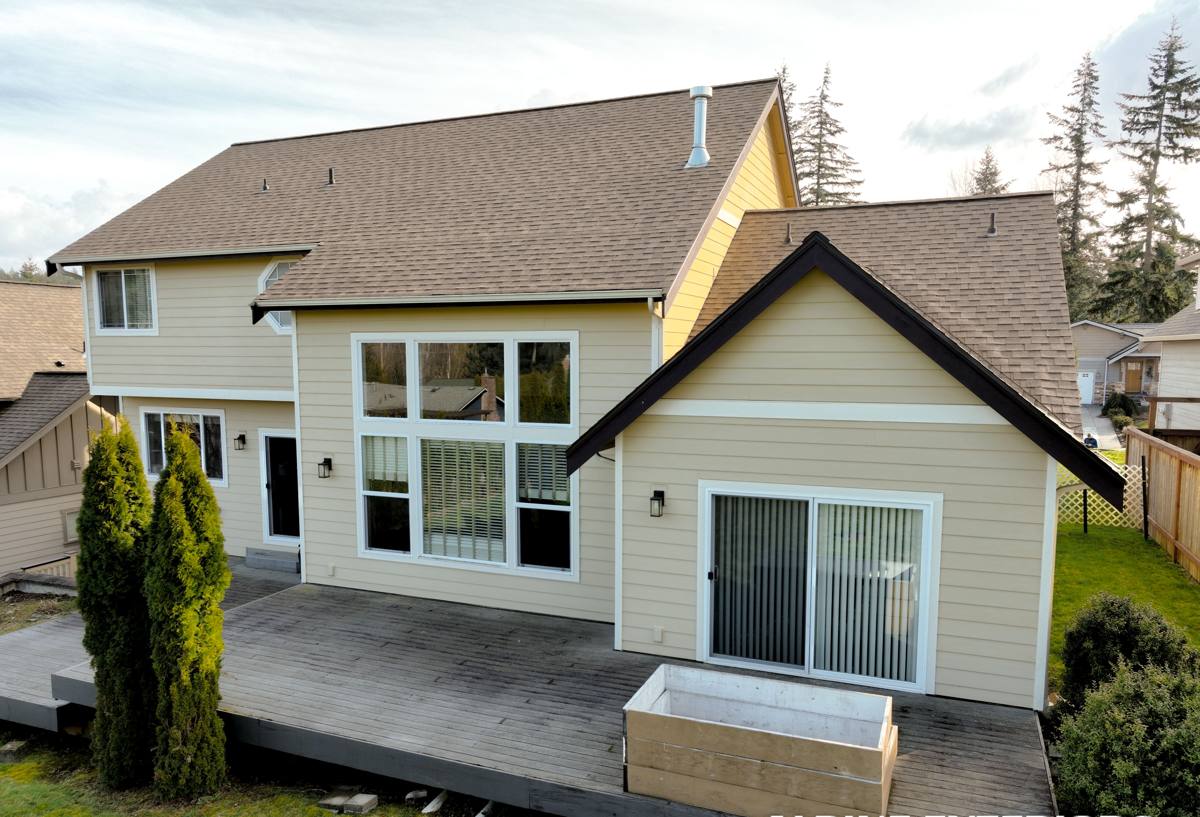
What Marietta's Climate Actually Does to a Roof
Salt Air and Metal Fatigue
Proximity to the water means airborne salt settles on roofing surfaces, flashing, fasteners, and exposed metal over time. Bare or lower-grade fasteners and thin flashing metal can corrode faster here than they would in a drier, inland part of the county. Corrosion at a nail head or a flashing seam doesn't announce itself — it just slowly opens a path for water, usually in a spot you'd never think to check until there's already a stain on the ceiling below.
Driving Rain and Wind-Driven Water
Storms coming off the water often bring rain that isn't falling straight down — it's being pushed sideways by wind, which forces water up under shingle edges, into vents, and around chimney and skylight flashing that would stay dry in a calmer rain. A repair that only addresses the visible gap, without accounting for wind-driven water pressure, tends to fail again in the next big blow.
Moss Season
Shaded roof sections, north-facing slopes, and areas under tree cover hold moisture longer through the wetter months, which is exactly what moss needs to establish. Moss doesn't just look bad — it lifts shingle edges as it grows, holds water against the roofing material far longer than bare shingle would, and channels runoff in directions the roof wasn't designed to shed water. A lot of the leaks we get called out for in this area trace back to moss that's been quietly doing damage for a year or more before anyone noticed.
Common Repair Issues We See on Marietta Roofs
- Lifted or cracked shingles along moss-affected slopes, especially on shaded north and east exposures
- Corroded or failing flashing around chimneys, skylights, and roof-to-wall transitions
- Water intrusion at vent boots and pipe collars where rubber gaskets have dried out or cracked
- Wind-lifted shingle tabs or ridge cap pieces after a strong storm off the water
- Gutter and edge-flashing issues that let wind-driven rain back up under the roof edge
- Granule loss and surface wear on older shingles that were already near the end of their service life
- Soft or discolored decking discovered once we get under a damaged section, usually from a slow leak that predates the visible symptom
What a Correct Repair Actually Involves
A roof repair done right is not just slapping sealant over the spot where water is showing up inside the house. Water travels — it can enter at one point and show up on a ceiling several feet away, following the path of least resistance along the decking or rafters. A repair that doesn't trace the actual entry point is a repair that looks finished but isn't.
Our process for a proper repair includes:
- Locating the true entry point — not just the visible interior symptom, but where water is actually getting past the roofing system.
- Checking the surrounding area — moss, corrosion, and wind damage rarely stay contained to one shingle or one flashing piece; we look at the full section, not just the failure point.
- Assessing the decking — if water has been getting in for a while, the plywood or sheathing underneath may be soft or delaminating and needs to be addressed, not just covered back over.
- Matching materials appropriately — using flashing, fasteners, and shingle products suited to a salt-air, high-moisture environment, not just whatever is on hand.
- Reinstalling with correct technique — proper shingle overlap, nailing pattern, and flashing integration so the repair sheds water the way the original roof system was designed to.
Our Repair Process, Start to Finish
1. On-Site Assessment
We get on the roof and look directly at the problem area and its surroundings, rather than estimating from photos or guessing based on the interior symptom alone. In a climate like this, what looks like a small isolated leak is often connected to a broader moss or flashing issue nearby.
2. Honest Diagnosis
We'll tell you plainly whether you're looking at a straightforward repair, a larger repair with some deck replacement, or a situation where repeated repairs are no longer the better value compared to addressing a larger section. We're not going to recommend more work than the roof needs, and we're not going to undersell a problem that's bigger than it looks from the ground.
3. The Repair Itself
Repairs are done with attention to how the fix integrates with the surrounding roofing — proper layering, flashing that directs water the right direction, and fasteners suited to a coastal environment. We clean up moss and debris in the work area as part of the job, not as an upsell.
4. Cleanup and Walkthrough
We clear the work area of old material and debris, and walk you through what we found and what we did, in plain language — no jargon, no upsell pressure for work the roof doesn't need yet.
Repair vs. Replacement: How We Help You Decide
Not every roof issue in Marietta needs a full replacement, but not every leak should keep getting patched indefinitely either. Here's a general framework for how that decision usually plays out:
| Factor | Leans Toward Repair | Leans Toward Replacement |
|---|---|---|
| Roof age | Roof is well within its expected service life | Roof is at or past the manufacturer's expected lifespan |
| Extent of damage | Isolated to one section, flashing point, or penetration | Multiple sections showing wear, moss, or granule loss |
| Decking condition | Deck is solid once uncovered | Widespread soft or delaminated decking found |
| Repair history | First or second repair in this area | Same spot has needed repeated repairs |
| Moss/algae coverage | Light, localized, easily treated | Heavy coverage across large roof sections |
When we're on-site, we'll place your roof honestly on that spectrum rather than defaulting to whichever option is more profitable for us.
Materials and Workmanship Standards We Hold to in This Environment
Because of the salt air and moisture exposure in the Marietta area, we're particular about a few things on every repair:
- Flashing and fastener materials chosen for corrosion resistance rather than the cheapest available option
- Proper shingle-to-flashing integration rather than relying on sealant alone to bridge a gap
- Ventilation checked as part of any repair, since poor attic ventilation accelerates moisture problems and shortens roof life in a damp climate
- Moss removed and treated in the repair area, not just shingled over
We hold to these standards because a repair that ignores them tends to need to be redone within a season or two — and in a climate this demanding, cutting corners costs homeowners more in the long run, not less.
Signs You Likely Need a Roof Repair Now
- Water stains or discoloration on ceilings or upper walls, especially after a storm
- Visible moss buildup on roof slopes, particularly shaded or north-facing areas
- Shingles that look lifted, curled, or missing granules from the ground
- Rusty streaking near flashing, vents, or metal roof components
- Daylight visible through the attic roof deck
- Higher-than-usual heating bills, which can point to moisture-compromised insulation from a slow leak
Why a Crew That Already Works in Marietta Makes a Difference
Roofing crews that work this stretch of Birch Bay and the broader Whatcom County coastline regularly develop an instinct for where problems tend to show up first — which slopes hold moss longest, which flashing details tend to fail under wind-driven rain, and which materials actually hold up against salt air over years, not just months. That local familiarity means less time spent diagnosing and more time spent fixing the right thing correctly the first time.
It also means we're not guessing at permitting requirements, disposal logistics, or scheduling around the weather patterns that are typical for this part of the county. When storms roll through off the water, we know how quickly conditions can turn and plan repair work accordingly, rather than getting caught mid-job by a squall.
Get a Straight Answer on Your Roof
If you're dealing with a leak, storm damage, or a roof that's showing its age in Marietta, we're happy to take a look and give you an honest read on what it actually needs — repair, partial replacement, or just routine maintenance. There's no pressure and no cost for the estimate. Fill out the form below and we'll get back to you to schedule a time to come take a look.