 Birch Bay Roofing
 Windows Built for Marietta's Coastal Conditions
Marietta sits close enough to Birch Bay and the Salish Sea shoreline that homes here deal with a version of the Pacific Northwest climate that's a little harder on building materials than most inland areas of Whatcom County. Salt-laden air drifts in off the water, wind-driven rain comes in sideways during fall and winter storms, and the marine layer keeps humidity high enough, year-round, that moss and mildew get a long head start on anything that isn't sealed and draining properly. Windows take the brunt of this. They're the part of the envelope with the most moving parts, the most seams, and the most opportunity for water or air to find a way in.
When we talk about "energy-efficient windows" for a Marietta home, we're not just talking about a lower utility bill, though that's part of it. We're talking about a window unit and installation that can handle repeated wetting and drying cycles, resist the corrosive effect of salt air on hardware and frames, and keep performing after ten or twenty winters of Whatcom County weather. A window that's efficient on paper but poorly flashed or sealed will fail here faster than in a drier climate — and it'll fail from the inside out, which is the expensive way to find out.
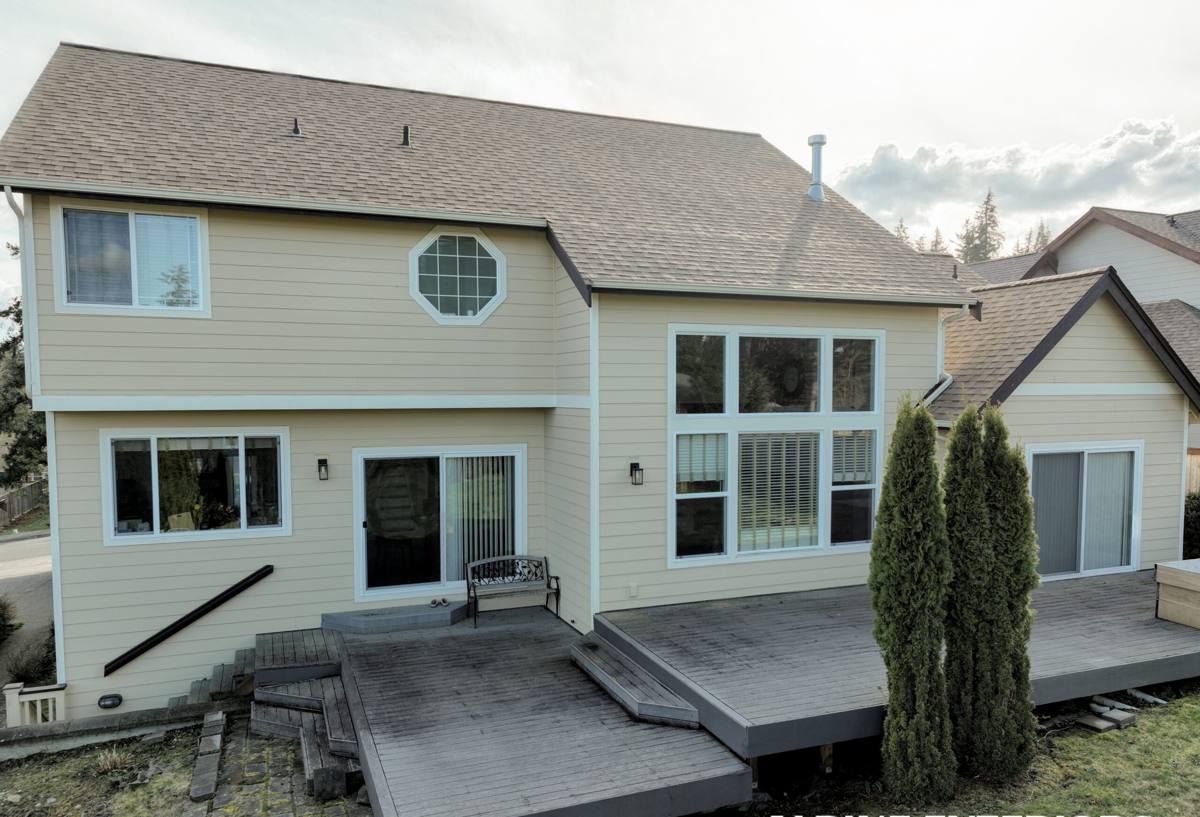
What Local Homes Actually Need From a Window Upgrade
Most of the homes we work on in and around Marietta and Birch Bay fall into one of two categories: older single-pane or early dual-pane windows that are past their useful life, or newer vinyl windows that were installed quickly during a remodel or original build and are now showing seal failure, fogging, or drafts. Either way, the goals are usually the same:
- Stop cold drafts and condensation on interior glass during winter
- Cut down on heating costs during the long, damp heating season
- Reduce road and wind noise where the home sits closer to open exposure
- Prevent water intrusion around the frame during driving rain events
- Choose materials and hardware that won't corrode or chalk from salt exposure
That last point gets overlooked a lot. Manufacturers rate window performance for average U.S. conditions, not for a home three-quarters of a mile from saltwater with onshore winds most of the year. Hardware finish, weep system design, and frame material all matter more here than they would in a drier, inland climate.
Glass Packages Worth Considering
For Marietta homes, we typically steer conversations toward double-pane units with a low-E coating and argon gas fill as the practical baseline — it's a proven combination that balances cost against real performance gains in heat retention and condensation resistance. Triple-pane is worth discussing for homes with more direct wind exposure or where street noise is a factor, but it adds weight and cost, and it isn't always worth it if the frame and installation aren't equally solid. A great glass package installed with weak flashing detail is still a leaky window.
Frame Materials: What Holds Up Near the Water
We get asked often whether vinyl, fiberglass, or wood-clad frames make the most sense for this area. Here's how we walk homeowners through it, honestly:
| Frame Type | Salt Air / Moisture Behavior | Maintenance | Typical Fit for Marietta |
|---|---|---|---|
| Vinyl | Won't corrode; UV and salt exposure can cause slow chalking over many years | Low — occasional cleaning | Good value option for most homes; verify UV-stable formulation |
| Fiberglass | Very stable in temperature swings and moisture; resists warping | Low | Strong long-term choice for exposed elevations facing the water |
| Wood-clad | Attractive but exterior cladding must be fully sealed — any breach invites rot in this moisture load | Higher — needs inspection and upkeep | Best reserved for protected elevations, not full weather exposure |
| Aluminum | Conducts cold and can corrode near saltwater over time without proper coatings | Moderate | Generally not our first recommendation for this climate |
We're not telling homeowners any one material is "bad" — every option has a legitimate use case. The point is matching the frame to the exposure. A wood-clad window on a sheltered side of the house facing away from prevailing wind and rain can perform fine for decades. That same window on the exposed side, taking direct wind-driven rain off the bay, is a different bet.
Where Installation Matters More Than the Window Itself
We say this to every Marietta homeowner we quote: the window unit is maybe half the job. The other half is how it's flashed, sealed, and integrated with the existing wall assembly — and in a high-moisture coastal climate, that other half is where failures actually happen. A quality window installed with poor flashing will leak. A modest window installed correctly will often outperform it.
What a Correct Installation Includes
- Removing old caulking and inspecting the rough opening for hidden rot or water staining before anything new goes in
- Installing self-adhered flashing tape at the sill and jambs, lapped correctly with the weather-resistive barrier so water sheds outward, not into the wall
- Sloping or shimming the sill pan so any incidental water drains back out, not into the framing
- Using low-expansion foam and backer rod appropriately around the frame — not just caulk alone — to control both air and moisture
- Sealing and finishing the exterior trim so the whole assembly sheds wind-driven rain rather than absorbing it
- Verifying the window operates smoothly and locks fully, since a compromised seal at the lock point undermines the whole efficiency gain
None of this is exotic. It's disciplined, basic building science applied consistently — but it only works if it's actually done every time, on every window, and that's where corners get cut on rushed jobs.
Moss, Mildew, and the Long Wet Season
Whatcom County's moss season isn't limited to roofs. Window sills, especially horizontal wood or composite sills on the shaded or north-facing side of a house, can collect enough standing moisture during the wet months to grow moss and mildew right on the sill and lower sash. This is usually a sign that water isn't draining away from the window the way it should — either the sill isn't sloped correctly, the weep holes are blocked or missing, or the original caulking has failed and is trapping moisture instead of shedding it. When we replace windows here, we pay particular attention to that drainage path, because a window that dries out quickly between rain events will outlast one that stays damp.
Our Process for a Marietta Window Replacement
- On-site assessment — we look at each window's current condition, check for hidden moisture damage around the frame, and note exposure differences between elevations of the home
- Honest product conversation — we walk through frame and glass options based on your budget and each window's actual exposure, not a one-size-fits-all recommendation
- Written estimate — clear pricing, product specifications, and scope, so you know exactly what's being installed and how
- Removal and inspection — old windows come out carefully, and we inspect the rough opening before anything new goes in, flagging any rot or damage we find before proceeding
- Correct installation — flashing, sill pan, insulation, and sealing done to the standard above, on every unit
- Final walkthrough — we check operation, locks, and exterior finish work with you before calling the job done
Why Hiring a Crew That Already Works This Area Matters
A window contractor who mainly works drier inland areas can still do a technically fine installation and still get surprised by how a home near the water actually performs over a winter. Wind direction relative to the shoreline, how much direct rain a given elevation actually takes, how quickly moss establishes on a shaded sill — these are things you learn by working in Birch Bay and Marietta specifically, not by reading a manufacturer's install guide. We adjust flashing details, sealant choices, and even scheduling (avoiding install days ahead of a driving rain event) based on what we've seen hold up and what hasn't, on homes just like yours in this exact area.
Cost Factors Homeowners Should Know
Every home is different, so we won't quote a number without seeing the windows, but the main factors that move the price are worth understanding upfront:
| Factor | Why It Affects Cost |
|---|---|
| Frame material | Vinyl is typically the most budget-friendly; fiberglass and wood-clad cost more upfront |
| Glass package | Double-pane low-E/argon vs. triple-pane changes both material cost and weight/hardware requirements |
| Existing damage | Rot or water damage found in the rough opening adds repair scope before the new window goes in |
| Window size and count | Larger openings and full-home replacements have different labor and material needs than a handful of units |
| Exposure and access | Elevations facing prevailing wind and rain, or requiring staging/ladders, take more care and time |
Signs It's Time to Replace
Not every window needs full replacement right away. Some common signs we look for that tell us a Marietta homeowner is due for an upgrade:
- Condensation or fogging between the glass panes (a sign the seal has already failed)
- Visible drafts or cold spots near the frame in winter
- Difficulty opening, closing, or locking the window
- Soft or discolored wood, or persistent moss/mildew, at the sill or frame
- Noticeably higher heating bills compared to similar homes nearby
- Visible daylight or gaps around the frame from outside
If you're seeing one or two of these, it's worth having someone take a look before it becomes a bigger repair. Water damage around a window frame rarely stays small once it starts.
If you're weighing a window upgrade for your Marietta home, we're happy to take a look and give you a straightforward, no-pressure estimate — just fill out the form below and we'll get in touch.