 Birch Bay Roofing
 Marietta's Siding Problem Isn't Hypothetical
Marietta sits close enough to the water that homes here take a different kind of beating than siding fifteen miles inland. Salt-laden air moves off the bay, wind-driven rain finds every gap a builder left loose, and the long, damp Whatcom County winters give moss and algae months to establish themselves on anything that stays wet. None of that is unusual for this stretch of the Washington coast. It's just the reality of building here, and it's why the siding decision matters more in Marietta than it would in a drier, more sheltered part of the state.
This page is about one thing: installing James Hardie fiber cement siding correctly on a home in this specific area. Not a general siding overview, not a sales pitch for every product on the market — just what local conditions demand, what a correct job actually involves, and why the installer matters as much as the material.
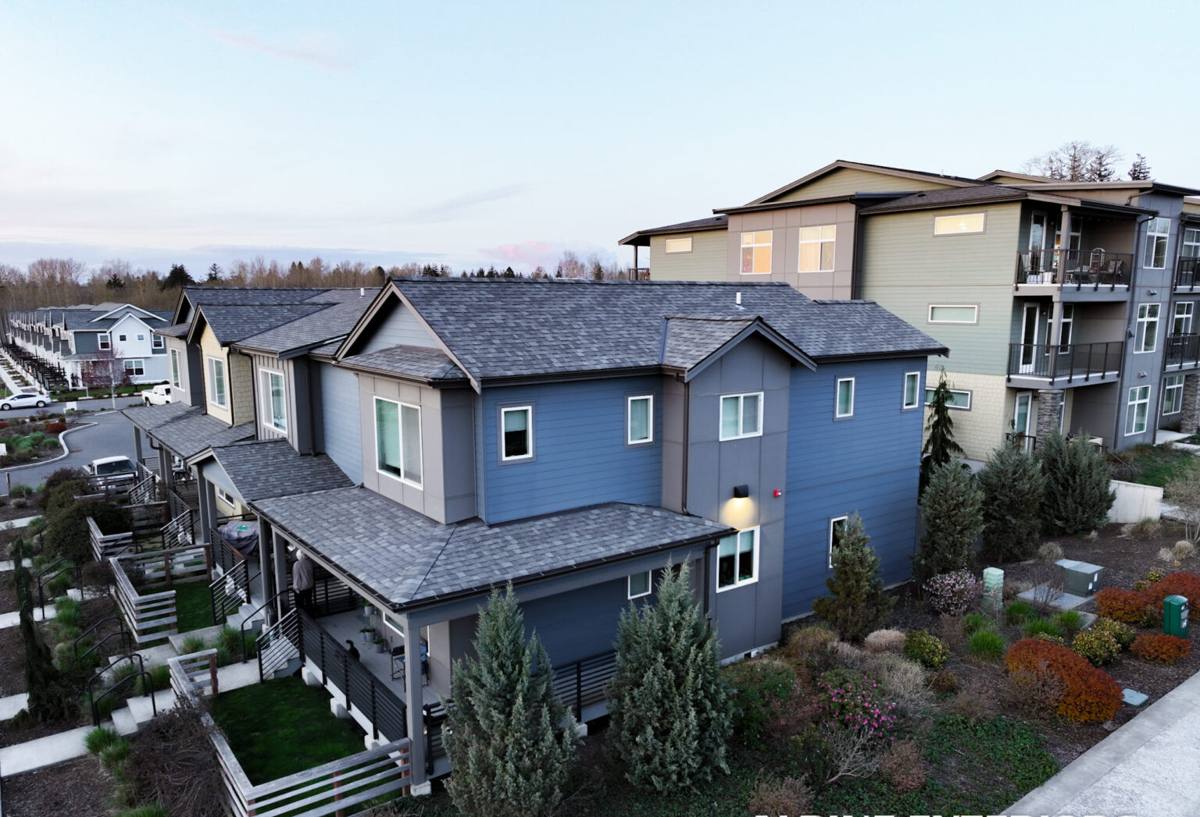
What Salt Air, Rain, and Moss Actually Do to Siding
Salt Air
Airborne salt is corrosive. It settles into fasteners, trim seams, and any exposed metal, and over years it accelerates rust and breaks down finishes that weren't built to handle it. Siding materials that rely on paint film alone for protection tend to chalk, fade, and lose their seal faster in a salt-air environment than they would twenty miles inland.
Driving Rain
Storms coming off the water don't just fall straight down — wind pushes rain sideways, into laps, seams, and butt joints. Siding systems are only as good as their weakest joint. If flashing, caulking, or overlap details are done wrong, wind-driven rain will find the gap eventually, and the damage usually shows up behind the siding — in sheathing and framing — long before it's visible on the surface.
Moss and Algae
Whatcom County's long wet season means north-facing walls, shaded elevations, and anything under tree cover can stay damp for weeks at a stretch. That's exactly the environment moss and algae need to take hold. On materials that absorb moisture or hold a biofilm well, growth spreads quickly and is genuinely hard to keep ahead of without regular cleaning.
Why We Standardize on James Hardie Fiber Cement
We only install James Hardie siding. We don't install vinyl, LP SmartSide, Cemplank, Allura, primed spruce, or cedar, and in a climate like Marietta's, that's a deliberate call, not a brand preference.
Vinyl siding can warp and crack under UV exposure and temperature swings, and its seams and J-channels give wind-driven rain plenty of entry points if the install isn't precise. Engineered wood products like LP SmartSide use a wood-strand substrate that, once moisture gets past the finish at a cut edge or fastener hole, is vulnerable to swelling and rot — a real risk anywhere that sees Marietta's rainfall totals. Cedar and primed wood look good on day one but demand a maintenance schedule (repainting, caulking, moss treatment) that most homeowners underestimate, and salt air only shortens the interval between coats.
James Hardie fiber cement is cellulose fiber, sand, and cement pressed into a rigid, dimensionally stable board. It doesn't absorb water the way wood-based products do, it won't warp or crack from temperature swings the way vinyl can, and it's non-combustible — a genuine advantage during Washington's wildfire seasons, which now reach further into Western Washington than they used to. It's not a miracle product, and it still has to be installed correctly to perform. But as a base material for a home exposed to salt air, rain, and moss, it's the one we're willing to put our name behind.
HardieZone HZ5: Built for This Exact Climate
James Hardie engineers its siding by climate zone, not as a one-size-fits-all product. Marietta falls in the HZ5 zone, which covers the wetter, more temperature-moderate regions of the Pacific Northwest. HZ5 products are formulated for freeze-thaw cycling and sustained moisture exposure, which is a closer match to Whatcom County's weather pattern than the HZ10 formulation used in hot, humid Southeastern climates. Using the correct zone-engineered product isn't a marketing detail — it affects how the board handles moisture and temperature change over decades, not just years.
ColorPlus Technology: Reducing the Maintenance Salt Air Demands
Standard field-painted siding is only as durable as its paint job, and paint is exactly what salt air degrades fastest. James Hardie's ColorPlus finish is baked on in a controlled factory environment in multiple coats, which gives it better fade and wear resistance than most site-applied paint — and it comes with its own finish warranty separate from the product warranty. For a home in Marietta, that means fewer repaint cycles and a finish that's better equipped to handle the coastal exposure than a hand-painted board.
Color selection still matters locally. Darker tones absorb more heat and can show dust and salt residue differently than lighter tones, and we'll talk through what tends to hold up well on exposed versus sheltered elevations when we walk your home.
What a Correct Installation Involves Here
Fiber cement siding is only as good as the install behind it. In a climate that punishes sloppy work faster than a dry inland climate would, these details aren't optional:
- Weather-resistive barrier installed and lapped correctly behind the siding, with all penetrations sealed
- Minimum ground clearance maintained (typically 6 inches, per Hardie's install requirements) to keep splash-back and standing moisture off the bottom course
- Flashing at every window, door, and roofline transition — the majority of siding failures we see trace back to flashing that was skipped or done wrong
- Corrosion-resistant, hot-dip galvanized or stainless fasteners, sized and spaced to Hardie's published specs — a real consideration this close to salt air
- Proper gapping and sealing at butt joints and trim, using sealants rated for the exposure rather than whatever caulk was on hand
- Field-cut edges primed and sealed before installation, since a raw cut edge is the one place factory finish protection doesn't reach
- Panels and planks fastened per Hardie's engineering — over-driving or under-driving fasteners is a common shortcut that shows up as problems years later
Every one of these steps is spelled out in James Hardie's installation instructions. The material doesn't fail on its own nearly as often as an installation does.
How We Approach a Marietta Job
Assessment
We start by looking at the home's exposure — which elevations take the most wind-driven rain, where moss has already taken hold, whether the existing sheathing shows signs of moisture damage that needs to be addressed before new siding goes on. Covering up a wet wall with new siding just hides the problem.
Product and Color Selection
We walk through Hardie's lap, panel, and shingle profiles and ColorPlus palette based on your home's style and exposure, not a one-size answer.
Installation
Tear-off, any necessary sheathing repair, weather barrier, flashing, and siding installation follow Hardie's published specifications — not shortcuts to save a day of labor.
Final Walkthrough
We go over the finished job with you, including care and cleaning guidance specific to a home that sits this close to the water.
What Affects Cost on a Job Like This
| Factor | Why It Matters |
|---|---|
| Home size and number of stories | More surface area and staging/access needs for upper stories directly affect labor |
| Siding profile (lap, panel, or shingle) | Detailed profiles like shingle siding take more install time than straight lap |
| Condition of existing sheathing | Moisture damage found during tear-off may need repair before new siding goes on |
| Trim and detail work | Corner boards, window trim, and fascia detailing add material and labor |
| Color and finish selection | Factory ColorPlus finishes vs. field-applied paint carry different costs and warranty coverage |
| Tear-off and disposal of old siding | Removing vinyl, wood, or damaged siding adds a labor and disposal cost most estimates need to account for |
We give straightforward, project-specific estimates rather than broad ballpark numbers pulled from a rate sheet — every one of these factors changes with the actual home.
Why a Local Crew Matters in Marietta
A crew that's already worked in Marietta and along the Birch Bay shoreline has seen firsthand which elevations take the worst of the wind-driven rain, how fast moss returns on shaded north walls here, and what corrosion-resistant hardware actually holds up under sustained salt exposure. That's not something you get from a general contractor working from a manual — it comes from doing the work repeatedly in this specific stretch of Whatcom County. It shows up in the small decisions: where extra flashing gets added even when the minimum spec would technically pass, which fastener grade actually makes sense here, and which details get inspected twice before the crew moves on.
If you're planning a siding project in Marietta, we're glad to walk your home, look at its specific exposure, and give you a straightforward, no-pressure estimate — just fill out the form below to get started.