 Birch Bay Roofing
 New-Construction Windows in Semiahmoo: A Different Job Than a Replacement
Semiahmoo sits right up against the water, which means every home built out here is going to take more weather than a house a few miles inland. When you're framing a new build or an addition in this part of Whatcom County, the windows you put in and how you install them matter more than almost anywhere else on the exterior. New-construction windows are installed into a bare, unfinished rough opening before siding and trim go on — not popped into an existing frame the way a replacement window is. That gives us full access to the sheathing, the weather-resistive barrier, and the framing itself, which is exactly what you want when the goal is a window opening that sheds water for decades instead of one that just looks finished on install day.
Done right, a new-construction window installation is one of the best opportunities you get to build long-term water management into the house. Done wrong, or rushed by a crew unfamiliar with what this stretch of coastline throws at a building, it becomes the source of rot, stains, and callbacks a few winters down the road.
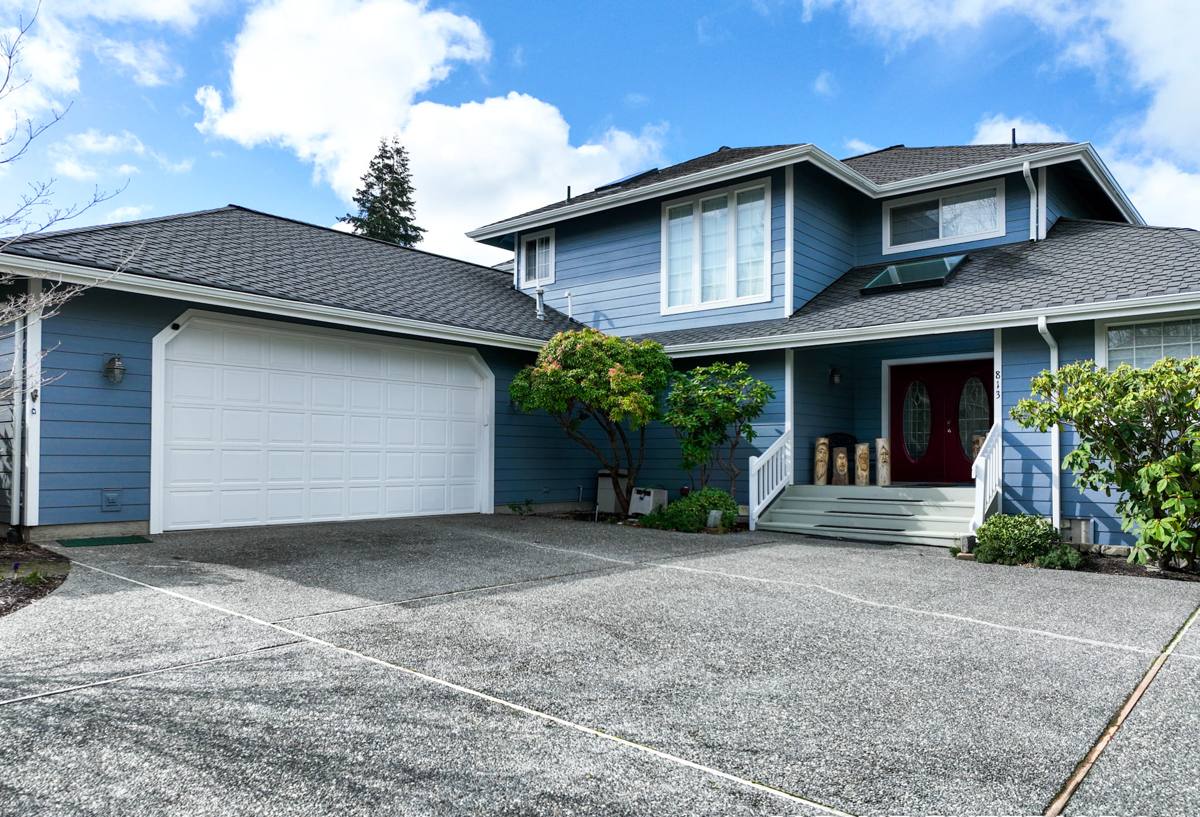
Why Semiahmoo's Climate Changes How This Job Gets Done
Semiahmoo's exposure is a combination most inland Whatcom County builders don't deal with every day: salt-laden air off the water, wind-driven rain that comes in sideways instead of straight down, and a wet season that runs long enough to grow moss on anything that stays damp. Each of these changes a decision somewhere in the window installation process.
Salt Air
Salt air accelerates corrosion on fasteners, flashing metal, and window hardware faster than a standard installation checklist accounts for. Screws, nails, and flashing that would hold up fine twenty miles inland can start showing rust streaks and pitting within a few seasons out here if they're not rated for coastal exposure.
Driving Rain
Wind off the Strait pushes rain into window openings horizontally, not just downward. That means gravity alone won't carry water away from a window the way it might on a more sheltered lot. The flashing sequence has to assume water will be forced up and sideways at the sill and jambs, not just dripped down the face of the wall.
The Long Moss Season
Whatcom County's wet season stretches long, and anywhere moisture sits — window sills, the tops of trim boards, north-facing jambs that don't get sun — moss and algae will eventually take hold. That's less about the window itself and more about whether the surrounding flashing and trim details actually drain, or just look like they do.
What a Correct New-Construction Window Install Actually Involves
A window install is judged by what you can't see once the siding goes back on. The visible caulk line is the least important part of keeping water out — the flashing sequence underneath it is what actually does the work.
Sill Pan and Flashing Sequence
Every opening should get a sloped sill pan so that any water that does get past the window has somewhere to go besides straight down into the framing. From there, the sequence matters: sill pan first, then the window, then jamb flashing, then head flashing, each one lapped over the layer below it — never the reverse. Self-adhered flashing tape needs to tie into the weather-resistive barrier (WRB) above and below the opening so the whole wall assembly drains as one system, not a window sitting in a hole with caulk around the edges.
Fasteners and Hardware for Salt Air
On a lot this close to the water, we don't use standard-grade fasteners at window openings. Corrosion-resistant screws and flashing metals cost a little more up front and save the trim and framing around the window from staining and failure years earlier than they should.
Where Sealant Belongs — and Where It Doesn't
Sealant is a backup, not the primary defense. It should seal the window nail fin to the WRB and close gaps at the exterior trim — it should never be the only thing standing between an opening and driving rain. If a window relies on a bead of caulk to stay dry, the flashing underneath it wasn't done right.
A Pre-Install Checklist Worth Confirming
- Rough openings are square, level, and sized correctly before windows arrive on site
- Sill pan flashing is specified for every opening, not just the ones facing the water
- Flashing tape and WRB integration follow a documented shingle-lap sequence
- Fasteners and flashing metal are rated for coastal/salt-air exposure
- Window selection accounts for wind and water exposure, not just price
- Sealant is used as a secondary seal, not a substitute for proper flashing
- Final water-management details are inspected before siding or trim closes them in
Choosing Frame Materials and Glass for This Location
There's no single "best" window frame material for every project — it depends on budget, the home's design, and how exposed the specific elevation is to wind and rain. What we do is walk homeowners and builders through the real trade-offs for a site like this one, rather than defaulting to whatever is easiest to install.
| Frame Material | Coastal Performance | Maintenance | Typical Use Case |
|---|---|---|---|
| Vinyl | Good; won't corrode, but check UV and impact rating | Low | Cost-conscious builds, most elevations |
| Fiberglass | Very good; dimensionally stable in temperature swings | Low | Higher-exposure walls, larger openings |
| Aluminum-clad wood | Good exterior durability, warm interior look | Moderate | Design-forward builds where appearance matters |
| Bare wood | Requires diligent upkeep in salt air and long wet seasons | High | Historic or period-specific projects only |
For most Semiahmoo builds, we steer clients toward vinyl or fiberglass on exposed elevations specifically because they don't need repainting or refinishing to keep shedding water — one less maintenance item on a home that already deals with a lot of weather. Glass selection matters too: a low-E coated, argon-filled unit that meets Washington's energy code requirements will perform better against both heat loss and condensation on a home that sees this much humidity and wind.
Cost Factors to Expect
New-construction window costs vary a lot by project, and we'd rather explain what drives the number than throw out a figure that doesn't apply to your build. Here's what actually moves the price on a Semiahmoo job.
| Factor | Why It Matters Here |
|---|---|
| Number and size of openings | Larger and more numerous openings mean more flashing detail work, not just more glass |
| Wall exposure | Water-facing and wind-exposed elevations may warrant upgraded flashing or glazing |
| Frame material | Vinyl, fiberglass, and clad-wood carry different material and install costs |
| Glass package | Low-E coatings and gas fills add cost but improve comfort and condensation resistance |
| Access and building height | Second-story and hard-to-reach openings take more time to flash correctly |
| Coordination with framing/siding trades | Scheduling around other crews affects labor efficiency |
Our Process, From Rough Opening to Final Inspection
We work new-construction window installs as part of the overall building envelope, coordinating directly with the general contractor or framer rather than showing up as an isolated trade.
- Rough opening review — we check that openings are square, correctly sized, and ready before windows are ordered or set.
- Product selection — we walk through frame material, glass package, and performance ratings based on the specific elevation's exposure.
- Flashing and installation — sill pans, window setting, jamb and head flashing, and WRB integration, done in sequence and documented as we go.
- Pre-siding inspection — every opening gets checked while it's still visible, before trim or siding covers the flashing work.
- Final walkthrough — we confirm operation, seals, and finish trim details before calling the job complete.
Because we're coordinating with your framer or GC on their timeline, we plan installation around the wet-season windows Whatcom County builders already have to work with, rather than treating weather as a surprise.
Why a Crew That Already Works Semiahmoo Matters
A window crew that mostly works drier, more sheltered inland lots isn't necessarily wrong about window installation in general — but they may not default to the details that matter on a site with this much wind and salt exposure. Knowing which elevations in this area take the worst of the driving rain, which fastener and flashing grades hold up against salt air over time, and how the long moss season shows up in poorly drained trim details isn't something you get from a spec sheet. It comes from having done this work, on homes like this, in this specific stretch of Whatcom County.
That local familiarity also matters for permitting and inspection — knowing what Whatcom County's building department expects to see documented on a new-construction opening, and building the installation to hold up to that review the first time, saves everyone a round of rework.
Get a Straight Answer on Your Window Install
If you're framing a new build or addition in Semiahmoo and want a window installation plan built around this location's actual exposure — not a generic checklist — we're glad to walk the plans with you. Reach out for a free, no-pressure estimate using the form below, and we'll give you an honest read on what your project needs.