 Birch Bay Roofing
 Building New in Marietta? The Windows Have to Match the Site
Marietta sits close enough to Birch Bay and the Strait of Georgia that salt-laden air, wind-driven rain, and long stretches of damp, low-light weather are just part of the building conditions here, not an occasional inconvenience. When a home is under construction, the window package is one of the few decisions that gets locked in before siding, trim, and interior finishes go on top of it. Get it right at rough-in and the house performs for decades. Get it wrong — a poor flashing detail, an undersized frame, a product that isn't rated for coastal exposure — and you're looking at rot, air leaks, or failed seals hiding behind finished walls within a handful of years.
New-construction window work is different from a retrofit or replacement job. There's no existing frame to work around, no old flashing to inspect and patch. That's an advantage: it means the window and the building envelope can be integrated correctly from the start, with proper flashing sequencing, house wrap integration, and sill pans built in before anything is closed up. It's also a responsibility, because whatever gets installed now is what the homeowner lives with, and what the next contractor has to work around if it's ever redone.
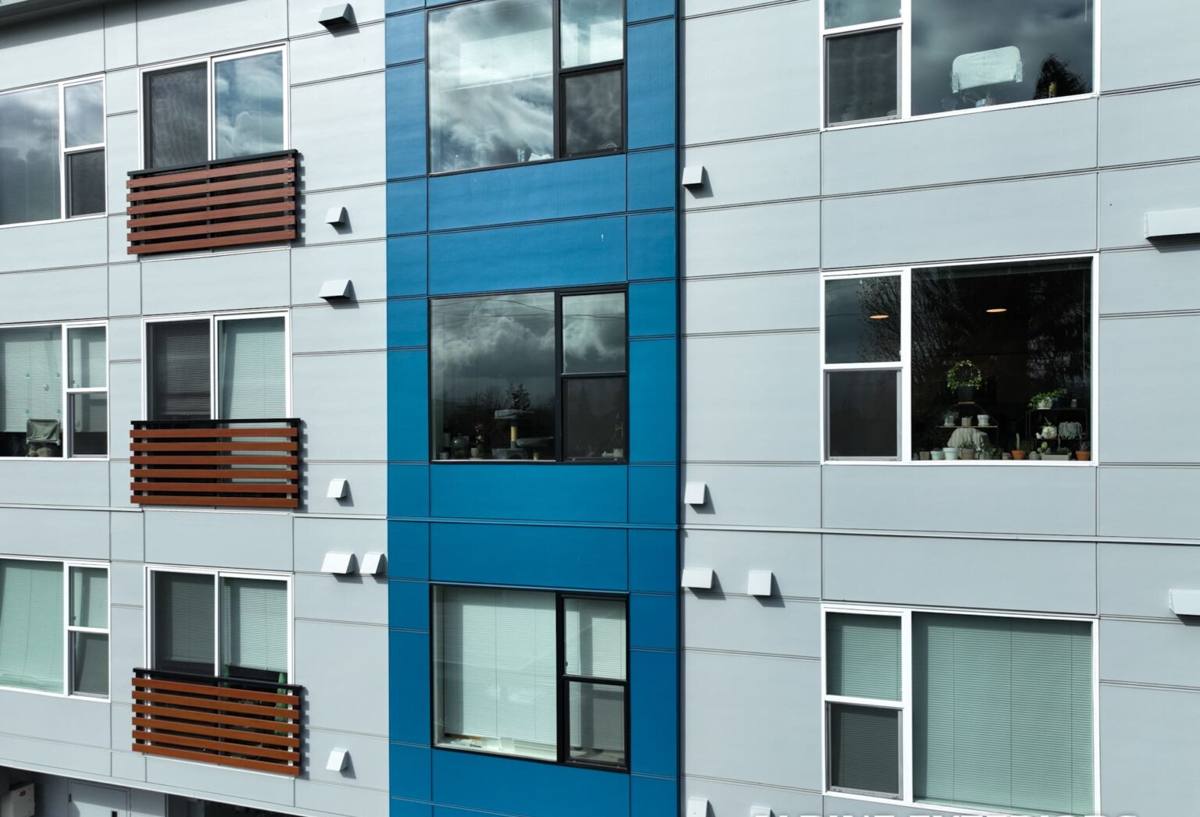
What Whatcom County's Coastal Climate Asks of a Window
Birch Bay and the Marietta area get a specific combination of conditions that not every window product or installation crew is built to handle well:
- Salt air corrosion — proximity to the bay means airborne salt settles on exterior surfaces. Hardware, cladding, and fasteners that aren't rated for coastal exposure can corrode or pit years ahead of schedule.
- Driving, wind-driven rain — storms off the water don't just fall straight down, they push rain sideways into wall assemblies. Flashing details and sill pans matter more here than in a sheltered inland lot.
- Extended moss and moisture season — long stretches of gray, damp weather from fall through spring mean any water that does get behind a window has less opportunity to dry out before it does damage.
- Marine-layer humidity swings — daily temperature and humidity shifts near the water put more stress on seals and glazing than a drier inland climate would.
None of this means new construction in Marietta requires exotic materials. It means the frame material, the glazing package, and above all the installation details need to be chosen and executed with this specific exposure in mind, not a generic Pacific Northwest spec pulled off a shelf.
Frame Materials: What Actually Holds Up Near the Water
Every major frame material can work in a coastal climate if it's specified and installed correctly. The differences show up in maintenance burden and long-term behavior, not in whether a product is "good" or "bad."
| Frame Material | Coastal Performance Notes | Maintenance Expectation |
|---|---|---|
| Vinyl | Doesn't corrode from salt air; performs well in humidity. Quality varies significantly by manufacturer. | Low — occasional cleaning, no repainting |
| Fiberglass | Dimensionally stable through temperature and humidity swings common near the bay; strong resistance to warping. | Low to moderate |
| Wood (clad or unclad) | Excellent insulating and aesthetic qualities, but exposed wood needs consistent upkeep in a wet, salty environment or moisture can find its way in over time. | Higher — regular inspection and finish maintenance |
| Aluminum | Strong and slim-profile, but standard aluminum is a poor thermal performer and can be prone to corrosion near salt air unless it's a marine-grade, thermally broken product. | Moderate to high depending on grade |
For most new-construction homes in this area, we lean toward vinyl or fiberglass products from manufacturers with a documented track record in marine or coastal climates, paired with corrosion-resistant hardware. Wood-clad windows are a legitimate choice for homeowners who want that look and are prepared for the upkeep — we'll walk through that trade-off honestly rather than push a single answer.
Glazing Package
Double-pane, low-E glass with argon fill is the practical baseline for this climate — it manages both the region's mild-but-persistent heat gain in summer and heat loss during the long, damp winter. Triple-pane is worth discussing for homes on more exposed lots near the water where wind load and noise from weather events are a bigger factor, but it's not a blanket requirement for every build.
Where New-Construction Installs Actually Go Wrong
Most window failures we get called out to inspect years later trace back to one of a few installation shortcuts, not the window product itself:
- Skipping or improperly lapping a sill pan flashing membrane, so any water that gets past the exterior cladding has nowhere to drain
- Flashing tape applied out of sequence with the house wrap, creating a shingle-lap that directs water into the wall instead of down and out
- Inadequate or missing backer rod and sealant at the exterior perimeter, leaving gaps for wind-driven rain to exploit
- Fasteners or hardware not rated for coastal salt exposure, leading to premature corrosion
- Rough openings cut without proper allowance for expansion, leaving windows racked or under stress once the structure settles
Every one of these is preventable with a disciplined sequence and a crew that treats the flashing details as seriously as the window itself.
Our Installation Process for New Builds
1. Rough Opening Review
Before a window ever arrives on site, we verify the rough openings against the manufacturer's specifications — size, squareness, and plumb. Catching a framing discrepancy now is far cheaper than discovering it after the window is set.
2. Sill Pan and Flashing Integration
We install a sloped sill pan at every opening so any incidental moisture drains outward rather than pooling at the sill. Flashing tape and house wrap are integrated in the correct shingle-lap order — each layer overlapping the one below it — so water always has a path down and out, never in.
3. Window Setting and Shimming
Windows are set plumb, level, and square, shimmed at manufacturer-specified points to avoid frame distortion, and fastened with corrosion-resistant hardware suited to this coastal environment.
4. Exterior Air and Water Sealing
Backer rod and a quality sealant close the perimeter gap between the frame and the rough opening on the exterior face, backed by the flashing system underneath — a belt-and-suspenders approach rather than relying on sealant alone.
5. Interior Air Sealing and Insulation
The gap between frame and framing is sealed on the interior side too, both for energy performance and to prevent condensation from forming inside the wall cavity during the region's damp months.
6. Final Inspection and Operation Check
Every window is checked for smooth operation, proper locking engagement, and a clean, even reveal before we consider the opening finished and ready for siding or trim.
Coordinating With Your Builder or GC
New-construction window work rarely happens in isolation. We coordinate directly with the general contractor or builder's schedule so window sets happen at the right point in the sequence — after the house wrap is on, before siding closes things up. Clear communication at this stage avoids the two most common scheduling problems on a build: windows sitting exposed too long before flashing is finished, or siding crews getting held up waiting on window installation. We show up on the day we're scheduled and work the sequence the build calls for.
Pre-Install Checklist for Marietta Homeowners and Builders
- Confirm frame material and glazing package match the site's exposure — a bay-view lot needs more attention than a sheltered inland one
- Verify rough openings are framed to the specific window manufacturer's tolerances
- Confirm house wrap is installed and inspected before window sets begin
- Ask what sill pan and flashing system will be used, and in what order it's installed
- Confirm hardware and fasteners are corrosion-resistant and rated for coastal use
- Get a clear timeline for when window sets need to happen relative to siding
- Ask about the manufacturer's warranty terms and what voids them (often improper installation)
Cost Factors on a New-Construction Window Package
Every build is different, and total cost depends on window count, size, frame material, and glazing upgrades, but the main variables worth understanding are:
| Factor | Why It Moves the Price |
|---|---|
| Frame material | Vinyl is typically the most economical; fiberglass and wood-clad run higher |
| Glazing upgrades | Triple-pane, upgraded low-E coatings, or specialty tints add cost per unit |
| Window size and configuration | Large picture windows, corner units, and custom shapes cost more than standard operable sizes |
| Number of openings | Larger homes with more window openings scale cost accordingly, though per-unit pricing often improves with volume |
| Coastal-rated hardware | Corrosion-resistant fasteners and hardware carry a modest premium over standard-grade components |
We'll walk through these trade-offs with actual product options and real numbers for your specific plan set — we don't quote a blanket per-window number without seeing the build.
Why a Crew That Already Works This Area Matters
A contractor who works Birch Bay and the surrounding Whatcom County shoreline regularly already knows which flashing details hold up against driving rain off the water, which hardware corrodes early in salt air, and how long the moss season actually runs here — because they've gone back and diagnosed the failures on homes where those details were skipped. That's not something a crew unfamiliar with this specific coastal exposure picks up on the first job. For a new-construction build, where the window installation gets buried under siding and trim within weeks, that local track record is the difference between a package that's installed correctly the first time and one that surfaces problems years down the road.
If you're planning a new build in Marietta or elsewhere around Birch Bay, we're happy to walk your plan set, talk through frame and glazing options for your specific lot exposure, and coordinate directly with your builder's schedule. Reach out for a free, no-pressure estimate using the form below.