 Birch Bay Roofing
 Why Marietta Roofs Wear on a Different Timeline
Marietta sits close enough to the water that salt air is part of daily life, and that changes how a roof ages. Add Whatcom County's long, wet winters and the moss season that follows them, and you have a combination that shortens the lifespan of a roof that was installed without those conditions in mind. A roof replacement here isn't just about swapping old shingles for new ones — it's about correcting for the specific ways this coastal, moss-prone climate attacks a roof system over time.
We work on homes throughout Birch Bay and the surrounding Whatcom County communities, and Marietta roofs show a consistent pattern: premature granule loss on the water-facing slopes, soft or stained decking near valleys and chimneys, and moss establishing itself faster than it would twenty or thirty miles inland. None of that is unusual for the area. It's just what a roof here is up against, and it's what a correct replacement needs to plan for.
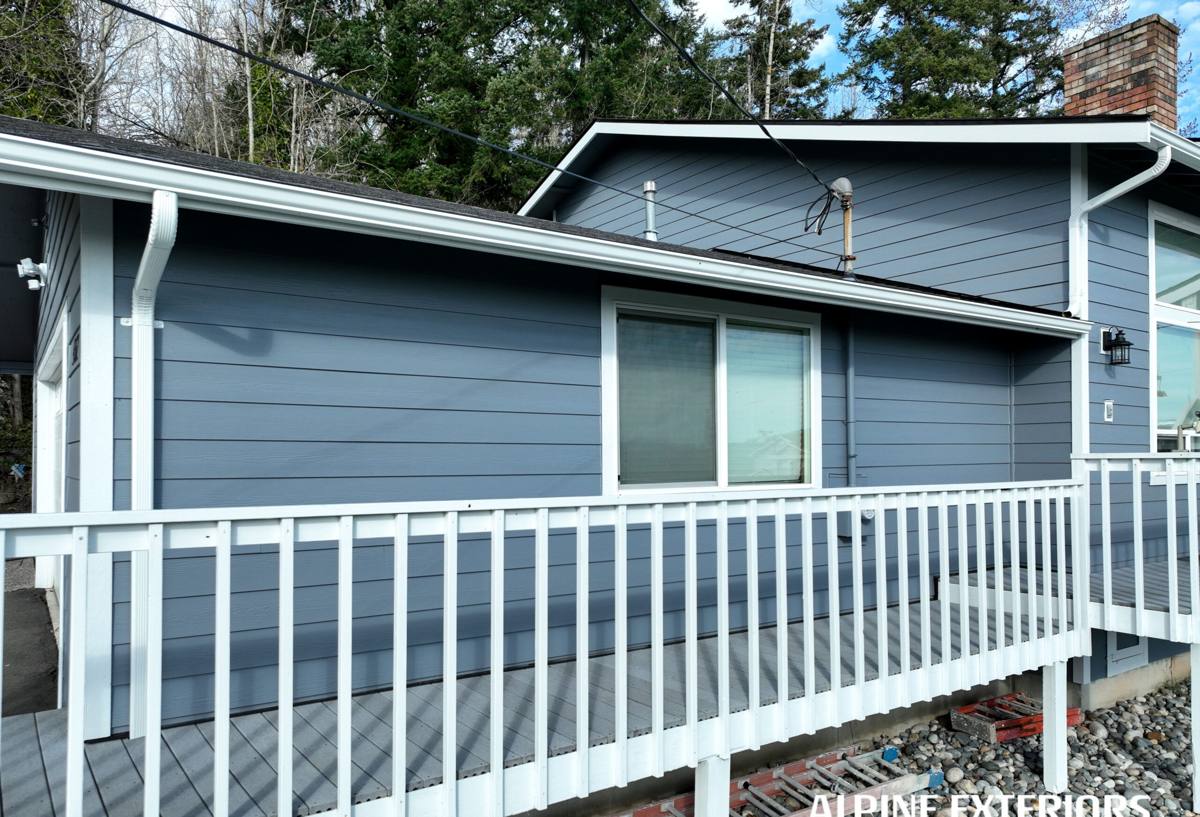
What Salt Air, Rain, and Moss Actually Do to a Roof
Salt Air
Airborne salt accelerates corrosion on any exposed metal — flashing, fasteners, vent caps, and gutter hardware. Standard fasteners and lower-grade flashing can start showing rust streaks and pitting years before they would in a drier, inland setting. This is why fastener and flashing selection matters more here than the roofing material spec sheet alone suggests.
Driving Rain
Wind-driven rain off the water doesn't fall straight down — it gets pushed sideways and upward under shingle edges, around penetrations, and into any gap in flashing or underlayment. A roof detailed for calmer, drier climates often isn't sealed aggressively enough for what Marietta homes see in a typical winter storm.
Moss
Shaded, north-facing slopes and roofs under tree cover stay damp longer here than almost anywhere else in the county. Moss doesn't just look bad — its root structure lifts shingle edges, holds moisture against the roof deck, and speeds up granule loss and rot underneath. Left unchecked over multiple seasons, moss growth can turn a roof that had years of life left into one that needs full replacement.
Signs a Marietta Home Needs Roof Replacement, Not Just Repair
Repair makes sense for isolated damage. Replacement becomes the honest recommendation once the roof's underlying protection — the decking, underlayment, and flashing system — is compromised in more than one area. Signs worth taking seriously include:
- Granule buildup in gutters that's increased noticeably over the past year or two
- Shingles that are curling, cupping, or cracking, especially on south- and west-facing slopes
- Moss or algae staining that returns within months of cleaning
- Soft spots or sagging felt underfoot in the attic near valleys, chimneys, or skylights
- Daylight visible through the roof deck from inside the attic
- Water stains on interior ceilings, even small or intermittent ones
- A roof approaching or past 20-25 years old with no major work done
- Missing or lifted shingles after a windstorm, especially if it's happened more than once
If two or three of these apply, it's worth having the roof looked at before winter. Waiting through another wet season on a compromised roof usually turns a planned replacement into an emergency one.
Choosing Materials That Actually Hold Up Here
Not every roofing product performs the same way under salt exposure and heavy moisture. We steer homeowners toward materials and details that are proven for this specific climate rather than whatever is cheapest to install.
| Material | How It Handles Salt Air & Moisture | Moss Resistance | Typical Lifespan Here |
|---|---|---|---|
| Standard 3-tab asphalt | Fair — lower-grade fasteners and thin flashing are more vulnerable to corrosion | Low without algae-resistant granules | 15-18 years |
| Architectural (laminate) asphalt | Good — thicker mat, better sealant strips resist wind-driven rain | Better with algae-resistant (AR) shingles | 22-28 years |
| Standing-seam metal | Very good — with marine-grade fasteners and coatings | High — smooth surface sheds moss more easily | 40-50+ years |
| Composite/synthetic shingle | Good — resists moisture absorption | Moderate to high | 30-40 years |
Architectural asphalt with algae-resistant granules is the most common choice for Marietta homes because it balances upfront cost against real durability in this climate. Metal roofing costs more initially but performs exceptionally well against both salt corrosion and moss when detailed correctly, and it's a solid option for homeowners planning to stay long-term. We'll walk through the honest trade-offs for your specific roof rather than defaulting to one product.
What a Correct Roof Replacement Actually Involves
A roof replacement is more than the shingles you see. The parts underneath do most of the work of keeping a home dry, and in a climate like this one, cutting corners on them shows up as a leak within a few years rather than a few decades.
Full Tear-Off and Deck Inspection
We remove the existing roofing down to the deck rather than layering over it. This is the only way to actually see the plywood or plank decking underneath — including any soft, rotted, or moss-damaged sections that need to be replaced before new roofing goes on. Roofing over hidden deck damage just hides the problem for another few years.
Underlayment Built for Wet Climates
Synthetic underlayment, with ice-and-water shield in the valleys, eaves, and around every penetration, gives the roof a second line of defense against the wind-driven rain this area sees regularly. This layer matters more here than in drier parts of the state.
Flashing and Fasteners Rated for Salt Exposure
Around chimneys, skylights, sidewalls, and valleys, we use flashing and fasteners specified for coastal or high-moisture environments rather than the lowest-cost standard option. This is one of the most common places we find corrosion-related failures on older Marietta roofs.
Ventilation
Proper intake and exhaust ventilation keeps the attic dry and temperature-balanced, which reduces condensation, extends shingle life, and helps prevent the trapped moisture that feeds moss growth from underneath.
Our Roof Replacement Process
- On-site inspection. We assess the current roof, decking condition, ventilation, and any moss or moisture patterns specific to your property and its exposure.
- Written estimate. A clear scope of work and pricing, with material options explained honestly — no pressure to upsell beyond what your roof actually needs.
- Scheduling. We plan around Whatcom County's weather windows to minimize the chance of work being delayed mid-project by rain.
- Tear-off and deck repair. Old roofing removed, decking inspected, and any damaged sections replaced before moving forward.
- Underlayment, flashing, and roofing installation. Installed to manufacturer specifications and detailed for this climate's rain and salt exposure.
- Final walkthrough. We review the completed roof with you, cover care and maintenance, and make sure everything meets the standard we agreed on.
What Roof Replacement Typically Costs to Plan For
Pricing depends on roof size, pitch, current condition, material choice, and access, so a real number only comes from an on-site look. In general terms, expect asphalt shingle replacements to fall in a broad mid-range for a typical home, with metal roofing running higher upfront but lower over its much longer service life. Rather than quote a number that doesn't apply to your roof, here's what actually drives the cost:
| Cost Factor | Why It Matters |
|---|---|
| Roof size and number of planes | More square footage and complexity mean more material and labor |
| Roof pitch | Steeper roofs require more safety setup and take longer to work |
| Deck condition | Rotted or moss-damaged decking adds repair cost discovered during tear-off |
| Material choice | Architectural asphalt, metal, and composite carry different material costs |
| Flashing and detail work | Chimneys, skylights, and valleys add labor and material for proper waterproofing |
| Access and site conditions | Tree cover, tight lots, or difficult staging can affect labor time |
Why Hiring a Crew That Already Works Marietta Matters
A roofing crew that regularly works in Birch Bay and Marietta already knows which slopes tend to hold moss, how far wind-driven rain can push under improperly sealed edges, and which fastener and flashing grades actually hold up against the salt air off the water. That local pattern recognition shows up in the details — the flashing spec, the underlayment choice, the attention paid to valleys and north-facing slopes — in ways a crew unfamiliar with the area might miss entirely. It also means we're not learning the local climate on your roof; we're applying what years of working these conditions in Whatcom County has already taught us.
It also matters for accountability. A local crew is easy to reach if a question comes up after the job, and we stand behind our work because we're not going anywhere.
Keeping a New Roof Performing Through Marietta's Climate
A correctly installed roof still benefits from some basic upkeep in this environment:
- Clear gutters and downspouts before the wet season so water sheds off the roof instead of backing up under edges
- Have moss treated or removed at the first sign of regrowth rather than letting it establish
- Trim back overhanging branches that keep shaded slopes damp longer than necessary
- Schedule a walk-through inspection every couple of years, especially after major windstorms
None of this is complicated, but staying ahead of it is what lets a well-installed roof reach the upper end of its expected lifespan instead of the lower end.
If your roof is showing wear, or you'd just like an honest opinion on where it stands, we're glad to take a look. Use the form below to request a free, no-pressure estimate for your Marietta home.