 Birch Bay Roofing
 Lummi Island sits right in the path of everything Puget Sound weather can throw at a house: salt-laden wind off the water, wind-driven rain that finds every gap in a window frame, and long gray stretches where moss and mildew get a foothold on anything that stays damp too long. Windows on the island work harder than windows almost anywhere else in Whatcom County, and when they fail, they fail quietly — a little more draft each winter, a little more condensation on the glass, a heating bill that creeps up without an obvious cause. This page covers what energy-efficient window replacement actually means for a Lummi Island home, what a correct installation involves, and why local experience with this specific stretch of coastline matters more than it does in a typical inland neighborhood.
Why Lummi Island Windows Wear Out Faster
Older single-pane and early dual-pane windows weren't built with this environment in mind. Three things do most of the damage over time:
- Salt air corrosion. Aluminum frames, hardware, and even some vinyl reinforcement components corrode or pit faster when they're constantly exposed to marine air. Locks stick, cranks seize, and weatherstripping compresses unevenly once the frame it's seated in starts to warp.
- Wind-driven rain. Rain here rarely falls straight down. When it's pushed sideways by wind coming off the water, it tests every seal, sill pan, and flashing detail a window has. A window that would stay dry in a calm rain can leak on Lummi Island simply because of the angle the water hits it.
- Sustained dampness and moss season. The long stretch of overcast, wet months means wood trim, sills, and even vinyl cladding around a window stay damp for days at a time. That's ideal conditions for moss, mildew, and slow wood rot, especially on north- and west-facing walls that don't get much sun to dry out between storms.
None of that is unique to any one house — it's the baseline condition for the whole island and much of coastal Birch Bay. It's just more pronounced here than a few miles inland, where wind speeds drop and salt exposure is lower.
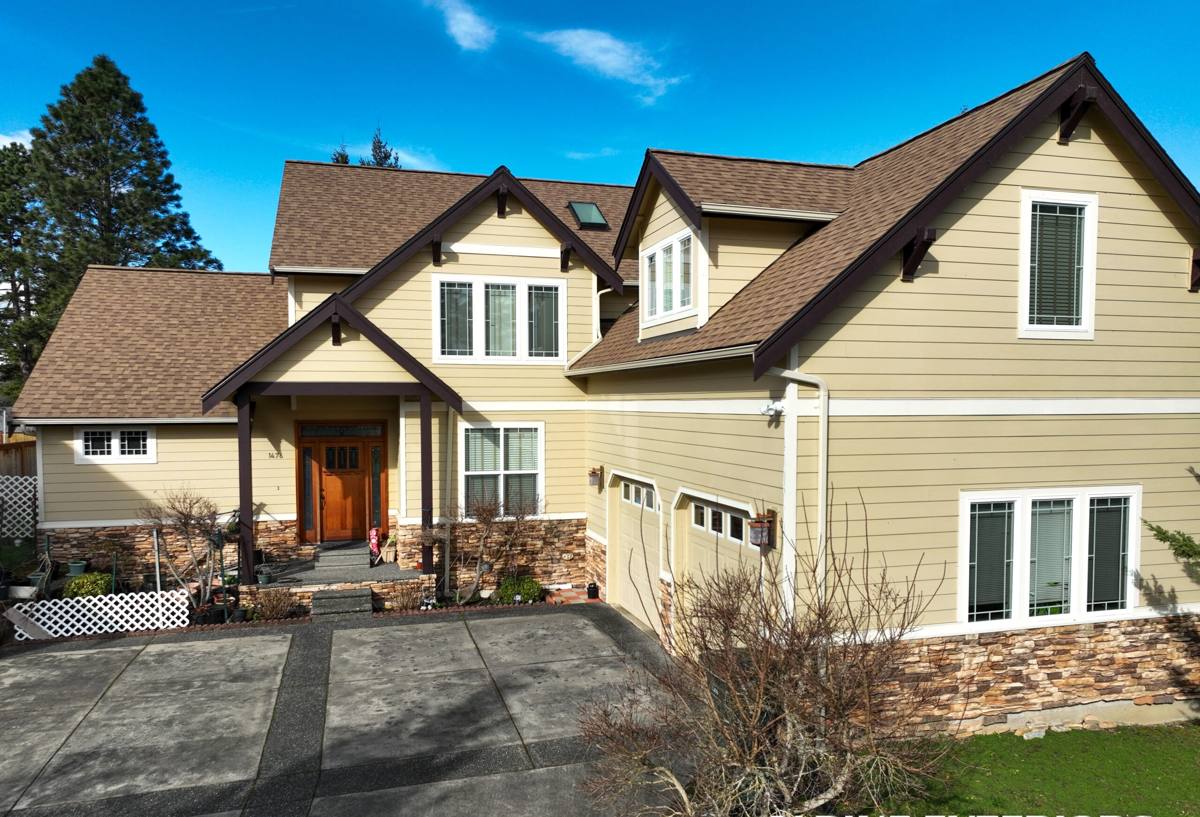
What "Energy-Efficient" Actually Means for This Climate
Energy efficiency in a marine climate isn't only about keeping heat in during winter — it's about controlling moisture and air movement at the same time. A window can have a great energy rating on paper and still perform poorly here if it's not built or installed to handle wind-driven water. The things that actually matter for a Lummi Island home:
Low-E Glass and Multi-Pane Construction
Low-emissivity (Low-E) coatings reflect radiant heat while still letting daylight through, which helps in both directions — keeping the house warmer in winter and reducing solar heat gain on the west-facing walls that catch afternoon sun. Double-pane is the practical baseline for this region; triple-pane can be worth the added cost on exposed, water-facing elevations where wind load and temperature swings are highest, but it's not always necessary on every wall of every house.
Warm-Edge Spacers and Argon or Krypton Fill
The spacer between panes of glass is a common weak point. Older metal spacers conduct cold straight through to the edge of the glass, which is exactly where condensation shows up first on a humid Whatcom County morning. Warm-edge spacer technology reduces that conduction. Gas fill between panes (argon is standard, krypton in tighter spaces) adds insulating value without adding weight or cost that doesn't pay off.
Frame Material Suited to Marine Exposure
Frame choice matters as much as glass choice here:
| Frame Material | How It Handles Salt Air & Moisture | Where It Makes Sense |
|---|---|---|
| Vinyl (quality, multi-chambered) | Doesn't corrode, low maintenance, good insulating value; performance varies a lot by manufacturer quality | Most Lummi Island homes, especially rentals or lower-maintenance properties |
| Fiberglass | Excellent dimensional stability, resists warping from temperature swings and moisture, very low maintenance | Exposed, water-facing walls or homes where long-term durability is the priority |
| Wood-clad | Good insulator but the wood core needs the exterior cladding and seals kept intact — vulnerable if that cladding is ever compromised | Homes prioritizing a traditional wood interior look, paired with disciplined maintenance |
| Bare aluminum | Conducts cold and corrodes fastest in salt air; generally not what we recommend for direct water-facing exposure | Limited use — mainly where matching an existing aluminum system is required |
We'll talk through these trade-offs honestly for your specific walls — a water-facing gable isn't the same install decision as a sheltered interior courtyard window, even on the same house.
Installation Is Where Performance Is Actually Won or Lost
A high-performance window installed with a weak flashing detail will underperform a mid-grade window installed correctly. This is the part of the job that doesn't show up in a product brochure, and it's where most window failures on this island actually start.
Sill Pan and Flashing
Every window opening needs a sloped sill pan that directs any water that gets past the window — and on a house that takes wind-driven rain, some always will — back out to the exterior, not down into the wall cavity. Flashing tape needs to be lapped correctly with the house wrap so water sheds outward at every layer, shingle-style, from the bottom up.
Sealing Without Trapping Moisture
It sounds counterintuitive, but a window can be sealed too tightly in the wrong place. The interior air seal should be tighter than the exterior weather seal, so any moisture that does get into the wall cavity has a path to dry outward rather than getting trapped against the interior finish. Getting this backwards is a common cause of hidden rot behind trim that looks fine from the outside.
Fasteners and Hardware Rated for Marine Air
Standard fasteners can corrode within a few seasons this close to salt water. Stainless steel or coated, corrosion-rated fasteners cost more up front and save a callback down the road.
Insulation at the Rough Opening
The gap between the window frame and the rough opening needs to be filled with a low-expansion foam or backer rod and sealant — not stuffed with fiberglass batting, which does little to stop air movement and can hold moisture against the frame.
Our Process for a Lummi Island Window Project
- On-site assessment. We look at each opening individually — sun exposure, wind exposure, existing signs of water intrusion or wood damage around the sill and trim — rather than quoting a blanket solution for the whole house.
- Product recommendation by elevation. Water-facing and wind-exposed walls may get a different frame or glass spec than sheltered walls. We explain the reasoning so you're deciding, not guessing.
- Removal and opening inspection. Once the old window is out, we check the sill, framing, and sheathing for hidden moisture damage before anything new goes in. This is often when older wind-driven rain damage first becomes visible.
- Sill pan, flashing, and air-seal installation. Done in the sequence above, every time, regardless of how straightforward the opening looks.
- Window set, shim, and fasten. Leveled, squared, and fastened with corrosion-rated hardware.
- Interior and exterior finish. Trim, caulking, and touch-up so the opening is fully weathered-in before we leave.
- Walkthrough. We check operation on every window — locks, cranks, and sashes — and answer questions about care going forward.
Signs Your Windows Are Already Losing the Fight
Homeowners on the island often live with early warning signs for years before calling anyone, mostly because they develop gradually. Worth a look if you notice:
- Condensation or fogging between panes — the seal has failed and the gas fill is gone
- Visible pitting, chalking, or corrosion on aluminum frames or hardware
- Soft or discolored wood trim around the window, especially at the bottom corners
- Moss or dark staining building up on the sill or exterior casing
- A noticeable draft near the window even with it fully latched
- Difficulty locking, cranking, or sliding the sash smoothly
- Rooms near certain windows feeling consistently colder than the rest of the house
Maintenance That Actually Extends Window Life Here
Good windows still need upkeep in this climate, and it's a small amount of work compared to what it prevents:
- Rinse salt residue off frames and glass a few times a year, especially after storms with onshore wind
- Keep weep holes clear so any water that does get into the frame track can drain out
- Clear moss and debris off sills and exterior trim before it holds moisture against the surface
- Lubricate locks and cranks periodically — salt air stiffens hardware faster than inland exposure does
- Check exterior caulking annually and re-seal any cracked or pulled-away sections before winter storms arrive
Cost Factors Worth Understanding Before You Get Quotes
There's no single number that applies to every house, but the main variables that move the price are worth knowing going in:
| Factor | Why It Affects Cost |
|---|---|
| Frame material | Fiberglass and higher-end vinyl cost more upfront than basic vinyl or aluminum, but hold up better against salt air over the long run |
| Glass package | Triple-pane and specialty coatings add cost; usually only worth it on the most exposed elevations |
| Opening condition | Hidden rot or water damage found during removal adds repair work before the new window can go in correctly |
| Number of exposed vs. sheltered walls | You may not need the same spec on every window — a mixed approach can control cost without cutting corners where it matters |
| Access and site logistics | Island properties can add scheduling and material-delivery lead time compared to mainland jobs |
We'll walk through where it makes sense to spend more and where it doesn't, based on how each opening is actually exposed to the weather — not a flat markup across the whole house.
Why Local Experience on This Stretch of Coastline Matters
Whatcom County covers a lot of different microclimates, and Lummi Island's wind and salt exposure is more aggressive than most of the mainland communities around Birch Bay. A crew that mainly works drier, more sheltered inland jobs may not think twice about a flashing detail or fastener spec that matters a great deal out here. We treat every island window opening as a marine-exposure install by default — sill pans, corrosion-rated hardware, and sealing sequence included, not upsold as an add-on. That's not a sales pitch; it's just what holds up in this environment over the years instead of five.
If your windows are drafty, fogged, sticking, or just old enough that you're wondering whether it's time, we're happy to take a look and give you an honest read on what's actually going on — no pressure, no obligation. Fill out the form below to schedule a free estimate for your Lummi Island home.