 Birch Bay Roofing
 Why Decks in Marietta Wear Out Faster Than You'd Expect
Marietta sits close to the water along the Birch Bay shoreline, which means decks here take a beating that inland Whatcom County homes never see. Salt-laden air corrodes metal fasteners and hardware years before their rated lifespan. Driving rain off the Strait pushes moisture sideways into joints, railings, and ledger connections that were never designed to shed water from that angle. And the long, damp moss season that runs through fall, winter, and much of spring keeps every horizontal surface wet for weeks at a time, feeding rot in framing that never gets a chance to fully dry out.
None of that means a deck in Marietta is doomed — it means the materials, fasteners, and structural details have to be chosen for this specific environment, not for a generic build-anywhere spec. A deck built the same way you'd build one in a dry inland town will fail faster here, sometimes years faster, and the failure usually starts in places you can't see from the surface.
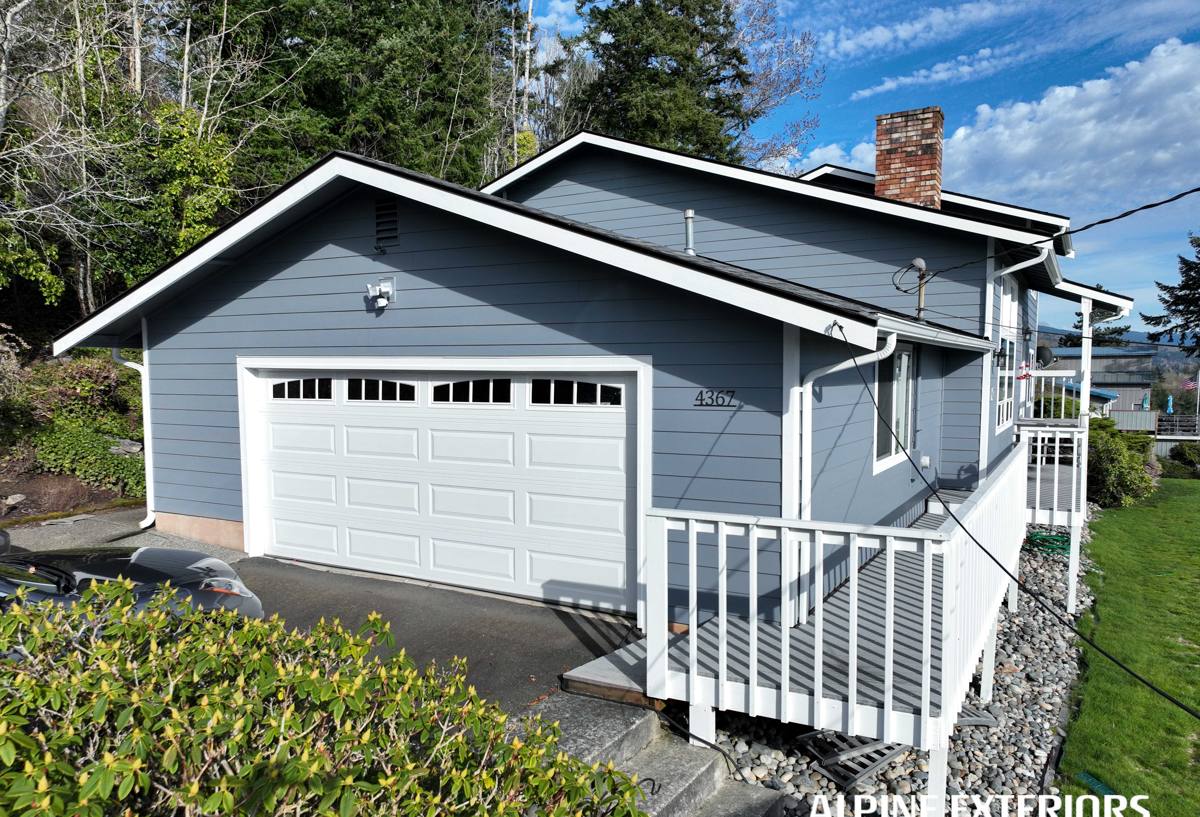
Signs Your Deck Has Reached the End of Its Service Life
Not every problem deck needs a full replacement. But there's a point where patching boards or sistering a joist is just delaying an inevitable, more expensive failure. Here's what tells us a deck is past repair:
- Soft, spongy, or spring-loaded decking that flexes underfoot, especially near the house
- Visible rot, discoloration, or crumbling wood at the ledger board where the deck meets the house
- Rust streaks running down posts or railings from corroding fasteners or hardware
- Persistent moss or black-green staining on the deck surface that comes back within weeks of cleaning
- Posts that feel loose at the base or footings that have shifted, heaved, or settled unevenly
- Railings that wiggle or feel less rigid than they did a year or two ago
- A deck more than 20-25 years old that's never had its structural framing inspected
If you're only seeing one or two of these on a deck that's otherwise structurally sound, repair may still make sense. Once rot has reached the framing or the ledger connection, replacement is almost always the more honest recommendation — patching around structural rot just moves the failure point, it doesn't remove it.
What a Correct Deck Replacement Actually Involves
Structural Inspection First
Before any decking comes off, a proper replacement starts with an honest look at what's underneath: footings, posts, beams, joists, and the ledger board connection to the house. In a marine climate like Birch Bay's, footings can shift with saturated soil, and joists near grade or under low-airflow sections of the deck are the first to show rot. We check all of it before quoting a final scope, because a deck that looks fine on the surface can have compromised framing underneath — and that's the part that actually holds people up.
Flashing and Ledger Attachment
The ledger board — where the deck attaches to the house — is the single most common failure point on decks in wet coastal climates. Water gets behind the ledger, the house's sheathing and rim joist start to rot, and by the time it's visible from inside the house, the damage is extensive. A correct replacement means proper flashing between the ledger and the house siding, a water-resistant barrier behind it, and mechanical fasteners rated for the load and for exposure to moisture and salt air — not just whatever lag screws happen to be on the truck.
Framing and Fasteners
For the structural frame, we use fasteners and structural connectors rated for exterior, corrosive-exposure use — stainless steel or coated hardware sized for a marine environment, not standard interior-grade hardware that starts rusting within a season this close to the water. Joist spacing, beam sizing, and post spacing all get built to current code, not just matched to whatever the old deck had, since older decks were often built to lighter, outdated standards.
Choosing Decking Material for Marietta's Climate
The decking surface itself is where most homeowners spend their attention, and it's worth getting right, because the wrong material in a salt-air, high-moss environment means more maintenance than most people want to take on.
| Material | How It Handles Salt Air & Moisture | Moss & Algae Resistance | Maintenance |
|---|---|---|---|
| Pressure-treated lumber | Holds up if sealed regularly; end grain and fastener holes are vulnerable points | Low — needs regular cleaning and treatment | Annual cleaning, periodic sealing/staining |
| Cedar | Naturally rot-resistant but still needs finish maintenance in coastal exposure | Moderate — better than treated lumber, still needs upkeep | Cleaning plus refinishing every few years |
| Composite decking | Very good — doesn't absorb moisture or corrode | Moderate to good, varies by product and surface texture | Periodic washing, no sealing or staining |
| PVC / capped composite | Excellent — fully sealed surface, no moisture absorption | Good — smoother caps shed moss and algae better | Lowest — occasional washing only |
We don't push one product line over another as a blanket rule — the right choice depends on your budget, how much upkeep you want to take on, and how exposed the deck's location is to direct rain and standing moisture. What we do insist on is matching the fastener and hardware spec to whatever decking material you choose, since a great decking product installed with the wrong fasteners will still fail early in this climate.
Cost Factors in a Marietta Deck Replacement
Every deck replacement is priced around the specifics of the job, and we won't quote a number without seeing the structure, but these are the factors that move the price up or down the most:
| Factor | Why It Matters Here |
|---|---|
| Deck size and layout | Multi-level decks, angles, and built-in features add labor and material |
| Condition of the framing underneath | Rotted joists, beams, or footings found during teardown add scope |
| Decking material selected | Treated lumber, cedar, composite, and PVC all carry different material costs |
| Railing system | Code-compliant railings with weather-resistant hardware add cost over basic wood rail |
| Ledger and flashing work | Extensive rot at the house connection can mean siding or sheathing repair too |
| Site access | Slopes, tight side yards, or elevated decks affect equipment and labor time |
We'd rather walk your deck in person and give you real numbers than throw out a broad range that doesn't mean much until we've seen the framing.
Our Deck Replacement Process, Start to Finish
- On-site evaluation — we inspect the existing deck, footings, ledger, and framing, and flag anything hidden that changes the scope
- Written estimate — a clear scope of work and price before anything is torn out, so there are no surprises mid-project
- Permitting — we handle the permit application and inspections required for the work
- Removal — the old deck comes down, including any compromised framing, footings, or ledger material
- Structural rebuild — new footings, posts, beams, and joists built to current code and sized for this climate
- Ledger and flashing — proper flashing and moisture barrier installed at the house connection before decking goes on
- Decking and railing installation — your chosen decking material and a code-compliant railing system
- Final walkthrough — we go over the finished deck with you, including basic care for whatever material you chose
Permits and Whatcom County Code Considerations
Most deck replacements in Whatcom County require a building permit, particularly when the work involves structural framing, footings, or a deck attached to the house at any meaningful height above grade. Railing height, guard spacing, and stair requirements are also governed by current building code, and older decks were frequently built before today's standards existed. Part of doing a replacement correctly is bringing the structure up to current code, not just rebuilding it to match what was there before — which matters both for safety and for resale, since an unpermitted or non-compliant deck can become a problem when a home is inspected for sale.
Why It Matters to Hire a Crew That Already Works in Marietta
A crew that regularly works decks in Marietta and around Birch Bay already knows what the salt air, driving rain, and moss season do to fasteners, framing, and decking over time — because we've torn out and rebuilt decks that showed us exactly where the weak points were. That's different from a contractor pricing your job off a generic template built for a drier, inland climate. It affects which fasteners we spec by default, how we detail the ledger flashing, how much airflow we build under the deck to help it dry between rain events, and which decking materials we'll actually recommend for a spot exposed to direct weather off the water.
It also means we're a known, findable crew if a warranty question or a maintenance question comes up two or five years down the road — not a company that priced the job cheap and moved on to the next region.
Keeping a New Deck Looking Good Through Moss Season
A correctly built deck still needs some basic seasonal attention in this climate. A short list that goes a long way:
- Sweep leaves and debris off the surface regularly through fall — trapped organic matter is what feeds moss growth
- Rinse or wash the deck surface a couple of times a year, more often on shaded sections that stay damp longer
- Check that gaps between boards stay clear so water can drain through rather than pooling
- Keep gutters and downspouts near the deck clear so runoff isn't dumping extra water onto the structure
- Look over railings and stair connections once a year for any looseness or corrosion at fastener points
- Reseal or refinish wood decking on the schedule appropriate to that product — don't wait until it's visibly failing
None of this is complicated, but skipping it is exactly how a well-built deck ends up needing early repairs in a climate this wet.
If your deck in Marietta is showing rot, soft spots, corrosion, or you're just not sure whether it's a repair or a replacement situation, we're happy to take a look and give you an honest, no-pressure estimate — use the form below to get started.