 Birch Bay Roofing
 Storm Damage Roof Repair Built for Ferndale's Coastal Weather
Ferndale sits close enough to the water that homes here take a different kind of beating than roofs further inland. Salt-laden air off the bay, driving rain that comes in sideways during winter storms, and a moss season that never really ends all add up over time. When a windstorm rips loose a section of shingles or driving rain finds a weak spot in your flashing, the fix needs to account for all of that — not just patch the visible hole and hope for the best. Birch Bay Roofing Co works on roofs throughout this corner of Whatcom County, and storm damage repair for Ferndale homes is one of the calls we get most after a hard blow comes through.
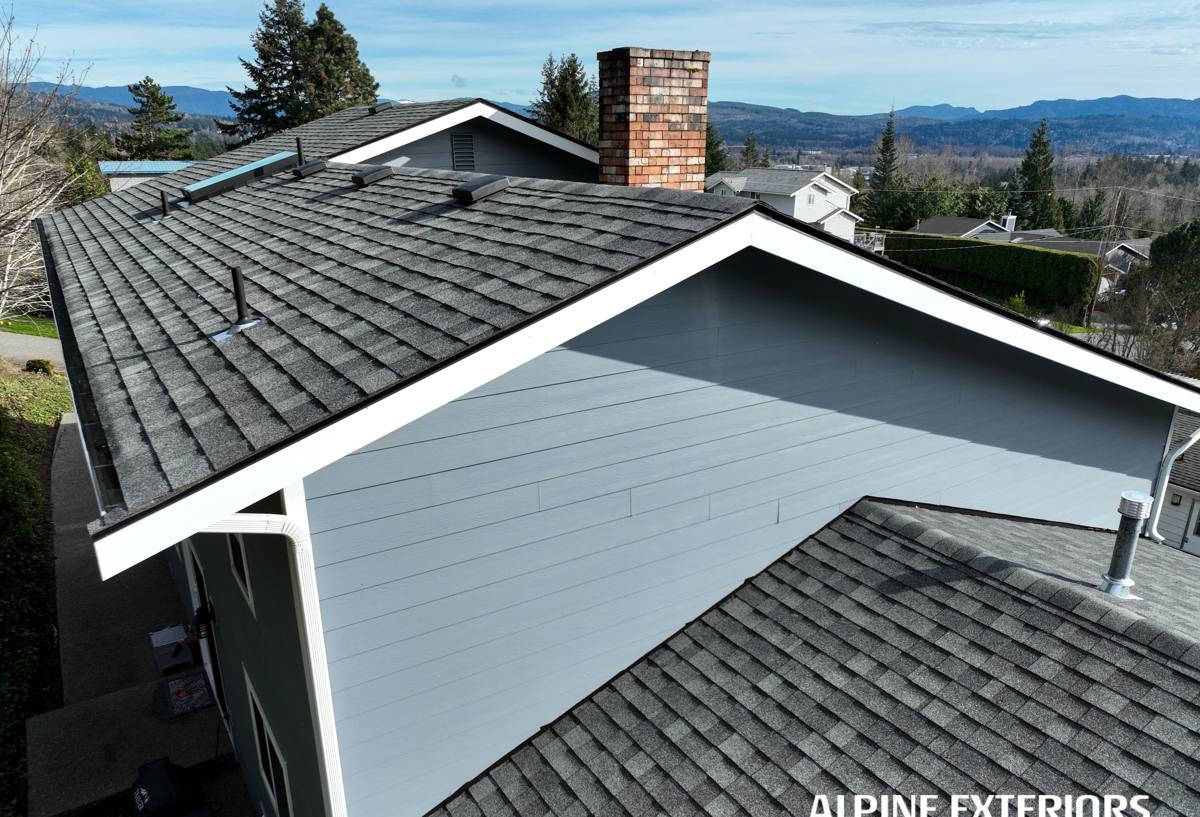
How Ferndale's Climate Wears Down a Roof
Before we talk about repair, it helps to understand why storm damage here tends to be worse than a similar storm would cause somewhere drier or further from the coast.
Salt Air and Corrosion
Metal components — nails, flashing, vent boots, gutter hardware — corrode faster when they're regularly exposed to salt-laden coastal air. A storm that loosens a shingle over already-corroding fasteners does more damage than the same wind would on a roof further from the water, because the nails have less holding power left to begin with.
Wind-Driven Rain
Ferndale storms rarely bring rain straight down. Wind pushes it sideways and even upward under shingle edges, ridge caps, and flashing that would keep out a normal vertical rain just fine. This is why storm damage often shows up as water intrusion at seams and penetrations rather than as an obvious missing shingle — the entry point can be small and easy to miss from the ground.
Moss and Trapped Moisture
Whatcom County's long wet season keeps roofs damp for months at a stretch, which is exactly what moss needs to take hold. Moss doesn't just look bad — it holds moisture against the shingle surface and lifts shingle edges as it grows, which gives wind and rain an easier path underneath during the next storm. A roof with an existing moss problem is more vulnerable to storm damage, and storm damage on a mossy roof is more likely to lead to a slow leak that isn't obvious right away.
Signs Your Roof Took Storm Damage
Not all storm damage is obvious. Some of it shows up inside the house weeks later as a stain or a musty smell, long after the wind has died down. After any significant wind or rain event, it's worth checking for the following:
- Shingles that are missing, cracked, curled, or visibly out of alignment with the rest of the roof
- Granules collecting in gutters or at the base of downspouts — a sign of shingle surface wear from wind and hail impact
- Bent, lifted, or missing flashing around chimneys, skylights, and roof-to-wall transitions
- Dented or loose gutters and downspouts, which often take the same impact the roof does
- Water stains on ceilings or upper walls, especially near exterior corners
- Daylight visible through the attic roof deck, or damp insulation near the eaves
- Debris — branches, needles, gravel from roof edges — collected in valleys or against the chimney
- A soft or spongy feel underfoot if you can safely view the roof from a ladder (never walk a roof after a storm to check this yourself)
If you notice any of these, it's worth having a roof looked at before the next storm system moves through, not after.
What a Correct Storm Damage Repair Actually Involves
A repair that only replaces the shingles you can see missing from the driveway often misses the damage that actually caused the leak. A correct repair works from the deck out:
Checking the Deck First
Once shingles are pulled back, the plywood or OSB decking underneath needs to be checked for soft spots, delamination, or rot. Wind-driven rain that's been getting in for a while can soften decking well before anyone notices a leak inside. Decking that's compromised has to be replaced — shingling over soft decking just sets up the next failure.
Underlayment and Flashing
The underlayment is the roof's actual waterproofing layer; the shingles are mostly there to shed water and protect the underlayment from sun and impact. Storm repairs should include fresh underlayment in the repair area, not just new shingles laid over whatever's left. Flashing at chimneys, skylights, sidewalls, and valleys gets re-evaluated too — flashing that was marginal before the storm is often the piece that finally failed during it.
Matching Materials
Shingle colors fade with sun exposure, so a patch using brand-new shingles next to a five-year-old roof can look mismatched. We talk through the options honestly — sometimes a close match is available, sometimes the better long-term call is to re-shingle a full slope rather than create a visible patchwork, especially on a roof visible from the street.
Ventilation Check
Storm repair is also a chance to check that ridge and soffit ventilation weren't compromised. Poor attic ventilation traps moisture, which feeds moss growth and accelerates decking rot — the same problems that make the next storm more damaging.
Our Repair Process, Step by Step
- Inspection. We walk the roof (or use a lift/ladder inspection where roof access is unsafe) and document damage with photos, checking the deck, flashing, and ventilation, not just the shingle surface.
- Written scope and estimate. You get a clear explanation of what's damaged, what needs to be repaired versus replaced, and a written estimate before any work starts.
- Temporary protection if needed. If there's active water intrusion, we can tarp or dry-in exposed areas so the interior of your home isn't at further risk while repair is scheduled.
- Repair. Damaged decking, underlayment, flashing, and shingles are replaced to match the surrounding roof as closely as possible.
- Cleanup and final check. Debris and old materials are hauled off, gutters are cleared of any repair debris, and we walk the repair with you before calling the job done.
Repair Options Compared
Depending on the extent of the damage, a few different approaches make sense. Here's how they compare:
| Approach | Best For | Considerations |
|---|---|---|
| Localized patch repair | Small area of missing/damaged shingles, deck and flashing intact | Fastest and least expensive; shingle color match may not be perfect on an older roof |
| Section or slope replacement | Concentrated damage on one roof plane, or visible mismatch concerns | Cleaner appearance than a small patch; costs more than a spot repair |
| Full roof replacement | Widespread damage, roof already near the end of its service life, or repeated storm damage over time | Highest upfront cost but resets the clock on materials and eliminates patchwork repairs |
We'll always tell you honestly which category your situation falls into rather than defaulting to the most expensive option.
What Drives the Cost of Storm Damage Repair
Every roof and every storm is different, so we don't publish fixed prices — but the same handful of factors move the number up or down on almost every job:
| Factor | Why It Matters |
|---|---|
| Extent of damage | A single damaged section costs far less to fix than damage spread across multiple planes |
| Roof pitch and access | Steep or hard-to-reach roofs take more time and safety equipment to work on |
| Decking condition | Rotted or soft decking found under damaged shingles adds material and labor beyond the surface repair |
| Material availability and match | Discontinued or faded shingle lines can require a larger replacement area to keep the roof looking uniform |
| Insurance coverage | A covered claim changes what you pay out of pocket, but doesn't change the actual scope of work needed |
As a general guide, a small localized patch typically runs in the low hundreds to low thousands of dollars, while a full slope or roof replacement runs considerably more — we'll give you real numbers once we've actually seen the damage.
Working With Your Insurance Claim
Most storm damage repairs in this area involve an insurance claim, and having clear documentation matters. We photograph and describe damage in a way that's useful for an adjuster to review, and we're glad to walk the roof with your adjuster or answer their questions about scope. We don't inflate estimates to match a claim amount or promise a specific settlement outcome — our job is to give an honest, accurate scope of the repair your roof actually needs, and let that documentation support your claim.
Why a Ferndale-Familiar Crew Matters
A crew that regularly works roofs in Ferndale and the rest of Whatcom County knows what our storms typically do to a roof — where wind-driven rain tends to find its way in, how far moss has usually progressed on a roof of a given age near the bay, and which flashing details hold up versus which ones tend to fail first. That local pattern recognition means a faster, more accurate inspection and a repair that's built for the next storm, not just patched for the one that already happened. It also means we're a short drive away if something needs a follow-up look after the next round of weather.
If a recent storm left you with damage — or you're just not sure whether that missing shingle is a small fix or a bigger problem — we're happy to take a look. Request a free, no-pressure estimate using the form below and we'll walk you through exactly what we find.