 Birch Bay Roofing
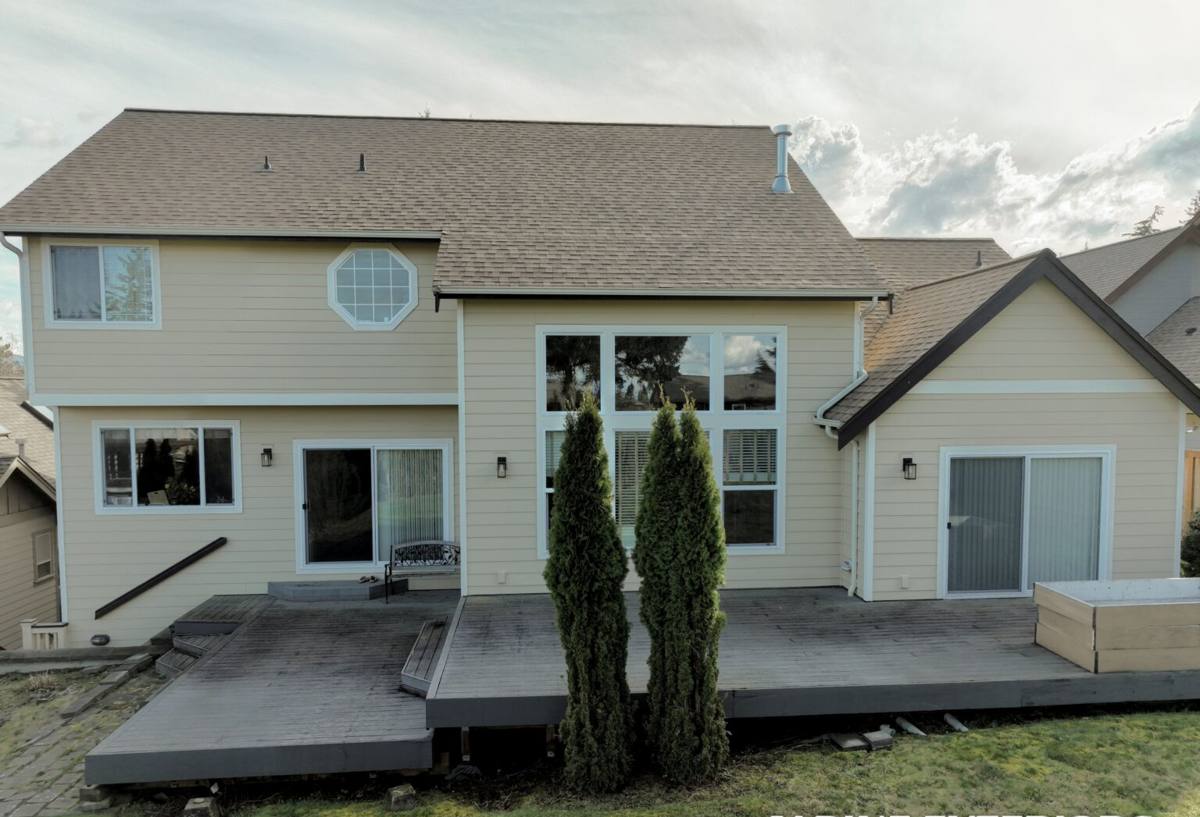
 Custom Decks for Marietta Homes
Marietta sits close enough to Birch Bay and the Strait of Georgia that its homes deal with the same coastal weather pattern the rest of Whatcom County's shoreline gets: salt-laden air, long stretches of driving rain, and a moss season that can run from October well into spring. A deck built here isn't just an outdoor living space — it's an exterior structure that has to survive conditions a lot of interior decking projects never face. We build and repair custom decks specifically with that in mind, using framing methods, fasteners, and material choices that hold up to marine exposure instead of just looking good the first summer.
This page covers what a correctly built deck looks like for a Marietta property, the material trade-offs worth understanding before you commit, and how our process works from first walkthrough to final walk-off.
What Birch Bay's Climate Does to a Deck
Homeowners who haven't dealt with coastal exterior work before are often surprised by how much faster things wear near the water. A few specifics that shape how we build:
Salt Air and Metal Fasteners
Airborne salt accelerates corrosion on fasteners, brackets, and hardware — especially anything galvanized rather than stainless or coated for coastal use. Standard interior-grade screws and joist hangers can start showing rust streaks within a couple seasons this close to the water. We spec corrosion-resistant hardware rated for exterior and coastal exposure on every deck we build, not just the visible top-side screws.
Driving Rain and Water Management
Rain here doesn't just fall straight down — wind off the water drives it sideways into ledger boards, fascia, and the gap between decking boards. Where a deck ties into the house, flashing details matter more than most homeowners realize; a poorly flashed ledger board is one of the most common sources of hidden rot we find when we're called out to repair an older deck.
Moss and Organic Growth
A long, damp moss season means anything that stays shaded and wet — the underside of a deck, gaps between boards, north-facing structural members — becomes a place moss and algae can gain a foothold. Moss holds moisture against wood and finishes, which speeds up rot and makes surfaces slick. Board spacing, airflow underneath the deck, and material choice all affect how much of a moss problem you'll be managing down the road.
Decking Material Options for Marietta Conditions
There's no single "best" decking material — it's a trade-off between upfront cost, maintenance commitment, and how each product actually behaves in wet, salty, moss-prone conditions. Here's how the common options compare for a coastal Whatcom County property:
| Material | Moisture & Moss Behavior | Maintenance | Typical Lifespan Here |
|---|---|---|---|
| Pressure-treated wood | Resists rot when properly sealed; moss can grow on shaded, damp surfaces if not cleaned | Annual cleaning and resealing recommended | 15-20 years with upkeep |
| Cedar | Naturally rot- and insect-resistant; still needs sealing to fight moss and graying | Periodic cleaning, staining or sealing every few years | 15-25 years with upkeep |
| Composite decking | Doesn't rot or absorb water like wood; can still grow surface algae/moss film if shaded and damp | Occasional washing; no staining or sealing | 25-30+ years, varies by product warranty |
| PVC/synthetic decking | Fully moisture-resistant; least hospitable surface for moss to take hold | Low — occasional rinse | 25-30+ years, varies by product warranty |
We don't push one material on every job. A shaded, low-airflow deck under mature trees is a poor candidate for a wood species that needs a lot of sun exposure to dry out between rains — that's the kind of site-specific call we walk through with you before ordering material, not after.
Why We're Selective About Wood-Composite Blends
Some lower-cost composite products use a wood-flour core that's more sensitive to moisture intrusion at cut edges and fastener penetrations than solid composite or PVC boards. In a climate this wet, that sensitivity matters — improperly sealed cut ends on those products can swell or delaminate over time. Our standard is to properly cap and seal every cut edge regardless of product, and to steer homeowners toward products with a track record in wet climates when budget allows, rather than the cheapest board on the shelf.
Framing and Substructure — Where Decks Actually Fail
The decking boards are what you see, but the framing underneath is what determines whether the deck is still safe and level in fifteen years. A correct build for this climate includes:
- Ledger board flashing that properly sheds water away from the house rim joist, not just a bead of caulk
- Joist hangers and structural hardware rated for exterior/coastal exposure
- Footings sized and set to local frost depth and soil conditions, not guessed at
- Adequate joist spacing for the decking material chosen — composite and PVC often require tighter spacing than solid wood
- Airflow underneath the deck to reduce trapped moisture and slow moss growth on the structure below
- Proper board gapping so water drains through instead of pooling on the surface
Most of the deck failures and rot problems we get called to repair trace back to one of these — usually ledger flashing or hardware corrosion — not the decking boards themselves. It's the part of the job you can't see once it's built, which is exactly why it has to be done right the first time.
Our Process for a Marietta Deck Project
- Site walkthrough. We look at sun/shade exposure, drainage, house tie-in points, and existing structure if it's a rebuild or repair, not a new build.
- Material and design conversation. We go over decking material trade-offs, railing and fastener options, and layout based on how you'll actually use the space.
- Written estimate. Clear scope, materials, and pricing before anything is ordered — no surprise change orders for work that was foreseeable at the walkthrough.
- Permitting. We handle the permit process where required for the scope of work.
- Build. Demolition of the old deck if applicable, framing, flashing, decking, railing, and finish work.
- Final walkthrough. We go over the finished deck with you, including basic care guidance specific to the material installed.
Deck Maintenance for This Climate
Even the right materials and build won't stay maintenance-free forever in a coastal moss climate. A basic seasonal routine goes a long way:
- Clear leaves and debris from between boards before wet weather sets in each fall
- Rinse or wash the deck surface periodically to keep moss and algae film from establishing
- Check and touch up sealant on wood decking every 1-3 years depending on sun exposure
- Inspect fasteners and hardware annually for rust or corrosion, especially near the ledger board
- Keep gutters and downspouts near the deck clear so water isn't dumping directly onto or under it
- Trim back overhanging vegetation to improve airflow and sun exposure on shaded sections
Cost Factors for a Custom Deck
Every deck is different, but the same handful of factors drive most of the cost variation we see on projects around Birch Bay and Marietta:
| Factor | Why It Affects Cost |
|---|---|
| Size and footprint | More square footage means more material, framing, and labor |
| Decking material | PVC and premium composite cost more upfront than pressure-treated wood but need less maintenance |
| Height and grade | Multi-level decks or steep-grade lots need more substructure and footings |
| Railing and features | Custom railing, built-in seating, or lighting add material and labor time |
| Site access | Tight side-yard access or removal of an old deck can add labor time |
| Permitting scope | Larger or attached structures typically require permitting, which adds time and fees |
We'd rather walk your specific site and give you real numbers than quote a ballpark that doesn't hold up once we see the actual conditions.
Why Hire a Crew That Already Works in Marietta
A deck contractor who mostly works inland doesn't always think about ledger flashing, hardware corrosion, or moss-prone shaded framing the same way a crew that works this stretch of coastline does — because those issues show up faster here than they do twenty miles inland. Working regularly in Birch Bay and the surrounding Whatcom County communities means we're not guessing at how salt air and a long wet season treat different materials and details over time; we're building around it from the start, and we're a known, findable crew if you ever need a repair or a hardware check down the line.
If you're planning a new deck or need an existing one looked at, we're happy to walk the site and give you a straightforward, no-pressure estimate. Fill out the form below and we'll get in touch.