 Birch Bay Roofing
 Deck Building in Marietta: Built for the Weather We Actually Get
Marietta sits close enough to the water that homes here deal with a different set of conditions than decks built further inland. Salt-laden air off the bay, long stretches of driving rain through fall and winter, and a moss season that seems to start earlier every year all put real stress on outdoor structures. A deck that's built to a generic spec — the kind you'd find in a builder's catalog for a dry climate — will show its age fast out here. Fasteners rust, joists stay damp longer than they should, and boards that looked fine going in start growing a green film by the second winter.
We build decks in and around Birch Bay and Whatcom County with those conditions as the starting assumption, not an afterthought. That changes material choices, framing details, and how the deck sheds water — all decisions that matter more here than they would somewhere with a milder, drier climate.
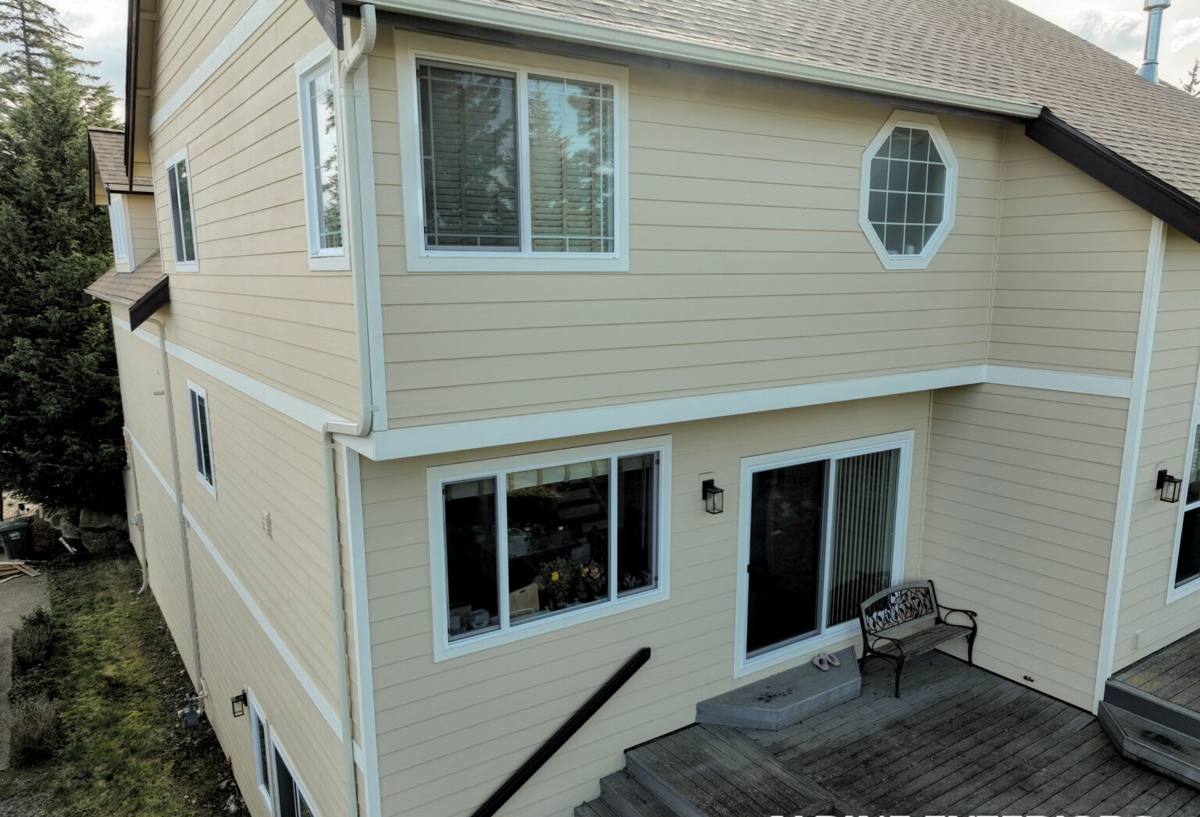
What Salt Air, Rain, and Moss Actually Do to a Deck
Salt Air and Corrosion
Homes near the water take in a steady drift of salt-laden moisture, even on days that aren't stormy. Over time this accelerates corrosion on anything metal — screws, joist hangers, bolts, and railing hardware. Standard zinc-coated fasteners that would last for years inland can start showing rust streaks and pitting much sooner in a coastal environment like Marietta's. Once a fastener corrodes, it loses holding strength long before it looks obviously bad, which is part of why hardware choice matters more here than most homeowners expect.
Standing Water and Rot
Whatcom County gets a lot of rain spread across many months, not just a few heavy storms. That means wood and framing members spend long stretches at higher moisture levels. If a deck's structure doesn't shed water efficiently — flat ledger connections, tight board spacing with no drainage gap, framing that traps moisture against the house — rot gets a head start and keeps working all winter.
Moss, Algae, and Surface Buildup
Shade, moisture, and mild temperatures are exactly what moss and algae need to establish themselves, and a lot of Marietta properties have at least some tree cover or north-facing exposure that keeps a deck surface damp for days after a storm. Beyond looking bad, a mossy surface holds moisture against the boards and gets slick and genuinely dangerous underfoot.
Choosing the Right Decking Material for This Climate
There's no single "best" decking material for every home — it depends on budget, how much upkeep you want to do, and how exposed the deck is to weather. Here's how the common options actually perform in a coastal, high-moisture climate like ours.
| Material | Moisture & Salt Resistance | Moss/Algae Resistance | Maintenance | Typical Lifespan Here |
|---|---|---|---|---|
| Pressure-treated lumber | Good if properly sealed and maintained | Needs regular cleaning | Annual cleaning, periodic sealing | 15–20 years |
| Cedar | Naturally decay-resistant, but softer | Needs regular cleaning | Sealing every 1–2 years | 15–20 years |
| Composite decking | Very good, doesn't absorb moisture the way wood does | Better, though not immune | Periodic washing, no sealing | 25–30+ years |
| Capped/PVC decking | Excellent, fully sealed surface | Best of the group | Occasional washing | 30+ years |
Wood is still a reasonable choice for homeowners who like the traditional look and are willing to stay on top of sealing and cleaning. Composite and capped boards cost more up front but ask a lot less of you over the years, which matters when the climate is working against the deck every month, not just in a rainy season.
Fasteners and Hardware
Whatever decking material you choose, the fasteners and structural hardware matter just as much. For coastal builds we use stainless steel or heavy-duty coated fasteners rated for corrosive environments, along with hot-dip galvanized or stainless joist hangers and structural connectors. It costs more than standard hardware, but replacing a rusted-out hanger means tearing into a finished deck — it's not a corner worth cutting.
What a Correctly Built Deck Involves in Marietta
Framing and Drainage
The framing underneath a deck does most of the work of keeping it dry and stable, and it's the part homeowners never see once the project's done. That means proper ledger board flashing where the deck meets the house, joists spaced and sized for our snow and wind load requirements, and board spacing that lets water actually drain instead of pooling. On a shaded or low-lying lot, we'll also think about airflow underneath the deck — a structure that can't breathe stays damp longer, and that's exactly what feeds rot and moss.
Footings for Local Soil and Frost Conditions
Footing depth and design need to account for local frost depth and soil drainage, not just be poured to the minimum. Whatcom County soil can hold water longer than sandier or better-drained soils elsewhere, so footings that aren't sized and placed correctly can shift over time. This is one of the areas where permitting and inspection exist for good reason — it's structural, and it's not something to guess at.
Railings and Guards
Railing hardware faces the same corrosion pressure as the rest of the structure, and it's also a safety component, so it needs to meet code height and spacing requirements in addition to holding up to the weather. We treat railing connections with the same hardware standards as the framing — no mixing in standard interior-grade fasteners because they were on hand.
Our Deck Building Process
1. On-Site Visit and Design
We start by walking the actual site — sun exposure, drainage patterns, tree cover, and how the deck will tie into the house. A design that works on a south-facing, open lot needs different drainage and material choices than one going up in a shaded, damp corner of the yard.
2. Permitting
Deck construction in Whatcom County generally requires a permit, and skipping that step can cause real problems later — at resale, with insurance, or if something's built out of code. We handle the permit process as part of the job so you're not chasing paperwork.
3. Build
Framing first, with attention to flashing, fastener choice, and drainage as described above, then decking, then railings and any finishing details. We build in the order that lets each stage be inspected and done right before the next one covers it up.
4. Final Walkthrough
Once it's built, we walk the finished deck with you — how it drains, what maintenance it needs, and what to expect from the specific material you chose.
Maintenance: What to Actually Expect Living Near the Water
No deck out here is truly "no maintenance," even composite and capped boards benefit from basic upkeep. Here's a realistic seasonal checklist for a Marietta-area deck:
- Sweep debris and leaves off the deck regularly, especially in fall — trapped organic matter holds moisture and feeds moss
- Rinse or wash the surface a couple of times a year to clear salt residue and early moss growth before it takes hold
- Check railing and structural hardware annually for rust, looseness, or corrosion, particularly on wood decks
- Reseal wood decking on the schedule appropriate to the product — typically every 1–2 years
- Keep gutters and downspouts near the deck clear so runoff isn't dumping extra water onto or under the structure
- Trim back overhanging branches to reduce shade and let the deck surface dry out between rains
Why a Crew That Already Works Marietta Matters
A lot of deck problems we get called out to fix started with a build that wasn't wrong exactly, just generic — built the way you'd build a deck somewhere dry and inland, then dropped into a coastal Whatcom County lot. A crew that already works this area knows which corners of a yard stay damp longest, which fastener grades actually hold up to the salt air, and what the county's permitting and inspection process expects. That local familiarity shows up in decisions you'd never think to ask about, like framing orientation for drainage or hardware grade, long before it shows up as a problem five years down the road.
Repair, Rebuild, or New Build
Not every deck problem in Marietta means starting from scratch. Some structures have sound framing under tired-looking boards, and a resurfacing project makes more sense than a full rebuild. Others have moisture damage in the framing itself, which usually means the structure needs to come down and be rebuilt correctly rather than patched. We'll tell you honestly which situation you're in rather than defaulting to the bigger job — a straightforward assessment during the site visit usually makes it clear.
If you're planning a new deck or need an honest look at one that's showing its age, we're happy to come take a look. Estimates are free and there's no pressure — just a straightforward read on what your deck needs and what it would take to build it right for Marietta's weather. The form below is the easiest way to get started.