 Birch Bay Roofing
 Why Siding in Birch Bay Village Has to Work Harder
Birch Bay Village sits close enough to the water that homes here deal with a different set of stresses than a house twenty miles inland. Salt-laden air moves through the neighborhood off the bay, driving rain comes in sideways during winter storms, and the shoulder seasons stay damp long enough for moss and algae to get a real foothold on north- and west-facing walls. None of that is dramatic on any single day. It's the cumulative effect — years of salt exposure, repeated wet-dry cycles, and shaded, slow-drying siding — that separates a wall system that holds up for decades from one that starts failing at year twelve.
Siding choice matters more here than it does in a drier part of Whatcom County. Materials that are marginal in a mild climate get exposed quickly in a marine one. That's the lens we bring to every Birch Bay Village siding job: not just what looks good going up, but what's still doing its job in year twenty.
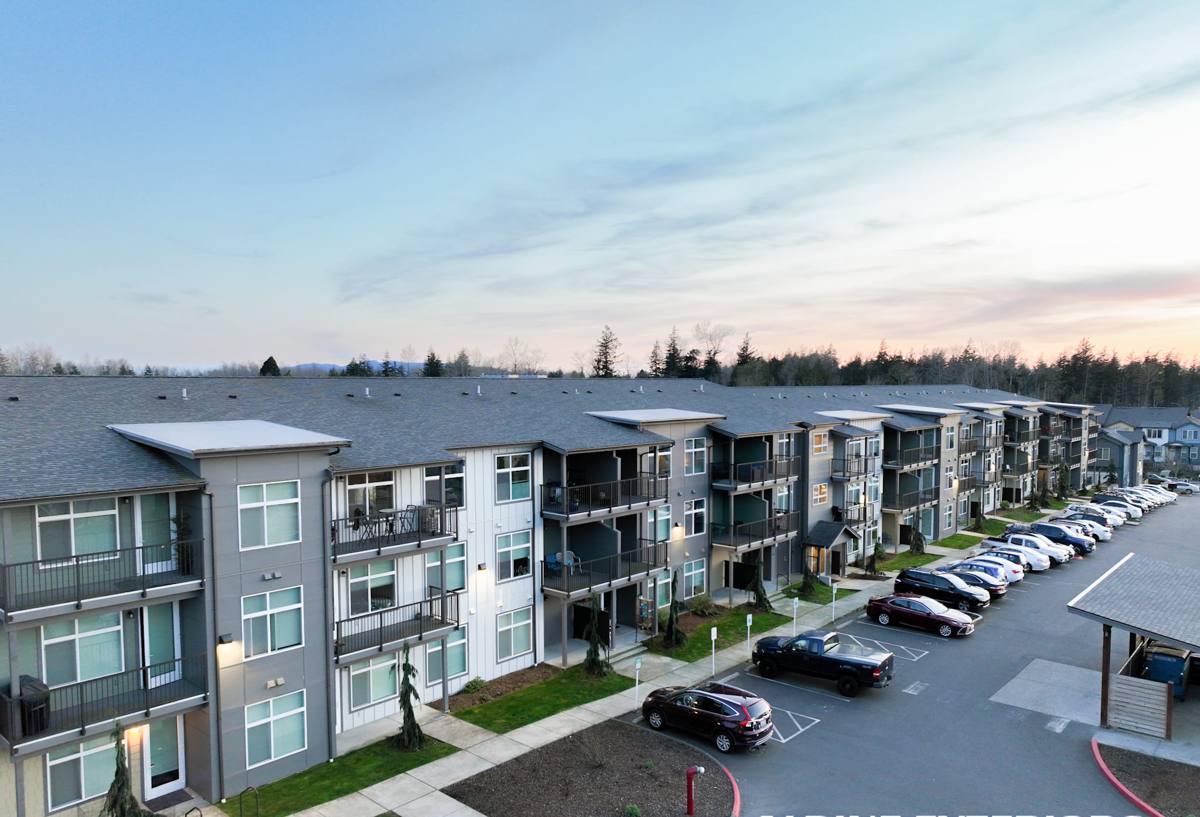
What Salt Air and Moss Season Actually Do to Siding
Salt Air
Airborne salt is corrosive to exposed metal fasteners, trim flashing, and hardware, and it accelerates the breakdown of coatings that aren't formulated to resist it. Over time, salt exposure can chalk or dull a painted finish faster than it would a few miles inland, and it's harder on any product where the factory finish is thin or where field-painting is required to maintain protection.
Driving Rain
Wind-driven rain doesn't just wet a wall's surface — it tests every seam, joint, and penetration for water intrusion. Siding systems depend on correct lap, flashing, and gap details to shed that water rather than trap it. A product that's dimensionally unstable, or a job where the water-management details were rushed, shows its weaknesses first during the wettest months of the year.
Moss and Algae Season
Shaded walls and roof-adjacent siding stay damp longer through fall, winter, and spring, which is exactly what moss and algae need to establish. Siding that holds moisture at the surface, or that has porous, unsealed edges, gives organic growth more to grab onto and holds it there longer between dry spells.
Why We Install James Hardie and Nothing Else
We standardized on James Hardie fiber cement siding for every home we work on, including here in Birch Bay Village, and we don't install vinyl, LP SmartSide, Cemplank, Allura, primed spruce, or cedar. That's not a marketing position — it's a practical one, built around what actually holds up in this climate.
Fiber cement doesn't rot, and it isn't a food source for moss the way wood-based products can be. It's non-combustible, which matters as wildfire smoke and dry-season fire risk become a bigger part of Pacific Northwest summers even in coastal areas. James Hardie's ColorPlus finish is baked on at the factory under controlled conditions, which gives it better fade and chip resistance than field-applied paint — a real advantage in an environment where UV, salt, and moisture are all working against a painted surface at once. And James Hardie backs it with a strong, transferable limited warranty when the product is installed to their specification, which matters to a future buyer as much as it does to you.
We're not going to tell you every other siding product is worthless — some of them perform fine in the right climate and with diligent maintenance. But we've made a professional call that in a place like Birch Bay Village, with salt air and a long wet season, we'd rather install one product very well than offer several and cut corners on any of them.
James Hardie Product Lines for This Climate
James Hardie engineers specific product formulations for different climate zones — the HZ5 line is built for regions with freeze-thaw cycles and wetter, more variable weather, which fits Whatcom County better than a product engineered for a hot, dry climate. Within that, most Birch Bay Village homes land on one of a few configurations:
| Product | Typical Use | Why It Fits This Area |
|---|---|---|
| HardiePlank lap siding | Primary wall cladding, most common choice | Traditional look, strong water-shedding lap profile, widest color range |
| HardieShingle | Accent gables, dormers, feature walls | Adds texture and character without giving up fiber cement durability |
| HardiePanel | Modern/board-and-batten styling | Clean vertical lines for contemporary exteriors, still fully rated for coastal exposure |
| HardieTrim | Corners, window and door surrounds, fascia | Matches the siding's finish and moisture resistance so trim doesn't become the weak point |
What a Correct Installation Involves Here
James Hardie siding performs the way it's designed to only when it's installed to spec. In a marine climate, the details that get skipped on a rushed job are exactly the ones that cause problems later. A correct install on a Birch Bay Village home includes:
- Proper clearance between the bottom of the siding and grade, decks, patios, and roof lines, so water and moisture don't wick up into the board
- Correct fastener type, spacing, and depth — over-driven or under-driven nails compromise the water-resistive barrier and the board itself
- A weather-resistive barrier and flashing at every window, door, and penetration, lapped correctly so water is directed out and down, not behind the siding
- Properly caulked and sealed joints at trim and corners, using sealants rated for the exposure, not just whatever's on hand
- Correct lap and gap dimensions per James Hardie's published installation instructions, which is what keeps the warranty valid
- Field-cut edges primed or sealed before installation, since raw cut edges are the most vulnerable point on any fiber cement board
Skipping any one of these doesn't usually cause a visible problem in year one. It shows up in year five or ten, as a soft spot, a stain, or a section that's holding moss when the rest of the wall isn't.
Our Process
Assessment and Estimate
We start by walking the exterior with you, looking at current siding condition, trouble spots (shaded walls, areas with visible moss or algae, spots near grade or decks showing wear), and any water intrusion signs on the existing cladding or sheathing underneath. You get a straightforward estimate based on what we actually see, not a generic per-square-foot guess.
Prep and Tear-Off
Old siding comes off, and we inspect the sheathing and framing underneath before anything new goes up. Any water damage or rot found at this stage gets addressed before installation continues — covering over a problem with new siding just hides it.
Water Management Layer
House wrap or building paper and flashing go in first, with careful attention to window and door openings, roof-to-wall transitions, and any other penetration. This layer does the real waterproofing work; the siding is the second line of defense, not the only one.
Installation
James Hardie boards, trim, and accessories go up per manufacturer spec — correct fastening, lap, and sealant details throughout. We keep job sites reasonably clean and organized as we go rather than leaving cleanup for the end.
Final Walkthrough and Warranty Registration
We walk the finished job with you, and we register the installation so your James Hardie warranty coverage is properly on file.
Maintenance in a Salt Air, Moss-Prone Environment
James Hardie siding is low-maintenance compared to wood-based alternatives, but "low-maintenance" isn't "no-maintenance," especially this close to the water. A little attention goes a long way:
- Rinse siding periodically with a garden hose to clear accumulated salt residue and airborne debris, especially on walls facing the bay
- Keep an eye on shaded, slow-drying sections for early moss or algae growth and address it before it spreads
- Trim back vegetation and shrubs that keep siding damp or block airflow along a wall
- Check caulking at trim, corners, and penetrations every couple of years and have any cracked or failing sealant redone
- Repaint on the manufacturer's recommended cycle if you've had ColorPlus siding for many years, or sooner if you chose a site-applied finish
Why a Crew That Already Works Birch Bay Village Matters
Siding work here isn't identical to siding work ten miles inland, and a crew that hasn't spent time on homes exposed to Birch Bay's salt air and weather patterns can miss it. Knowing which elevations take the worst of the driving rain, which wall orientations stay damp longest through moss season, and how much clearance really matters near grade in a coastal setting comes from doing this work in this specific area repeatedly — not from a general installation manual alone.
There's also a practical side: a contractor already working in and around Birch Bay Village can typically schedule more efficiently, source materials without long delays, and stand behind the work without you wondering whether they'll still be reachable in five years if a warranty question comes up.
What This Kind of Job Costs
Every Birch Bay Village home is different, and an accurate number requires a look at your specific house. In general, these are the factors that move a siding job up or down in cost:
| Factor | Effect on Cost |
|---|---|
| Home size and number of stories | More square footage and access complexity (scaffolding, lifts) raise cost |
| Number of corners, windows, and trim details | More cutting, flashing, and trim work adds labor time |
| Condition of existing sheathing | Rot or water damage found during tear-off adds repair scope |
| Product mix (lap only vs. lap plus shingle accents/panel) | Mixed product lines and custom detailing cost more than a single simple profile |
| Color and finish choice | Factory ColorPlus finishes vs. field-painted options affect material cost |
| Full tear-off vs. new construction | Removal and disposal of old siding adds labor compared to new builds |
We'll walk your specific home and give you real numbers rather than a rough guess based on square footage alone.
Is It Time to Replace Your Siding?
Not every siding problem in Birch Bay Village means a full replacement, but a few signs are worth taking seriously: soft or spongy spots when pressed, persistent moss or staining that returns quickly after cleaning, visible gaps or warping at joints, or paint that's failing faster than it should on a wall that's only a few years old. Any of those can point to water getting behind the siding rather than just sitting on top of it, which is worth having looked at before it spreads to the framing underneath.
If your current siding is showing wear, or you're planning ahead for a replacement, we're happy to take a look and give you a straightforward, no-pressure estimate on James Hardie siding built for what Birch Bay Village actually deals with. Use the form below to get started.