 Birch Bay Roofing
 Siding in California Creek Works Harder Than It Looks
Homes near California Creek sit close enough to the water that the air itself becomes part of the maintenance equation. Salt-laden marine air drifts in off the bay, driving rain comes in sideways during winter storms, and a long, damp moss season settles over roofs and walls for months at a time. None of that is unique to one street or subdivision — it's the character of Birch Bay and the wider Whatcom County coastline — but it adds up differently depending on how a home is oriented, how exposed it is to wind, and what's actually holding its siding together underneath the paint.
Siding replacement in this area isn't just a cosmetic upgrade. It's a chance to correct whatever the original material and installation got wrong for this climate, and to put something in its place that's built to handle salt exposure, sustained moisture, and freeze-thaw cycling without a decade of touch-up work.
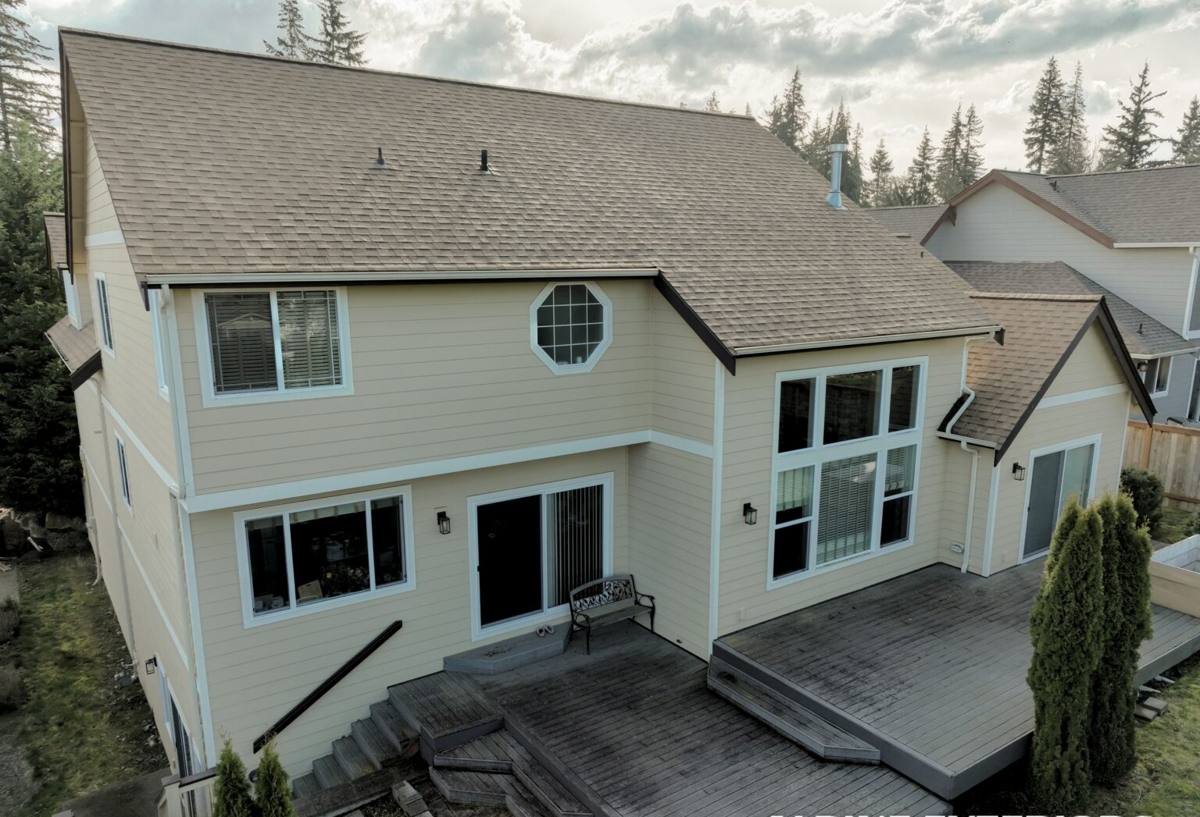
Signs a California Creek Home Needs Siding Replacement, Not Just Repair
Coastal siding failure is often slow and quiet before it becomes obvious. By the time paint is visibly peeling or boards are visibly warped, moisture has usually been working behind the surface for a while. Common signs we look for on service calls in this area include:
- Soft or spongy spots when you press on the siding, especially near the bottom courses and around window trim
- Paint that's bubbling, cracking, or needing repainting far more often than it should
- Persistent green or black staining that comes back within a season of cleaning
- Visible gaps, cupping, or separation at seams and corner boards
- Rising energy bills or noticeably colder walls in winter, which often points to a compromised weather barrier
- Siding that's original to a home built more than 20-25 years ago, particularly if it's wood-based or older composite
Any one of these can sometimes be handled with a targeted repair. Several together, especially on a home that catches wind and moisture off the water, usually means the assembly behind the siding has been compromised and a full replacement is the more honest recommendation.
What a Correct Siding Replacement Actually Involves
Full Tear-Off and Inspection
We don't install new siding over old siding, and we don't install it over sheathing we haven't inspected. A proper replacement starts with removing the existing material down to the studs or sheathing so we can see what's actually there — soft sheathing, rot around window and door openings, and improperly flashed penetrations are far more common on older coastal homes than most owners expect, and none of it can be fixed by covering it up.
Weather-Resistive Barrier and Flashing
This is the layer that matters most in a climate like this one. A correctly lapped weather-resistive barrier, properly integrated flashing at every window, door, and penetration, and careful attention to how water is directed away from the wall — not just blocked — is what actually keeps driving rain from becoming a rot problem five years later. This step gets rushed more than any other on cut-rate jobs, and it's the one that fails silently.
Installation to Manufacturer Spec
Fiber cement siding has specific fastening, gapping, and clearance requirements that exist for a reason — get them wrong and you shorten the material's life regardless of how good the product itself is. That includes proper ground clearance, correct fastener spacing and depth, and factory-caulked or properly field-sealed joints. We install to the manufacturer's published specifications because that's what keeps the warranty valid and the assembly performing the way it's designed to.
Why We Install Only James Hardie Fiber Cement
We made the decision to standardize on James Hardie siding across every job we do, and we stand behind that decision on homes near the water as much as anywhere else. Fiber cement is non-combustible, doesn't swell or rot the way wood-based products can, and holds its shape and paint line far longer under repeated wetting and drying cycles — the exact conditions a long Whatcom County moss season and marine air create.
Hardie's Climate-Engineered HZ Lines
James Hardie engineers its HZ5 and HZ10 product lines specifically around regional moisture and temperature exposure rather than shipping one generic product everywhere. For the Pacific Northwest, that means a formulation built to handle sustained damp conditions and freeze-thaw cycling without the moisture absorption issues that plague some other siding materials in this climate. Paired with Hardie's factory-applied ColorPlus finish, which is baked on and warrantied against peeling and fading, it gives homes near California Creek a surface that isn't fighting the environment from day one.
We don't install vinyl siding, LP SmartSide, Cemplank, Allura, primed spruce, or cedar. Each of those has legitimate uses elsewhere, but for the salt exposure, moisture load, and long-term maintenance reality of this coastline, we don't think they hold up as well as Hardie fiber cement installed correctly — and we'd rather put one product on every home and stand behind it fully than offer several we have reservations about.
Our Process, Start to Finish
- On-site assessment — we walk the exterior, check for soft spots and existing damage, and look at drainage, grading, and exposure specific to the property
- Written estimate — a clear scope of work and price, with no vague allowances hiding potential change orders
- Tear-off and sheathing inspection — old material removed, any rot or damage addressed before anything new goes up
- Weather barrier and flashing installation — the layer that actually protects the home, done to spec
- Hardie siding installation — installed per manufacturer requirements for fastening, clearance, and joint treatment
- Final walkthrough — we go over the finished work with the homeowner before calling the job done
What Siding Replacement Typically Costs — and What Drives the Price
Every home is different, and we don't quote a job without seeing it, but the factors below are what generally move the price up or down for a California Creek property.
| Factor | Effect on Cost |
|---|---|
| Extent of hidden rot or sheathing damage found at tear-off | Increases cost; can't be known until old siding is removed |
| Home size and number of stories | Larger and taller homes require more material and labor, plus access equipment |
| Number of window, door, and trim details | More openings mean more flashing and cutting work |
| Existing siding type being removed | Multiple layers or hard-to-remove materials add tear-off time |
| Hardie product selection | Plank, panel, and shingle styles carry different material costs |
| Site access and staging | Tight lots, slopes, or limited driveway access can add labor time |
The honest answer to "what will this cost" almost always comes down to what we find once the old siding is off. That's why we build inspection into the estimate process rather than guessing from a drive-by look.
Why Local Experience in Birch Bay Matters Here
A crew that already works around Birch Bay and the California Creek area has a working sense of how wind, rain exposure, and moss growth vary from one side of a lot to another here, and what that means for flashing details, ventilation, and where a home is most likely to be hiding moisture damage. That's not something you get from a general contractor bio — it comes from having done the tear-offs, found the rot in the same kinds of wall assemblies, and corrected the same recurring installation shortcuts on homes in this exact stretch of Whatcom County coastline.
It also means straightforward scheduling and follow-up. We're not driving in from out of the area for a one-off job; we're a crew that's going to be working in Birch Bay next month and next year too, which is part of why we stand behind the work we do here.
Caring for Your New Siding After Installation
James Hardie fiber cement is low-maintenance compared to wood or engineered wood siding, but "low-maintenance" doesn't mean "no maintenance," especially this close to the water. A few habits keep it performing for the long haul:
- Rinse the exterior once or twice a year to clear salt residue and organic buildup before moss gets a foothold
- Keep gutters clean and downspouts directed away from the foundation and wall base
- Trim back vegetation and shrubs so siding gets airflow and isn't holding moisture against it
- Inspect caulking at trim and penetrations annually and have any gaps resealed promptly
- Address any impact damage or cracked boards quickly rather than letting moisture get behind them
If you're noticing early wear on your current siding or you're just planning ahead for a home near California Creek, we're happy to take a look and give you a straightforward, no-pressure estimate — no obligation, just an honest read on where things stand and what your options are.