 Birch Bay Roofing
 Decks in Marietta Take a Different Kind of Beating
Marietta sits close enough to the water that every deck in the area is fighting the same three things year-round: salt-laden air, driving rain that comes in sideways off Birch Bay, and a moss season that can stretch from October well into spring. None of that is unique to any one house — it's just what Whatcom County's marine climate does to exterior wood and hardware, and it does it whether the deck is five years old or twenty-five. We repair decks in this neighborhood regularly enough to know which failures show up first here, and it's rarely the same pattern you'd see on a deck twenty miles inland.
A deck repair that doesn't account for that climate is a temporary fix. Boards get swapped, the deck looks fine for a season, and the same rot or corrosion reappears a year or two later because the underlying moisture and salt exposure were never actually addressed. Our approach is built around fixing the cause, not just replacing what's visibly damaged.
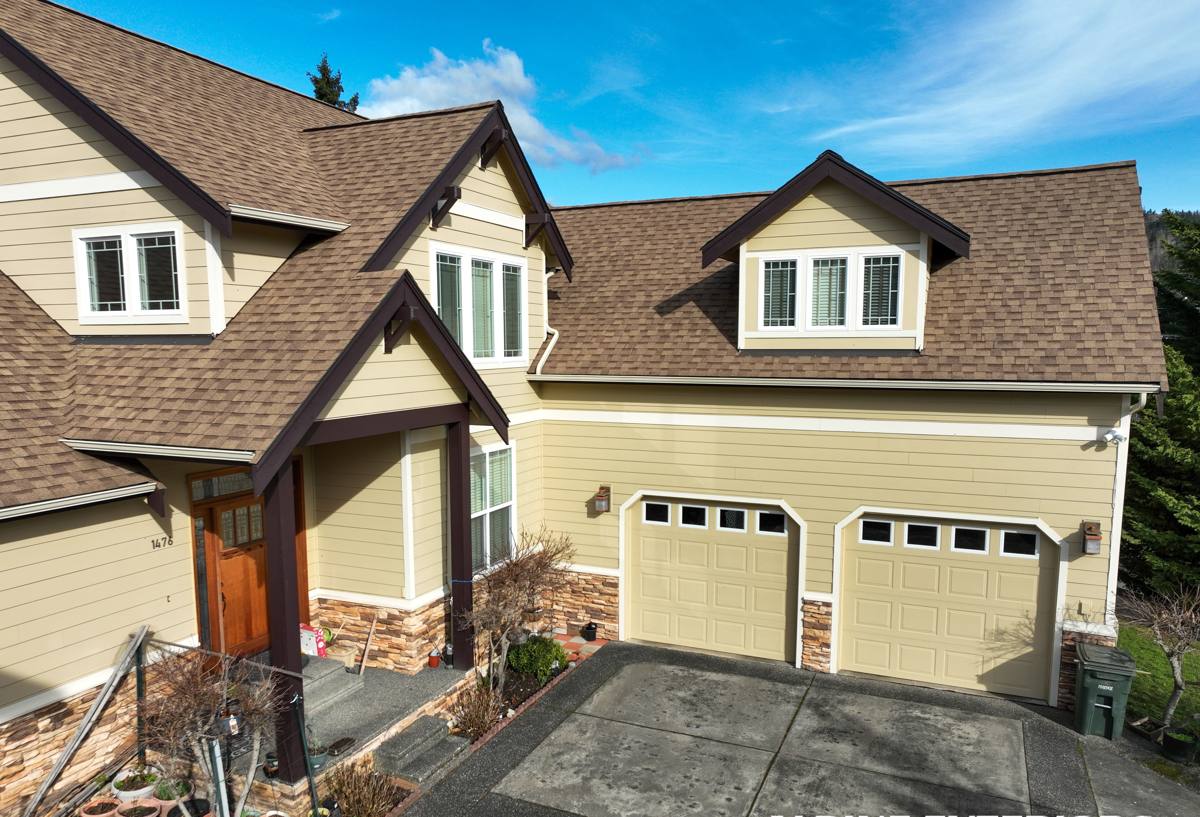
What Birch Bay's Climate Does to a Deck
Salt Air and Metal Fatigue
Airborne salt from Birch Bay accelerates corrosion on anything metal — fasteners, joist hangers, railing brackets, and structural screws. Corroded fasteners don't just look bad; they lose holding strength. A ledger board or joist hanger held by rusted-through screws is a structural problem, not a cosmetic one, and it's often invisible until you pull a board or the deck starts to feel spongy underfoot.
Driving Rain and Water Intrusion
Wind-driven rain off the water doesn't fall straight down — it gets pushed sideways and up under boards, around post bases, and behind ledger flashing. Over time, water finds every gap in old flashing or every board that was installed tight against the house without a drainage gap. That's where rot starts, usually at the ledger connection or around post bottoms, long before it shows up in the decking surface itself.
Moss and Extended Wet Season
A long moss season means extended periods where deck surfaces stay damp instead of drying out between rains. Moss and algae hold moisture against the wood surface, which softens fibers, makes boards slick and unsafe, and speeds up surface rot even on treated lumber. Left alone through a full wet season, moss growth can mask soft spots until someone's foot goes through a board.
Signs a Marietta Deck Needs Repair
Most homeowners call us after noticing one obvious problem, but a proper inspection usually finds two or three related issues feeding off the same moisture source. Here's what we check for and what should prompt a call sooner rather than later:
- Boards that feel spongy, bounce, or flex more than they used to
- Visible gaps, cracking, or splintering along board edges, especially near the house
- Rust staining around fasteners or hardware
- A railing or post that wiggles when pushed — this is a safety issue, not a cosmetic one
- Persistent moss or dark staining that comes back within weeks of cleaning
- Soft or discolored wood where the deck meets the house (the ledger board)
- Stairs that feel uneven or have visibly sagging stringers
- A musty smell coming from underneath the deck
Any one of these can be a minor fix. Several at once usually points to a moisture source that needs to be traced back and corrected, not just patched over.
What a Correct Deck Repair Actually Involves
Structural Assessment First
Before any board gets replaced, we check the framing underneath: joists, beams, the ledger connection to the house, and post footings. This is the part of a deck that determines whether it's actually safe, and it's the part most easily missed by a quick surface-level repair. Ledger flashing in particular gets overlooked constantly, and a failed ledger connection is one of the more serious deck failures out there.
Fastener and Hardware Replacement
In a salt-air environment, we don't reuse corroded fasteners or hangers even if the wood around them still looks sound. Hardware gets replaced with fasteners rated for the exposure, because reattaching new boards with old, weakened screws just resets the clock on the same failure.
Matching Board Replacement, Not Patchwork
Where boards need replacing, we match spacing, fastening pattern, and where possible, material type, so the repair doesn't stand out or create an uneven wear pattern down the line. Spot-patching with mismatched boards or hardware tends to age unevenly, which just means a second repair call sooner.
Addressing the Water Path, Not Just the Symptom
If rot traces back to a drainage or flashing problem, we fix that as part of the repair. Replacing boards without correcting the water intrusion path is the single most common reason deck repairs don't last in this climate.
Repair vs. Replace: How We Help You Decide
Not every deck problem in Marietta calls for a full replacement, and not every "small" repair should be treated as small. The table below covers the factors that actually drive that decision:
| Factor | Leans Toward Repair | Leans Toward Replacement |
|---|---|---|
| Framing condition | Solid joists/beams, isolated rot spots | Widespread soft or rotted framing |
| Age of structure | Under 15-20 years, built to a reasonable standard | Older deck near or past typical service life |
| Fastener corrosion | Isolated to a few connections | Corrosion widespread across hardware |
| Ledger connection | Flashing intact, connection sound | Ledger rot or failed flashing at the house |
| Decking surface | Scattered board issues | Most boards cracked, splintering, or cupped |
| Railings and posts | Stable, minor tightening needed | Loose posts, footing movement, code concerns |
We'll walk you through where your deck actually falls on this before recommending anything — an honest assessment sometimes means telling a homeowner their deck has more life left in it than they expected, and sometimes it means being upfront that a repair would be spending money on a structure that's past the point of patching.
Our Process for a Marietta Deck Repair
- Full inspection — framing, ledger, hardware, and decking surface, above and below.
- Honest scope — a clear explanation of what's failing, why, and what it takes to fix it correctly.
- Written estimate — repair scope and materials spelled out, no vague allowances.
- The repair itself — structural fixes first, then hardware, then decking and railings.
- Water path check — confirming flashing, drainage, and grading direct water away from the structure going forward.
Materials That Hold Up in This Climate
Material choice matters more here than in drier inland areas. Standard pressure-treated lumber is a reasonable, cost-effective choice for framing and can work well for decking too, provided it's properly sealed and maintained — the trade-off is it needs more regular upkeep to resist moss and moisture in a marine climate. Composite decking costs more upfront and doesn't need staining, but it still requires a sound, dry structure underneath, and not every composite product handles ground-level moisture or ventilation the same way, so installation details matter as much as the material itself. For hardware, we lean toward stainless or heavily coated fasteners rated for coastal exposure rather than standard-grade screws, since the cost difference is small relative to how much longer they last against salt air.
There's no single "best" material for every deck — it depends on budget, how much maintenance a homeowner wants to take on, and what the existing structure can support. We'll walk through the honest trade-offs for your specific situation rather than pushing one option.
Why a Local Birch Bay Crew Matters
A deck repair is only as good as the crew's understanding of what's actually causing the damage, and that's shaped heavily by working this specific stretch of coastline regularly. We already know which connections tend to fail first in a marine climate, which fastener grades are worth the extra cost here, and how a long moss season changes maintenance recommendations. That means fewer surprises during the inspection and a repair scope that's realistic from the first estimate, rather than one that grows once work is already underway.
It also means being reachable if something comes up after the repair — a follow-up question, a maintenance concern, or simply wanting an honest opinion before the next wet season sets in.
Simple Maintenance That Extends a Repair
Once a repair is done right, a little seasonal upkeep goes a long way in this climate:
- Clean moss and algae off deck surfaces before it re-establishes, not after it's already staining the wood
- Check fasteners and hardware for early rust once a year
- Keep gutters and downspouts clear so runoff isn't draining onto or under the deck
- Reseal or restain wood decking on the manufacturer's recommended schedule, not just when it looks faded
- Walk the deck periodically and note any new soft spots, movement, or squeaks
If you've got a deck in Marietta that's showing any of the signs above, we're happy to take a look and give you a straight answer on what it needs. Estimates are free, there's no pressure to commit to anything, and you'll get a clear explanation of the actual condition of your deck — use the form below to get started.