 Birch Bay Roofing
 Composite Decking for Marietta, Built for the Climate It Actually Sits In
Marietta sits close enough to the water that every deck out here deals with three things at once: salt-laden air off the Salish Sea, long stretches of driving rain, and a moss season that runs longer than most homeowners expect. A deck that would hold up fine in a drier inland part of Whatcom County can still struggle here if it wasn't built with this specific exposure in mind. Composite decking is a strong fit for Marietta homes, but only when the boards, fasteners, and substructure are chosen and installed to match local conditions — not just installed off a generic spec sheet.
This page walks through what that actually means: how the climate stresses a deck, what a correct composite install looks like out here, and why a crew that already works this neighborhood tends to catch problems a first-timer to the area won't.
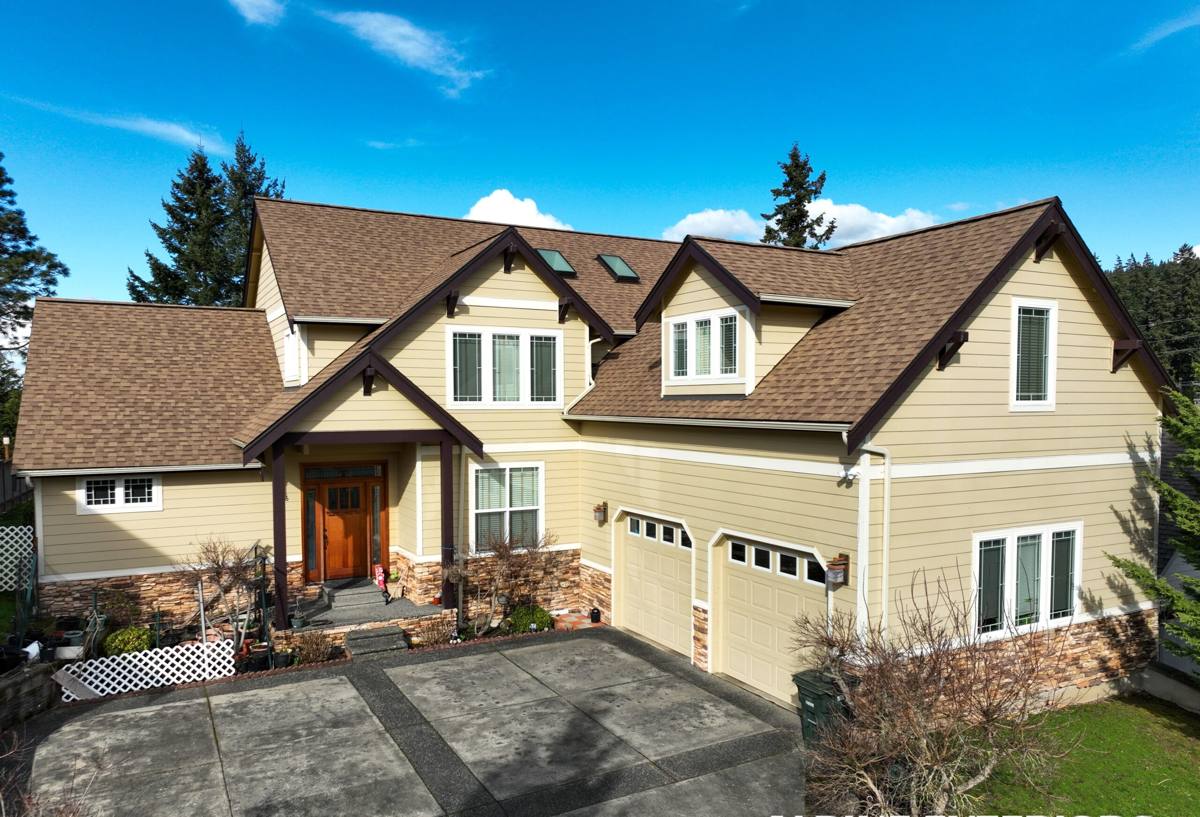
What Birch Bay's Climate Does to a Deck Over Time
Salt Air and Metal Hardware
Salt in the air accelerates corrosion on anything metal — screws, joist hangers, post bases, railing brackets. Composite decking boards themselves resist rot and salt exposure well, but the hardware holding the structure together is a different story. If that hardware isn't rated for coastal exposure, it can start corroding years before the boards show any wear, which is exactly the kind of failure that's invisible until it isn't.
Driving Rain and Water Management
Wind-driven rain doesn't just fall on a deck — it gets pushed sideways into ledger connections, under railing posts, and into any gap where flashing was skipped or done poorly. Composite boards don't absorb water the way wood does, but the framing underneath, the ledger board attaching to the house, and any exposed fasteners still need proper flashing and drainage. A composite deck built on a poorly flashed substructure will outlast the flashing problem, not fix it.
Moss and Surface Buildup
Whatcom County's moss season is long, and a deck with poor airflow underneath or boards installed too tight to a shaded wall will grow moss and green algae faster than one with proper spacing and drainage. This is mostly a surface and slip-hazard issue on composite boards rather than a structural one, but it's still the complaint we hear most from homeowners in shaded, moisture-heavy yards typical of this area.
Why Composite Makes Sense for This Specific Location
Wood decking can absolutely work in Marietta, but it asks more of the homeowner — annual sealing, more frequent inspection for rot at fastener points, and a shorter practical lifespan in a marine, high-moisture climate. Composite decking shifts that burden. The boards themselves don't rot, don't need staining, and hold up to repeated wet-dry cycles better than wood over the long run. That doesn't mean composite is maintenance-free — it still needs to be kept clean and the structure underneath still needs to be built right — but it removes the single biggest recurring task (sealing/staining) that wood demands in a climate like this one.
What a Correct Composite Deck Install Involves Here
A composite deck is only as good as what's underneath it and how it's fastened. In Marietta specifically, that means:
- Stainless steel or coated, coastal-rated fasteners and hardware throughout — not standard galvanized, which corrodes faster in salt air
- Proper ledger board flashing where the deck attaches to the house, sealed against wind-driven rain
- Adequate joist spacing and blocking sized for the specific composite board being used — composite has different span requirements than wood, and manufacturers vary
- Sufficient clearance and airflow underneath the deck to reduce moisture buildup and slow moss growth
- Hidden fastener systems where board design allows, reducing the number of exposed fastener points that can corrode or trap moisture
- Post bases and structural connectors rated for ground contact and coastal exposure, not just standard exterior-rated hardware
Skipping any one of these doesn't show up on install day. It shows up two, five, or eight years later as a squeak, a rust stain, a soft spot near the house, or moss that won't go away no matter how often it's cleaned.
Choosing the Right Composite Board for This Climate
Not all composite decking is built the same way, and the differences matter more in a wet, salt-air climate than they would somewhere drier. The table below is a general guide to the tradeoffs — actual products and specs vary by manufacturer, so we'll go over specific options during your estimate.
| Board Type | How It Handles This Climate | Tradeoff to Know |
|---|---|---|
| Capped composite (full wrap) | Best moisture and stain resistance; handles wet-dry cycling and salt exposure well | Higher upfront cost than uncapped or wood |
| Uncapped composite | Still rot-resistant but the exposed composite surface can absorb some moisture and is more prone to mold/moss staining over time | Lower cost, but more surface maintenance in a mossy climate |
| Solid-core composite | Denser, generally more resistant to moisture intrusion at cut ends and fastener points | Heavier, sometimes limits span and fastening options |
| Hollow-core composite | Lighter and often more affordable | Cut ends and exposed openings need to be capped/sealed carefully to keep water and pests out |
Our Process for a Marietta Deck Project
- On-site visit to assess the existing structure (if replacing a deck), grading, drainage, and sun/shade exposure specific to your lot
- Honest conversation about board options, hardware upgrades needed for coastal exposure, and realistic cost ranges — no pressure, no upsell for its own sake
- Written estimate covering materials, structural work, flashing, and fastener specification so there's no ambiguity about what's included
- Structural build-out first — framing, blocking, ledger flashing, and hardware — since this is the part that determines how the deck performs in wind-driven rain over time
- Composite board installation per manufacturer spacing and fastening requirements
- Final walkthrough covering drainage, any airflow/moss considerations for your specific yard, and basic care going forward
Maintaining a Composite Deck in a Marine, Mossy Climate
Composite decking is lower-maintenance than wood, not maintenance-free. In Marietta's climate, a short seasonal routine goes a long way:
- Sweep debris off the deck regularly, especially in shaded or tree-covered areas where moss takes hold fastest
- Clean the surface with a soft-bristle brush and a composite-safe cleaner at least once or twice a year, more often in shaded spots
- Check that drainage gaps between boards and along the perimeter stay clear of leaves and debris so water doesn't pool
- Inspect visible fasteners and railing hardware periodically for early signs of rust, especially after the wetter winter months
- Confirm ledger flashing and any wall-to-deck connections stay sealed — this is the spot most likely to let wind-driven rain in over time
Cost Factors to Expect
Composite decking costs vary widely based on board tier, deck size, structural condition, and how much of the existing substructure (if any) needs replacing. Rather than quote a number that won't reflect your actual project, here's what tends to move the price:
| Factor | Why It Matters |
|---|---|
| Board tier (capped vs. uncapped, solid vs. hollow) | Material cost per square foot varies significantly between entry-level and premium composite lines |
| Substructure condition | Rebuilding framing and ledger connections costs more than decking over sound existing framing, but skipping needed structural repair isn't a real option in this climate |
| Deck size and layout | Multi-level decks, curves, or picture-frame board patterns add labor and material complexity |
| Railing and hardware upgrades | Coastal-rated fasteners and railing hardware cost more than standard-grade options but hold up far longer in salt air |
| Site access | Waterfront and hillside lots common around Birch Bay can add labor time for material staging and equipment access |
Why Hiring a Crew That Already Works Marietta Matters
A contractor who mostly builds decks inland doesn't always think to spec coastal-rated hardware by default, or to plan airflow underneath the deck with moss season in mind. Those aren't exotic problems — they're just specific to this stretch of Whatcom County, and they're the kind of thing you only build a habit around by working here repeatedly. We've built and repaired decks around Birch Bay and the surrounding communities long enough that the coastal-grade hardware, the flashing details, and the drainage planning aren't an upcharge or an afterthought — they're just how we build a deck out here.
If you're considering composite decking for a home in Marietta, we're happy to walk your property, look at your existing structure or bare site, and put together a straightforward estimate — no pressure, no obligation. Reach out through the form below to get started.