 Birch Bay Roofing
 New Construction Is a Different Job Than Replacement
Custer sits in the mostly rural stretch of Whatcom County between Ferndale and the Canadian border, close enough to Birch Bay and the Strait of Georgia that the marine climate shapes everything about how a house should be built. As more lots in and around Custer get built out with new homes, we've done a fair amount of work installing windows during construction rather than swapping them into an existing wall — and it's genuinely a different trade than replacement window work.
Replacement windows go into an opening that's already framed, flashed, and sided. New-construction windows go in raw, before the siding is on, while the weather-resistive barrier (WRB) is still exposed and the flashing sequence is still being built layer by layer. That means the window installer isn't just setting a unit level and plumb — they're a working part of the building envelope. Get the sequence wrong at this stage and the mistake gets sided over, sometimes for years, before it shows up as a stain, a soft spot, or a drafty room.
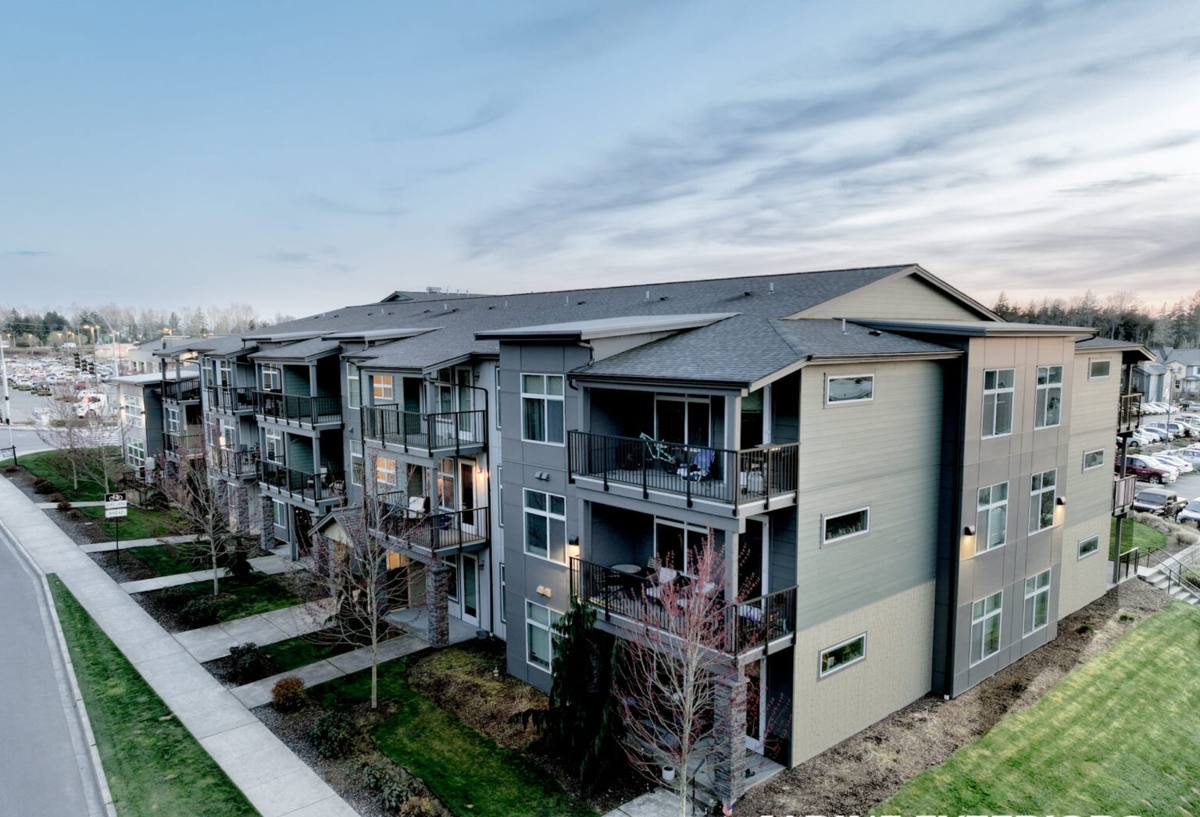
What Custer's Climate Does to a New Build Over Time
Custer doesn't get the direct wave exposure of a bluff-front Birch Bay lot, but it's close enough to the water that salt-laden air still reaches inland properties, especially with the wind patterns common to this part of Whatcom County. Combine that with the region's long, wet winters and the moss and algae growth that comes with months of shade and moisture, and you've got three separate stressors working on a house at once: corrosion, water intrusion, and organic growth.
- Salt air accelerates corrosion on exposed fasteners, hinges, and lesser-grade hardware — especially on the weather side of the house.
- Driving rain off Georgia Strait weather systems pushes water sideways into any gap in the flashing, not just straight down.
- Moss and algae thrive in the shaded, damp microclimates around window sills, trim, and north-facing walls, holding moisture against wood and caulk joints longer than a drier climate would.
None of that is unique to Custer — it's Whatcom County weather generally — but it's exactly why the installation details matter more here than they would in a dry climate. A window that's technically "in" but not correctly flashed will usually perform fine for a season or two before the water finds the gap.
Getting the Water Management Right
Sill Pan and Flashing Sequence
Every new-construction window opening should get a sloped sill pan before the window ever goes in — a dedicated drainage plane that catches any water that gets past the window and directs it back outside instead of into the wall cavity. From there, the flashing has to shingle correctly: the WRB laps over the bottom flange, the side flanges get taped or flashed next, and the top flange gets covered last, with a head flashing or drip cap directing water out and away from the top of the unit. Done out of order, water runs behind a layer instead of over it.
Head Flashing and Sealant
Caulk and sealant are a backup, not the primary defense. On a house that's going to see the amount of driving rain Whatcom County gets in a normal winter, we treat sealant as the last line of protection, not the first — the physical shingled flashing sequence does the real work of keeping water out. That distinction matters most on Custer's more exposed, open lots where wind-driven rain hits window walls at an angle rather than straight down.
Choosing Frame Materials for a Marine Climate
Frame material is one of the bigger decisions on a new build, and it's worth weighing against the specific stresses of this climate rather than picking on style alone.
| Frame Material | Coastal / Marine Climate Behavior | Maintenance |
|---|---|---|
| Vinyl | Won't corrode or rot; performs well in salt air; can expand/contract more with temperature swings | Low — occasional cleaning |
| Fiberglass | Very stable dimensionally, strong resistance to moisture and corrosion, holds paint well if a custom color is wanted | Low |
| Aluminum-clad wood | Good look, but cladding seams and any exposed fasteners need real corrosion resistance near salt air | Moderate — cladding protects wood, but joints need periodic inspection |
| Bare aluminum | Conducts heat/cold and can pit or corrode faster in salt air unless properly finished | Higher — finish maintenance matters |
For most new builds in Custer, we steer homeowners toward vinyl or fiberglass for their resistance to both moisture and salt air with minimal upkeep. Aluminum-clad wood is a fine choice too when the look matters and the homeowner understands the cladding joints deserve occasional attention — we just want that trade-off understood going in rather than discovered later.
Glass Packages and Energy Performance
Washington's state energy code sets minimum performance requirements for new construction, and Whatcom County's climate zone means U-factor (how well the window resists heat transfer) matters more here than solar heat gain does — we're not fighting excessive sun most of the year. A double-pane, low-E, argon-filled unit is the practical baseline for a new Custer home; triple-pane is worth discussing on north-facing walls or exposed elevations where wind and cold are more of a factor, but it's a real cost jump and not always necessary lot by lot.
We size glass packages to the wall orientation rather than applying one spec to the whole house — a south-facing living room window and a north-facing bedroom window don't need to perform identically, and matching the spec to the exposure keeps the project on budget without cutting corners where it counts.
How Our Process Works on a New Build
New-construction window work runs on the builder's schedule, not the homeowner's — we're one link in a sequence that includes framing, WRB installation, window setting, flashing, and then siding. Our process:
- Review the window schedule and rough openings against the plans before units are ordered, catching sizing or swing-direction errors while they're still cheap to fix.
- Coordinate delivery and set timing with the builder's framing and siding schedule so windows go in at the right point in the sequence — not too early, not so late it holds up the crew behind us.
- Install sill pans, set units square and to manufacturer fastening specs, and shingle-lap the flashing in the correct order.
- Photograph the flashing and sill pan work at each opening before it's covered by siding — a record that's useful for the builder, the homeowner, and anyone doing warranty work down the road.
- Walk the finished openings with the builder or homeowner before siding closes them in for good.
What Correct Installation Looks Like
If you're a homeowner working with a builder, or a builder bringing in a window subcontractor, this is what's worth confirming before the openings get covered:
- Sloped sill pan installed under every opening, not just caulk on the rough sill
- Flashing shingled in the correct order — bottom, sides, then top, each lapping over the one below it
- Unit shimmed, squared, and fastened per the manufacturer's instructions, not just "tight to the opening"
- Insulation or backer rod in the gap between the frame and rough opening — not left as an air gap or overpacked with spray foam that can bow the frame
- Corrosion-resistant fasteners and hardware, especially on exposed or weather-side elevations
- Interior and exterior sealant applied as a backup layer, not a substitute for the flashing
Why a Crew That Works Custer and Birch Bay Regularly Matters
New-construction window work depends on getting the sequence right with a builder's schedule, and that goes smoother when the installer already knows how Whatcom County inspections and permitting typically run, and has already seen how this specific stretch of coastline treats a house over its first few winters. We're not learning the local climate on your project — we've flashed openings on exposed Birch Bay-area lots and quieter inland Custer lots, and we adjust the details based on which kind of exposure a given house actually has.
That local familiarity also means fewer surprises mid-build. Builders juggling several trades on a schedule don't have room for a window crew that's guessing at flashing details or unfamiliar with how fast weather can turn on a job site here. Showing up prepared for the sequence, the inspections, and the weather is most of what makes new-construction window work go cleanly.
If you're planning a new build in Custer or anywhere in the Birch Bay area, we're happy to look at your window schedule and talk through frame material, glass package, and timing — no pressure, no obligation. Reach out using the form below for a free estimate.